
When Harassment Becomes a Hostile Work Environment
Understanding why brief or isolated harassment often fails to meet the legal standard for a hostile work environment under U.S. employment law.
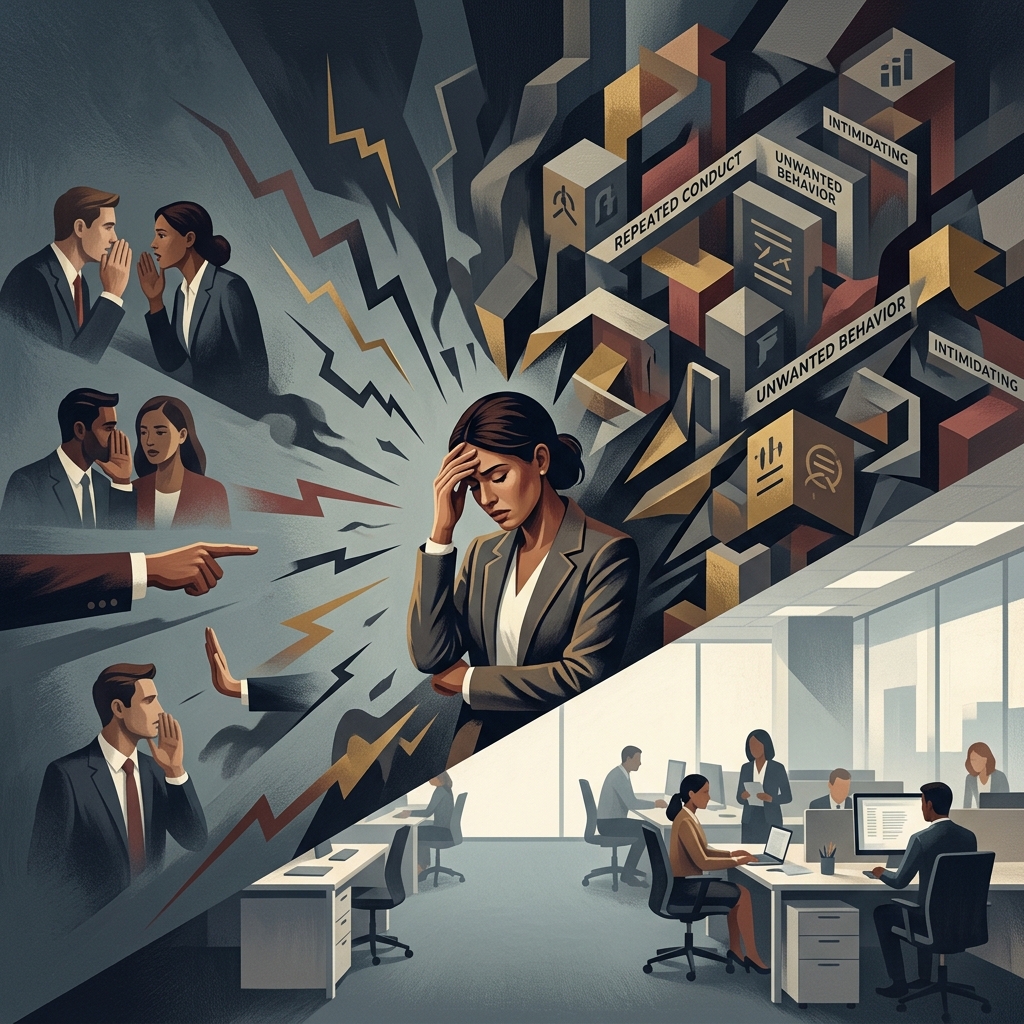
Employees often experience offensive or uncomfortable conduct at work, yet not every disturbing incident will be treated as unlawful harassment in court. U.S. employment law draws a sharp line between ordinary conflict and a legally hostile work environment, and that line turns largely on whether the conduct is severe or pervasive enough to alter the terms and conditions of employment.
This article explains how that legal distinction works, why brief episodes of harassment frequently fail to qualify, and what workers and employers should understand about their rights and responsibilities.
Foundations: What Counts as Workplace Harassment?
Under federal law, workplace harassment is a form of discrimination when it is tied to a person’s protected characteristic, such as race, sex, religion, national origin, age (40 or over), disability and other categories recognized under statutes like Title VII of the Civil Rights Act and related laws.
According to the U.S. Equal Employment Opportunity Commission (EEOC), harassment includes unwelcome conduct that is based on one of these protected traits and is significant enough that a reasonable person would find the environment intimidating, hostile or offensive. Notably, the EEOC explains that offensive conduct may involve:
- Verbal comments, slurs or jokes
- Physical conduct, including unwanted touching
- Visual or written material, such as explicit images or emails
- Threats, intimidation or interference with work activities
However, everyday rudeness, minor insults or general personality conflicts, without a connection to a protected characteristic, usually do not fall within this legal definition.
Hostile Work Environment: A Specific Legal Theory
Harassment claims are often pursued under the theory of a hostile work environment. In these cases, an employee alleges that the workplace has become so abusive or degrading that it effectively changes the conditions of employment.
Courts and enforcement agencies focus on whether the environment is both:
- Subjectively hostile – the employee genuinely finds the conduct abusive and unwelcome.
- Objectively hostile – a reasonable person in the same position would also consider the conditions hostile or abusive.
To meet these tests, the conduct must be either severe or pervasive enough to interfere with a “term, condition, or privilege” of employment, such as the ability to perform one’s job, access opportunities, or feel safe at work.
| Element | Legal Focus |
|---|---|
| Unwelcome conduct | Employee did not solicit or approve the behavior, and reasonably views it as offensive. |
| Protected characteristic | Conduct is linked to race, sex, religion, age, disability, etc., not just general incivility. |
| Severe or pervasive | Either a single intense incident or a pattern of repeated harassment over time. |
| Impact on employment | Harassment alters working conditions or creates an abusive atmosphere affecting work. |
| Reasonable person standard | Average person in the same situation would find the environment hostile or abusive. |
Why “Severe or Pervasive” Matters So Much
The phrase “severe or pervasive” is central in hostile environment cases. Courts typically treat the standard as a sliding scale:
- Severe conduct can be a single, extremely serious event, such as sexual assault or physically threatening behavior.
- Pervasive conduct involves ongoing, frequent incidents that collectively make the workplace abusive, even if each individual episode is less extreme.
Employment law guidance notes that occasional or trivial harassment, described in some decisions as “isolated or sporadic,” generally does not rise to the level of a hostile work environment.[10] Courts look at the total context, considering:
- How often the harassment occurred
- How long it lasted
- How serious or threatening the conduct was
- Whether it interfered with performance or opportunities
- Whether it was physically humiliating or dangerous
This approach explains why highly unpleasant but brief harassment can sometimes fail in court: if the incident does not reach the threshold of “severe” and is not part of a broader pattern, judges may find that the legal standard is not met.[10]
Short-Term Harassment: When Is It Legally Actionable?
Some workers experience a limited burst of harassment—perhaps a short period of crude comments or a single day of inappropriate behavior from a coworker or supervisor. From a human perspective, such conduct can be frightening and invasive. Legally, however, courts ask whether the episode is truly severe or whether it is better described as unpleasant but legally insufficient.
Several key points influence how short-term harassment is evaluated:
- Connection to a protected characteristic: If the conduct is unrelated to race, sex, religion or other protected traits, it may not fall under discrimination law at all.
- Intensity of the incident: Physical assault, explicit threats, or egregious sexual propositions in a single event may satisfy the “severe” prong even without a long history of abuse.
- Employer response: If an employee complains promptly and the employer responds effectively, some courts are less likely to find that the environment became hostile for a sustained period.
- Duration and repetition: Brief, isolated comments or gestures may be deemed “occasional” or “trivial” and not actionable, even when they are offensive.[10]
Legal commentators emphasize that hostile environment claims usually grow stronger when the employee documents a pattern: multiple incidents over weeks or months, repeated offenders, and failure by management to intervene. A solitary instance may still be serious enough to support a claim, but courts assess those facts carefully against the “severe” threshold.
Examples: Harassment vs. Hostile Work Environment
To clarify the distinction, consider general types of scenarios that often arise in litigation and guidance materials.
Situations Likely Not to Meet the Standard
- A coworker makes a single inappropriate joke about age at lunch, and never repeats it.
- A manager is regularly rude to everyone, regardless of race or gender, without using slurs.
- One off-color comment about religion that is quickly followed by an apology and no further incidents.
Although these episodes may be unprofessional, they are typically viewed as isolated or non-discriminatory and thus not actionable as hostile environment claims.[10]
Situations More Likely to Constitute a Hostile Work Environment
- Persistent jokes and slurs about an employee’s race or national origin over months, witnessed by others and ignored by supervisors.
- Repeated sexual comments, unwelcome romantic pressure and sharing of explicit images, leading the employee to fear coming to work.
- Ongoing mockery of a worker’s disability, coupled with exclusion from meetings and refusal to provide necessary accommodations.
In these examples, the harassment is both connected to protected characteristics and either severe or pervasive enough that a reasonable person would regard the atmosphere as abusive.
The Role of the Employer: Liability and Duty to Act
Employers are not automatically liable for every instance of harassment. Liability depends on who engages in the misconduct and how the employer responds.
- Supervisor harassment: If a supervisor’s harassment results in a tangible job action—such as termination, demotion or a significant loss of pay—employers are often held strictly liable under Title VII.
- Co-worker harassment: Employers can be liable when they knew or reasonably should have known about harassment by coworkers and failed to take appropriate corrective action.
- Preventive measures: Clear anti-harassment policies, training and prompt investigation of complaints can help employers both prevent hostile environments and demonstrate compliance if litigation arises.
Guidance from enforcement agencies stresses that employers should not wait for harassment to become extreme or pervasive before intervening. Early action can stop problematic behavior before it develops into a hostile environment and may reduce legal exposure.
Brief Harassment and Hostile Environment Claims: Court Perspectives
While facts vary widely, judicial decisions frequently repeat a core idea: a little harassment does not automatically equal an unlawful hostile work environment.[10] Courts often quote formulations explaining that there is no recovery for conduct that is occasional, isolated, sporadic or trivial, even if it is unpleasant.[10]
At the same time, appellate opinions and EEOC guidance recognize that a single severe incident—particularly one involving violence or clear threats—may be sufficient, because severity can substitute for pervasiveness. The legal inquiry is therefore contextual, not mechanical.
For employees, this means:
- Experiencing brief harassment does not guarantee a successful hostile environment claim.
- Documenting the specifics—dates, statements, witnesses and impact—is crucial if a pattern emerges.
- Consulting an employment attorney or advocacy organization can help assess whether the facts meet the legal threshold.
Practical Guidance for Workers
Workers who face harassment, whether brief or ongoing, can take concrete steps to protect their position and health while preserving their legal options.
Immediate Actions
- Record incidents: Keep contemporaneous notes of what happened, who was involved, and how it made you feel.
- Review policies: Most employers have written anti-harassment procedures that outline how to report concerns.
- Consider speaking up: Where safe, clearly but professionally indicate that the behavior is unwelcome.
Using Internal Complaint Channels
- Submit a written complaint to HR or the designated contact, following internal policy.
- Provide specific examples and any supporting documentation.
- Ask for confirmation that the complaint has been received and will be investigated.
Legal practitioners often note that an employer’s response to such complaints—whether timely and thorough or dismissive and slow—is central in evaluating liability for hostile environment claims.
Seeking External Help
- Contact enforcement agencies: Workers can file charges with the EEOC or state fair employment agencies when harassment involves protected characteristics.
- Consult legal counsel: An employment attorney can help interpret whether the conduct is likely to meet the severe or pervasive standard and explain deadlines for filing.
- Access support services: Advocacy organizations and employee assistance programs may provide counseling and guidance for those affected.
Implications for Employers and HR Professionals
Employers have both ethical and legal reasons to prevent harassment. Beyond complying with federal and state law, maintaining a respectful workplace improves morale, retention and productivity.
Effective employer strategies include:
- Comprehensive policies that clearly define prohibited conduct and outline reporting mechanisms.
- Regular training for managers and employees on recognizing harassment and responding appropriately.
- Prompt investigations and fair, consistent disciplinary measures when complaints arise.
- Monitoring workplace culture to detect patterns of incivility or bias that could evolve into hostile environments.
Legal guidance emphasizes that harassment can harm workers even when they continue performing their jobs, and modern proposals seek to clarify that harmful conduct should not be dismissed simply because tangible job losses are not immediately apparent. A proactive approach helps organizations address problems before they reach the threshold of unlawful hostile environment claims.
FAQs About Brief Harassment and Hostile Work Environments
Does a single incident ever qualify as a hostile work environment?
Yes. A single incident can meet the standard when it is extraordinarily serious—for example, physical assault or explicit threats tied to a protected characteristic. In such cases, courts may find the conduct sufficiently severe even without a pattern of repetition.
If harassment only lasted a short time, is it automatically legal?
No. The duration of harassment is only one factor. Short-lived harassment can still be unlawful if it is severe and connected to protected characteristics. However, courts often reject claims based solely on brief, relatively minor incidents.[10]
Does hostile work environment law cover general bullying?
Usually not. Laws enforced by the EEOC are focused on harassment related to protected traits, not generic workplace bullying. Without a link to protected characteristics, bullying may violate internal policies but not necessarily federal discrimination law.
Do I have to show that my performance suffered?
Not always. Guidance from enforcement agencies indicates that harassment can be actionable even when the employee continues to do their job, as long as the conduct is severe or pervasive and would be considered abusive by a reasonable person.
What should I do if my complaint stops the harassment?
Continue to document events and keep copies of your complaint and the employer’s response. While ending the harassment is positive, earlier conduct may still be relevant, particularly if the episodes were severe or the employer’s response was inadequate.
References
- Harassment — U.S. Equal Employment Opportunity Commission. 2023-05-18. https://www.eeoc.gov/harassment
- Hostile Work Environment: Guide for Whistleblowers — National Whistleblower Center. 2022-03-10. https://www.whistleblowers.org/whistleblower-resources/hostile-work-environment-guide-for-whistleblowers/
- EEOC Enforcement Guidance on Workplace Harassment: Impact on “Term, Condition, or Privilege” of Employment — Jackson Lewis P.C. 2024-05-02. https://www.jacksonlewis.com/insights/eeoc-enforcement-guidance-workplace-harassment-impact-term-condition-or-privilege-employment
- 3 Common Types of Harassment in a Hostile Work Environment — Tulane University Law School (Online). 2023-01-15. https://online.law.tulane.edu/blog/types-of-harassment-in-a-hostile-work-environment
- Understanding & Prosecuting Hostile Work Environment Claims — Law Office of Archibald J. Thomas, III, P.A. 2021-09-01. https://www.employmentlawfirmpc.com/understanding-and-prosecuting-hostile-work-environment-claims_2.html
- A Little Harassment Does Not Equal a Hostile Work Environment — CDF Labor Law LLP. 2015-06-29. https://www.cdflaborlaw.com/blog/a-little-harassment-does-not-equal-a-hostile-work-environment
- The BE HEARD in the Workplace Act: Addressing Harassment — National Women’s Law Center. 2019-09-12. https://nwlc.org/resource/the-be-heard-in-the-workplace-act-addressing-harrassment/
Similar Articles








Read full bio of Sneha Tete




