
When Employees Invent: Who Really Owns the IP?
Understand how ownership of employee-created inventions works, and how smart contracts and policies can protect your business and your workforce.
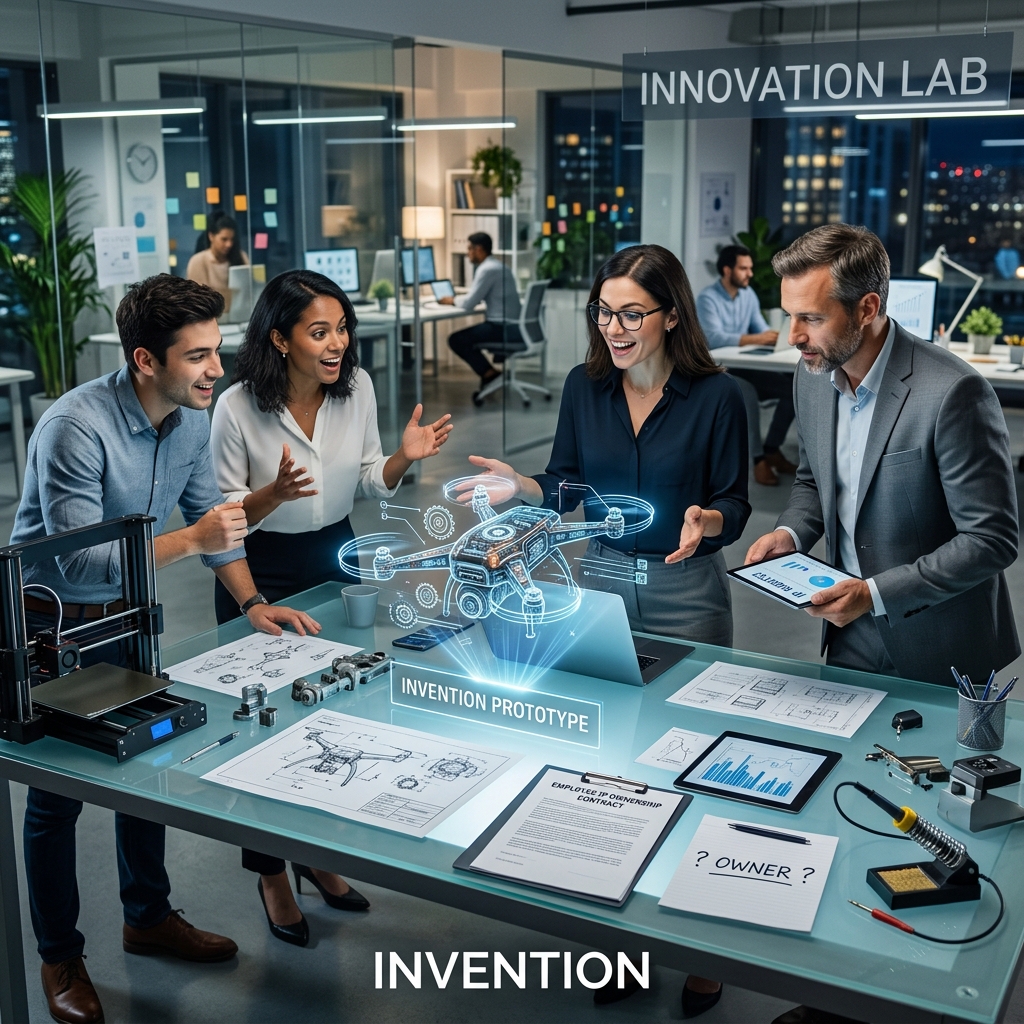
Invention and innovation are central to many successful businesses. But when a breakthrough idea comes from an employee rather than the founder, a crucial question arises: who owns the legal rights to that invention? The answer depends on a mix of intellectual property law, employment contracts, and how the invention was created.
This article explains the legal framework governing ownership of employee-created inventions, highlights common pitfalls for both employers and employees, and offers practical guidance on structuring contracts and policies to avoid costly disputes.
Why Ownership of Employee Inventions Matters
Ownership of intellectual property (IP) determines who can legally exploit, license, or sell an invention, and who can stop others from using it. For technology companies, manufacturers, research-based organizations, and even creative small businesses, getting ownership wrong can undermine competitive advantage and invite litigation.
- For employers: Clear ownership ensures the company can commercialize new products, attract investors, and avoid conflicts when employees leave.
- For employees: Understanding rights helps inventors protect their contributions, negotiate fair compensation, and avoid accidentally breaching their obligations.
- For investors and partners: Confident IP ownership is often a precondition for funding, mergers, acquisitions, or licensing deals.
The Baseline Rule: Inventors Own Their Inventions
Under U.S. patent law, the starting point is straightforward: the person who invents is the initial owner of the patent rights, even if they are an employee and conceived the idea while working. Courts have repeatedly confirmed that an employer has no inherent ownership interest in an invention that is “the original conception of the employee alone” unless there is an agreement or special circumstances that transfer those rights.
This default rule means that, in the absence of a contract, an employee inventor typically owns any patentable invention they create. However, that baseline quickly gives way to several important exceptions and doctrines that can shift or share ownership.
Key Exceptions: How Employers Gain Ownership
Employers rarely rely on the default rule. Instead, they secure rights through contracts and, in specific situations, through legal doctrines that imply an assignment of ownership. The main pathways by which an employer may own an employee’s invention are:
- Express written assignment in employment or consulting agreements.
- Hired-to-invent doctrine, where the employee is engaged specifically to create or design.
- Implied assignment based on circumstances showing the invention was part of the employee’s core duties.
1. Express Written Assignment Agreements
The most common and reliable method for employers to obtain ownership is a written assignment of inventions signed by the employee. In the United States, patent rights must be transferred in writing; oral promises are usually not enforceable for patent assignments.
Well-drafted invention assignment clauses typically:
- State that the employee assigns all rights in inventions created in the course of employment or using company resources.
- Apply to inventions related to the employer’s business or anticipated research.
- Require the employee to disclose inventions promptly and assist with patent filings.
- Include obligations that continue for a defined period after employment ends (sometimes called “trailer” or post-termination clauses).
For clarity and enforceability, many companies go beyond generic language. They use present assignment wording (e.g., “hereby assigns” rather than “agrees to assign”) so that rights transfer automatically when the invention is created, and they execute a separate, patent-specific assignment whenever a patent application is filed.
2. The Hired-to-Invent Doctrine
Even without a written agreement, an employer may gain ownership where an employee is specifically hired to invent. Under this doctrine, if an individual’s principal job is to solve technical problems, design products, or develop new technologies, courts may find an implied obligation to assign any resulting patents to the employer.
Factors that may indicate a hired-to-invent relationship include:
- The position description emphasizes innovation, design, or research.
- The employee is paid to create specific solutions or inventions.
- The invention falls squarely within the assigned tasks and company projects.
This doctrine does not apply merely because an invention is useful to the employer or arises in a work-related setting. The focus is on whether the job itself is to invent, rather than to perform routine operational duties.
3. Implied Assignment and Shop Rights
In some circumstances, courts infer that an employee has implicitly agreed to assign rights, especially when the invention is closely tied to the employee’s responsibilities and the employer’s investment in development. These situations are narrow and fact-specific.
Even when the employee retains ownership, an employer may acquire a “shop right”—a limited, nonexclusive license to use the invention without paying royalties—if the invention was created using the employer’s time, materials, tools, or facilities.
Shop rights are important because they:
- Allow the employer to use the invention internally and in its business.
- Do not require a formal written agreement.
- Do not transfer ownership; the employee can still license or sell the patent to others, subject to the employer’s continued use.
Comparing Employee vs. Employer Rights
| Scenario | Who Owns the Patent? | Employer’s Rights |
|---|---|---|
| No contract, invention outside core duties | Employee | Possible shop right if company resources were used |
| Employee hired to invent, no written agreement | Often employer (implied assignment) | Full ownership, can patent and commercialize |
| Employment agreement with present assignment clause | Employer | Strong ownership, easier enforcement and transactions |
| Invention created entirely on employee’s own time and tools, unrelated to employer | Employee | Usually no rights unless contract is very broad |
Designing Effective Invention Assignment Agreements
For businesses that rely on innovation, a carefully structured IP assignment process is essential. Poorly drafted agreements can leave ownership ambiguous or even invalidate assignments under patent law. Best practices suggested by legal and professional guidance include:
- Use clear present-tense assignment language (“hereby assigns”).
- Define the scope broadly: cover inventions related to the business, developed with company resources, or arising from confidential information.
- Require disclosure of inventions and cooperation with patent filings, including signing further documents.
- Reaffirm obligations during exit interviews, and consider post-employment assignment clauses.
- Record assignments with the patent office promptly to protect against later competing claims.
Companies should also distinguish between employees and independent contractors, and ensure that contractors sign similar IP agreements where they are expected to create protectable inventions or works.
Practical Steps for Employers
Small and mid-sized businesses often grow organically and may not implement formal IP policies until problems arise. To reduce risk, consider the following practical measures:
- Audit current contracts to see whether IP and invention assignment clauses are present, clear, and enforceable.
- Implement a standard IP agreement for all employees and key contractors whose work involves innovation.
- Train managers and staff to identify potentially patentable developments and route them to legal or IP counsel.
- Maintain documentation of who contributed to each invention, when it was conceived, and what resources were used.
- Monitor post-employment activities only where lawful and appropriate, and rely on contract rights rather than informal understandings.
Considerations for Employee Inventors
Employees who invent within a company environment should also protect their interests and comply with legal obligations. Some practical considerations include:
- Review your employment agreement carefully before starting work on side projects or innovations.
- Clarify expectations with your employer if you plan to pursue independent projects that might overlap with company work.
- Document your contributions and keep records of when and how you developed ideas, while respecting company confidentiality.
- Avoid using company resources for personal inventions if you want to minimize claims of shop rights or implied assignment.
- Seek legal advice before filing patents or licensing technology that may be connected to your employment.
Frequently Asked Questions
Do employers automatically own anything I invent at work?
No. By default, the inventor owns patent rights, even if employed. Employers gain ownership through written assignments, hired-to-invent relationships, or implied agreements, and may obtain shop rights to use inventions created with their resources.
What if my contract says I must assign “all inventions”?
A broadly drafted invention assignment clause can transfer ownership of any invention related to the employer’s business or developed with company resources, sometimes even if created off the clock. The exact scope depends on the wording and applicable state law, so careful drafting and review are critical.
Can I keep rights to a side project I developed at home?
In many cases, yes—especially if the project is unrelated to your employer’s business and you did not use company tools or confidential information. However, some contracts claim rights in any related inventions, and shop rights may arise if employer resources were involved. Legal advice is recommended.
What is a “shop right” in practical terms?
A shop right is an implied, royalty-free license that allows an employer to use an invention owned by an employee, when that invention was developed using the employer’s facilities, materials, or time. It does not transfer ownership, but it reduces the employee’s ability to block the employer’s use.
How can small businesses protect themselves without overburdening employees?
Small businesses can adopt concise, clear IP agreements, educate staff about why these clauses exist, and focus on transparency and fairness. Combining reasonable assignment clauses with recognition or incentives for employee inventors often promotes innovation while securing necessary rights.
Balancing Innovation, Fairness, and Legal Certainty
Employee-created inventions sit at the intersection of corporate strategy, employee creativity, and legal technicalities. While the law presumes that inventors own their creations, employers can and often should secure ownership or usage rights through clear written agreements and thoughtful policies. At the same time, respecting the contributions of employee inventors—through credit, compensation, or recognition—helps maintain trust and encourages continued innovation.
Both employers and employees benefit from understanding how doctrines such as hired-to-invent, shop rights, and invention assignment work in practice. With the right structures in place, businesses can harness internal innovation confidently, and inventors can contribute their ideas knowing where they stand legally.
References
- Employee Inventors and Patent Ownership: Whose Rights Are They Anyway? — American Bar Association. 2013-03-01. https://www.americanbar.org/groups/intellectual_property_law/resources/landslide/archive/employee-inventors-patent-ownership-whose-rights-are-they-anyway/
- Ownership Rights and Exploitation of Employee Inventions — ASME. 2010-06-01. https://www.asme.org/topics-resources/content/ownership-rights-and-exploitation-of-employee
- Ownership of Employee Inventions — Fennemore. 2021-04-15. https://www.fennemorelaw.com/ownership-of-employee-inventions/
- Inventions Made for Hire — New York University Journal of Intellectual Property & Entertainment Law. 2012-01-01. https://jipel.law.nyu.edu/vol-2-no-1-1-simmons/
- The Employee’s Idea, The Employer’s Property: How to Capture Employee Intellectual Property — Markowitz Herbold. 2015-09-01. https://www.markowitzherbold.com/The-Employee-s-Idea-The-Employer-s-Property-How-to-Capture-Employee-Intellectual-Property
- If I Invent Something While Working for a Company, Does the Company Own It? — MoloLamken LLP. 2019-07-10. https://www.mololamken.com/knowledge-if-i-invent-something-while-working-for
- Who Owns What: Patent Assignment and Ownership — Cooley GO. 2020-05-01. https://www.cooleygo.com/assignment-and-ownership-of-patents-and-applications/
Similar Articles








Read full bio of Sneha Tete




