
When Coaches Hit Students: Discipline, Law, and School Accountability
Exploring when a coach’s physical contact crosses the line from discipline to unlawful force and what schools must do.
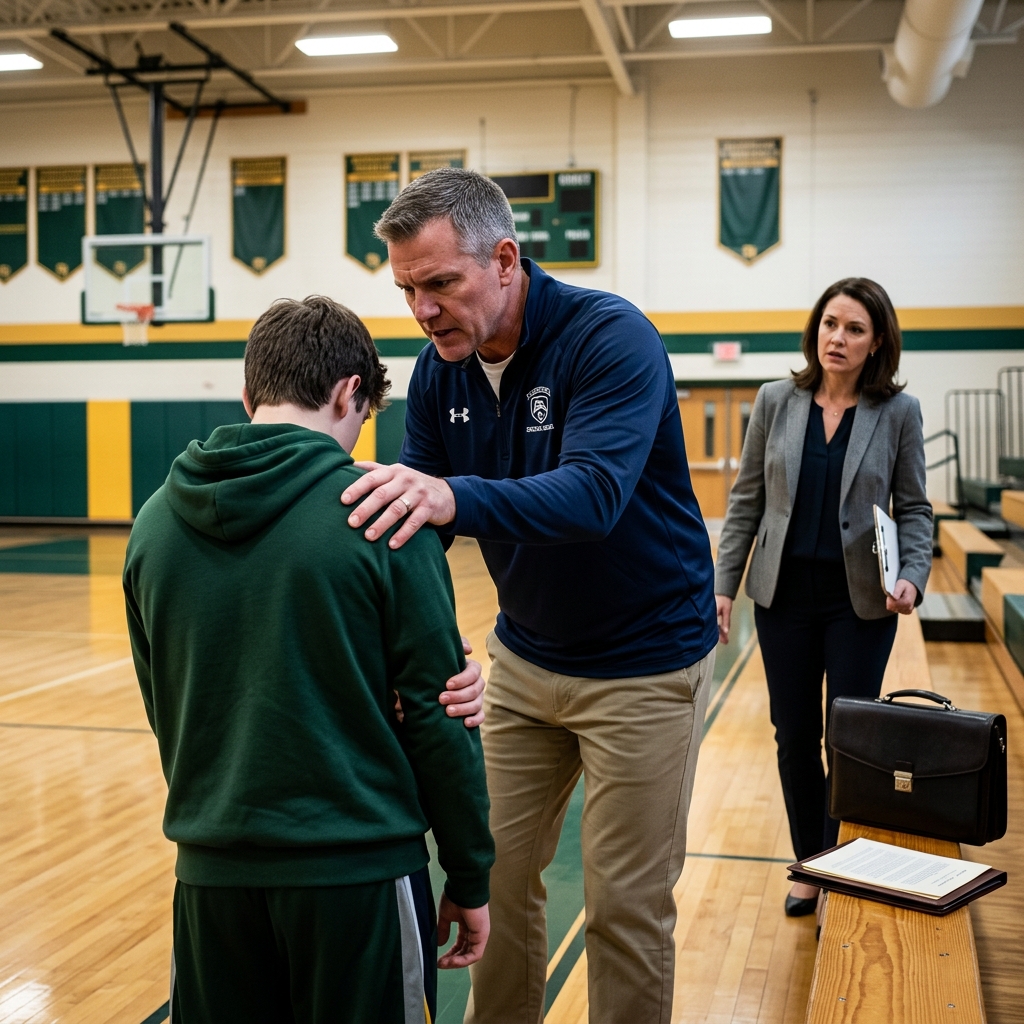
Physical discipline by teachers and coaches raises immediate questions: is it ever legal for school staff to hit students, and should a coach lose their job for doing so? The answers depend on state law, school policy, and the specific facts of the incident, but one principle is clear: student safety and dignity must come first.
Understanding Corporal Punishment in Schools
Corporal punishment generally means using physical force intended to cause pain as a way to correct behavior, such as paddling, spanking, or hitting with an object. In school settings, this can include actions by teachers, administrators, or coaches when they discipline students.
In the United States, there is no single federal rule that bans corporal punishment in all schools. Instead, states decide whether school staff can use physical force as discipline. That patchwork of laws is critical when evaluating any case involving a coach who hit a student.
- Corporal punishment: physical force used as punishment, not as self-defense or to stop an immediate danger.
- Physical restraint: limited force used to prevent serious harm, such as breaking up a fight or stopping a dangerous action.
- Abuse or assault: unnecessary or excessive force that causes pain or injury and is not legally justified.
Legal Landscape: Where Can Teachers Hit Students?
Most Americans assume teachers and coaches are never allowed to hit students, but the law is more complex. Corporal punishment is banned in many states, yet still permitted in others under specific regulations.
States That Ban Corporal Punishment
More than half of U.S. states prohibit school staff from using physical punishment. In these jurisdictions, hitting a student as discipline is generally illegal and can trigger both professional sanctions and potential criminal charges. For example, Connecticut has banned corporal punishment in public schools since 1989, meaning teachers and staff cannot legally spank, hit, or physically punish students under any circumstances.
- Teachers and coaches may use force only to prevent immediate harm or stop dangerous behavior.
- Any physical contact used as discipline rather than safety can expose staff to discipline or legal liability.
- Students who are hit in these states may be considered victims of physical abuse or assault, depending on the severity of the incident.
States That Still Allow Corporal Punishment
In contrast, school corporal punishment remains legal, at least on paper, in a significant minority of states. Research and advocacy organizations report that corporal punishment is legal in around 17–19 states, and still practiced in a smaller subset of those. Although precise numbers vary by year and definition, the pattern is consistent:
- Legal but regulated in many southern and midwestern states.
- Usually limited to paddling or spanking and subject to local school board policies.
- Often carried out by administrators or coaches using wooden paddles or similar objects.
Even in states where corporal punishment is legal, schools are generally forbidden from using excessive force, and staff can be liable if a student is injured or the punishment is unreasonable.
| Type of State | Legal Status | Typical Practice |
|---|---|---|
| Banned States | Corporal punishment prohibited by state law | Physical force allowed only to prevent harm; hitting as discipline can lead to sanctions |
| Legal but Rare States | Corporal punishment legal but discouraged or infrequently used | Some districts retain paddling policies, others ban it locally; strong community debate |
| Legal and Practiced States | Law permits corporal punishment and schools still use it | Paddling or similar methods used mainly for discipline, often disproportionately affecting certain groups |
Coaches, Physical Contact, and the Line Between Discipline and Force
Coaches frequently use physical contact during practices and games: adjusting a stance, spotting a lift, or guiding movement. The law typically allows reasonable contact tied to instruction or safety, but the problem arises when a coach’s actions become punitive or aggressive.
Legitimate Uses of Force by School Staff
Even in states that ban corporal punishment, teachers and coaches are usually permitted to use limited force to maintain safety. Examples include:
- Separating students during a physical fight.
- Pulling a student away from dangerous equipment.
- Restraining a student who is at risk of seriously harming themselves or others.
These actions are legally viewed as protective, not punitive, when they are proportionate and necessary.
When a Coach’s Action Becomes Corporal Punishment
A coach who hits a student to punish or embarrass crosses into corporal punishment. Whether that is illegal or simply against school policy depends on the jurisdiction, but it is almost always viewed as professionally unacceptable. Factors that matter include:
- Intent: Was the coach trying to stop immediate harm, or to punish the student?
- Force used: Was the contact mild or severe? Did it cause pain or injury?
- Context: Did the incident occur during a dangerous situation, or as a response to misbehavior?
- Pattern: Was this a one-time lapse, or part of an ongoing practice of physically punishing students?
Consequences for Coaches Who Hit Students
Whether a coach should be fired for hitting a student is a practical and ethical question that depends heavily on the law and school policies. However, several types of consequences are common across cases of physical discipline.
Employment and Licensing Consequences
School districts typically have policies that strictly limit physical contact with students. Violating these rules can lead to:
- Internal investigation by the school or district.
- Suspension with or without pay during the investigation.
- Termination if the force is serious, repeated, or clearly outside policy.
- Loss of coaching duties or reassignment to non-student-contact roles.
- Reporting to state education authorities, which can affect licensure depending on the state.
In some countries, teachers who use corporal punishment even once must be dismissed under national regulations, reflecting a very strict stance against physical discipline. While U.S. rules vary, many districts follow similarly tough standards.
Civil and Criminal Liability
In addition to employment consequences, a coach may face legal action if their conduct is considered assault or abuse:
- Civil lawsuits by students or families seeking compensation for injuries or emotional harm.
- Criminal charges if the act meets the definition of assault or child abuse under state law.
- Future federal claims if proposed legislation, such as the Protecting Our Students in Schools Act, is enacted, which would create a private right of action for families when school staff hit students.
Advocacy groups emphasize that physical discipline in schools disproportionately affects students of color and those with disabilities, raising civil rights concerns and increasing scrutiny on staff conduct.
Impact of Corporal Punishment on Students
Understanding whether a coach should be fired also requires looking at the effects on students. Research shows that corporal punishment is not only a disciplinary choice; it can have lasting educational and psychological consequences.
Academic and Psychological Effects
A large study of young adults who experienced school corporal punishment found that being hit by school personnel is associated with lower academic achievement and higher levels of depressive symptoms. The study also documented how corporal punishment is typically administered:
- Often by male administrators or teachers.
- Most incidents involved hitting students with objects, increasing the risk of injury.
- Students were usually struck multiple times per incident.
Professional organizations and education advocates have repeatedly argued that hitting students undermines trust, damages school climate, and is not effective for long-term behavior change.
Disproportionate Impact on Vulnerable Students
Data show that corporal punishment in schools is not applied evenly across student groups. Nationwide, Black students and students with disabilities are significantly more likely to receive corporal punishment than their peers. Boys also experience physical discipline at much higher rates than girls.
These disparities raise concerns about discrimination and unequal protection within schools, and they influence how policymakers and courts view physical discipline by staff.
What Families Can Do When a Coach Hits a Student
If a coach hits a student, families often want to know what steps to take to protect their child and hold the school accountable. While specific procedures vary by district, several common actions are recommended, especially in states where corporal punishment is banned.
Immediate Steps After the Incident
- Ensure medical care: Seek medical evaluation if there is any sign of injury or pain, and request written documentation from the healthcare provider.
- Document the incident: Take photographs of visible injuries, write down the student’s account, and note the date, time, and witnesses.
- Preserve evidence: Keep copies of any messages, emails, or reports related to the situation.
Reporting Within the School System
- Notify school administration: Report the incident to the principal or appropriate administrator as soon as possible so an investigation can begin.
- File a written complaint: Submit a formal complaint to the district or school board outlining what happened and what remedies are sought.
- Review district policies: Check the student handbook and district discipline policies regarding corporal punishment and staff conduct.
Escalating to Law Enforcement or Legal Counsel
- Contact law enforcement if the conduct appears to be criminal assault or abuse, especially in states that ban corporal punishment outright.
- Consult an attorney experienced in education or personal injury law to assess potential legal claims.
- Explore civil rights remedies if there are concerns about discrimination or disproportionate targeting of certain student groups.
Policy Trends: Moving Away from Physical Discipline
Even in states that legally allow corporal punishment, the national trend is steadily moving toward nonviolent approaches to school discipline.
National and Federal Policy Developments
Federal agencies and lawmakers have increasingly focused on student safety and climate. The proposed Protecting Our Students in Schools Act would, if enacted, prohibit corporal punishment in schools that receive federal funding and allow families to sue when staff hit students. It also envisions:
- Clear notification requirements when corporal punishment occurs.
- Federal investigation and intervention powers to address violations.
- Grants for evidence-based alternatives like Positive Behavioral Interventions and Supports (PBIS).
Alternatives to Hitting Students
Many districts that have ended corporal punishment rely on restorative and preventive approaches, such as:
- Restorative justice practices to repair harm and rebuild relationships.
- PBIS and similar frameworks to reinforce positive behavior and reduce reliance on exclusionary discipline.
- Social-emotional learning to help students manage behavior constructively.
These strategies aim to maintain order and accountability without exposing students to physical pain or humiliation.
Should a Coach Be Fired for Hitting Students?
Whether a coach should be fired for hitting students is not answered by a single rule, but by weighing legal obligations, professional standards, student impact, and school values. Key considerations include:
- State law: In states that ban corporal punishment, hitting a student as discipline directly violates the law, strongly supporting termination.
- Severity and context: Serious or repeated incidents, use of objects, or actions that cause injury favor stronger sanctions, including firing.
- School policy: Many districts view any corporal punishment as incompatible with professional conduct.
- Student harm: Evidence of physical or emotional harm, or a pattern of targeting vulnerable students, intensifies the case for removing the coach from contact with students.
- Trust and culture: Schools rely on trust; a coach who hits students can undermine the sense of safety for the entire community.
Ultimately, schools must balance fair treatment of staff with their overriding duty to protect students. As laws and research continue to move away from physical discipline, the professional risk for any coach who hits a student is only increasing.
Frequently Asked Questions
Is it ever legal for a coach to hit a student?
In many states, it is never legal to hit a student as discipline because corporal punishment is banned. In a minority of states, certain forms of corporal punishment may still be allowed by law, but even there, excessive or injurious force can lead to legal and professional consequences. Force used solely to prevent immediate harm is treated differently from force used to punish.
Can a school be sued if a coach hits a student?
Yes. Families may bring civil lawsuits for assault, battery, or negligence if a coach’s actions cause harm, particularly in states that ban corporal punishment or where district policies prohibit physical discipline. Proposed federal legislation would create additional avenues for civil suits in schools that receive federal funding.
What should a parent do first if their child was hit by a coach?
Parents should secure medical evaluation, document any injuries, and report the incident to school administrators without delay. It is also advisable to obtain and review the school’s discipline policies and consider consulting an attorney if the incident involved significant harm or appears to violate state law.
Does corporal punishment actually improve student behavior?
Research does not support the idea that corporal punishment is an effective long-term behavior management strategy. Instead, studies link school corporal punishment to lower achievement and higher levels of depression in affected students. Major education organizations promote restorative and preventive approaches as more effective alternatives.
Are some students more likely to be hit than others?
Yes. National data show that Black students, students with disabilities, and boys are disproportionately subjected to corporal punishment in schools that still use it. These disparities contribute to growing calls for nationwide bans and stronger civil rights protections.
References
- Is It Legal for Teachers to Hit Students in Connecticut? — Forte Law Group. 2023-06-01. https://www.fortelawgroup.com/is-it-legal-for-teachers-to-hit-students-in-connecticut/
- Corporal punishment in schools — Various national laws summarized via secondary source. Accessed 2024-10-01. https://en.wikipedia.org/wiki/Corporal_punishment_in_schools
- Is Corporal Punishment Legal in School? — FindLaw. 2021-08-10. https://www.findlaw.com/legalblogs/personal-injury/is-corporal-punishment-legal-in-school/
- Protecting Our Students in Schools Act — Intercultural Development Research Association (IDRA). 2023-02-15. https://www.idra.org/education_policy/protecting-our-students-in-schools-act/
- School Corporal Punishment and Its Associations with Achievement and Mental Health — Gershoff, E.T., et al., Children (MDPI). 2020-07-16. https://pmc.ncbi.nlm.nih.gov/articles/PMC7405866/
- Corporal Punishment in Schools Still Legal in Many States — National Education Association. 2024-03-01. https://www.nea.org/nea-today/all-news-articles/corporal-punishment-schools-still-legal-many-states
Similar Articles








Read full bio of medha deb




