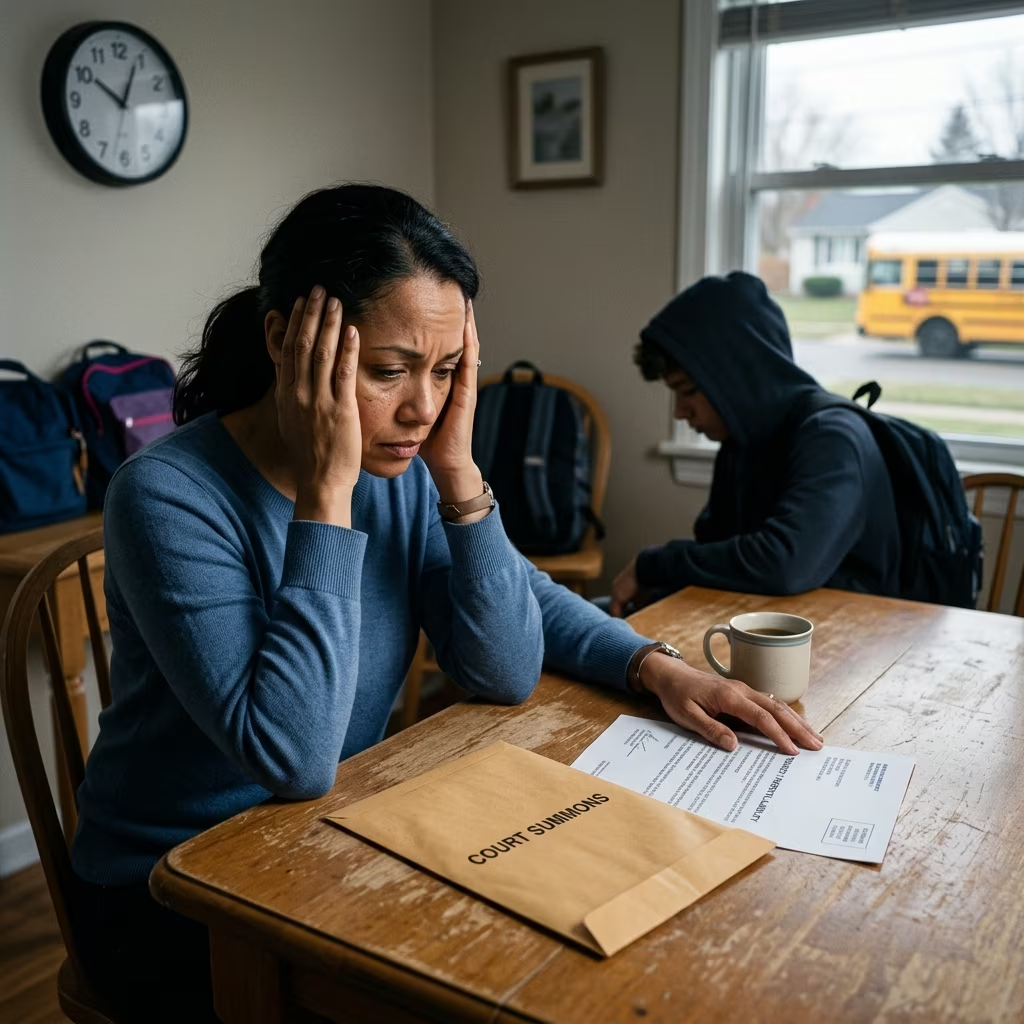
Across the United States, children are required by law to attend school, yet chronic absenteeism and truancy remain persistent problems. While most families see missed school days as an educational concern, in some situations it can escalate into a legal issue for parents. In certain jurisdictions, parents can face fines, probation, and even jail time when they fail to ensure that a school-aged child regularly attends class.
This article explains how compulsory education laws work, when parents can be held criminally responsible for truancy, what penalties they may face, and how families can respond if attendance problems begin to attract attention from schools or authorities.
Understanding Compulsory Education and Truancy
Every U.S. state has compulsory education laws that require children within a certain age range to attend school, be homeschooled, or otherwise receive an approved education. Although the details differ state by state, several common elements appear in most laws:
- Age ranges – Many states require attendance from approximately ages 6 to 16, with some extending to 17 or 18.
- Approved forms of education – Attendance can be satisfied by public school, private school, or documented homeschooling.
- Excused vs. unexcused absences – Illness, disability, religious observance, or emergencies may be excused if properly reported; other absences may be treated as unexcused.
Truancy generally refers to repeated, unexcused absences from school. While definitions vary, states typically specify a threshold after which a child is considered habitually truant, such as a certain number of missed days in a semester or school year.
Who Is Legally Responsible for School Attendance?
Compulsory education laws do more than define what children must do; they also assign responsibility to adults. In many states, parents or guardians are legally obligated to take reasonable steps to ensure their school-aged children attend school.
| Actor | Typical Legal Role |
|---|---|
| Parents / Guardians | Ensure enrollment and regular attendance; respond to school notices; cooperate with interventions. |
| Schools | Track attendance; notify families of absences; offer support services; refer serious cases to authorities. |
| Truancy / Attendance Officers | Investigate chronic absences; contact families; coordinate with social services and juvenile courts. |
| Courts | Hear cases involving chronic truancy; impose orders, fines, probation, or other sanctions on parents or youths. |
Because parents control enrollment, transportation, and daily routines for younger children, they are often the focus when absences continue despite warnings and offers of school support. For teenagers, courts may address both the youth and the parent, depending on the circumstances.
Can Parents Go to Jail Over Their Child’s Truancy?
The short answer is yes, in some states, parents can be jailed for their child’s chronic truancy, but this outcome is relatively rare and usually follows repeated failures to respond to less severe measures.
Reports from civil liberties organizations and local prosecutors show that a number of states have statutes allowing criminal penalties when parents do not ensure that their children attend school. In some places, these penalties have been enforced through arrests and jail sentences.
- In Alabama, an ACLU report noted that parents were indicted and at least one served 60 days in jail after pleading guilty to charges related to truancy.
- In Illinois, local news coverage has highlighted prosecutions where parents faced a Class C misdemeanor for allowing truancy, punishable by up to 30 days in jail and fines.
- In other states such as Michigan, proposed laws have included fines and community service for parents whose children are frequently absent, with existing statutes allowing short jail terms that have historically been rarely enforced.
Even when jail is legally available, prosecutors and courts often treat it as a last resort, used in cases of extreme or persistent noncompliance – for example when a child has missed well over 100 school days and parents have ignored repeated interventions.
Typical Legal Process Before Criminal Charges
Parents are not usually arrested after a child misses a few days of school. Instead, there is often a gradual progression from informal warnings to formal action:
- School-level contacts – Teachers or attendance staff call or email parents when absences accumulate. They may ask for medical notes or explanations.
- Official written notices – After a threshold is reached, schools send letters explaining truancy policies, the number of unexcused absences, and possible consequences.
- Meetings and intervention plans – Families may be invited to meet with administrators, counselors, or attendance officers to develop a plan to improve attendance.
- Referral to truancy officers or social services – If absences continue, the case may be referred for further investigation, which can include home visits and assessments of family needs.
- Court involvement – Persistent problems can lead to juvenile court proceedings focusing on the child, or adult court charges alleging that the parent violated compulsory education or neglect statutes.
By the time criminal charges are filed, parents have typically received multiple opportunities and warnings. Failure to respond, refusal to cooperate, or underlying neglect can significantly increase the likelihood of prosecution.
Common Penalties for Parental Truancy Violations
When parents are found legally responsible for a child’s truancy, possible consequences vary by state but may include:
- Fines – Statutes often authorize monetary penalties. Some states allow fines in the range of tens to hundreds of dollars per offense, and in rare cases, these may escalate if absences continue.
- Probation – Courts may place parents on probation, requiring them to comply with attendance plans, participate in counseling, or complete parenting classes.
- Community service – Some proposals and laws include court-ordered community service hours to emphasize the importance of compliance.
- Short jail terms – In a minority of cases, parents have received jail sentences ranging from a few days to several weeks, especially when violations are repeated or associated with broader neglect.
In practice, incarceration is uncommon. Many courts prefer alternatives that address the underlying problems contributing to truancy, such as transportation, health issues, or family instability.
Factors That Influence Whether Parents Are Charged
Not every truancy situation triggers criminal prosecution. Authorities usually consider multiple factors before deciding whether to pursue charges against parents:
- Severity of absences – Extremely high numbers of missed days, especially over multiple years, are more likely to be treated as serious violations.
- Parent cooperation – Parents who communicate with the school, attend meetings, and follow attendance plans are less likely to be charged, even if some absences continue.
- Underlying causes – Chronic health problems, disabilities, bullying, school safety concerns, or transportation issues may shift the focus toward support rather than punishment.
- History of neglect or abuse – Truancy combined with broader neglect or unsafe living conditions can lead to more serious charges and involvement from child protective services.
- Local policy priorities – Some counties make aggressive use of truancy laws, while others rarely prosecute and instead emphasize social services and school-based interventions.
How Schools and Communities Try to Prevent Truancy
Modern approaches to truancy increasingly recognize that punishment alone rarely solves attendance problems. Many schools and communities focus on early intervention and support:
- Attendance monitoring systems that quickly flag patterns of unexcused absences.
- Counseling and mental health services to help students dealing with anxiety, depression, or other barriers to attendance.
- Family outreach programs that help parents understand attendance rules and connect them with resources such as transportation or childcare support.
- Alternative education options, including flexible schedules or credit-recovery programs for students who have fallen behind.
- Collaborative truancy boards or diversion programs that bring together schools, social workers, and courts to design individualized solutions rather than relying solely on prosecution.
These strategies aim to address the root causes of truancy while preserving the possibility of legal enforcement for situations where parents consistently refuse to engage or where children face significant educational harm.
Practical Steps Parents Can Take if Attendance Is a Problem
Parents who are worried about attendance issues or have already received warnings can take proactive measures to reduce the risk of legal trouble and improve their child’s education:
- Communicate early and often – Contact the school whenever your child is absent, provide documentation when needed, and respond promptly to letters or calls.
- Ask for a meeting – Request a discussion with teachers, counselors, or attendance staff to understand what the school sees and explore solutions.
- Identify obstacles – Be honest about barriers such as transportation, mental health, bullying, or family schedule issues, and ask what help might be available.
- Document efforts – Keep records of medical appointments, emails with the school, and steps you take to improve attendance; these can be important if the situation escalates.
- Seek legal advice if necessary – If you receive court papers or learn that charges may be filed, consult a qualified attorney familiar with local education and juvenile laws.
Staying engaged with the school and demonstrating a good-faith effort to comply with attendance requirements can make a substantial difference if authorities later review the situation.
Balancing Child Welfare, Education, and Parental Rights
Truancy laws sit at the intersection of several important values: the state’s interest in an educated population, parents’ rights to raise their children, and children’s right to safe and supportive schooling.
Supporters of enforcing truancy laws argue that:
- Regular attendance is essential for academic success and long-term economic opportunity.
- Some parents may neglect their children’s education unless there are clear consequences.
- School attendance can provide a protective environment and access to services for vulnerable children.
Critics, including civil liberties organizations, raise concerns about:
- Criminalizing poverty or hardship, particularly when absences stem from illness, unstable housing, or caregiving responsibilities.
- Disproportionate impact on low-income families and communities of color when enforcement is uneven.
- Use of jail for parents whose primary challenge is limited resources rather than disregard for education.
Many jurisdictions attempt to strike a balance by reserving criminal penalties for exceptional cases while expanding preventive services and alternatives to prosecution.
Frequently Asked Questions (FAQs)
1. Is truancy a crime for the child?
In most states, children are not sent to adult jails for truancy itself. Instead, chronic truancy may lead to juvenile court proceedings, where the focus is on rehabilitation and services rather than traditional criminal punishment.
2. Do all states allow parents to be jailed for truancy?
No. Some states include explicit criminal penalties such as fines or jail time for parents who fail to comply with compulsory education laws, while others rely more on civil remedies, diversion programs, or child welfare interventions. Enforcement practices also vary widely among counties.
3. How many absences count as truancy?
The threshold for truancy is set by state law or local policy and can differ dramatically. It may be defined as a specific number of unexcused absences within a month or semester, or as a percentage of missed instructional time. Parents should check local school district policies for precise definitions.
4. What if my child is sick or has a disability?
Absences due to documented medical conditions or disabilities are often treated differently from unexcused truancy. Individualized education plans (IEPs), 504 plans, and other accommodations may include tailored attendance expectations. Working closely with the school and healthcare providers is essential.
5. Can homeschooling avoid truancy issues?
Legally recognized homeschooling or private school enrollment usually satisfies compulsory education requirements, but parents must follow state rules for registration, curriculum, and reporting. Failure to comply with those rules can still result in truancy-related concerns.
6. What should I do if I receive a truancy summons or court notice?
Do not ignore legal documents. Contact the court or an attorney promptly, gather your attendance records, and prepare to explain the steps you have taken to support your child’s education. Courts often take cooperation and documented efforts into account when deciding on outcomes.
References
- Parents Jailed for Children’s Truancy — American Civil Liberties Union. 2000-09-21. https://www.aclu.org/press-releases/parents-jailed-childrens-truancy
- Six Parents Arrested on Criminal Charges for Putting School Aged Children at Risk by Allowing Chronic Truancy Despite School and Law Enforcement Warnings — Orange County District Attorney. 2011-03-08. https://ocdistrictattorney.gov/press/six-parents-arrested-on-criminal-charges-for-putting-school-aged-children-at-risk-by-allowing-chronic-truancy-despite-school-and-law-enforcement-warnings/
- Parents face charges for kids missing hundreds of school days — WSB-TV Atlanta (via YouTube). 2024-01-18. https://www.youtube.com/watch?v=WI4QnoCWF5E
- Parents arrested for kids missing school — FOX 2 St. Louis (via YouTube). 2021-09-15. https://www.youtube.com/watch?v=y4roHSbq59Y
- Can I Go To Jail If My Child Does Not Go To School? — SQ Attorneys. 2024-02-05. https://sqattorneys.com/can-i-go-to-jail-if-my-child-does-not-go-to-school/