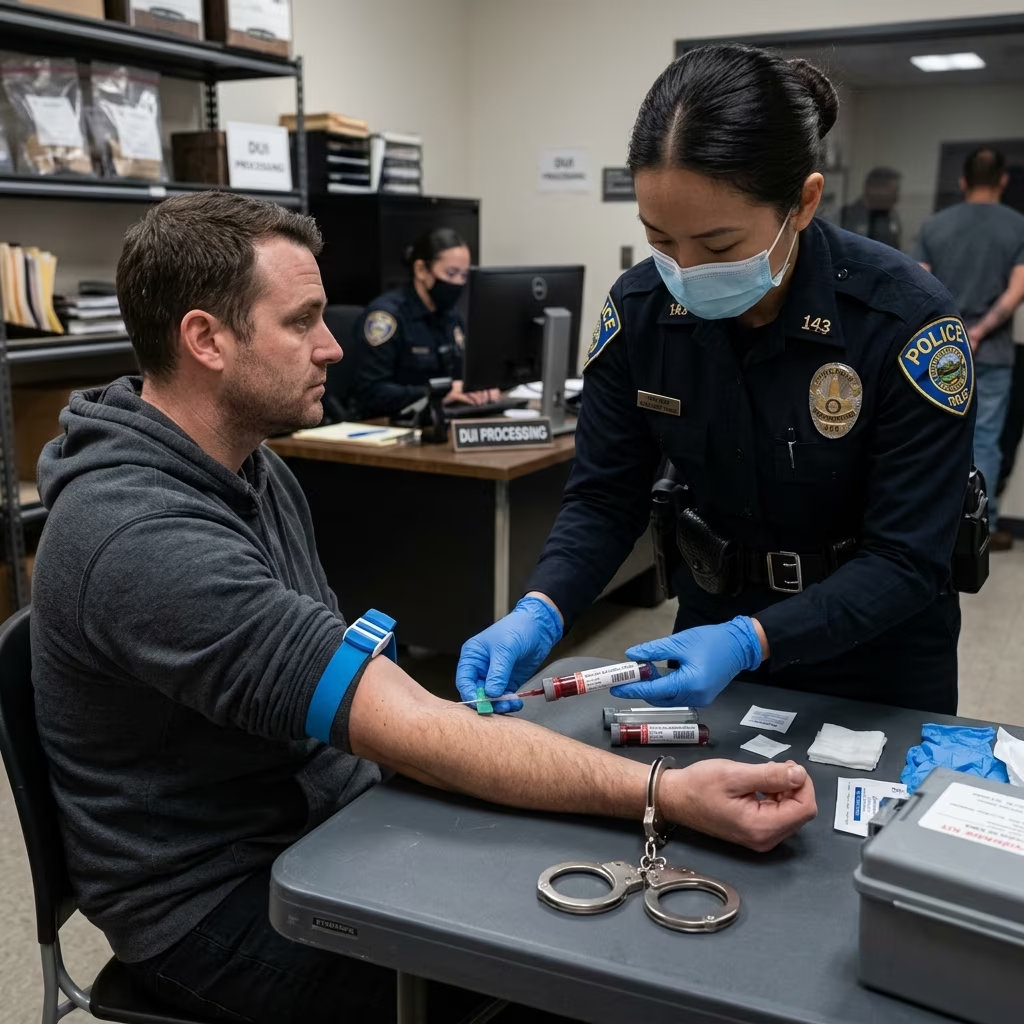
Being investigated for driving under the influence (DUI) is stressful enough. When officers start talking about drawing your blood for testing, it raises serious questions about privacy, bodily integrity, and your constitutional rights. This article explains the legal framework that governs DUI blood draws, when police can lawfully take your blood, and what options you may have if you believe the procedure was illegal.
Why Blood Tests Matter in DUI Investigations
Blood tests are one of several chemical testing methods officers use to determine a driver’s blood alcohol concentration (BAC) or the presence of drugs. Unlike breath tests, blood tests involve piercing the skin and extracting a sample, which courts recognize as a significant intrusion on bodily integrity and privacy.
Because of this intrusive nature, courts treat blood draws as a search under the Fourth Amendment, which protects against unreasonable searches and seizures. This means the government generally must meet heightened legal requirements before ordering or forcing a blood draw.
- Higher accuracy: Blood tests can measure alcohol and many drugs more precisely than breath tests.
- More invasive: A needle puncture is physically intrusive and can raise health or religious concerns.
- Greater privacy impact: Blood contains extensive personal information beyond BAC, which enhances privacy concerns.
Core Legal Principles: Fourth Amendment and Implied Consent
Two main legal concepts shape when police may draw blood in a DUI case: the Fourth Amendment and implied consent laws.
Fourth Amendment: Search and Seizure Rules
Under the Fourth Amendment, a blood draw is a search, and the government must justify it as reasonable. In general, reasonableness requires either:
- A valid search warrant issued by a judge based on probable cause; or
- A recognized exception to the warrant requirement, such as voluntary consent or exigent circumstances.
The U.S. Supreme Court has emphasized that because blood draws are significantly more invasive than breath tests, they usually require a warrant absent a clear exception.
Implied Consent Laws
Most states have DUI-related implied consent statutes. These laws say that by choosing to drive on public roads, you are deemed to have consented to chemical testing if lawfully arrested for DUI.
In practice, implied consent laws often:
- Allow police to request breath, blood, or urine tests after a lawful DUI arrest.
- Impose automatic license suspensions or other penalties if you refuse testing.
- Limit your ability to choose which test (breath vs blood) you will take.
However, implied consent does not give officers unlimited authority. Courts have held that criminal penalties or forced blood draws based solely on implied consent may be unconstitutional without a warrant or other recognized exception.
When Police Usually Need a Warrant for a Blood Draw
In many situations, officers must obtain a search warrant before drawing your blood for DUI evidence.
Probable Cause and Judicial Approval
To secure a warrant, police must present an affidavit to a judge or magistrate showing probable cause that:
- You operated a vehicle; and
- Were under the influence of alcohol or drugs; and
- A blood test will likely provide evidence of that impairment.
If the judge agrees, they issue a warrant authorizing the blood draw. The warrant typically specifies where and by whom the blood will be drawn, and sometimes sets time limits to ensure the sample reflects your condition near the time of driving.
Illustrative Comparison: Breath vs Blood
| Feature | Breath Test | Blood Test |
|---|---|---|
| Invasiveness | Non-invasive; you blow into a device | Invasive; needle puncture and blood extraction |
| Typical Warrant Need | Often no warrant required after lawful arrest | Generally requires warrant unless exception applies |
| Scope of Information | Primarily alcohol content | Alcohol, drugs, and other health-related markers |
| Privacy Concerns | Moderate | High, due to rich personal data in blood |
Exceptions: When Police May Draw Blood Without a Warrant
Although warrants are strongly preferred, there are important exceptions where officers may legally draw blood without first getting a judge’s approval.
Voluntary Consent
If you freely and voluntarily agree to a blood test, officers may proceed without a warrant.
Key points about consent:
- Consent should be clear and not coerced by threats or improper pressure.
- You may have the right to refuse, although refusal usually triggers license or other administrative penalties under implied consent laws.
- If your consent is later found involuntary, the blood test results may be suppressed in court as unconstitutional.
Exigent Circumstances
Exigent circumstances are emergency situations where waiting for a warrant would significantly undermine the investigation. In DUI blood draw cases, courts have recognized exigency when:
- There is probable cause to believe you are impaired; and
- Delays in obtaining a warrant would allow alcohol levels in your blood to dissipate; and
- Other urgent factors, such as crash-related injuries or hospital treatment, limit the time and opportunity to secure a warrant.
Some state statutes codify this principle. For example, North Carolina law allows a warrantless blood test when officers reasonably believe that the delay needed to obtain a warrant would cause the alcohol concentration in your blood to decline significantly. Similarly, Florida law permits mandatory blood testing in crashes involving death or serious bodily injury, and authorizes reasonable force if necessary to obtain the sample.
Mandatory or Forced Blood Draws
In certain serious situations, officers may be authorized to require a blood test—even using reasonable physical force—if specific legal conditions are met.
Serious Injury or Fatal Crashes
Several states have statutes that mandate blood testing when officers have probable cause to believe a driver under the influence caused a crash resulting in death or serious bodily injury.
- In Florida, officers must require a blood test under those circumstances and may use reasonable force if necessary.
- The test does not need to be incidental to a lawful arrest, reflecting the state’s strong interest in investigating serious crashes.
Implied Consent and Criminal Penalties
Implied consent laws often impose civil or administrative penalties (such as license suspension) for refusing a chemical test. However, the Supreme Court has limited states’ ability to impose additional criminal penalties or to perform forced blood draws based solely on implied consent without a warrant.
As a result, many jurisdictions now require either:
- A valid warrant; or
- Clear exigent circumstances; or
- Voluntary consent,
before forcibly drawing blood for DUI evidence.
Who May Draw Your Blood and How It Must Be Done
Even when a blood draw is authorized, the law often specifies how and by whom it must be performed to protect safety and reliability.
Qualified Medical Personnel
States typically require that blood draws in DUI investigations be performed by qualified medical personnel—for example, physicians, nurses, paramedics, or laboratory technicians.
- North Carolina law limits blood draws to physicians, nurses, EMTs, or other medically trained personnel identified as “qualified persons.”
- Florida law similarly restricts withdrawal of blood to physicians, certified paramedics, registered nurses, licensed practical nurses, hospital-authorized staff, and licensed laboratory professionals acting at an officer’s request.
Reasonable Manner Requirement
Laws commonly require that blood be drawn in a reasonable manner, which includes proper sanitary conditions, safe techniques, and minimal unnecessary force.
If the procedure is performed in a way that is excessively painful, dangerous, or degrading, defendants may challenge the admissibility of the test results or claim a violation of due process or constitutional rights.
Your Right to Refuse – And Possible Consequences
In many jurisdictions, you retain the right to refuse a blood test even if you are arrested for DUI, unless there is a valid warrant or clearly applicable exigent circumstances.
Administrative Penalties
Refusal almost always triggers consequences under implied consent statutes, such as:
- Automatic license suspension for a set period (often months or a year).
- Use of your refusal as evidence in administrative hearings regarding your driving privileges.
Criminal and Evidentiary Effects
In some jurisdictions:
- Refusal after a valid warrant may lead to additional criminal charges, such as obstructing justice.
- A court may allow the prosecution to introduce your refusal as evidence suggesting consciousness of guilt, subject to local rules and constitutional limits.
Challenging an Allegedly Illegal Blood Draw
If you or your attorney believe your blood was drawn in violation of constitutional or statutory requirements, there may be ways to challenge the evidence.
Common Grounds for Challenge
- No warrant and no valid exception: Officers lacked both a search warrant and a clear basis for exigent circumstances or voluntary consent.
- Defective warrant: The warrant lacked probable cause, was overly broad, or was not properly issued by a neutral magistrate.
- Invalid consent: Consent was coerced, unclear, or obtained under misleading conditions.
- Improper procedure: Blood was drawn by unqualified personnel or in an unreasonable manner.
Possible Remedies
- Filing a motion to suppress the blood test results as evidence obtained in violation of the Fourth Amendment.
- Challenging administrative license penalties based on unlawful testing procedures.
- Seeking independent analysis of retained blood samples, where permitted, to contest accuracy or contamination.
In some jurisdictions, defendants can arrange for independent testing of their blood sample through a separate laboratory, which may reveal discrepancies in the government’s analysis.
Practical Tips If Police Request a Blood Test
The right decision in a specific case depends on local law and your circumstances. However, there are general considerations people often weigh when confronted with a blood test request.
- Know that refusal has consequences: Implied consent laws often impose automatic license suspensions and other penalties for refusing testing.
- Understand the warrant issue: If officers already have a search warrant, refusal may lead to additional charges and does not necessarily stop them from obtaining your blood.
- Consider medical factors: If you have conditions making blood draws risky, inform medical staff and officers, though this does not always prevent testing.
- Avoid resisting physically: Physical resistance can lead to separate criminal charges and increase risk of injury.
- Seek legal counsel quickly: An attorney can evaluate whether the blood draw was lawful and advise on strategies to protect your rights.
Frequently Asked Questions About DUI Blood Draws
Can I demand a blood test instead of a breath test?
Often, you cannot choose the type of test. Many states allow officers to decide whether to use breath, blood, or urine. If you refuse the test the officer requests but offer to take a different one (such as blood instead of breath), that may still count as a refusal under implied consent laws.
Are warrantless blood draws always illegal?
No. Warrantless blood draws can be lawful if they fit within recognized exceptions, such as voluntary consent or exigent circumstances. Courts evaluate whether officers reasonably believed a delay for a warrant would lead to the loss of critical evidence, such as dissipating alcohol in the blood.
Can police use physical force to take my blood?
In some serious cases, such as crashes involving death or serious bodily injury where there is probable cause of DUI, statutes may allow officers to use reasonable force to obtain a blood sample. The force must be proportionate and the procedure must be conducted in a medically reasonable way by qualified personnel.
Who decides if the blood draw evidence is admissible?
The trial court judge decides whether the blood test results can be used as evidence. Your attorney can file motions challenging the legality of the blood draw, and the judge will review the facts, applicable statutes, and constitutional requirements to rule on admissibility.
What if hospital staff drew my blood for medical reasons?
When you are taken to a hospital after a crash, medical staff may draw blood for treatment purposes without police involvement. In some jurisdictions, law enforcement may later seek access to those records or samples through subpoenas or warrants. Whether and how those results can be used in a DUI case depends on state law, privacy protections, and hospital policies.
References
- Understanding Your Rights: Blood Draw Search Warrant in DUI Cases — Meltzer & Bell, P.A. 2023-05-01. https://www.meltzerandbell.com/news/understanding-your-rights-blood-draw-search-warrant-in-dui-cases/
- Illegal Blood Draw in a DUI Case — Law Office of Aaron M. Black, PLLC. 2022-09-15. https://www.azduilaws.com/dui/chemical-testing/illegal-blood-draw-in-a-dui-case/
- DUI Blood Draws: Does Consent Eliminate the Search Warrant Requirement? — Gambone Law. 2019-06-10. https://gambonelaw.com/library/dui-blood-consent-search-warrants/
- Can I request and/or demand a DUI Blood Test? — Avvo Legal Answers. 2013-02-20. https://www.avvo.com/legal-answers/can-i-request-and-or-demand-a-dui-blood-test–1662436.html
- DUI Blood Test: Overview and Laws — Matthew Gilman Law. 2021-11-05. https://www.matthewgilmanlaw.com/blog/dui-blood-test-overview-and-laws/
- Blood Draws in DWI Cases — North Carolina Criminal Law Blog, UNC School of Government. 2009-12-02. https://nccriminallaw.sog.unc.edu/blood-draws-in-dwi-cases/
- Florida Statutes §316.1933 – Blood test for impairment or intoxication in cases of death or serious bodily injury — Florida Legislature, Online Sunshine. 2023-01-01. https://www.leg.state.fl.us/statutes/index.cfm?App_mode=Display_Statute&URL=0300-0399/0316/Sections/0316.1933.html