
When Can Police Take Your Blood After a DUI Arrest?
A practical guide to warrants, consent, and constitutional limits on DUI blood tests after Supreme Court rulings.
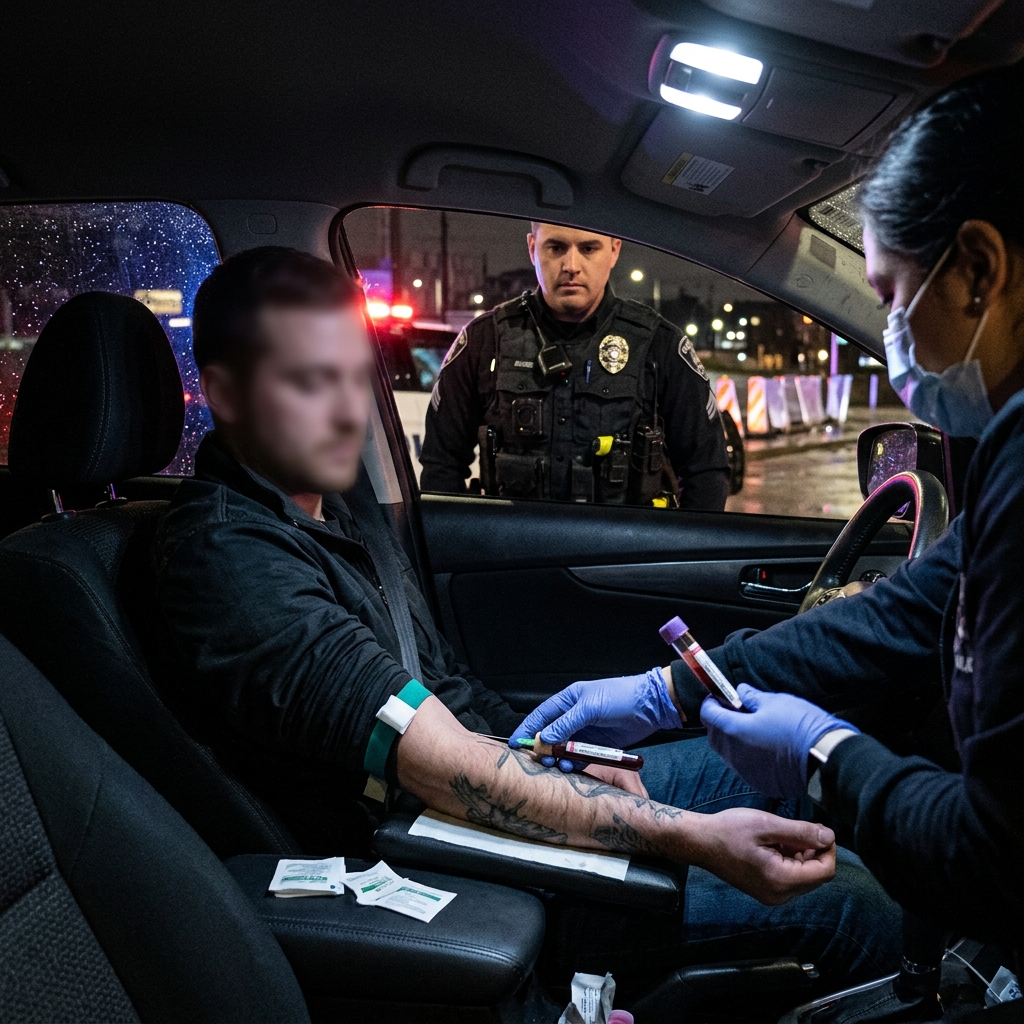
Traffic stops for suspected drunk driving often lead to chemical testing, and in serious cases officers may seek a sample of your blood. Whether they can do that without first getting a warrant is a constitutional question the U.S. Supreme Court has confronted several times in the last decade. This article explains the current legal landscape, how blood tests differ from breath tests, and what those differences mean for your rights if you are arrested for driving under the influence.
Why DUI Blood Tests Raise Special Constitutional Concerns
The Fourth Amendment to the U.S. Constitution protects people against unreasonable searches and seizures by the government. A blood draw is more than just a medical procedure—it is considered a search because it involves physically penetrating the body and analyzing highly personal biological information. The Supreme Court has repeatedly acknowledged that this kind of intrusion triggers the highest level of constitutional scrutiny.
In modern DUI enforcement, police typically rely on two types of chemical tests:
- Breath tests (breathalyzers), which estimate blood alcohol concentration by analyzing exhaled air.
- Blood tests, which directly measure alcohol and sometimes other substances in a sample drawn from a vein.
While both are searches under the Fourth Amendment, the Supreme Court has concluded that blood tests are significantly more intrusive than breath tests and therefore demand stronger justification when done without a warrant.
Key Supreme Court Cases Shaping DUI Blood Test Rules
Several landmark cases define when warrantless blood draws can be lawful in DUI investigations. Understanding these decisions helps clarify when an officer may lawfully obtain your blood and when they must seek a warrant.
Schmerber v. California: Recognizing Blood Draws as Searches
One of the earliest cases, Schmerber v. California (1966), involved a driver injured in an accident who was subjected to a blood test without a warrant. The Court held that the blood draw was indeed a search but allowed it under the specific circumstances: the officer reasonably believed that the delay to obtain a warrant would result in the destruction of evidence because alcohol was dissipating in the suspect’s blood.
Schmerber established two important principles:
- A compulsory blood draw is a Fourth Amendment search.
- Such a search could be justified without a warrant in a genuine emergency where evidence would be lost during the time needed to secure judicial approval.
Missouri v. McNeely: No Automatic Emergency in Every DUI Case
As DUI enforcement became routine, some states argued that the natural breakdown of alcohol in the body created a per se emergency in every drunk driving case. In Missouri v. McNeely (2013), the Supreme Court rejected that idea.
Justice Sotomayor’s opinion explained that the mere fact that alcohol dissipates does not automatically authorize a warrantless blood test. Instead, courts must look at the totality of the circumstances in each case to decide whether a true exigency exists.
- If officers can reasonably obtain a warrant without undermining the effectiveness of the investigation, they are constitutionally required to do so.
- Only when specific facts show that waiting for a warrant would jeopardize critical evidence or safety can a warrantless blood draw be valid.
Birchfield v. North Dakota: Breath vs. Blood, and Refusal Laws
In Birchfield v. North Dakota (2016), the Court drew a sharp line between breath tests and blood tests carried out after a DUI arrest.
| Type of Test | Intrusiveness | Warrant Requirement | Criminal Penalties for Refusal |
|---|---|---|---|
| Breath test | Relatively minimal; no physical piercing of the skin. | Generally allowed without a warrant as a search incident to a lawful DUI arrest. | States may criminalize refusal to submit to a breath test, subject to other constitutional limits. |
| Blood test | Highly intrusive; involves a needle and laboratory analysis of bodily fluid. | Typically requires a warrant unless a recognized exception applies (such as consent or exigent circumstances). | States may not make it a crime to refuse a warrantless blood test based solely on implied consent statutes. |
Birchfield emphasizes that motorists cannot be treated as having consented to a blood draw “on pain of committing a criminal offense” just by the act of driving in a state. Implied consent laws must operate within Fourth Amendment limits.
When Police Still May Draw Blood Without a Warrant
Despite these protections, there are still limited situations where officers may lawfully obtain a blood sample without first securing a warrant. Courts typically recognize three main avenues:
- Valid search warrant (the default requirement in most DUI blood cases).
- Voluntary consent from the driver to the blood draw.
- Exigent circumstances that make waiting for a warrant objectively unreasonable.
1. Consent: Agreeing to a Blood Draw
One established exception to the warrant requirement is free and voluntary consent. If an individual clearly agrees to have blood drawn, and that consent is not the product of coercion or misrepresentation, courts may uphold the procedure without a warrant.
Important aspects of consent in DUI blood cases include:
- The consent must be an actual choice, not merely compliance with a threat of criminal punishment for refusal.
- Officers cannot rely solely on implied consent statutes to treat every driver as having pre-authorized a blood draw under penalty of criminal liability.
- Judges may look at the driver’s condition, level of understanding, and the circumstances of the encounter to decide whether consent was truly voluntary.
2. Exigent Circumstances: Emergencies Justifying Immediate Action
Another major exception is the presence of exigent circumstances—situations where the needs of law enforcement are so urgent that obtaining a warrant would be impractical and risk serious harm or loss of evidence.
Examples that courts might treat as exigent include:
- A serious crash with multiple injuries where officers must divide their attention between emergency response and evidence preservation.
- Remote locations or limited judicial access that substantially delay any attempt to secure a warrant.
- Complex medical treatment beginning immediately, such that delaying the blood draw would make later testing impossible or unreliable.
However, based on McNeely, the natural dissipation of alcohol alone—without additional case-specific factors—is not enough to establish an emergency in every DUI investigation. Courts require officers to show clear and convincing evidence that waiting for a warrant was unreasonable when they rely on exigency.
Implied Consent Laws After Birchfield
Most states have so-called implied consent statutes. These laws generally say that by driving on public roads, motorists are deemed to have consented to chemical testing when lawfully arrested for DUI. Refusing testing can lead to administrative consequences, such as license suspension.
Birchfield forced states to reconsider how implied consent operates for blood tests:
- States may still impose civil or administrative penalties (like loss of driving privileges) for refusing a blood test.
- They may not automatically treat refusal as a criminal offense when the blood draw itself would violate the Fourth Amendment without a warrant.
- Implied consent statutes must be read in harmony with constitutional limits on bodily intrusions.
Some courts and legislatures have since revised or interpreted their implied consent laws to ensure they do not authorize blanket warrantless blood draws based solely on probable cause to suspect DUI.
Practical Scenarios: How These Rules Play Out
Routine DUI Stop With No Accident
In a typical traffic stop where an officer suspects drunk driving but there is no crash or injury:
- Police can usually require a breath test without a warrant as a search incident to arrest.
- If they want a blood test, they generally must either obtain a warrant, secure voluntary consent, or identify specific exigent circumstances.
- Refusing a breath test may be subject to criminal penalties in some jurisdictions; refusal of a warrantless blood test cannot itself be criminalized solely under implied consent.
Serious Collision Involving Injury or Death
After a major crash, officers may suspect DUI and wish to obtain blood while emergency medical treatment is underway. Some statutes purport to authorize warrantless blood draws in this context, but recent decisions question such broad authority.
- Officers still must consider whether they can reasonably obtain a warrant without undermining the investigation.
- Where emergency medical care, time pressures, or other factors create a true exigency, a warrantless draw may be upheld.
- Blanket rules authorizing blood draws based solely on probable cause and hospital treatment, without case-specific exceptions, have faced constitutional challenges.
What Drivers Should Understand About Their Rights
These Supreme Court decisions and subsequent state cases have practical implications for drivers. While this article does not provide legal advice, it highlights key points that people should understand about DUI blood tests.
- Blood tests are not routine. They involve substantial bodily intrusion and ordinarily require a warrant or a recognized exception.
- Breath tests are treated differently. Police can typically require a breath test without a warrant following a lawful DUI arrest.
- Refusal has consequences. Even though states cannot criminalize refusal of a warrantless blood test, they can often suspend your license or impose other civil penalties.
- Exigency is case-specific. Courts look at the particular facts, not a one-size-fits-all rule, to determine whether an emergency justified skipping the warrant.
Frequently Asked Questions (FAQs)
1. Is a DUI blood test always unconstitutional without a warrant?
No. A warrant is the default requirement, but a blood test may still be constitutional if the driver voluntarily consents or if specific exigent circumstances make obtaining a warrant impractical and dangerous to the effectiveness of the investigation.
2. Can police force me to submit to a breath test?
Under Birchfield, the Supreme Court held that breath tests may be administered as searches incident to a lawful DUI arrest without a warrant. States may also impose criminal penalties for refusing a breath test, although the exact rules vary by jurisdiction.
3. What happens if I refuse a blood test?
A state generally may not make it a crime to refuse a warrantless blood test based purely on implied consent. However, your refusal can still result in administrative penalties, such as suspension of your driver’s license, and prosecutors may argue that the refusal suggests consciousness of guilt.
4. Do implied consent laws mean I already agreed to a blood draw?
Implied consent laws usually state that drivers agree to chemical testing as a condition of using the roads, but Birchfield limits how far this concept can go. You cannot be deemed to have consented to an invasive blood draw under threat of criminal punishment where the Fourth Amendment would otherwise require a warrant.
5. Can states still change their DUI testing laws?
Yes. Legislatures may revise DUI and implied consent statutes so long as they respect the constitutional distinction between breath and blood tests, the need for warrants in most blood cases, and the case-by-case nature of exigent circumstances.
References
- Birchfield v. North Dakota, 579 U.S. 438 — U.S. Supreme Court. 2016-06-23. https://www.koffellaw.com/blog/supreme-court-limits-warrantless-dui-blood-tests/
- Missouri v. McNeely, 569 U.S. 141 — U.S. Supreme Court. 2013-04-17. https://www.law.cornell.edu/supremecourt/text/11-1425
- Birchfield v. North Dakota – Warrantless Breath and Blood Tests — Dale Savage Law Firm. 2016-06-24. https://www.dalesavage.com/do-police-need-a-warrant-to-draw-blood/
- DUI Blood Draws: Does Consent Eliminate the Search Warrant? — Gambone Law. 2017-09-01. https://gambonelaw.com/library/dui-blood-consent-search-warrants/
- Exigent Circumstances for a Warrantless DUI Blood Draw — Sammis Law Firm. 2016-08-05. https://criminaldefenseattorneytampa.com/dui/chemical-testing/blood-test/exigent-circumstances/
- Commonwealth v. [J-43-2024] — Supreme Court of Pennsylvania. 2024-06-05. https://www.pacourts.us/assets/opinions/Supreme/out/J-43-2024mo%20-%20106406333315219915.pdf
Similar Articles








Read full bio of Sneha Tete




