
When Can Police Search a Home Without a Warrant?
Understanding consent, co‑occupant rights, and the narrow exceptions that allow warrantless home searches under the Fourth Amendment.
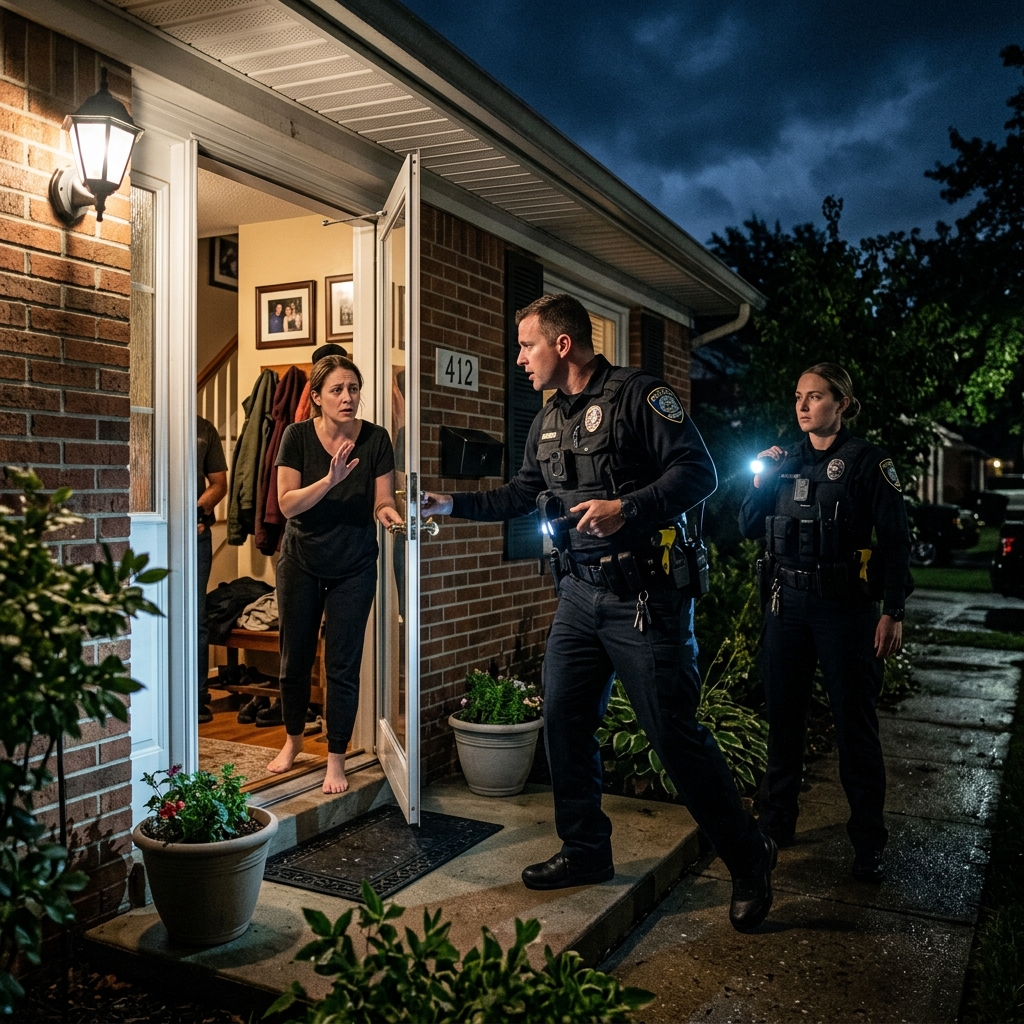
The Fourth Amendment places strong limits on government intrusion into the home, making searches without a warrant generally presumptively unreasonable. Yet the Supreme Court has recognized narrow situations where officers may enter and search a residence without first obtaining a warrant. This article explains those exceptions, with a special focus on situations where one occupant consents to a search while another objects.
Using major Supreme Court decisions as a guide, we will explore:
- Why the home receives the highest level of constitutional protection
- How consent searches work and who can give valid consent
- What happens when co‑occupants disagree about letting police in
- How emergency situations and other exceptions justify warrantless entries
- Practical implications for residents, police, and courts
The Home at the Center of the Fourth Amendment
The Fourth Amendment declares the right of the people to be secure in their persons, houses, papers, and effects against unreasonable searches and seizures. The word “houses” is central: historically, the framers reacted against British use of broad, open‑ended warrants that allowed officials to search homes freely for evidence of tax violations. This history helps explain why searches in a home, more than virtually anywhere else, generally require a warrant issued by a neutral magistrate based on probable cause.
Accordingly:
- Searches and seizures inside a home without a warrant are presumptively unreasonable.
- Only a few, narrowly defined exceptions can overcome this presumption.
- Courts ask whether the person had a reasonable expectation of privacy in the area searched, which is especially strong in a residence.
This baseline rule sets the stage: police usually must seek a warrant, and deviations from that requirement are supposed to be limited and well justified.
Consent as a Key Exception to the Warrant Requirement
One long‑standing exception occurs when officers obtain voluntary consent to search from someone with authority over the premises. If an occupant freely agrees to a search, the Supreme Court has held that a warrant is not required, and the search may be reasonable under the Fourth Amendment.
What Counts as Valid Consent?
For consent to justify a warrantless search, two main conditions must be met:
- Voluntariness: The consent must be the product of free choice, not coercion or intimidation. Courts evaluate voluntariness under a totality of the circumstances test, looking at factors such as the setting, police conduct, and the person’s characteristics.
- Authority: The person giving consent must have common authority or a sufficient relationship to the place being searched, or officers must reasonably believe that they do.
Importantly, the Supreme Court has stated that the government need not prove the consenting person knew they could refuse. Knowledge of the right to say no is a relevant factor, but not a strict requirement for valid consent.
Third‑Party and Co‑Occupant Consent
Consent raises special issues in shared living spaces. The Court has repeatedly addressed situations where one resident consents and another does not. Some key principles emerge from those decisions:
- Any person with common authority over the premises may consent to a search of areas jointly controlled.
- When someone shares access to a space, that person assumes the risk that a co‑occupant might allow police to enter.
- Consent can remain valid even when another occupant later objects, if that occupant was absent at the time of the search.
These ideas reflect practical realities: police often encounter multiple residents, and requiring unanimous approval for any consent search would significantly limit this exception. However, the Supreme Court has also drawn a line to protect the rights of a present and objecting occupant.
When Co‑Occupants Disagree: The Objecting Resident Rule
The Supreme Court has taken a nuanced approach when two residents disagree about letting officers search their shared home. The Court’s decisions distinguish between situations where the objecting tenant is physically present and those where they are absent.
| Co‑Occupant Situation | Can Police Rely on Consent? | Key Principle |
|---|---|---|
| One occupant consents; the other is not present to object | Generally yes | Sharing authority includes risk that another may allow access |
| One occupant consents; another occupant is present and explicitly objects | No, as to the objector | A present inhabitant’s express refusal is dispositive as to that person |
| Objecting occupant later removed or absent; remaining occupant consents | Consent may be sufficient, depending on circumstances | Subsequent consent can permit a search when the objector is not on scene |
The Rule Protecting a Present Objector
In interpreting these conflicts, the Court has emphasized the social expectations we would have if a private visitor, rather than police, knocked at the door. If one resident says “come in” while another stands nearby and says “stay out,” ordinary social norms suggest the visitor would not enter over the express objection of a present co‑occupant. Translating that intuition into constitutional doctrine, the Court has held:
- A physically present inhabitant’s explicit refusal of consent controls as to that person, regardless of a fellow occupant’s permission.
- Police are not required to make “affirmative steps” to discover whether any other resident objects if one occupant has already given consent.
- But once an occupant is present and clearly says no, officers cannot treat another resident’s consent as sufficient to override that refusal, at least with respect to the objecting tenant.
This rule strengthens the privacy rights of co‑occupants by ensuring that a present resident’s refusal is meaningful, not merely symbolic.
Absent Objectors and Conflicted Consent
The Court has also considered harder cases where police remove an objecting tenant—for example, by making an arrest—and later obtain consent from another resident. In those circumstances, consent may validate a search even though the originally objecting occupant is no longer present when officers return.
Scholars have noted that this framework creates a form of “conflicted consent”: police cannot enter based on consent alone while the objector is standing in the doorway and saying no, but may be able to rely on consent once that person is gone, depending on the legitimacy of the removal. This interplay raises sensitive questions about police incentives and the boundaries of the consent doctrine.
Other Narrow Exceptions to the Warrant Requirement
Consent is not the only path for a warrantless home entry. Over time, the Supreme Court has recognized a small set of circumstances where the urgency or nature of the situation makes a warrantless entry objectively reasonable under the Fourth Amendment.
Emergency Aid and Exigent Circumstances
One of the most important exceptions involves emergencies. The Court has held that officers may enter a home without a warrant when they have an objectively reasonable basis for believing that an occupant is seriously injured or imminently threatened with such injury. This is often called the emergency aid or exigent circumstances exception.
Under this doctrine:
- Officers may act to render immediate assistance or prevent serious harm without waiting to secure a warrant.
- The entry must be limited to what is reasonably necessary to address the emergency; it does not justify a broader, evidence‑gathering search of the home.
- Courts evaluate the officers’ belief from an objective standpoint: would a reasonable officer in the same situation think someone inside was in danger?
Exigent circumstances can also include situations like hot pursuit of a fleeing felon or imminent destruction of evidence, though the scope of those doctrines is carefully constrained.
Arrests and Administrative Warrants
While the Supreme Court has allowed the use of administrative warrants in some regulatory settings, those warrants do not automatically authorize entry into a private home for law enforcement purposes. Courts have stressed that to enter a residence to make an arrest, the government typically must have an arrest warrant specific to the person or qualify under a narrow exception such as emergency aid.
Recent decisions and commentary highlight tension around attempts by agencies to rely on non‑judicial or administrative warrants for home entries, especially in the immigration context. These disputes reinforce the central role of judicially issued warrants and the limits on alternative mechanisms.
Balancing Privacy, Shared Living, and Law Enforcement Needs
The law of warrantless home searches reflects a continuous balancing act. Courts seek to uphold the core privacy protections of the Fourth Amendment while acknowledging that real‑world policing requires some flexibility.
Key themes include:
- Respect for the home: The home is treated as the most protected space, with a strong presumption against warrantless entry.
- Shared authority: People who share living spaces accept some risk that another occupant may consent to a search, but a present objector retains powerful rights.
- Clear, workable rules: The Court favors relatively simple standards—for example, treating an express refusal from a present resident as dispositive—to guide officers in the field.
- Narrow exceptions: Emergency situations and other exigencies allow warrantless entry only to the extent necessary, not as a general license to conduct broad searches.
These doctrines continue to evolve as new disputes reach the courts, including cases involving modern technology, multi‑unit housing, and complex living arrangements.
Practical Takeaways for Residents and Practitioners
For residents, attorneys, and law enforcement officers, several practical lessons emerge from the Supreme Court’s decisions on consent and warrantless home searches:
- If you share a home, any co‑occupant with common authority may permit officers to enter and search shared areas, unless you are physically present and clearly refuse.
- A clear, verbal objection from a present resident can block a consent‑based search as to that person, even if another occupant gives permission.
- Police are not required to seek out all co‑occupants before acting on consent; they may rely on consent from one resident unless a present objector makes their refusal known.
- Emergency situations—such as apparent threats to life or serious injury—can justify immediate entry, but officers must limit their actions to resolving the emergency.
- Administrative or internal agency warrants generally do not carry the same weight as judicial warrants when it comes to entering private homes.
Understanding these rules can help individuals better assess their rights, law enforcement agencies craft constitutionally sound policies, and courts evaluate challenges to warrantless searches.
Frequently Asked Questions
1. Can police search my home if my roommate says yes and I say no?
If you are physically present and clearly refuse consent, your objection generally controls as to you, even if your roommate agrees to the search. The police cannot rely solely on your roommate’s consent to override your express refusal with respect to your own Fourth Amendment rights. However, the precise outcome may depend on the areas searched and other facts.
2. Do officers have to tell me I can refuse consent?
No. The Supreme Court has held that voluntariness is assessed under the totality of the circumstances and does not require proof that the person knew they could refuse. Knowledge of the right to decline is relevant but not determinative.
3. What if I’m not home when police ask my spouse to consent to a search?
When a co‑occupant with common authority consents and the other occupant is not present to object, courts have usually allowed the search to proceed. The absent occupant is considered to have assumed the risk that a co‑occupant might allow officers into shared areas.
4. Can police enter without a warrant during an emergency?
Yes, if officers have an objectively reasonable basis to believe that someone inside is seriously injured or in imminent danger, they may enter without a warrant to provide emergency aid. Their actions must be tailored to the emergency and do not automatically authorize a broad search for evidence.
5. Are administrative warrants enough to let officers into my home?
Not usually. Courts have emphasized that entering a home to conduct an arrest or search typically requires either a judicial warrant or a recognized exception like exigent circumstances. Administrative warrants used in regulatory contexts do not automatically satisfy the Fourth Amendment standard for home entries.
References
- Search and Seizure: An Overview of the Supreme Court’s Decisions — Congressional Research Service. 2006-09-01. https://www.everycrsreport.com/reports/RL33664.html
- Search & Seizure Supreme Court Cases — Justia. 2024-01-01 (approx. updated). https://supreme.justia.com/cases-by-topic/search-seizure/
- Conflicted Consent When the Objecting Tenant Is Absent — Harvard Law Review. 2014-10-01. https://harvardlawreview.org/wp-content/uploads/2014/10/fernandez_v_california.pdf
- Case v. Montana, 24-624 — Supreme Court of the United States. 2026-01-14. https://www.supremecourt.gov/opinions/25pdf/24-624_b07d.pdf
- DHS Warrantless Home Entry Memo’s Fourth Amendment Problem — Brennan Center for Justice. 2024-03-01. https://www.brennancenter.org/our-work/analysis-opinion/dhs-warrantless-home-entry-memos-fourth-amendment-problem
- The Supreme Court’s Refusal to Allow Searches of the Home Based on Disputed Consent — Oklahoma Law Review. 2007-01-01. https://digitalcommons.law.ou.edu/cgi/viewcontent.cgi?article=1204&context=olr
Similar Articles








Read full bio of medha deb




