
When Calling the Police Becomes a Hate Crime
Exploring when weaponized 911 calls cross the line from biased harassment into criminal hate conduct under modern law.
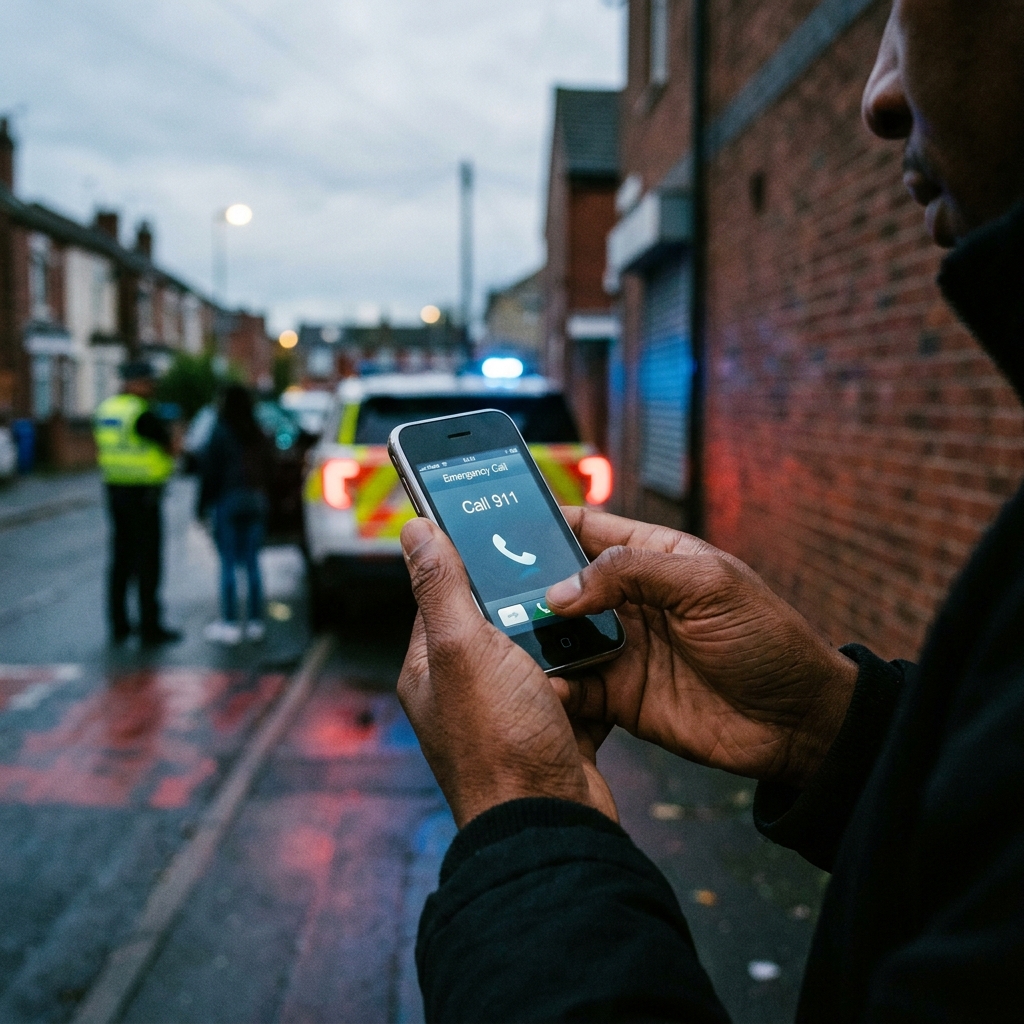
In most situations, contacting the police is a routine way to report crime, seek protection, or resolve emergencies. Yet in recent years, a growing number of cases show people dialing 911 not to report legitimate danger, but to target others based on race, religion, or other protected characteristics. This trend raises a complex legal question: can a weaponized police call ever be treated as a hate crime?
Understanding What Counts as a Hate Crime
To understand whether a biased call to law enforcement can be a hate crime, it is crucial to first grasp how the law defines hate crimes. Under U.S. federal guidance, a hate crime generally involves a criminal offense motivated wholly or partly by bias against a protected characteristic such as race, religion, national origin, disability, gender or sexual orientation. A similar definition is used by many police agencies and universities.
Key elements usually include:
- A predicate offense — there must be an underlying crime, such as assault, threats, property damage, or false reporting.
- Bias motivation — the offender’s actions are driven, at least in part, by hostility toward a protected group.
- Selection of the victim — the victim is targeted because of actual or perceived membership in that group.
By contrast, hateful or hostile speech, without more, is often classified as a hate incident rather than a hate crime, because it may not meet the threshold of criminal conduct.
Bias, Hostility and the Role of Intent
Intent plays a central role in hate crime analysis. Police and prosecutors usually have to show that the suspect acted because of bias against a protected trait. In the United Kingdom, for example, prosecutors treat any criminal offence as a hate crime if the offender either demonstrates hostility based on race, religion, disability, sexual orientation or transgender identity, or is motivated by such hostility.
Evidence of bias might include:
- Derogatory slurs or statements made during the incident.
- Social media posts or prior threatening messages directed at the group.
- Patterns of behavior showing repeated targeting of similar victims.
When the alleged misconduct is a phone call to police, the caller’s words, tone, and circumstances become critical clues in determining whether the call was genuinely about public safety or primarily about expressing prejudice.
From Hate Incident to Hate Crime: Why the Underlying Offense Matters
Not every biased act is criminal. Law enforcement training materials commonly distinguish between hate incidents and hate crimes.
- Hate incidents may involve offensive speech, disrespectful behavior, or discriminatory treatment that does not rise to the level of a criminal offense.
- Hate crimes require a criminal offense, such as assault, vandalism, threats, or other conduct defined in penal codes, combined with bias motivation.
When a person calls 911, the conduct will usually be analyzed under existing criminal statutes, such as false reporting or misuse of emergency services. If the elements of those crimes are met and bias can be proven, the call might be eligible for hate crime classification.
Weaponizing 911 Calls: What Makes These Situations Unique?
Public debate over racially motivated 911 calls has focused on scenarios where individuals contact police about ordinary activities — such as walking, sitting in a park, or entering a building — simply because they view the person as suspicious due to race or other identity. Some policymakers argue that these calls reflect efforts to use law enforcement as a tool of intimidation or control, rather than genuine concern for safety.
Concerns include:
- Risk of escalation — unnecessary police encounters can expose targeted individuals to detention, force, or arrest.
- Community impact — repeated biased calling contributes to fear, humiliation, and distrust of institutions, similar to other hate incidents.
- Resource diversion — emergency responders may be tied up by non-emergency calls driven by prejudice, reducing availability for true emergencies.
These harms have prompted legal reform discussions about how best to respond to racially motivated 911 calls.
Existing Hate Crime Laws and Their Application to Police Calls
Traditional hate crime statutes were primarily designed to address acts like violence, threats, and property destruction. Many state and federal laws do not explicitly reference calling the police. However, prosecutors can sometimes rely on more general criminal provisions.
Common underlying offenses that may apply include:
- False reporting to law enforcement — knowingly providing false information about a crime or emergency.
- Harassment or stalking — repeatedly targeting an individual with unwanted conduct, potentially including repeated biased calls.
- Disorderly conduct or misuse of emergency systems — using 911 for non-emergency purposes in violation of statute.
If prosecutors can show that such behavior was motivated by hostility toward the victim’s race, religion, or other protected trait, the offense may be eligible for hate crime enhancement or classification under state law.
Emerging Legislative Responses to Biased 911 Calls
Growing recognition of the harms caused by racially motivated 911 calls has led some lawmakers to propose new statutes aimed directly at this conduct. In California, for example, legislators introduced proposals to criminalize racially motivated 911 calls, framing them as a form of discriminatory misuse of public safety systems.
Such proposals typically seek to:
- Create a specific offense for knowingly making a biased emergency call without legitimate basis.
- Allow civil remedies for victims who experience discrimination, emotional distress, or reputational harm as a result of the call.
- Clarify that targeting someone for police intervention based solely on race or perceived membership in a protected group can be treated similarly to other discriminatory acts.
These debates illustrate how existing hate crime frameworks are being adapted to new forms of bias-driven behavior, including the misuse of emergency reporting.
Police Discretion, Abuse of Hate Crime Statutes, and Fair Application
Any extension of hate crime laws to new kinds of conduct must grapple with how those laws are enforced. Civil liberties advocates have raised concerns that law enforcement sometimes uses hate crime statutes in ways that diverge from their original purpose, including charging suspects for hostile language directed at officers themselves.
Potential issues include:
- Overcharging — treating verbal outbursts against police as hate crimes, even when the conduct is closer to “contempt of cop” than targeted bias.
- Inconsistent enforcement — relying heavily on police perception of hostility, which may reflect implicit biases or misunderstandings.
- Chilling effect — risk that enhanced penalties may discourage people from protesting or criticizing authorities.
These concerns underline the importance of clear statutory definitions and training for officers and prosecutors on distinguishing genuine hate-motivated conduct from ordinary conflict or disrespect.
How Law Enforcement Is Trained to Handle Hate Crimes
Police agencies increasingly receive guidance on investigating and responding to hate crimes. Professional organizations emphasize that hate crimes have a unique impact not only on individual victims but on entire communities.
Recommended practices for officers include:
- Recognizing indicators of bias motivation, such as slurs, symbols, or patterns of targeting.
- Documenting the circumstances and motives surrounding the event, including statements made during a 911 call.
- Coordinating with victim advocates and community organizations to support victims.
- Establishing zero-tolerance policies for prejudice within the department and promoting training on diversity and bias reduction.
When an allegedly biased 911 call is reported, officers may have to investigate both the caller’s intent and the reality of the situation on the ground to determine whether any crime occurred and whether hate crime classification is appropriate.
Victims, Witnesses, and Reporting Hate-Motivated Conduct
People who believe they have been targeted by a biased police call often face uncertainty about how to respond. Federal guidance on hate crimes emphasizes that individuals should report suspected hate crimes to local police and, where appropriate, to federal authorities.
Typical steps include:
- In emergencies, dialing 911 or calling local police for immediate assistance.
- Seeking to file a formal report documenting the incident, including details of the call, the caller’s statements, and any harm suffered.
- Reporting the incident to federal civil rights authorities when the conduct may implicate civil rights protections.
- Connecting with victim support services and advocacy groups for legal and emotional assistance.
For law enforcement, collecting accurate data on hate-motivated incidents helps inform policy decisions and resource allocation, including whether further legislative changes are needed.
Comparing Traditional Hate Crimes and Biased 911 Calls
| Aspect | Traditional Hate Crime | Biased 911 Call |
|---|---|---|
| Underlying conduct | Violence, threats, vandalism, or other direct offenses against persons or property. | Phone call to police, potentially involving false or exaggerated claims. |
| Targeting | Victim selected due to protected characteristic such as race or religion. | Police summoned against someone engaged in ordinary activity, allegedly because of their identity. |
| Primary legal issue | Bias enhancement applied to existing crimes. | Whether the call itself violates false reporting or discrimination laws and qualifies for hate crime treatment. |
| Potential harm | Physical injury, property damage, community fear. | Police confrontation, emotional distress, criminal suspicion triggered by prejudice. |
Frequently Asked Questions (FAQ)
Can a 911 call itself be a hate crime?
A 911 call can potentially form part of a hate crime if it satisfies two conditions: first, the call must meet the elements of a criminal offense, such as false reporting or harassment; second, the caller’s actions must be motivated by bias against a protected characteristic like race or religion. Without both, the conduct is more likely to be treated as a hate incident or misuse of emergency services.
Is racially biased suspicion enough to trigger hate crime charges?
Suspicion based on stereotypes alone is not necessarily a crime, but if it leads to knowingly false reports or repeated targeting that violates criminal statutes, prosecutors may consider hate crime enhancements. They will look for evidence that the person was selected because of race or another protected trait and that the caller knew there was no genuine threat.
How do hate crime definitions differ between jurisdictions?
While many jurisdictions rely on similar frameworks, there are differences in the list of protected characteristics and in the way bias is proven. For example, U.K. prosecutors use a broad test that includes crimes perceived by victims or witnesses to be motivated by hostility. In the United States, definitions often focus on whether bias was a motivating factor in the offense and whether the victim was selected because of that characteristic.
What should I do if I believe someone called police on me because of my race?
If you feel unsafe or that your rights have been violated, you can request that officers document your account of the incident, ask to file a report, and consider contacting legal counsel or civil rights organizations. You may also report hate crime concerns to state or local police and, where applicable, to federal civil rights authorities.
Are law enforcement agencies required to treat all biased calls as hate crimes?
No. Agencies typically follow legal definitions and internal policies to determine whether a reported incident qualifies as a hate crime, a hate incident, or another type of offense. Officers are encouraged to collect evidence of bias and consult applicable statutes, but final charging decisions usually rest with prosecutors.
Balancing Free Reporting with Protection Against Discrimination
Any legal response to biased 911 calls must balance two important objectives: preserving the public’s ability to contact police in good faith, and protecting individuals from discriminatory misuse of that power. Clear statutory language, robust training, and careful case-by-case analysis are essential to ensuring that hate crime law is applied fairly and consistently.
As conversations about race, policing, and civil rights evolve, the question of whether a phone call can be a hate crime is likely to remain an active area of legislative and judicial development. For now, the answer depends largely on whether the call crosses the line into criminal behavior and whether bias can be proven as a motivating factor.
References
- Responding to Hate Crimes: A Police Officer’s Guide to Investigation and Prevention — International Association of Chiefs of Police. 2001-01-01. https://www.theiacp.org/resources/responding-to-hate-crimes-a-police-officers-guide-to-investigation-and-prevention
- Hate Crimes — Center for Problem-Oriented Policing, Arizona State University. 2015-01-01. https://popcenter.asu.edu/content/hate-crimes-0
- Hate Crime — Crown Prosecution Service (UK). 2023-06-01. https://www.cps.gov.uk/types-crime/hate-crime
- Report a Hate Crime — U.S. Department of Justice. 2022-09-01. https://www.justice.gov/hatecrimes/report-a-hate-crime
- Hate Crimes — Eastern Michigan University Police Department. 2020-01-01. https://www.emich.edu/police/safety-crime-prevention/hate-crimes.php
- Hate Crime — Salt Lake City Police Department. 2023-01-01. https://police.slc.gov/hatecrime/
- Could racially motivated 911 calls become hate crimes? — CalMatters. 2020-06-15. https://calmatters.org/politics/2020/06/criminalizing-911-calls-racial-hate-crimes/
- Police in Pennsylvania Are Abusing the State’s Hate Crime Law — American Civil Liberties Union. 2018-08-03. https://www.aclu.org/news/racial-justice/police-pennsylvania-are-abusing-states-hate-crime-law
Similar Articles








Read full bio of medha deb




