
Can A Landlord Evict You For Calling 911: Legal Protections Now
How housing rules can punish abuse survivors for seeking emergency help and why legal protections matter.
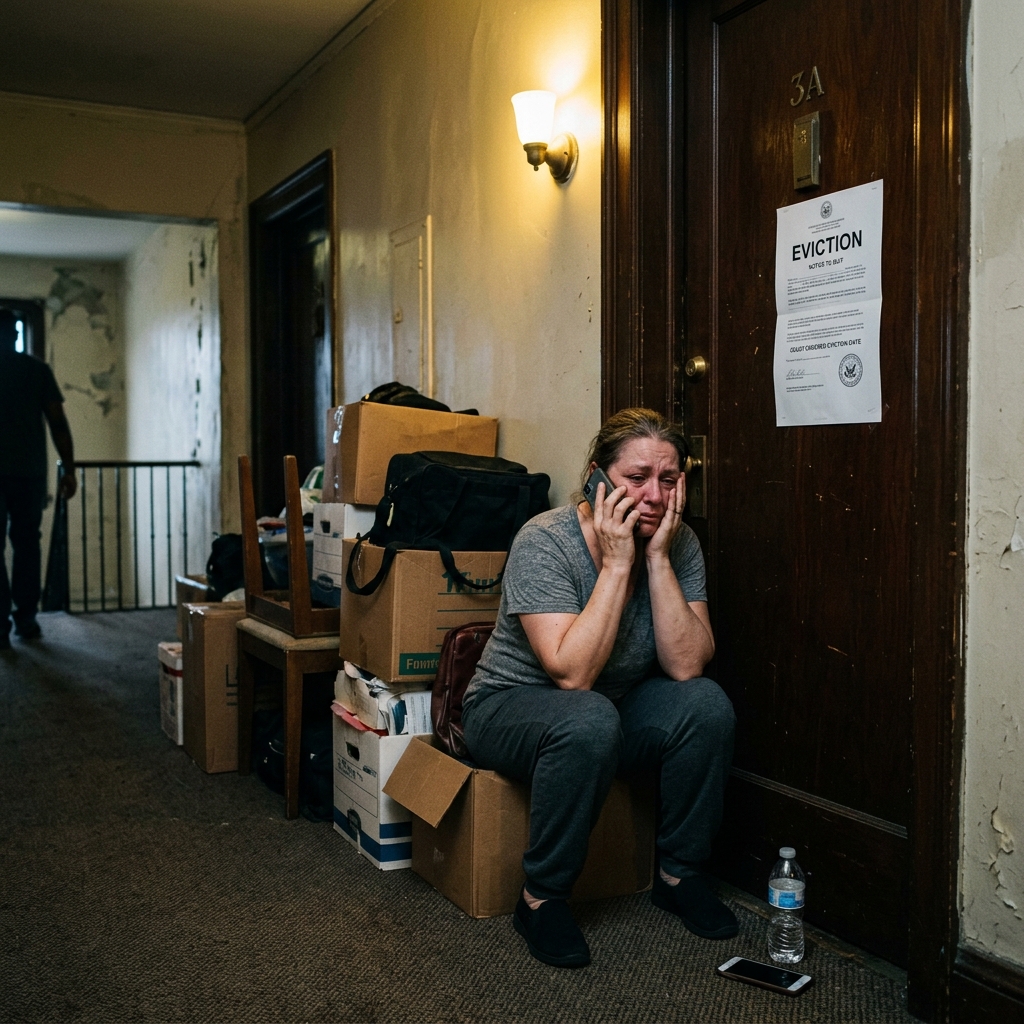
For many people, calling police during a violent emergency is the most basic and reasonable step they can take to protect themselves. Yet in some housing systems, a 911 call can trigger fines, warnings, or even eviction threats. That reality has placed domestic violence survivors in a painful position: seek help and risk losing housing, or stay silent and remain in danger.
This issue sits at the intersection of housing law, public safety, and domestic violence policy. While the facts vary from place to place, the legal pattern is familiar. Some local rules and lease provisions treat emergency calls as a nuisance, while federal and state laws increasingly recognize that victims should not be punished for abuse committed against them or for asking for help. Housing providers, tenants, and advocates all need to understand where those lines are drawn.
Why a 911 Call Can Become a Housing Problem
Local nuisance ordinances and landlord policies are often written broadly. They may allow a city or property owner to penalize repeated police calls at a property, even if those calls involve crime victims, medical crises, or threats of violence. In practice, that can mean the person who asked for help is treated as the source of the disruption. The ACLU has described this problem as a rule structure that can punish assault victims for calling 911 after an attack.
Domestic violence cases are especially vulnerable because abuse often happens in private, and police may be called more than once. If a household is labeled “problematic” simply because emergency services were needed, the survivor can be blamed for the abuser’s conduct. That approach can discourage future calls and may leave victims trapped in unsafe homes.
The Legal Shift Toward Survivor Protections
Over time, lawmakers have moved to limit housing penalties against survivors of domestic violence, sexual assault, stalking, and related abuse. Federal housing rules now recognize that survivors in federally funded housing should not be evicted or denied assistance because of violence committed against them. These protections reflect a broader policy choice: housing stability should not depend on a victim’s ability to control an abuser’s actions.
The Violence Against Women Act, commonly known as VAWA, is central to this framework. HUD states that survivors in covered housing cannot be evicted or have assistance terminated because of abuse, have a right to confidentiality, may request lease bifurcation to remove the abuser, and may seek law enforcement or emergency assistance without being penalized under local housing rules for doing so.
What Federal Housing Rules Cover
VAWA protections are strongest in HUD-subsidized or HUD-assisted housing, but they are not limited to one narrow program. HUD explains that the law can apply to public housing, Housing Choice Voucher assistance, and many other federally supported housing arrangements. In those settings, a survivor generally cannot be denied admission, evicted, or have benefits terminated because of domestic violence, dating violence, sexual assault, or stalking.
The federal rules also require confidentiality. A housing provider typically cannot disclose a tenant’s status as a survivor except in limited circumstances allowed by law. That matters because privacy can be a safety issue. If an abusive partner learns that a tenant has reported violence, the risk of retaliation may increase.
| Housing issue | General risk | Common survivor protection |
|---|---|---|
| Emergency police call | May be treated as a nuisance | Cannot be penalized for seeking emergency help in covered housing |
| Lease violation caused by abuser | May be used as eviction grounds | Survivor may raise a defense if the conduct stems from abuse |
| Safety concerns in the unit | Tenant may feel forced to stay | Emergency transfer options may be available in covered housing |
| Disclosure of survivor status | Can invite retaliation | Confidentiality protections limit improper sharing of information |
State Laws Can Fill Important Gaps
Not all tenants live in federally assisted housing, so state law often matters just as much. Some states specifically protect tenants from eviction or nonrenewal when the underlying issue is abuse-related. Women’sLaw notes that in Oregon, for example, a landlord generally cannot terminate tenancy, refuse to renew, raise rent, or deny a rental agreement because a tenant is a victim, and the law also addresses situations where police or emergency responders came to the home because of abuse.
Other state materials show similar trends. A national housing-law compendium explains that some states prohibit landlords from limiting the right to call police or emergency assistance during domestic violence incidents, and some forbid tenants from waiving that right in a lease. These provisions matter because a lease clause that appears neutral can effectively silence victims if it threatens them with eviction for contacting emergency services.
How Courts and Agencies Often View These Cases
Housing discrimination claims tied to domestic violence often arise under fair housing principles as well as specific survivor-protection statutes. Advocacy groups and state fair-housing organizations have noted that punishing survivors can amount to sex discrimination in some circumstances, particularly because domestic violence disproportionately affects women. That does not mean every eviction connected to abuse is unlawful. Landlords can still act on genuine lease violations unrelated to victimization, such as serious property damage or unsafe conduct not caused by the abuse itself.
The key legal question is whether the housing provider is targeting the survivor for the abuser’s behavior or for the survivor’s attempt to get help. If the answer is yes, survivor-protection laws may provide a defense or a claim for relief. If the landlord can show a truly independent, non-retaliatory reason, the analysis may be different. That distinction is why documentation and timing are often critical.
What Tenants Should Document After an Incident
Survivors facing eviction threats should keep records that connect the housing problem to the abuse. Useful evidence can include police reports, protection orders, medical records, text messages, emails from the landlord, and notices of eviction or lease nonrenewal. When possible, tenants should also save any written communication showing that the landlord is treating emergency calls as misconduct.
Documentation helps in three ways. First, it can support a survivor’s request for a housing accommodation or transfer. Second, it can establish that the lease issue was caused by violence rather than ordinary tenant behavior. Third, it can preserve evidence if the case later becomes a court dispute or a complaint to a housing agency.
Practical Steps for Survivors Facing Housing Retaliation
When an eviction notice follows a call for help, speed matters. Survivors may need to contact legal aid, a tenant union, a domestic violence shelter, or a housing advocate immediately. In many situations, legal help can identify whether federal, state, or local protections apply and whether the landlord or city violated anti-retaliation rules.
- Ask whether the property is covered by VAWA or another survivor-protection law.
- Request all landlord communication in writing.
- Preserve police records and any proof that the incident involved abuse.
- Look for deadlines to challenge the notice or request a hearing.
- Ask about emergency transfer options if staying in the unit is unsafe.
Survivors should also consider safety planning before sharing sensitive information. HUD notes that confidentiality is part of the protection framework in covered housing, but tenants still benefit from limiting unnecessary disclosures and working through trusted advocates when possible.
Why These Laws Matter Beyond One Tenant
The policy stakes are broader than one eviction dispute. If victims believe that calling police can cost them their home, they may delay reporting violence, avoid medical help, or remain in unsafe living situations. That undermines both personal safety and community safety. It also shifts the burden of abuse away from the offender and onto the person trying to survive it.
Housing protections are therefore not just a landlord-tenant issue. They are part of the public response to domestic violence. Safe housing can make it easier to leave an abuser, cooperate with law enforcement, and rebuild stability. Without it, even a successful escape from violence can become temporary.
How Landlords and Cities Can Reduce Harm
Housing providers and local governments can reduce the risk of unlawful or harmful eviction by narrowing nuisance rules, training staff, and separating emergency calls from ordinary lease violations. Policies should distinguish between dangerous conduct and a victim’s plea for help. They should also make clear that police calls related to domestic violence, stalking, sexual assault, or other emergencies are not grounds for retaliation in covered cases.
Many disputes can be avoided through better notice procedures and communication. If a lease problem is suspected, landlords can investigate the actual source of the disturbance rather than assuming the tenant caused it. Cities that rely on call-based nuisance enforcement should also consider exceptions for emergency and victimization-related calls so that public-safety systems do not become eviction tools.
Frequently Asked Questions
Can a landlord evict a tenant for calling 911 during a domestic violence incident? Not always. In many protected housing settings, federal or state law may prohibit punishment for seeking emergency help.
Does VAWA protect every renter? No. HUD explains that VAWA protections apply to covered HUD-subsidized or assisted housing programs, though many states also have separate protections.
What if the lease violation was caused by the abuser? Many survivor-protection laws recognize that the survivor should not be treated as responsible for abuse-related conduct, especially when the police were called because of violence.
Can the landlord ask about the abuse? In some cases, a provider may request limited documentation to verify survivor status, but HUD emphasizes confidentiality and protection against retaliation in covered housing.
What is the fastest next step after receiving an eviction notice? Contact legal aid or a tenant advocate immediately, because deadlines to respond can be very short and the available defenses may depend on timing and documentation.
Final Thoughts for Tenants and Advocates
Housing law is slowly catching up to a simple truth: people should not lose their homes because they sought help in an emergency. The most serious forms of abuse often happen behind closed doors, which means the law must create room for victims to call police, ask for protection, and escape danger without being punished by the housing system.
For survivors, the most important message is that an eviction threat after calling for help is not always the end of the story. Federal protections, state statutes, and fair housing remedies may all be available. For landlords and policymakers, the lesson is equally clear: public safety policies must be designed so they do not trap victims in the very places they are trying to survive.
References
- Surprise! Get Assaulted, Call 911, Get Evicted … By Order of City Hall? — ACLU. 2012-09-26. https://www.aclu.org/news/womens-rights/surprise-get-assaulted-call-911-get-evicted-order-police
- The Federal Government Steps Up to Protect Survivors of Domestic Abuse from Eviction — ACLU of Tennessee. 2016-07-07. https://www.aclu-tn.org/news/federal-government-steps-up-protect-survivors-domestic-abuse-eviction/
- Can a landlord refuse to renew my lease or evict me because I am a victim? — WomensLaw.org. 2026-07-10. https://www.womenslaw.org/laws/or/housing-laws/can-landlord-refuse-renew-my-lease-or-evict-me-because-i-am-victim-what-if
- Housing Protections for Victims of Domestic Violence — Fair Housing and Civil Rights Center of New Hampshire. 2026-07-10. https://fairhousing-nh.org/fair-housing-nh-blog/housing-protections-for-victims-of-domestic-violence
- Housing Rights of Domestic Violence Survivors — National Housing Law Project. 2011-12-01. https://nhlp.org/files/Domestic%20violence%20housing%20compendium%20FINAL7.pdf
- Violence Against Women Act (VAWA) — U.S. Department of Housing and Urban Development. 2026-07-10. https://www.hud.gov/vawa
Similar Articles








Read full bio of Sneha Tete


