
Can Parents Sue A School After Bullying Suicide: 6 Steps Today
How families may pursue claims when schools fail to address bullying and a child dies.
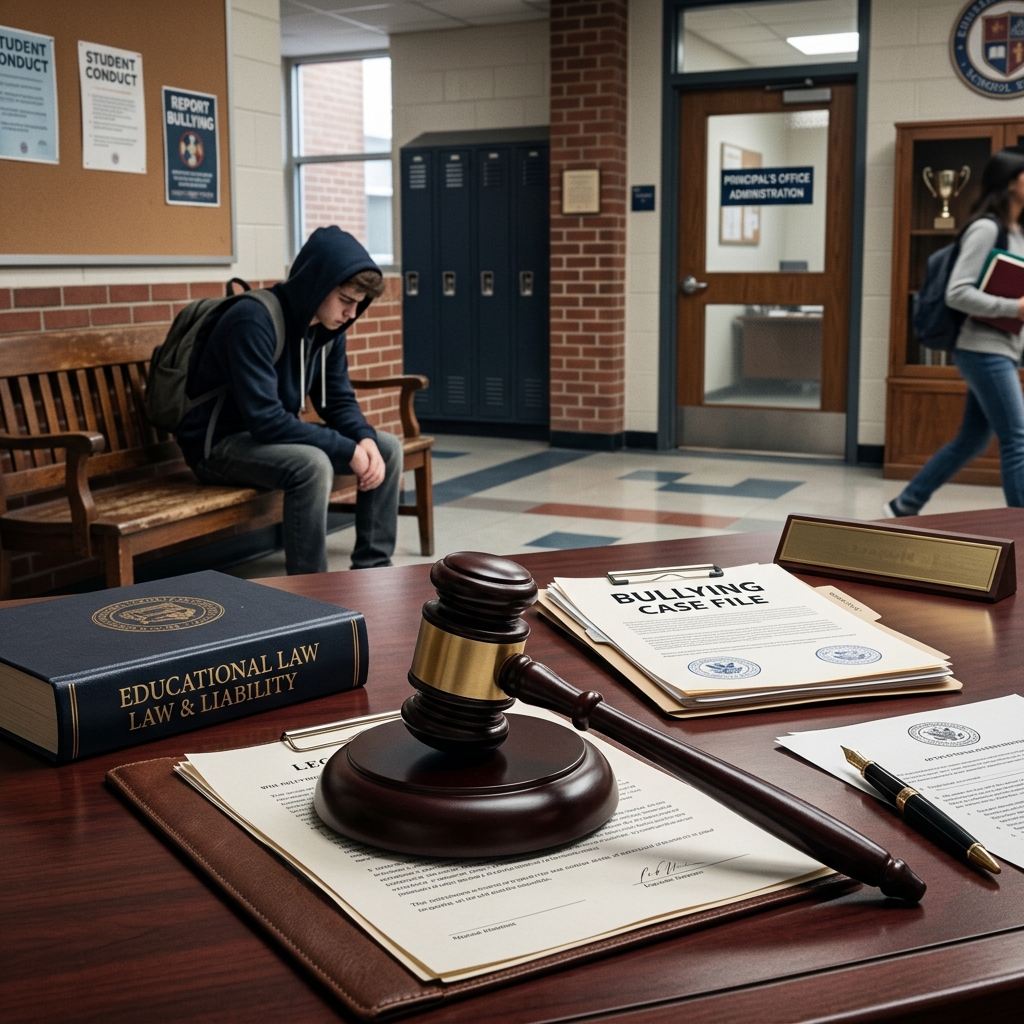
When a student dies by suicide after a pattern of bullying, families often ask whether the school could be held legally responsible. In some situations, the answer may be yes, but those cases are complex and depend on the facts, the evidence, and the applicable state and federal law.
A lawsuit in this area usually centers on whether school officials knew, or should have known, that a student was in danger and failed to take reasonable steps to protect them. The legal claim may involve negligence, civil rights violations, or wrongful death, depending on what happened and who may be sued.
Why these cases draw so much attention
School bullying cases become especially serious when there are allegations that adults ignored repeated complaints, minimized threats, or failed to intervene despite visible warning signs. Families often argue that the tragedy was not sudden, but the result of a long period of inaction.
These disputes also raise difficult questions about responsibility. A school is not automatically liable every time a child is bullied. But liability may arise when there is proof that staff members had notice of the abuse and did not respond in a meaningful way.
- Repeated reports of harassment can strengthen a family’s claim.
- Written complaints, emails, and witness statements can be important.
- Failure to enforce anti-bullying policies may support negligence arguments.
What a family may need to prove
To bring a successful case, parents typically need to show more than sadness, anger, or a general sense that the school handled things poorly. They must connect the school’s conduct to the harm suffered and show that the harm was foreseeable.
| Issue | What it usually means |
|---|---|
| Notice | The school knew, or reasonably should have known, bullying was happening. |
| Failure to act | Officials did not investigate, discipline, supervise, or protect the student adequately. |
| Causation | The family must show the school’s failure contributed to the injury or death. |
| Damages | The family suffered losses that the law recognizes, such as funeral costs or emotional harm. |
In a wrongful death setting, the family may argue that the school’s neglect helped create the conditions that led to the suicide. That is often a difficult claim because suicide cases raise legal arguments about causation, foreseeability, and whether other factors also played a role.
Possible legal theories in a bullying lawsuit
Different claims may be available depending on the circumstances. Some cases focus on negligence, while others involve civil rights or discrimination law. The strongest legal theory depends on the student’s situation, the school’s conduct, and the evidence available.
- Negligence: The school allegedly failed to take reasonable steps to protect a student from known danger.
- Wrongful death: The family claims the death resulted, at least in part, from the school’s conduct or failure to act.
- Civil rights violations: In some cases, bullying may overlap with protected characteristics such as disability, sex, race, or national origin.
- Hostile environment claims: A student may argue that the school allowed severe harassment to continue unchecked.
Not every bullying situation fits neatly into one category. Sometimes the facts support more than one theory, and attorneys will evaluate which claim best matches the evidence and the law in the relevant jurisdiction.
How courts think about school responsibility
Courts generally look at whether school officials acted reasonably after receiving warning signs. That often means reviewing the timing of complaints, the steps taken by staff, and whether those steps were likely to protect the student.
A school may defend itself by arguing that it lacked sufficient notice, that it responded appropriately, or that the student’s death was caused by factors outside the school’s control. These defenses are common, which is why documentation is so important.
In many disputes, the central issue is not whether bullying occurred. The real question is whether the school had a duty to respond and whether it responded in a way that a reasonable institution would have under similar circumstances.
Evidence that can matter most
Families who are considering legal action often need to preserve as much information as possible. The more detailed the record, the easier it may be to show what the school knew and what it did or did not do.
- School emails, text messages, and voicemail records
- Written complaints made to teachers, counselors, or administrators
- Attendance records, discipline reports, and incident logs
- Social media posts, messages, or screenshots showing harassment
- Medical or counseling records that may show emotional distress
- Statements from classmates, teachers, or other witnesses
It is also useful to keep notes about when incidents occurred, who was told, and how the school responded. Small details can become important later if the case moves into litigation.
Why schools often try to document their response
Schools that face bullying complaints may create records to show that they took concerns seriously. Those records can include meetings with parents, student discipline, supervision changes, or referrals to counselors. If those records are incomplete or reveal little action, they may help the family’s case instead.
From a legal standpoint, the presence or absence of documentation often matters almost as much as the underlying complaint itself. A school that can show a thoughtful response may have a stronger defense than one that merely promises action without following through.
What families may seek in a lawsuit
The remedy in these cases depends on the type of claim and the forum in which it is filed. Some families seek money damages, while others are focused on policy changes, public accountability, or both.
| Potential remedy | Purpose |
|---|---|
| Compensatory damages | To address financial losses and other legally recognized harm. |
| Wrongful death recovery | To pursue damages connected to the student’s death. |
| Policy reform | To push schools to improve anti-bullying procedures and oversight. |
| Settlements | To resolve the case without a trial while still obtaining relief. |
In some publicized cases, families have pursued large settlements or verdicts. Those outcomes depend heavily on the facts and do not mean that every case will have the same result.
Practical steps after repeated bullying complaints
Families who believe a school has failed their child often do best when they act quickly and keep careful records. That does not guarantee a lawsuit will succeed, but it may protect important evidence and preserve legal options.
- Report the bullying in writing whenever possible.
- Ask the school for a formal response and keep copies of all messages.
- Document every incident, including dates, witnesses, and locations.
- Save screenshots, messages, and any recordings that are lawfully obtained.
- Seek medical or counseling support if the child shows signs of distress.
- Consult a lawyer early if the school’s response seems inadequate.
These steps can also help show that the school had clear notice and an opportunity to intervene before the harm escalated.
How a lawyer may evaluate the case
A lawyer will usually begin by reviewing the timeline. That includes the first bullying incident, every complaint made to the school, the school’s reaction, and any warning signs that the student was at risk.
The attorney will also assess whether the school had a legal duty under state law, whether any federal discrimination protections apply, and whether other parties besides the school may share responsibility. In some cases, the answer may involve more than one defendant.
Because these claims can intersect with education law, civil rights law, and tort law, they often require a careful factual investigation before any lawsuit is filed.
Frequently asked questions
Can parents sue a school if bullying led to a suicide?
Yes, in some cases parents may be able to sue if they can show the school knew about the bullying and failed to take reasonable action, and that this failure contributed to the death.
Is every bullying case a wrongful death claim?
No. Some cases involve only emotional injury, discrimination, or administrative complaints. A wrongful death claim generally requires stronger proof that the school’s conduct played a legally significant role in the death.
Does the family need proof that the school intended harm?
Usually not. Many claims focus on negligence or deliberate indifference, which do not require proof that the school wanted the student to be harmed.
What if the bullying happened mostly online?
Online harassment can still matter if school officials knew about it, the conduct affected the school environment, and the school had a duty to respond.
How long do families have to file a case?
Deadlines vary by state and by the type of claim. Some claims against public schools may require special notice procedures and shorter filing windows, so legal advice should be sought quickly.
Why these cases are difficult but important
Bullying-related suicide cases are among the most painful disputes in school law because they combine emotional trauma with serious legal questions. Families may feel that the warning signs were obvious, while schools may argue they responded as best they could under difficult circumstances.
Those competing narratives make the evidence critical. Whether a case succeeds often depends on what was reported, how clearly the danger was communicated, and whether the school’s actions matched the seriousness of the risk.
For families, the legal process can also be about more than compensation. It may be a way to seek accountability, preserve a child’s story, and push institutions to prevent the same failure from happening again.
References
- Parents’ lawsuit blames schools for bullying, child suicide — The Indiana Lawyer. 2016-04-18. https://www.theindianalawyer.com/articles/44449-parents-lawsuit-blames-schools-for-bullying-child-suicide
- Teen Commits Suicide Due to Bullying: Parents Sue School for … — ABC News. 2010-01-21. https://abcnews.com/Health/MindMoodNews/story?id=7228335
- School district to pay $9.1M to parents of 12-year-old who died by suicide — NJ Spotlight News. 2019-02-11. https://www.njspotlightnews.org/video/school-district-to-pay-9-1m-to-parents-of-12-year-old-who-died-by-suicide/
- Families Sue Schools After Teen Suicides — Andreozzi + Foote. 2024-03-14. https://www.victimscivilattorneys.com/blog/families-sue-schools-after-teen-suicides/
- Suing a School for Death by Suicide — LLF National Law Firm. 2023-08-08. https://www.studentdisciplinedefense.com/suing-a-school-for-death-by-suicide
Similar Articles








Read full bio of medha deb


