
When Banks Must Cover Fraudulent Transactions
A practical guide to when banks are responsible for fraud, when consumers share liability, and how legal protections actually work in real life.
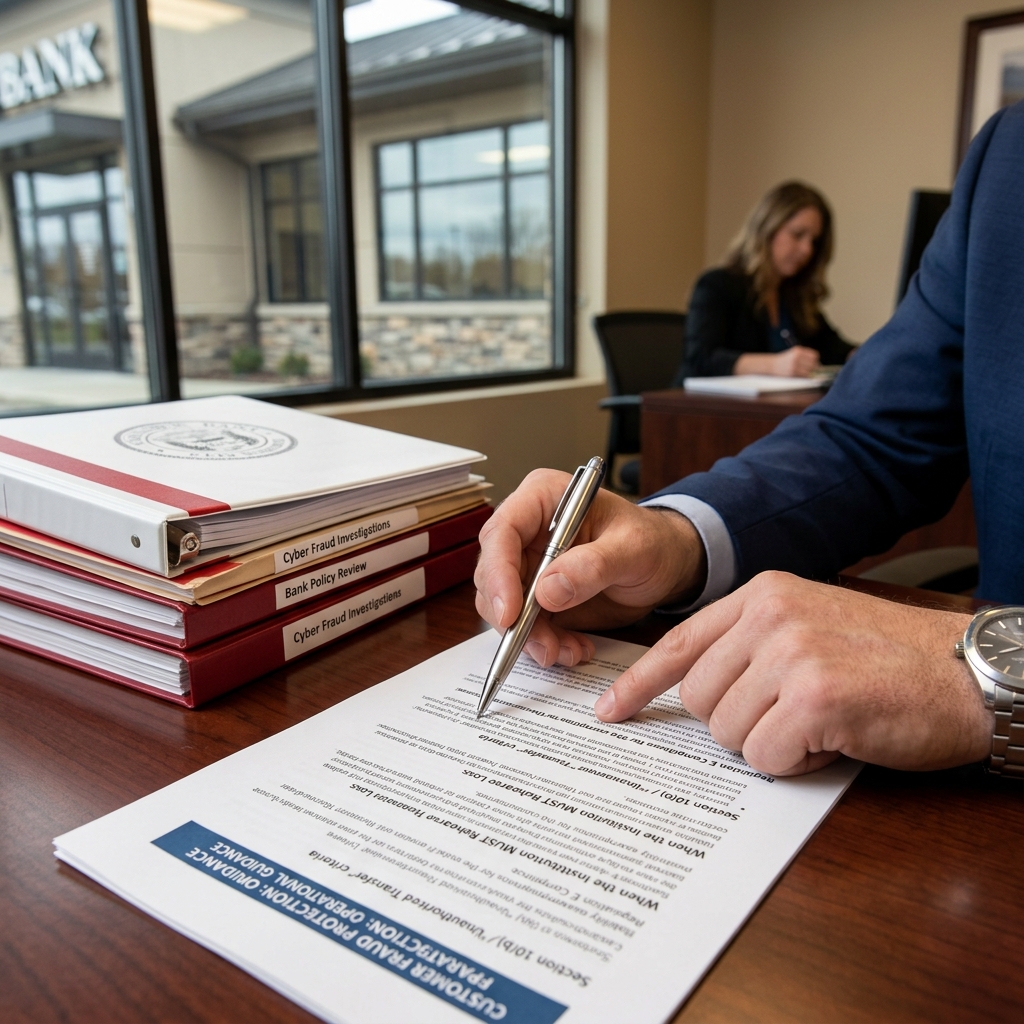
Fraudulent transactions can drain a bank account in minutes, but who ultimately pays for the loss depends on a complex mix of laws, contract terms, and how quickly the fraud is reported. Understanding when a bank is required to reimburse you, and when you may bear some or all of the loss, is critical to protecting your finances.
This article explains, in plain language, how liability is typically allocated between banks and customers for unauthorized payments, what legal protections apply, and what practical steps you can take to minimize both your risk and out-of-pocket loss.
Fraud vs. Unauthorized Transactions: Why Definitions Matter
Legal rules often distinguish between the broad idea of “fraud” and the more specific concept of an unauthorized transaction. The difference is crucial, because banks are usually obligated to refund unauthorized transfers, but may not be required to absorb losses from payments you technically authorized—even if you were tricked into doing so.
- Fraud: Any deceptive scheme intended to cause financial loss or gain, including scams, identity theft, stolen cards, account takeover, and phishing.
- Unauthorized transaction: A payment made from your account that you did not authorize and did not benefit from. For consumer electronic transfers, U.S. law defines liability around this concept.
- Authorized but induced by a scam: Payments you approve after being misled (for example, sending a wire to someone impersonating law enforcement). In many cases, these transactions are treated as authorized, and the legal protections are much weaker.
Because the legal framework hinges on whether a transaction is considered authorized, accurately describing what happened to your bank is essential when you report suspected fraud.
Key Legal Protections for Consumers
For personal accounts, several federal laws and regulations limit how much a consumer can be held liable for unauthorized use of their bank account or card. The most important for day-to-day banking are:
- Electronic Fund Transfer Act (EFTA) and Regulation E: Governs unauthorized electronic fund transfers from consumer bank accounts, including ATM, debit card, point-of-sale, and online transfers.
- Truth in Lending Act (TILA): Limits liability for unauthorized use of credit cards, provided consumers report the loss or theft promptly.
These protections apply primarily to consumer accounts, not business accounts, and they focus on unauthorized use rather than every type of fraud.
Liability Limits for Unauthorized Electronic Transfers
Regulation E sets a tiered system for how much a consumer can be required to pay when a thief makes unauthorized transfers from their account using an access device such as a debit card.
| Consumer Action / Timing | Maximum Consumer Liability | Who Bears the Remaining Loss? |
|---|---|---|
| Reports loss or theft of card within 2 business days of learning of it | Up to $50 in unauthorized transfers | Bank generally absorbs the rest, subject to investigation |
| Reports after 2 business days, but within 60 days of statement | Up to $500 for unauthorized transfers occurring before notice | Bank covers amounts above $500 for those transfers |
| Fails to report within 60 days of statement showing first unauthorized transfer | Liable for earlier tiers plus all unauthorized transfers occurring after 60 days and before notice, if the bank shows they would not have occurred with timely notice | Bank may shift substantial loss to the consumer |
For unauthorized electronic transfers that do not involve an access device—such as certain online-only fraud—Regulation E still provides protection, but the two-tier $50/$500 structure does not apply. If the consumer fails to report within 60 days of receiving the statement, they may be liable for unauthorized transfers occurring after that point.
When Banks Are Required to Refund Fraudulent Transactions
Banks do not automatically cover every instance of fraud, but they are legally responsible for certain types of losses, particularly when their customer did not authorize the transaction and reported it within the required time.
Unauthorized Electronic Transfers from Consumer Accounts
Under EFTA and Regulation E, a bank must investigate a consumer’s claim of unauthorized electronic transfers and, if the transactions are indeed unauthorized, limit the consumer’s liability according to the tiers described above. If the consumer’s liability is capped at $50 or $500, the bank generally must credit the remaining loss back to the account.
The bank’s duties typically include:
- Providing a way to report unauthorized transfers and loss or theft of cards promptly.
- Investigating reported unauthorized transfers within specified timeframes (often 10 business days initially, with extensions in some circumstances).
- Provisionally crediting the account if the investigation takes longer than the initial period, or promptly correcting the error if unauthorized use is confirmed.
In practice, this means that if someone steals your debit card and drains your account, and you report it quickly, the bank will usually be on the hook for the bulk of the loss, subject to the statutory caps.
Fraudulent Wire Transfers and Commercial Reasonableness
Wire transfers are treated differently under Article 4A of the Uniform Commercial Code (UCC), which many U.S. states have adopted. For payment orders issued in the name of a bank’s customer, Article 4A determines whether the bank or the customer bears the risk of loss when the transfer is fraudulent.
In general:
- If a payment order is unauthorized and not effective as the customer’s order, the receiving bank must refund the payment.
- Even if the customer did not personally authorize the transfer, it may still be treated as effective if the bank used a commercially reasonable security procedure and acted in good faith in following it.
- If the bank’s security procedures are commercially reasonable and correctly applied, losses from certain unauthorized wire transfers can fall on the customer rather than the bank.
This framework is particularly significant for business customers, who generally do not receive the same broad protections that consumers do under EFTA and Regulation E.
Fraudulent Checks and the Role of Depository Banks
Check fraud is another area where banks can be held responsible, though liability may shift between different financial institutions. Under UCC provisions governing checks, the bank that pays on a fraudulent check (the drawee bank) often has an initial duty to make its account holder whole when it pays a charge that is not properly payable.
However, the drawee bank may then seek reimbursement from the bank that accepted the check for deposit (the depository bank), based on warranties that the depositary bank makes about the authenticity of the check and the absence of alterations. This arrangement reflects the idea that the depository bank is usually in the best position to detect irregularities when the check is first presented.
When Consumers May Bear Part of the Loss
Although the law provides substantial protection, consumers can still be held liable for a portion, or in some cases a large share, of fraudulent losses under certain circumstances.
Late Reporting
Failure to notify the bank quickly after discovering fraud is one of the most common reasons consumers end up bearing more of the loss.
- Reporting after two business days but within 60 days can increase liability from up to $50 to up to $500 for unauthorized transfers involving an access device.
- Failing to report within 60 days of the statement can expose the consumer to unlimited liability for unauthorized transfers occurring after that date and before notice, if the bank can show they would not have occurred with timely reporting.
Regularly monitoring account activity and statements is therefore not just good practice—it directly affects your legal protection.
Authorized Transactions Induced by Scams
Many sophisticated fraud schemes involve convincing victims to voluntarily authorize payments. For example, a scammer might pretend to be from the bank or law enforcement and instruct a customer to move funds “for safety” to a new account. Because the customer technically authorizes these transfers, they often fall outside the legal definition of unauthorized transactions.
In these cases:
- Banks are frequently not legally required to reimburse the loss, particularly for wire transfers and certain online payments.
- Consumers may bear the entire loss, even though they were misled, because the law treats the payment as one they authorized.
This distinction is one reason regulators and consumer advocates emphasize prevention and education about scams—some types of fraud are much harder to recover from legally.
Practical Steps to Protect Yourself and Your Rights
While the legal rules determine how losses are allocated after fraud occurs, your actions before and immediately after detection can strongly influence the outcome. Combining good security hygiene with rapid response can significantly reduce your exposure.
Immediate Actions If You Spot a Fraudulent Transaction
- Contact your bank’s fraud department right away. Use the phone number on the back of your debit or credit card or from a trusted statement—not a number from an unsolicited email or text.
- Report loss or theft of access devices. If your card is missing or compromised, notify the bank so they can block further use and issue a replacement.
- Follow up in writing. Send a dated letter or email with your account number, the questionable transactions, when you noticed them, and when you reported them. This helps establish timelines for liability rules.
- Dispute charges with merchants if applicable. If the fraud involves a merchant, consider contacting them to reverse or contest the transaction in parallel with the bank’s investigation.
Preventive Measures to Reduce Fraud Risk
- Monitor your accounts regularly. Review online banking activity and statements to detect suspicious transactions quickly, which is essential for benefiting from liability limits.
- Use strong authentication. Enable multifactor authentication (such as codes or biometric checks) for online banking whenever available.
- Be wary of phishing and impostor calls. Do not share login credentials or one-time codes in response to unsolicited emails, texts, or calls claiming to be from your bank. Hang up and call using an official number instead.
- Prefer credit cards over debit cards for online purchases. Credit cards typically offer stronger fraud protections and do not directly withdraw money from your bank account.
- Exercise caution at ATMs and point-of-sale terminals. Avoid devices that look tampered with, and shield your PIN when entering it.
FAQs About Bank Responsibility for Fraud
1. If someone steals my debit card and uses it, will my bank cover the loss?
In many cases, yes—up to the limits set by Regulation E. If you report the loss within two business days of learning your card was missing or compromised, your liability is capped at $50 for unauthorized transfers, and the bank must generally absorb the rest. Reporting later can increase your liability, so speed is critical.
2. What if I was tricked into sending money, but I technically authorized the transfer?
These situations are much more challenging. Because you formally authorized the payment, it may not be treated as an unauthorized transaction under EFTA or Article 4A. Banks often are not legally required to reimburse such losses. You can still report the incident, and the bank may assist with investigations or recovery efforts, but the legal protections are weaker.
3. Do business accounts have the same protections as personal accounts?
Generally no. Most of the robust liability limits in EFTA and Regulation E apply to consumer accounts. Business customers are often governed by contract terms and UCC Article 4A rules regarding commercial reasonableness of security procedures. Businesses should carefully review their banking agreements and implement strong controls.
4. How long does a bank have to investigate an unauthorized transaction?
Under federal rules for electronic fund transfers, banks usually have up to 10 business days to investigate a reported error, including unauthorized transfers, though they may extend that period in some circumstances if they provide provisional credit. Check your account agreement and the bank’s disclosures for precise timelines.
5. Can I be held fully liable for fraud if I do not check my statements?
Potentially, yes. If you fail to report an unauthorized electronic transfer within 60 days of the bank sending a statement that shows the first unauthorized transfer, you may be liable for all subsequent unauthorized transfers that occur after that period and before you notify the bank, provided the bank demonstrates they would not have happened with timely notice. Regular statement review is therefore essential.
Summary: Balancing Bank Duties and Consumer Responsibilities
The modern payment system relies on a careful balance: banks must provide secure systems and refund many unauthorized transactions, while consumers must act quickly and responsibly to preserve their protections. Laws like EFTA, Regulation E, TILA, and UCC Article 4A collectively define when banks are “on the hook” for fraud, but outcomes depend heavily on the facts of each case and the timing of your response.
By understanding how liability rules work, keeping a close eye on account activity, and reacting swiftly to any sign of fraud, you can significantly reduce both the likelihood of becoming a victim and the financial impact if it happens.
References
- Duties of Banks and Consumers in the Age of the Modern Scammer — Matthiesen, Wickert & Lehrer, S.C. 2019-03-01. https://www.mwl-law.com/who-has-to-pay-for-a-fraudulent-check-duties-of-banks-and-consumers-in-the-age-of-the-modern-scammer/
- Consumer Liability for Unauthorized Transactions Under the Electronic Fund Transfer Act and Regulation E — Federal Reserve Bank of Philadelphia (Consumer Compliance Outlook). 2025-07-01. https://www.consumercomplianceoutlook.org/2025/third-issue/consumer-liability
- Bank Liability for Fraudulent Wire Transfers – General Discussion — University at Buffalo School of Law CLE Materials. 2004-03-25. https://www.law.buffalo.edu/content/dam/law/content/cle/25Mar04-materials-2.pdf
- Gavel to Gavel: What is a bank’s responsibility when consumer fraud happens? — McAfee & Taft. 2023-06-01. https://www.mcafeetaft.com/gavel-to-gavel-what-is-a-banks-responsibility-when-consumer-fraud-happens/
- 12 CFR § 1005.6 — Liability of consumer for unauthorized transfers — Consumer Financial Protection Bureau. 2024-01-01. https://www.consumerfinance.gov/rules-policy/regulations/1005/6
- How Do Banks Handle Unauthorized Transactions? — U.S. News & World Report. 2023-08-15. https://www.usnews.com/banking/articles/how-do-banks-handle-unauthorized-transactions
- Online Banking Fraud: Protecting Consumers from Unauthorized Transactions — Library of Parliament (Canada). 2025-10-21. https://hillnotes.ca/2025/10/21/online-banking-fraud-protecting-consumers-from-unauthorized-transactions/
Similar Articles








Read full bio of medha deb




