A divorce settlement may feel like the end of a long legal and emotional process, but life rarely stays the same for long. Jobs change, children grow, people move, and health or finances can improve or decline. Under certain conditions, the law allows specific parts of a divorce settlement to be changed, while other elements are intended to remain final.
This article explains in practical terms which parts of a divorce settlement can be modified, the legal standard courts apply, and how to request changes through the court system. It is meant to provide general educational information, not individualized legal advice.
What Is a Divorce Settlement and Why Finality Matters
A divorce settlement (or divorce decree) is the final order issued by a court that sets out the rights and responsibilities of each former spouse after their marriage ends. It typically covers:
- Division of marital property and debts
- Child custody and parenting time (visitation)
- Child support obligations
- Spousal support (alimony or maintenance)
- Any other agreed obligations, such as responsibility for insurance or educational expenses
Court systems value finality in judgments, particularly in the division of assets, so that people can move on and plan their financial futures without constant uncertainty. At the same time, judges recognize that family circumstances do change. The law strikes a balance by allowing limited, carefully controlled modifications to some parts of a divorce settlement, while treating other aspects as essentially permanent.
Core Legal Standard: Substantial Change in Circumstances
In most jurisdictions, you cannot change a divorce settlement simply because you regret the outcome or feel it is unfair in hindsight. Instead, you must show a substantial change in circumstances that occurred after the original order.
While phrasing varies by state, the concept is similar:
- The change must be significant, not minor or short-term
- The change must be ongoing or expected to last, not temporary
- The change must affect the ability to comply with the existing order or make the order unreasonable or contrary to the child’s best interests
Courts often use language such as “changed circumstances so substantial and continuing as to make the terms unreasonable.” Examples may include major income shifts, serious health problems, relocation, or substantial changes in a child’s needs.
Which Parts of a Divorce Settlement Are Usually Modifiable?
Most legal systems treat the following areas as potentially modifiable, subject to proof of a substantial change in circumstances:
| Settlement Component | Usually Modifiable? | Typical Basis for Change |
|---|---|---|
| Child custody & parenting time | Yes | Best interests of the child plus major change in circumstances affecting care or safety |
| Child support | Yes | Significant income changes, altered financial needs of the child, medical or educational expenses |
| Spousal support (alimony) | Often, but not always | Change in financial circumstances, health, employment, or remarriage/cohabitation, unless decree says “non-modifiable” |
| Division of property & debts | Rarely | Fraud, misrepresentation, serious clerical error, or duress at time of settlement |
Changing Child Custody and Parenting Time
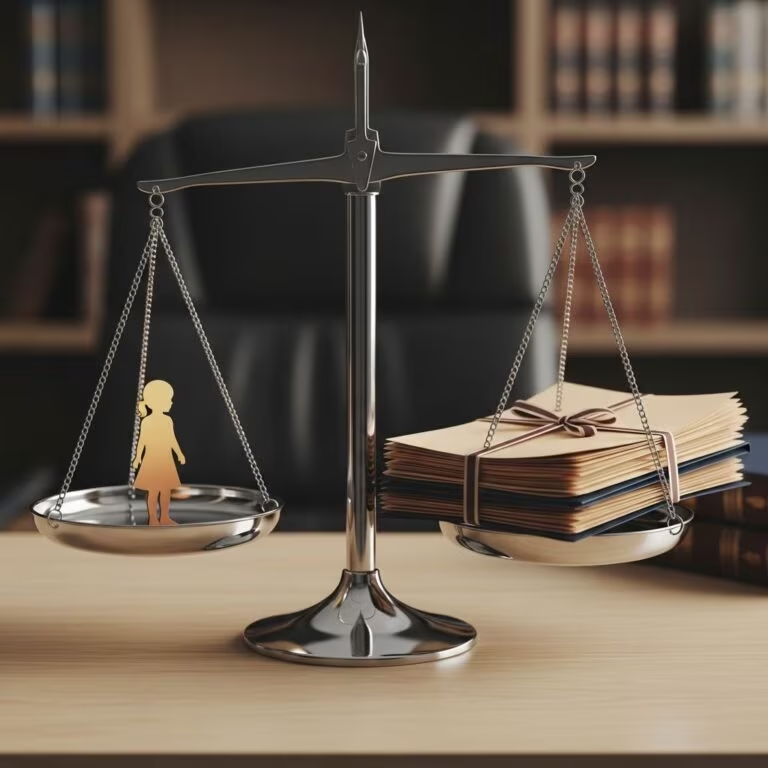
Courts approach custody and visitation with a single guiding principle: the best interests of the child. Because children’s needs and family environments evolve, custody orders and parenting schedules are commonly modified.
Common Reasons to Seek Custody or Parenting Time Changes
Courts usually require both a substantial change in circumstances and evidence that the modification serves the child’s best interests. Common scenarios include:
- Parental relocation to another city, state, or country
- Changes in the child’s needs, such as new educational or medical requirements
- Safety concerns, including abuse, neglect, or serious substance misuse by a parent
- Parental inability to fulfill responsibilities due to health, incarceration, or repeated violations of the existing order
- Mutual agreement between parents to adopt a different schedule, which still must be approved by the court
Evidence can include school records, medical reports, police or social services documentation, and testimony from professionals or family members.
Best Interests Analysis
When deciding whether to modify custody or parenting time, judges often consider factors such as:
- The child’s age and developmental needs
- The quality of each parent’s relationship with the child
- Stability of the home environment
- Each parent’s ability to meet the child’s physical and emotional needs
- Any history of domestic violence or abuse
- Sometimes, the child’s preferences, depending on age and maturity
The existing arrangement will not be changed lightly; the court typically wants strong evidence that a new arrangement would clearly benefit the child.
Modifying Child Support Obligations
Child support is one of the most frequently modified parts of a divorce settlement, because it is closely tied to parents’ incomes and children’s evolving needs. Many states allow adjustments when circumstances significantly change so that the current order no longer reflects reality.
Reasons Courts Commonly Accept for Child Support Changes
- Job loss or major income reduction that is involuntary and not a temporary setback
- Substantial income increase or improved financial situation of either parent, especially where guidelines would yield a different amount
- Changes in the child’s needs, including new medical, therapeutic, or educational expenses
- Additional dependents, such as the birth of a new child or becoming responsible for another dependent
- Relocation affecting costs or practical arrangements for care
Most jurisdictions require the parent seeking modification to file a formal request and provide supporting documentation such as pay stubs, tax returns, medical bills, or insurance statements.
Temporary vs. Long-Term Changes
Courts generally distinguish between short-term financial interruptions and longer-term changes. A brief period of unemployment might support a temporary adjustment or payment plan, while a permanent disability or long-term income shift may justify a more lasting modification.
Changing Spousal Support (Alimony)
Spousal support is designed to address economic disparities between spouses after divorce. Whether alimony can be modified depends both on state law and on the wording of the original decree. Some orders are explicitly labeled “non-modifiable”, meaning the amount and duration cannot be changed later.
When Alimony Is Often Modifiable
When the decree allows modification, courts look for substantial changes in circumstances similar to those applied in child support cases. Common reasons include:
- Involuntary loss of employment or significant pay cut for the paying spouse
- Major increase in the recipient’s income, reducing the need for support
- Serious illness or disability affecting either spouse’s earning capacity
- Retirement at a reasonable age, impacting income and ability to pay
- Remarriage or cohabitation by the recipient, which in many jurisdictions can reduce or terminate alimony automatically or by court order
As with other modifications, the spouse requesting change must file a petition or motion and provide detailed financial and medical documentation.
Reopening Property Division: Rare and Narrow Situations
Unlike support and custody, courts almost always treat the division of property and debts as final. The goal is to prevent endless re-litigation over who owns what after divorce. However, there are limited circumstances in which a property division can be revisited.
Grounds for Challenging Property Division
While specific rules vary by jurisdiction, examples of situations that may justify reopening a property settlement include:
- Fraud or misrepresentation, such as hiding assets, falsifying financial statements, or concealing debt
- Clerical or legal errors in the written decree that materially change what the court intended
- Extreme duress or incapacity when the agreement was reached, making consent invalid
- Serious legal mistakes in the original proceedings, depending on state law and appeal deadlines
Simply being unhappy with the outcome or feeling that the division was unequal is not enough. Courts usually require a formal petition, strong evidence, and a legal basis recognized in that jurisdiction.
General Process for Requesting a Modification
Although procedures differ from state to state, the basic steps for seeking a post-divorce modification are broadly similar.
Typical Steps
- Review the original decree carefully to understand what it says about modification, including any “non-modifiable” language for support.
- Document the change in circumstances with objective evidence (financial statements, pay stubs, medical records, school reports, police or social services records, etc.).
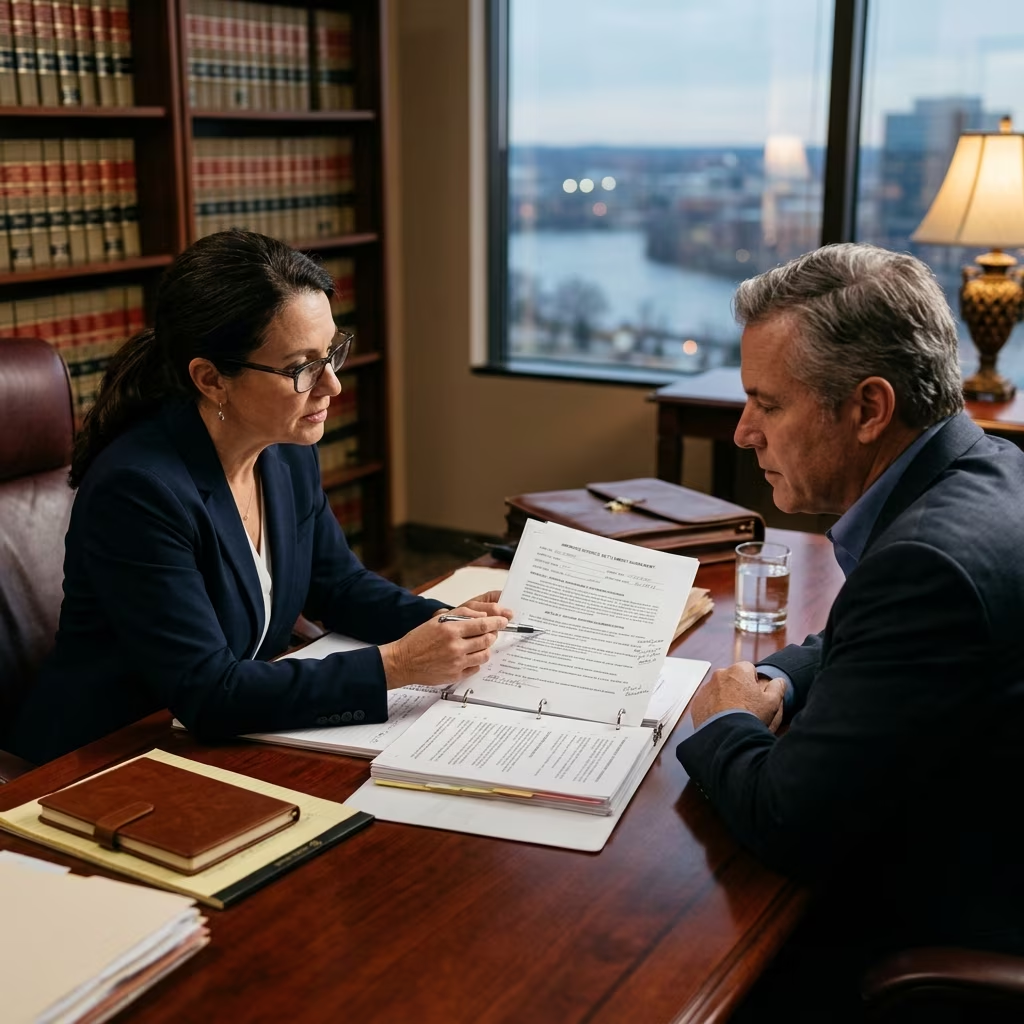
- Consult a family law attorney in your state if possible, as local rules and timelines can significantly affect your rights.
- File a motion or petition with the court that issued the original judgment, explaining what you seek to change and why.
- Serve notice on the other party according to procedural rules so they have time to respond or object.
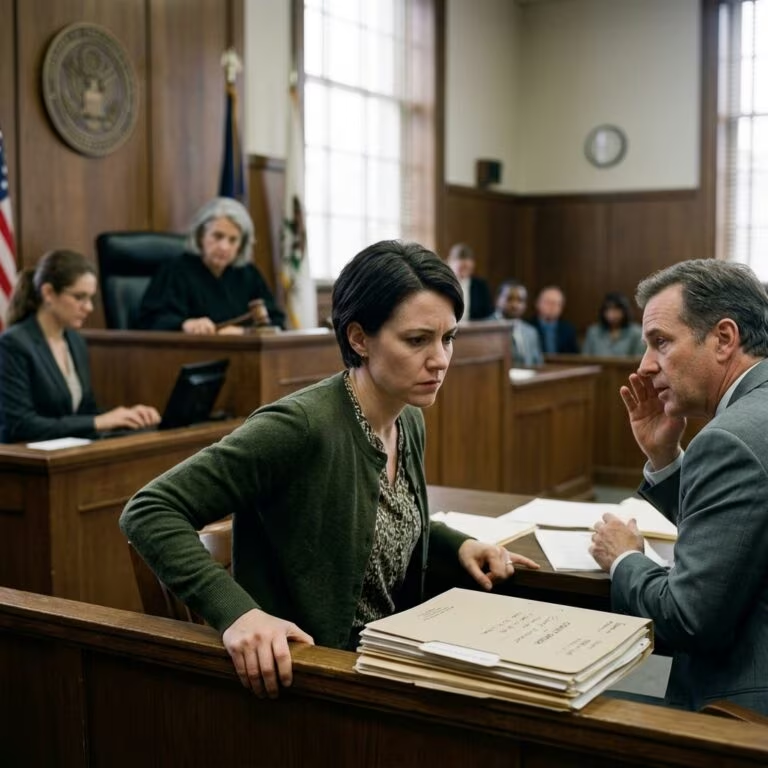
- Attend a hearing where both sides may present evidence and legal arguments.
- Comply with the court’s new order, which may replace or adjust parts of the original decree.
In some cases, former spouses are able to negotiate a written agreement on new terms and submit it jointly to the court for approval. Even then, the court must review the agreement to ensure it meets legal standards and, when children are involved, serves their best interests.
Practical Tips Before You Seek a Modification
Because post-divorce modifications involve reopening a closed case, they can be time-consuming and costly. Taking a careful, strategic approach can make the process smoother and more effective.
- Act promptly when a major change occurs; waiting too long can make the situation more complicated or create arrears (unpaid amounts).
- Keep thorough records of income, expenses, payments, and communications related to custody or support.
- Try to maintain constructive communication with your ex-spouse; collaborative solutions often lead to faster, less adversarial outcomes.
- Do not rely on informal agreements alone for support changes; until the court modifies the order, the original terms remain enforceable.
- Consider mediation or alternative dispute resolution if direct negotiation is difficult; many courts encourage or require it in family matters.
Frequently Asked Questions (FAQs)
Can I change my divorce settlement if I simply think the judge made a mistake?
You generally cannot modify a settlement solely because you disagree with the outcome. Courts usually require either a timely appeal based on legal error or a separate, recognized ground such as fraud, duress, or a substantial change in circumstances for modification.
Is there a time limit for asking the court to modify custody or support?
Most jurisdictions do not impose a strict deadline for modifying custody or support, but they do require that the change in circumstances be genuine and ongoing. However, time limits may apply to appealing the original judgment or challenging property division, so prompt legal advice is important.
Can my ex and I just agree between ourselves to change support payments?
You can reach a private agreement, but it does not replace the court order. Until the court formally modifies the decree, the original support amount remains legally enforceable. To avoid future disputes or enforcement actions, you should submit any agreed changes to the court for approval.
What happens if I lose my job and cannot pay the ordered support?
If you lose your job or suffer a major income drop, you should seek legal advice and consider filing for a modification as soon as possible. Courts may adjust support if they find the change is substantial and not temporary, but they usually expect prompt action and clear documentation of your situation.
Do I need a lawyer to file for a divorce settlement modification?
Some people represent themselves, especially in simpler cases, but modification proceedings can be complex. Because rules and standards vary greatly by state, consulting a family law attorney can help you understand your options, gather evidence, and present a stronger case.
References
- Modification of Final Divorce Judgments Under the Law — Justia. 2023-05-01. https://www.justia.com/family/divorce/after-divorce/modification-of-final-divorce-judgments/
- Can a New Jersey Divorce Agreement Be Modified After Finalization? — Paone, Zaleski & Murphy. 2022-10-11. https://www.paonezaleski.com/can-a-new-jersey-divorce-agreement-be-modified-after-finalization/
- Divorce Modifications Attorney — Joseph Law Group P.C. 2021-04-15. https://josephlawpc.com/divorce-modifications-lawyer/
- Can I Modify My Divorce Agreement? — Kirshenbaum Law Associates. 2020-08-20. https://www.kirshenbaumlaw.com/blog/can-i-modify-my-divorce-agreement/
- Can I Amend My Divorce Decree? — Casey, Simmons & Bryant, PLLC. 2022-04-04. https://www.caseysimmonsandbryant.com/blog/2022/april/can-i-amend-my-divorce-decree-/
- Divorce Modification in Missouri — Page Law. 2019-06-10. https://www.pagelaw.com/family-law/divorce-modification/
- What You Need to Know About Post-Divorce Modifications — J. Aldrich Law, LLC. 2021-09-30. https://www.jaldrichlaw.com/blog/what-you-need-to-know-about-post-divorce-modifications
- Post-Judgment Modifications in New York City — NYC Divorce Law Firm. 2020-03-18. https://www.divorcelawfirmnewyork.com/family-law/modifications/