
DUI Murder Vs DUI Manslaughter: What You Need To Know Key Facts
Exploring how deadly impaired driving can lead to DUI manslaughter or second-degree murder charges under modern criminal law.
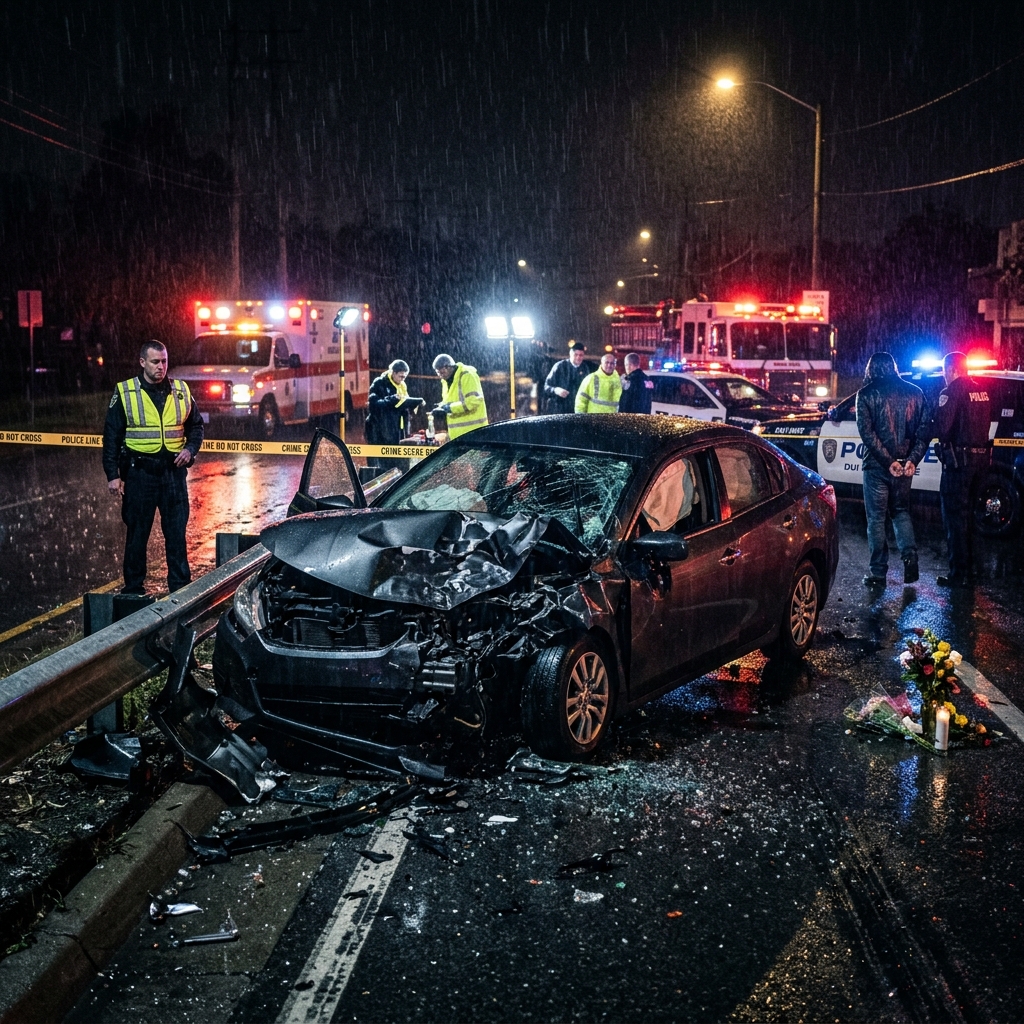
Driving under the influence is usually charged as a misdemeanor offense, but when impairment leads to a death, the case can become one of the most serious crimes in the criminal code. In some situations, a deadly crash can be prosecuted not just as vehicular manslaughter or vehicular homicide, but as second-degree murder under state law.
This article explains how a fatal DUI can turn into a murder case, how the law distinguishes DUI manslaughter from DUI murder, and which facts make prosecutors more likely to pursue the harshest possible charges.
From Traffic Crime to Homicide: The Legal Landscape
Most states treat simple drunk driving as a lower-level offense, often a misdemeanor for first-time offenders. But when an intoxicated driver kills someone, the criminal system shifts focus from traffic safety to homicide law.
States use different labels and statutes to address death caused by impaired driving, including:
- DUI manslaughter or vehicular manslaughter
- vehicular homicide while DUI
- criminally negligent homicide involving a vehicle
- DUI murder or Watson murder (in California and similar jurisdictions)
While the terminology varies, the core question is the same: was the driver merely negligent, or did the conduct show a level of recklessness that the law treats as equivalent to malice?
Key Distinction: DUI Manslaughter vs. DUI Murder
Courts draw a sharp legal line between DUI manslaughter and DUI murder. Understanding that line is essential to grasp when a drunk driving case becomes a murder case.
| Feature | DUI Manslaughter | DUI Murder |
|---|---|---|
| Intent to Kill | No intent to kill; death is unintended. | No specific intent to kill, but law treats conduct as having “malice”. |
| Mental State | Ordinary or gross negligence while impaired. | Conscious disregard for human life or implied malice. |
| Typical Charge Level | Felony manslaughter or homicide while DUI. | Second-degree murder in qualifying cases. |
| Burden on Prosecutor | Show DUI and negligent driving caused the death. | Show DUI plus knowledge of deadly risk and conscious disregard. |
| Penalty Range | Years in prison; specific ranges vary by state. | Often 15 years to life for second-degree murder, depending on jurisdiction. |
What Prosecutors Must Prove in DUI Manslaughter Cases
For charges like DUI manslaughter or vehicular homicide while DUI, the prosecution usually must establish three basic elements.
- A person was killed in connection with the incident.
- The defendant was driving while under the influence of alcohol or drugs at the time.
- Negligent or unlawful driving caused the death, such as speeding, ignoring traffic signals, or failing to maintain control.
Importantly, the state does not have to prove that the driver intended to kill anyone. DUI manslaughter is classified as an unintentional homicide.
Evidence used to prove impairment can include:
- Blood alcohol concentration (BAC) test results
- Field sobriety tests
- Witness statements about drinking or drug use
- Traffic camera footage or crash reconstruction reports
Some jurisdictions allow a conviction for vehicular homicide while DUI even if the driver’s BAC is not above a per se legal limit, so long as other evidence shows impairment.
When Impaired Driving Becomes Murder
To elevate a fatal DUI to second-degree murder, prosecutors must show more than negligence. They must prove a mental state commonly described as implied malice or a conscious disregard for human life.
Courts and statutes often require proof that:
- The defendant intentionally chose to drive while impaired.
- The natural and probable consequences of that choice were dangerous to human life.
- The defendant knew about this danger and drove anyway, demonstrating conscious disregard.
In other words, the law treats the act of getting behind the wheel while intoxicated—despite knowing it can kill—as a form of malice similar to that in traditional murder cases.
The Watson Murder Doctrine and Similar Approaches
California offers a well-known example of how DUI murder charges work through what is often called Watson murder. In a landmark decision, the state’s highest court held that drunk driving can satisfy the “malice aforethought” requirement for second-degree murder when certain facts are present.
Under this approach, the prosecutor must prove beyond a reasonable doubt that:
- The defendant intentionally drove while under the influence of alcohol or drugs.
- The defendant’s impaired driving was dangerous to human life as a natural and probable consequence.
- The defendant knowingly acted with conscious disregard for that danger.
When these elements are met and a death occurs, the driver can be convicted of second-degree murder, facing penalties such as 15 years to life in prison and significant fines.
Patterns That Support a DUI Murder Charge
Not every fatal DUI will result in a murder charge. Prosecutors typically look for aggravating circumstances that help show implied malice or conscious disregard for human life.
Common factors that can increase the likelihood of a DUI murder prosecution include:
- Prior DUI convictions: Courts may treat repeat offenders as having clear knowledge of the dangers of drunk driving, especially if they attended DUI education programs or signed advisements warning of potential homicide charges.
- Extremely high levels of intoxication: A BAC far above the legal limit can support the argument that the driver consciously ignored serious risk, though high BAC alone typically is not enough.
- Dangerous driving behavior: Excessive speeding, racing, driving the wrong way, or fleeing police while impaired can show extraordinary recklessness.
- Disregarding prior warnings: Being previously advised by a court or DMV that impaired driving can lead to death and murder charges strengthens the case for implied malice.
- Multiple victims or catastrophic crashes: Collisions that injure or kill several people often lead to closer scrutiny and harsher charging decisions.
Penalties: Manslaughter vs. Murder in DUI Death Cases
Sentences for impaired driving homicides vary widely between states, but the overall pattern is clear: DUI murder carries significantly harsher consequences than DUI manslaughter.
DUI Manslaughter and Vehicular Homicide Penalties
Many states impose substantial prison terms for vehicular homicide or manslaughter involving DUI, often measured in years or decades.
- Some jurisdictions set ranges such as 2 to 10 years for certain forms of DUI-related homicide.
- Others define felony DUI causing death with penalty ranges from 1 year to 25 years of mandatory imprisonment, plus fines and license revocation.
- Vehicular homicide statutes frequently include enhanced sentencing if there are prior DUI convictions or additional aggravating factors.
DUI Murder Sentencing
In states that recognize DUI murder or Watson murder, the offense is treated like other forms of second-degree murder.
- Imprisonment: Penalties often start around 15 years to life in prison for a single murder conviction.
- Fines: Courts may impose significant fines, for example up to $10,000 in some jurisdictions, alongside imprisonment.
- Additional consequences: A second-degree murder conviction is often considered a “strike” under repeat-offender laws, enhancing sentencing for future felonies.
Beyond incarceration and fines, both manslaughter and murder cases may involve restitution orders requiring payment to victims’ families.
Evidence Strategies in DUI Murder Prosecutions
Because proving implied malice is more demanding than proving negligence, DUI murder cases rely on a broader set of evidence to establish the defendant’s mental state.
Prosecutors may use:
- Prior court records: Showing that the defendant attended DUI school, received explicit warnings about the dangers of impaired driving, or signed documents acknowledging potential homicide liability.
- Statements made by the defendant: Admissions that they “knew” they should not drive, or that they recognized the risk of their level of intoxication.
- Crash data: Reconstruction reports demonstrating extreme speed, deliberate risk-taking, or prolonged dangerous driving before impact.
- Witness testimony: Accounts that the driver had options (such as using rideshare or staying overnight) but chose to drive anyway despite clear intoxication.
In contrast, a DUI manslaughter case usually focuses more on basic proof of impairment and negligent driving rather than on deep exploration of the defendant’s prior knowledge and mindset.
Defenses Commonly Raised in Fatal DUI Cases
Defendants in fatal DUI prosecutions, particularly those facing murder charges, often challenge both the evidence of impairment and the claim that they acted with implied malice.
Potential defense strategies may include:
- Disputing impairment: Questioning the accuracy or admissibility of breath and blood tests, or arguing that observed behavior had other explanations.
- Challenging causation: Arguing that factors such as the victim’s conduct, mechanical failure, or road conditions—not the defendant’s impairment—were the primary cause of the fatal crash.
- Arguing lack of malice: In murder cases, asserting that while the driver made a terrible mistake, they lacked the conscious disregard for human life required for implied malice.
- Highlighting procedural violations: Challenging how evidence was obtained, such as unlawful traffic stops or improper blood draws.
The precise defenses available depend heavily on the laws of the state where the crash occurred and the specific facts of the case.
Practical Implications: Why the Distinction Matters
For defendants, victims, and communities, the difference between DUI manslaughter and DUI murder has far-reaching consequences.
- Sentencing impact: The difference between a term of years and a possible life sentence can hinge on how the law categorizes the driver’s mental state.
- Plea negotiations: Prosecutors may initially file both manslaughter and murder charges, using the possibility of a murder conviction as leverage in plea discussions.
- Public policy and deterrence: Harsh DUI murder penalties are often justified as tools to deter repeated drunk driving and send a clear message that society treats impaired driving deaths as serious crimes.
From a broader perspective, the evolution of DUI murder doctrines reflects the legal system’s recognition that drunk driving is not merely a traffic infraction but can be behavior so reckless that it is morally equivalent to intentional violent crime.
Frequently Asked Questions (FAQs)
Is every deadly DUI automatically charged as murder?
No. Most deadly DUI crashes are charged as DUI manslaughter or vehicular homicide, not murder. To file murder charges, prosecutors generally must show implied malice or conscious disregard for human life, which is a higher standard than simple negligence.
Do I need to intend to kill someone to be charged with DUI murder?
Intent to kill is not required for DUI murder. The law focuses instead on whether you intentionally drove while impaired, knew that doing so was dangerous to human life, and chose to drive anyway.
How do prior DUI convictions affect a new fatal crash?
Prior DUI convictions can be a major factor. They often show that the driver was formally warned about the risks and legal consequences of impaired driving. In some states, repeat offenders who cause a death while DUI can face elevated charges such as third-degree or second-degree murder.
What is Watson murder?
Watson murder is a term used in California to describe second-degree murder based on a fatal DUI. It stems from a court decision recognizing that impaired driving, when done with awareness of the deadly risk, can satisfy the “malice aforethought” required for second-degree murder.
Are penalties for DUI manslaughter the same in every state?
No. Sentencing ranges vary significantly, but many states impose multi-year prison terms and substantial fines for DUI manslaughter or vehicular homicide. Some laws provide higher penalties when there are aggravating factors such as prior DUIs or multiple victims.
References
- DUI Manslaughter vs. DUI Murder: What Are the Legal Differences? — FindLaw. 2024-02-15. https://www.findlaw.com/dui/charges/dui-manslaughter-and-dui-murder.html
- California Watson Murder Laws (a.k.a. DUI Murder) — Wallin & Klarich. 2023-08-10. https://www.wklawdui.com/practice-areas/watson-murder-laws-k-dui-murder/
- HOW A DUI CAN BECOME 2ND DEGREE WATSON MURDER — Former District Attorneys. 2022-06-01. https://formerdistrictattorneys.com/how-a-dui-can-become-2nd-degree-murder-watson-murder/
- Pennsylvania DUI Homicide Lawyer — Rubin, Glickman, Steinberg & Gifford. 2023-05-05. https://www.rgsglaw.com/pennsylvania-dui-homicide/
- Penalties for Drunk Driving Vehicular Homicide — Mothers Against Drunk Driving (MADD).
- Felony DUI in Lexington, SC — Duni Law Firm. 2023-01-12. https://www.duilexington.com/dui-defenses/felony-dui/
- DUI/DWI — Maryland People’s Law Library. 2022-09-30. https://www.peoples-law.org/duidwi
Similar Articles








Read full bio of medha deb




