
Traffic Stop: Essential Guide To Your Rights And Safety
Stay calm, know your rights, and handle a traffic stop safely and legally.
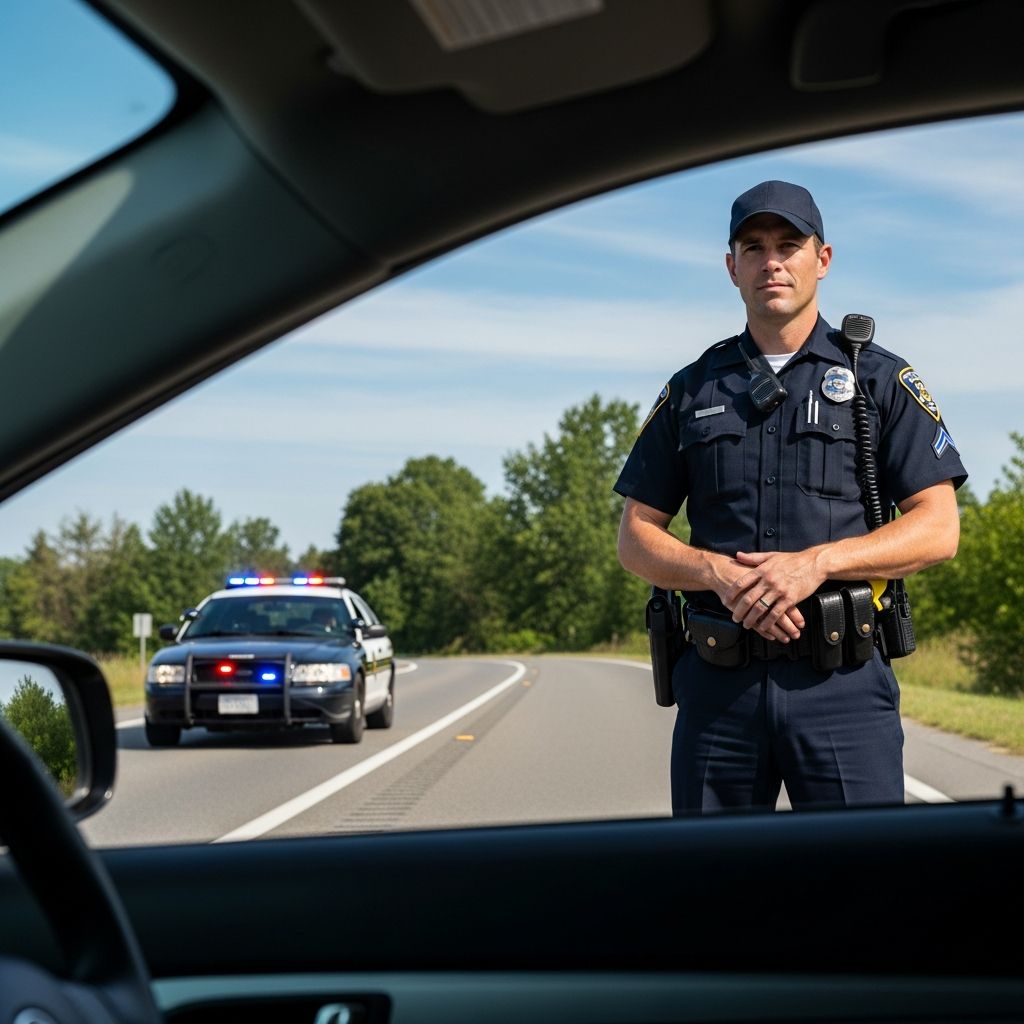
Staying Calm and Composed During a Traffic Stop
Being pulled over by law enforcement can be stressful, even if you’ve done nothing wrong. The flashing lights in your rearview mirror often trigger anxiety, but how you respond can make a big difference in how the situation unfolds. The first and most important step is to remain calm. Take a deep breath, turn off music or distractions, and focus on safely pulling over.
Signal early and move to the right side of the road as soon as it is safe to do so. Choose a well-lit, open area if possible, especially at night. Avoid stopping on curves, hills, or in areas where visibility is poor. Once stopped, turn off your engine, keep your hands visible on the steering wheel, and wait for the officer to approach. Sudden movements or reaching for items without announcing them can be misinterpreted as a threat.
Understanding Why You Were Stopped
Officers are required to have a legal reason to initiate a traffic stop, such as a traffic violation (speeding, broken taillight, rolling stop) or reasonable suspicion of criminal activity. In some states, like Washington, courts have ruled that officers cannot use minor traffic infractions as a pretext to investigate unrelated matters unless there is an independent public safety concern.
When the officer approaches, they will usually explain the reason for the stop. If they don’t, it’s acceptable to politely ask, “Officer, may I ask why I was stopped?” This is not a challenge to their authority but a way to understand the situation. Knowing the reason helps you respond appropriately and later evaluate whether the stop was lawful if needed.
Basic Rights During a Traffic Stop
Even during a traffic stop, you retain important constitutional rights under the Fourth and Fifth Amendments. These include:
- Right to remain silent – You must provide your license, registration, and proof of insurance when asked, but you are not required to answer additional questions about where you’re going, where you’ve been, or whether you’ve been drinking.
- Right against unreasonable searches – Officers generally need your consent, a warrant, or probable cause to search your vehicle. You can refuse consent without being arrested, though the officer may still search if they have legal justification.
- Right to be free from unreasonable detention – A stop should last only as long as necessary to address the original reason (e.g., checking documents, issuing a ticket). Prolonging the stop without reasonable suspicion of another crime may violate your rights.
Passengers in the vehicle also have rights. The U.S. Supreme Court has ruled that passengers are “seized” during a traffic stop and can challenge the legality of the stop if it was unlawful. This means evidence found during an illegal stop may be suppressed in court, even if the passenger was not the driver.
What You Must Provide to the Officer
While you have the right to remain silent, there are a few things you are legally required to provide in most states:
- Valid driver’s license
- Vehicle registration
- Proof of insurance
Refusing to show your license can lead to a citation or even arrest for driving without a license, depending on state law. If you don’t have physical documents, some states allow digital versions through official apps, but this varies by jurisdiction.
After providing these documents, you can politely say, “I’d prefer not to answer any further questions without an attorney,” if you feel uncomfortable. You are not required to admit fault, speculate, or explain your behavior beyond basic identification.
How to Interact with the Officer
Respectful and cooperative behavior goes a long way, even if you believe the stop was unjustified. Here are some practical tips:
- Stay in the vehicle unless instructed otherwise.
- Keep your hands visible, preferably on the steering wheel.
- Speak calmly and avoid arguing, sarcasm, or aggressive body language.
- Answer basic questions (name, address, destination) if you choose, but you can decline to elaborate.
- If asked to exit the vehicle, do so calmly and follow instructions.
Officers may ask questions like “Do you know why I stopped you?” or “Have you been drinking?” These are investigative questions, not required disclosures. You can respond with something like, “I’m not sure, Officer, can you clarify?” or “I’d prefer not to answer that.”
When and How to Refuse a Vehicle Search
One of the most important decisions during a traffic stop is whether to allow a search of your vehicle. Officers often ask, “Do you mind if I look in your car?” This is a request for consent, not a command.
You have the right to say:
- “I do not consent to a search of my vehicle.”
- “I do not consent to a search of my person or belongings.”
Saying this clearly and politely protects your rights. Refusing consent does not give the officer grounds to arrest you, but it may lead them to call for a K-9 unit or seek probable cause based on what they observe (smell of drugs, visible contraband, etc.).
Remember: if the officer has probable cause (for example, they see drugs on the seat), they can search without your consent. If they don’t have probable cause and you didn’t consent, any evidence found may be challenged in court.
When a Stop Turns into an Arrest
If the officer decides to arrest you, the situation changes. You may be handcuffed, placed in a patrol car, and taken to a station. During an arrest, you still have rights:
- You must provide identifying information (name, date of birth, address) in most states.
- You have the right to remain silent about the alleged offense.
- You have the right to an attorney before answering questions.
If the officer begins questioning you after arrest, they must read your Miranda rights. At that point, clearly state: “I want to speak with an attorney” and “I choose to remain silent.” Repeating this helps ensure your statements aren’t used against you later.
Knowing When the Stop Should End
A traffic stop should be limited in time and scope. Once the officer has addressed the reason for the stop (checked documents, issued a warning or ticket), they generally must let you go unless they have reasonable suspicion of another crime.
For example:
- If you were stopped for speeding and the officer has written the ticket, they cannot keep you there to question you about unrelated matters without additional justification.
- If they call for a drug dog or additional officers without observing anything suspicious, that may extend the stop beyond what is legally allowed.
If you believe the stop is being unreasonably prolonged, you can politely ask, “Am I free to leave?” If the officer says yes, you may leave. If they say no, they should explain why they believe they have reason to continue detaining you.
Practical Steps to Protect Yourself
Here are concrete actions you can take before, during, and after a traffic stop:
Before the Stop
- Keep your license, registration, and insurance in an easily accessible place.
- Ensure your vehicle is in good condition (working lights, valid registration).
- Know your state’s laws on recording police and digital documents.
During the Stop
- Pull over safely and promptly.
- Turn off the engine and keep hands visible.
- Provide required documents when asked.
- Be polite but assert your rights when necessary.
- Clearly state if you do not consent to a search.
After the Stop
- Write down everything you remember: officer’s name, badge number, time, location, and what was said.
- Save any dashcam or phone recordings if allowed by law.
- If you believe your rights were violated, contact an attorney or file a complaint with the department’s internal affairs or civilian oversight board.
Common Misconceptions About Traffic Stops
Several myths can lead people to make poor decisions during a traffic stop:
- Myth: “If I don’t consent to a search, the officer will arrest me.”
Reality: Refusing consent is your right and cannot be the sole basis for arrest. - Myth: “I have to answer all the officer’s questions.”
Reality: You only have to provide ID and vehicle documents; other questions are optional. - Myth: “If I sign a ticket, I’m admitting guilt.”
Reality: Signing a ticket is usually just an agreement to appear in court, not an admission of guilt. - Myth: “Passengers have no rights during a stop.”
Reality: Passengers are protected by the Fourth Amendment and can challenge illegal stops and searches.
When to Seek Legal Help
If you believe a traffic stop was unlawful, resulted in an improper search, or led to an unjust arrest, consulting an attorney is crucial. A lawyer can:
- Review whether the stop was justified.
- Challenge evidence obtained through an illegal search.
- Advise on whether to contest a ticket or criminal charge.
- Help file a complaint if misconduct occurred.
Many civil rights and criminal defense attorneys offer free initial consultations. If you were arrested or charged, acting quickly is important to preserve evidence and build a defense.
Frequently Asked Questions
Can the police stop me for a minor traffic violation?
Yes, officers can stop you for any traffic violation, no matter how minor (e.g., a broken taillight, expired registration, or rolling stop). However, in some states, courts have placed limits on using minor violations as a pretext to investigate unrelated crimes without an independent safety concern.
Do I have to answer questions about where I’m going?
No. You are not required to answer questions about your destination, recent activities, or whether you’ve consumed alcohol. You must provide your license, registration, and insurance, but other questions are optional.
Can I record the traffic stop?
In most states, you can legally record police during a traffic stop as long as you are not interfering with their duties. Some states require all parties to consent to audio recording, so it’s wise to know your local laws. If you record, announce it calmly if required by law.
What if the officer asks me to exit the vehicle?
You must comply if the officer instructs you to exit. Keep your hands visible, move slowly, and follow their directions. Officers are allowed to order drivers and passengers out of the vehicle for safety reasons, even during routine stops.
Can I refuse to sign a traffic ticket?
In many jurisdictions, refusing to sign a ticket can result in arrest because it’s seen as refusing to promise to appear in court. Signing the ticket usually only acknowledges receipt, not guilt. If you disagree, you can contest the ticket in court later.
What should I do if I think the stop was illegal?
Stay calm during the stop, follow instructions, and document everything afterward. Write down details, save recordings, and contact an attorney. Do not resist or argue at the scene, as this can lead to additional charges.
Final Thoughts: Balance Safety and Rights
A traffic stop is a moment where safety, respect, and legal rights intersect. While it’s important to know and assert your rights, it’s equally important to do so in a way that keeps everyone safe. Staying calm, providing required documents, and clearly but politely stating your boundaries (like refusing a search) can help you navigate the situation effectively.
Remember, the goal is not to “win” the interaction on the roadside, but to protect your rights, avoid escalation, and preserve your ability to challenge any legal issues in court if necessary. Preparation, knowledge, and composure are your best tools when the lights appear in your rearview mirror.
References
- Brendlin v. California, 551 U.S. 249 (2007) — Supreme Court of the United States. 2007. https://www.supremecourt.gov/opinions/06pdf/06-8120.pdf
- Know Your Rights: Stopped by Police — American Civil Liberties Union. Accessed 2025. https://www.aclu.org/know-your-rights/stopped-by-police
- What to Do When Pulled Over by Law Enforcement — American Association of Motor Vehicle Administrators (AAMVA). Accessed 2025. https://www.aamva.org/law-enforcement/what-to-do-when-stopped-by-law-enforcement
Similar Articles








Read full bio of Sneha Tete




