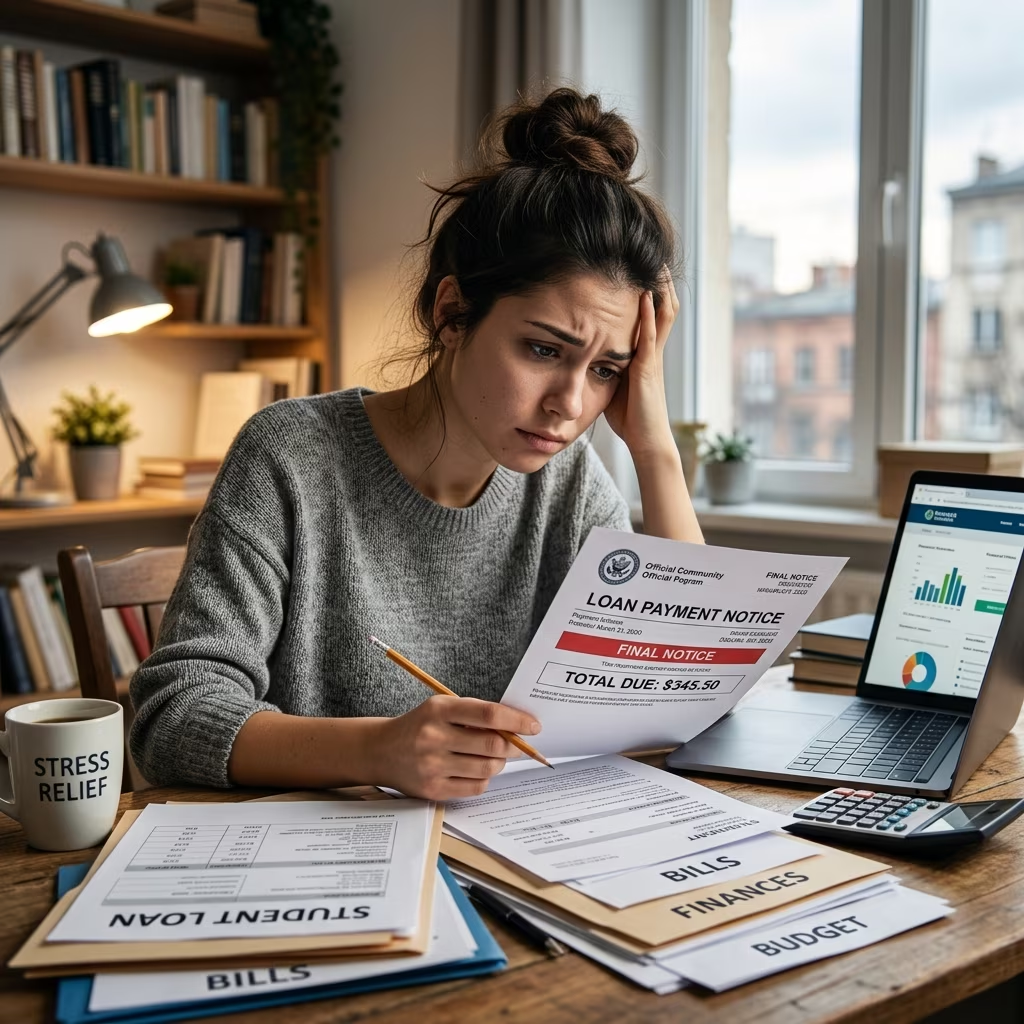
If your student loan payments are becoming unmanageable, you are not out of options. Depending on whether your debt is government-backed or private, you may be able to lower payments, pause them temporarily, negotiate revised terms, or explore formal debt relief.
The right response depends on the kind of loan you have, whether it is in good standing, and how long it has been since your studies ended or your last payment was made. Acting early matters because it can help you avoid collections, additional fees, and legal enforcement.
First, identify what kind of loan you have
The most important first step is to determine whether your student loan is a government loan, a private loan, or a mix of both. Government loans usually come with repayment programs and protections that private lenders may not offer. Private loans, on the other hand, are governed by the contract you signed with the lender, so the lender’s flexibility will depend on its own policies.
- Government loans are often eligible for repayment assistance.
- Private loans may allow renegotiation, but the lender is not required to reduce your payment.
- If you have both types of debt, you may need to deal with each one separately.
Before contacting a lender, gather your loan statements, monthly budget, and any records showing changes in your income or expenses. That information will make it easier to explain why you need help and what payment level you can realistically afford.
Use repayment help before you miss too many payments
If your loan is a government student loan, repayment assistance may be available through the National Student Loans Service Centre. These programs are designed for borrowers who are facing temporary financial hardship or who have a disability that makes working difficult.
In some cases, assistance can reduce the amount you need to pay each month to something affordable. In others, you may qualify for no payment at all for a limited approval period. The exact result depends on your income, household size, and other eligibility criteria.
- You can usually apply online or submit a paper application.
- Supporting documents may be required to verify income or family circumstances.
- If approved, you may need to reapply periodically.
Repayment assistance is usually most effective when you apply before the loan falls into serious arrears. If you wait until the debt is in collections, your choices may become narrower and the process more stressful.
Ask about changing the loan terms
If your repayment difficulty is temporary, it may make sense to ask for a change in the loan terms rather than relying only on short-term assistance. This can be useful whether your loan is government-backed or private.
For a government student loan, one possible option is a Revision of Terms arrangement. This may allow you to reduce payments for a short period, make interest-only payments for a time, or extend the repayment schedule. The benefit of this approach is that it can give you breathing room without forcing you into a more permanent debt solution.
If your loan is private, contact the lender directly and explain your situation. A private lender may be willing to lower payments, give you more time, or temporarily adjust the repayment structure, especially if you contact them before default occurs.
- Ask whether reduced payments are possible.
- Ask whether the lender can extend the repayment period.
- Ask whether interest-only payments are available for a short period.
If you are not sure whether the lender still has the legal right to enforce the debt, get advice before agreeing to anything. In some situations, limitation periods may affect whether a lender can sue to collect.
Do not ignore collections or legal deadlines
Missing payments does not make a loan disappear. If the debt remains unpaid, the lender or government may move toward collections or other enforcement steps. Those steps can affect your credit, your bank account, and in some cases your wages or tax refunds.
The sooner you act, the more control you usually have. A borrower who reaches out early may still qualify for payment relief or other accommodation. A borrower who waits until the account has been transferred to collections may have fewer options and more pressure.
It is also important to understand that repayment issues can intersect with legal time limits. In some cases, the amount of time that has passed since a missed payment or formal demand can matter. That is one reason it is wise to get advice before entering into a new payment arrangement if you think the debt may already be legally stale.
Consider what happens if your debt is already in default
Once a student loan is in default, the consequences can be more serious. Default can trigger collection efforts and may affect your ability to qualify for new assistance immediately. In that situation, you may need to take steps to bring the loan back into good standing before other options become available.
For government student loans, there may be a process to restore the account after missed payments. That often involves making certain payments or resolving outstanding interest before the loan can be treated as current again. If the debt is already in collections, contact the relevant service centre as soon as possible to ask what must be done to repair the account.
- Find out whether interest or missed payments must be addressed first.
- Ask what steps are needed to restore good standing.
- Confirm whether the account is with the original servicer or a collections agency.
Because every file is different, the fastest path back to stability is usually a direct conversation with the agency handling the debt.
Understand the difference between temporary relief and debt forgiveness
Repayment assistance and revised terms are useful when the problem is temporary or when you need a lower monthly payment. Debt forgiveness, by contrast, is a more permanent solution and is usually only considered when you need a clean break from debts you cannot realistically repay.
There are legal tools that may help if your financial situation has become unmanageable. A licensed insolvency trustee can explain whether a consumer proposal or bankruptcy is appropriate. These are formal processes with serious consequences, so they should not be treated as casual fixes. However, for some borrowers, they are the most realistic path to a fresh start.
- A consumer proposal changes how you repay creditors.
- Bankruptcy may eliminate many debts, but it also has important consequences.
- Both options should be reviewed with a licensed insolvency trustee.
If you are considering a formal insolvency option, take time to understand how your student loan is treated. Government student loans can receive special treatment under insolvency law, including waiting periods before discharge may be available.
Special rules may apply if you are thinking about bankruptcy
Student loans are not always wiped out immediately in bankruptcy. If you were a student within the last seven years, your government student loan debt may survive bankruptcy. In other words, filing for bankruptcy does not automatically erase that debt if the waiting period has not passed.
There is also a possible shorter path in some cases. After five years have passed since you stopped being a student, you may be able to ask a court for an earlier discharge of government student loan debt. This is a legal process, not an automatic result, and it usually requires showing that repayment would impose serious hardship.
Because these rules are technical and time-sensitive, professional advice is especially important before filing bankruptcy if student loan debt is a major part of your financial problem.
How to decide which option fits your situation
There is no single best solution for every borrower. The right choice depends on whether your income problem is short term or long term, whether your loan is government or private, and whether you are already in default or collections.
| Situation | Possible response | Main goal |
|---|---|---|
| Temporary income drop | Repayment assistance or revised terms | Lower or pause payments |
| Private loan with room to negotiate | Direct lender discussion | Modify repayment terms |
| Loan in collections | Contact the servicer or collections office | Restore good standing |
| Long-term inability to pay | Consumer proposal or bankruptcy review | Seek broader debt relief |
This comparison is only a general guide. Your actual options may be broader or narrower depending on the lender, the age of the debt, and your total financial picture.
Practical steps to take right now
If you are struggling today, focus on actions that can reduce damage quickly. Start with your loan details, then move to repayment help, and then to legal advice if needed.
- Confirm whether your student loan is government-backed, private, or both.
- Check whether the loan is current, overdue, or in collections.
- Contact the servicer or lender and explain your financial situation.
- Ask about repayment assistance, revised terms, or a temporary payment plan.
- Review whether any legal time limits may affect the debt.
- If the debt is overwhelming, speak with a licensed insolvency trustee.
Taking these steps early can help you avoid making a bad situation worse. Even a short conversation with the right office can reveal options you did not know existed.
Frequently asked questions
Can I get help if I already missed a student loan payment?
Yes. Borrowers can often still contact the lender or loan service centre after missing a payment to ask about repayment help, payment arrangements, or restoring the account to good standing.
Do private student loans have repayment assistance programs?
Private lenders are not required to offer the same programs as government loan systems, but many will discuss alternative payment arrangements if you contact them early.
Will bankruptcy automatically erase my student loan?
Not always. Government student loans may still survive bankruptcy if you finished school within the relevant waiting period, although a court may sometimes allow earlier relief in appropriate cases.
What if I just need a short break from paying?
If the problem is temporary, ask first about repayment assistance or a revised payment schedule. Those options are often better suited to short-term hardship than formal insolvency.
Should I wait to see if the lender contacts me?
No. Borrowers generally have more options before a loan is in serious default or collections. Contacting the lender early can improve your chances of finding a manageable solution.
References
- If you’re having difficulty paying your student loan — People’s Law School. 2026. https://www.peopleslawschool.ca/difficulty-paying-student-loan/
- Repay a student loan – Can’t repay — Government of Canada. 2026. https://www.canada.ca/en/services/benefits/education/student-aid/grants-loans/repay/unable-repay.html
- Repayment Assistance — Alberta Student Aid. 2026. https://studentaid.alberta.ca/resources/repayment-essentials/help-during-repayment/repayment-assistance/
- Get help with repayment — StudentAid BC. 2026. https://studentaidbc.ca/repay/repayment-help
- A Smarter Way to Handle Student Loans in Canada: Repayment Assistance, Revised Terms and Forgiveness — CAIRP. 2026. https://cairp.ca/industry-views-news/blogs/A_Smarter_Way_to_Handle_Student_Loans_in_Canada_Repayment_Assistance_Revised_Terms_and_Forgiveness