
DUI Checkpoints: Your Rights, What To Expect, And Safety Tips
Understand how DUI checkpoints work, what police can and cannot do, and how your legal rights apply when you’re stopped on the road.
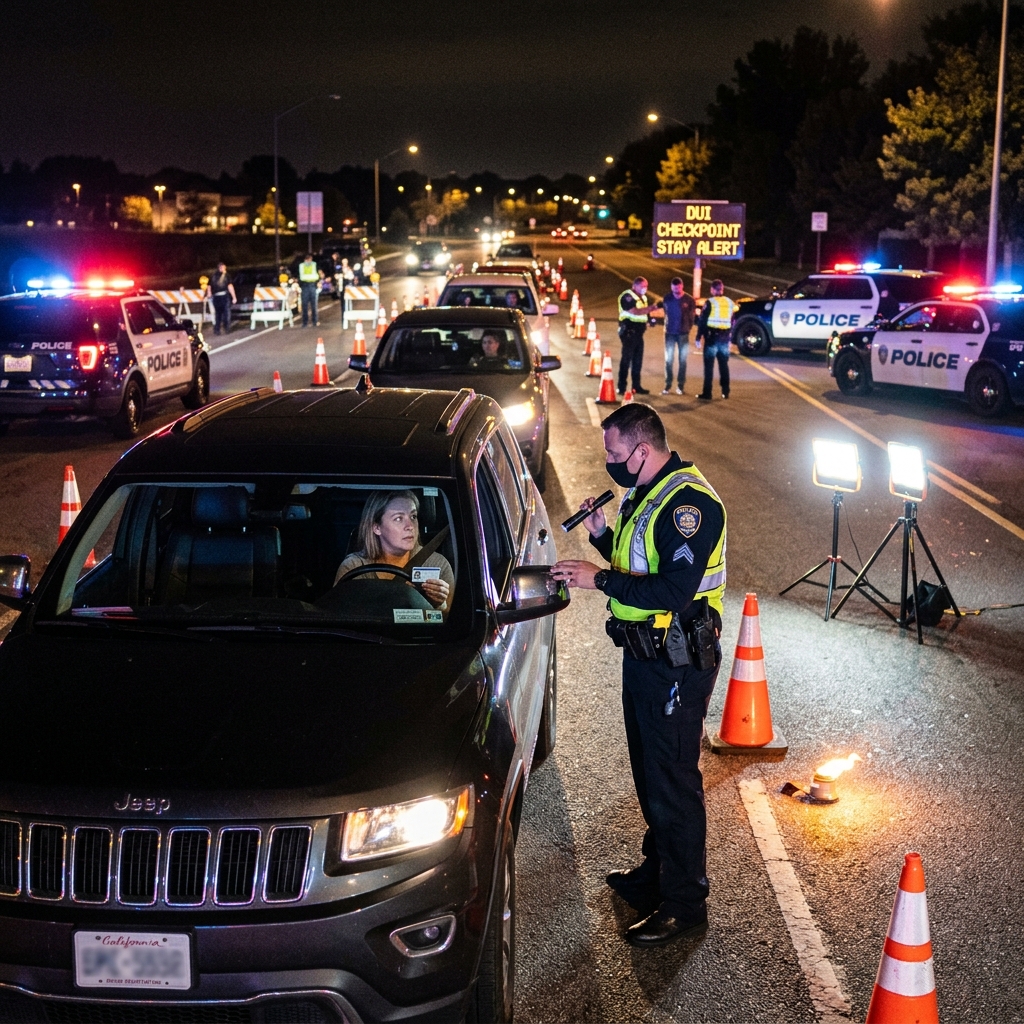
DUI checkpoints, often called sobriety checkpoints, are temporary roadblocks law enforcement uses to detect and deter impaired driving. They are common in many states, especially on weekends and holidays, and can feel intimidating if you encounter one unexpectedly.
This guide explains how these checkpoints are planned and operated, what officers look for, the types of tests they may administer, and how your rights and obligations fit into the process. The goal is to help you understand what to expect so you can navigate a checkpoint calmly and lawfully.
Understanding the Purpose of DUI Checkpoints
At their core, DUI checkpoints are designed to promote road safety by identifying drivers who are under the influence of alcohol or drugs and by discouraging people from driving after drinking.
- Detection: Officers can identify and remove impaired drivers from the roadway.
- Deterrence: Publicized checkpoints increase the perceived risk of being stopped and arrested for DUI, which can reduce drunk driving overall.
- Efficient enforcement: Checkpoints allow officers to screen many drivers in a short time, using standardized procedures.
Unlike routine traffic stops, officers at a checkpoint do not need individualized reasonable suspicion just to stop you. Instead, vehicles are stopped according to a neutral, pre-planned pattern such as every car or every fourth vehicle.
Where and When Checkpoints Are Used
Not every state permits DUI checkpoints. Laws vary widely, and some states prohibit them on constitutional or statutory grounds, while others conduct them regularly as part of highway safety campaigns.
In states that allow them, checkpoints are typically set up:
- On public roads with a history of drunk driving crashes or arrests
- During high-risk periods, such as late nights, weekends, and holidays
- With advance planning and, in many cases, public notice through media or traffic safety agencies
National guidance from traffic safety agencies emphasizes that checkpoints should be visible, well-marked, and physically safe for drivers and officers, with adequate lighting, signs, and cones to manage traffic flow.
How a DUI Checkpoint Is Planned and Authorized
For a checkpoint to be lawful under federal and state constitutions, it must follow clear, pre-approved procedures rather than leaving decisions to the on-scene officer’s discretion.
Typical legal requirements include:
- Neutral stopping pattern: Vehicles must be stopped based on a formula (for example, every third car), not based on the officer’s subjective choice.
- Written or approved plan: Supervisors or designated officials must approve a written plan that covers how the checkpoint will operate, what its purpose is, and how officers will interact with drivers.
- Legitimate purpose: The primary stated purpose must be to detect and deter impaired driving, not to search for unrelated offenses.
- Limited intrusion: The stop should be brief and focused, balancing public safety with individual rights by minimizing delays and unnecessary questioning.
- Safety measures: The site must be physically safe, with clear signs, traffic control devices, and sufficient space to conduct screenings without creating hazards.
When any of these elements are missing or poorly executed, defense attorneys may challenge the legality of arrests made at the checkpoint.
What Happens As You Approach the Checkpoint
Encountering a checkpoint usually follows a predictable sequence. As you approach, you can expect:
- Advance warning: Signs, cones, and lights signaling a law enforcement checkpoint ahead.
- Traffic control: Officers directing vehicles into one or more lanes, sometimes slowing traffic with flares and barriers.
- Selection pattern: Vehicles being waved through or stopped according to the pre-established neutral formula.
In some jurisdictions, drivers are allowed to legally turn away from the checkpoint if they do so safely and without violating traffic laws. However, abrupt avoidance—like making an illegal U-turn or cutting across lanes—may attract attention and lead to a separate lawful stop if officers observe a traffic violation or suspicious behavior.
Initial Interaction: Questions and Observations
When your vehicle is stopped at the checkpoint, the first interaction is typically brief. Officers aim to gather basic information while watching for signs of impairment.
Common steps include:
- Requesting your driver’s license, registration, and proof of insurance
- Engaging in a short conversation to observe speech, demeanor, and responsiveness
- Looking for physical signs of impairment, such as:
- Odor of alcohol
- Bloodshot or glassy eyes
- Slurred or slow speech
- Difficulty following instructions
- Open containers or visible alcohol in the vehicle
If the officer does not detect any signs of impairment, you are typically allowed to proceed almost immediately. If they do observe indicators of alcohol or drug use, the interaction may escalate to more focused questioning and testing.
From Screening to Investigation: When Officers Take a Closer Look
Checkpoint stops themselves are brief, but if an officer develops reasonable suspicion that you are impaired, they may transition from routine screening to a more detailed DUI investigation.
Factors that may trigger further investigation include:
- Strong smell of alcohol coming from the driver or the vehicle
- Admission of drinking or drug use
- Visible open containers or drug paraphernalia
- Difficulty locating documents or responding coherently
- Obvious coordination problems (fumbling keys, dropping items, etc.)
At this point, the officer may ask you to step out of the vehicle for field sobriety tests or request a preliminary breath test using a portable device, depending on the laws of the state.
Field Sobriety Tests: Assessing Coordination and Attention
Field sobriety tests are standardized physical and cognitive tasks used to assess whether a driver may be impaired. Many agencies rely on a three-test battery developed and validated for detecting alcohol impairment.
| Test Name | What It Evaluates | Typical Procedure |
|---|---|---|
| Horizontal Gaze Nystagmus (HGN) | Involuntary jerking of the eyes, which becomes more pronounced under alcohol impairment | Officer moves a small object (like a pen) side to side while the driver tracks it with their eyes. |
| Walk-and-Turn | Balance, coordination, and ability to follow multi-step instructions | Driver walks heel-to-toe along a straight line for nine steps, turns, and returns in the same fashion. |
| One-Leg Stand | Static balance and divided attention | Driver stands on one foot, holding it raised for about 30 seconds while counting aloud. |
Officers look for specific clues during these tests, such as swaying, stepping off the line, using arms for balance, or losing count. Multiple clues across tests can suggest impairment and lead to further testing or arrest.
Breath, Blood, and Urine Tests: Measuring Alcohol Concentration
In addition to field sobriety tests, officers may use chemical tests to measure your blood alcohol concentration (BAC).
- Portable breath tests (PBTs): Handheld devices used at the roadside to estimate BAC and support the officer’s decision to move forward with an arrest or additional testing.
- Stationary breath tests: More sophisticated breathalyzer equipment typically used at a police station or central testing location.
- Blood or urine tests: Often ordered after an arrest, particularly when drug impairment is suspected or breath results are disputed.
In most states, a BAC of 0.08% or higher for adult non-commercial drivers is considered over the legal limit for DUI, although lower thresholds apply for commercial drivers and drivers under 21. A positive chemical test often provides probable cause for a formal DUI arrest.
Your Rights and Obligations at a Checkpoint
Even though checkpoints allow for brief suspicionless stops, drivers retain important constitutional rights. Understanding them can help you respond appropriately while avoiding unnecessary conflict.
Rights You Generally Have
- Right to be free from unreasonable searches: Officers cannot search your vehicle or belongings without consent, a warrant, or a recognized legal exception. The initial checkpoint stop alone does not automatically justify a full search.
- Right to remain silent: Beyond basic identifying information required by law (such as your name and license), you generally have the right not to answer incriminating questions.
- Right to counsel after arrest: If you are arrested, you have the right to consult with an attorney before making significant decisions, subject to your jurisdiction’s rules.
Obligations You Usually Must Follow
- Provide license and registration: Virtually all states require drivers to present these documents upon lawful request.
- Comply with lawful orders: Instructions such as pulling into a designated lane, remaining in the vehicle when told, or exiting the vehicle are typically lawful commands during a checkpoint.
- Implied consent for chemical testing: Many states have implied consent laws that impose license suspensions or other penalties if you refuse post-arrest chemical testing (breath, blood, or urine).
The precise scope of these rights and obligations depends on state law and recent court decisions, so consulting a local attorney is crucial if you face charges stemming from a checkpoint.
Common Outcomes of a DUI Checkpoint Stop
Most drivers pass through a checkpoint in under a minute and continue on their way. However, a stop can lead to several possible outcomes:
- No action: No signs of impairment; the driver is allowed to proceed.
- Warning or minor citation: Officers may issue warnings or citations for non-DUI issues such as expired registration.
- Further testing: If impairment is suspected, officers may conduct field sobriety tests or a preliminary breath test.
- DUI arrest: If tests and observations suggest impaired driving, the driver may be arrested and the vehicle towed.
After an arrest, the case follows the typical DUI process: formal charges, arraignment, potential license suspension proceedings, and possible trial or plea negotiations.
Practical Tips for Drivers Encountering a Checkpoint
While checkpoint procedures are largely standardized, how you respond can influence the outcome. The following practical tips focus on lawful, safe behavior:
- Stay calm and patient: A brief delay is normal; aggressive behavior or argument can escalate the situation unnecessarily.
- Have documents ready: Keep your license, registration, and insurance easily accessible to reduce fumbling and delays.
- Communicate clearly and politely: Officers are watching for confusion and slurred speech; clear communication helps demonstrate sobriety.
- Avoid unnecessary movements: Sudden or suspicious movements can increase officer concern and scrutiny.
- Know your limits with alcohol: The safest strategy is not to drive after drinking. Checkpoints are designed to catch drivers who ignore this advice.
FAQs About DUI Checkpoints
Are DUI checkpoints legal in every state?
No. While many states and Washington, D.C. permit DUI checkpoints, a significant minority either prohibit them or choose not to use them based on constitutional or policy concerns. Whether checkpoints are used where you live depends on state law and court decisions.
Can I be stopped at a checkpoint without doing anything wrong?
Yes. Checkpoints are one of the few circumstances where officers can stop vehicles without individualized reasonable suspicion, as long as they follow a neutral and pre-planned stopping pattern and comply with legal requirements.
Do I have to take field sobriety tests?
In many jurisdictions, field sobriety tests are voluntary, but refusing may not prevent arrest if other signs of impairment are present. The legal consequences of refusal vary by state, so local legal advice is important.
What happens if I refuse a breath or blood test?
Under implied consent laws, refusing a post-arrest chemical test often leads to administrative penalties such as driver’s license suspension, even if you are later not convicted of DUI. Some states also allow refusal to be used as evidence in court.
Can officers search my car at a checkpoint?
Checkpoint stops alone do not automatically justify a full search of your vehicle. Officers may conduct a search if you consent, if they see evidence in plain view, or if other recognized legal grounds exist (such as probable cause or a lawful arrest).
References
- DUI Checkpoint Laws by State — FindLaw. 2023-06-15. https://www.findlaw.com/dui/arrests/dui-checkpoint-laws-by-state.html
- DUI Checkpoints & Legal Requirements — Justia. 2022-09-01. https://www.justia.com/criminal/drunk-driving-dui-dwi/handling-a-dui-stop/sobriety-checkpoints/
- Publicized Sobriety Checkpoints — National Highway Traffic Safety Administration (NHTSA). 2022-01-10. https://www.nhtsa.gov/book/countermeasures-that-work/alcohol-impaired-driving/countermeasures/enforcement/publicized
- What Happens at a Sobriety Checkpoint? — Zero Deaths Maryland (MDOT MVA). 2023-05-05. https://zerodeathsmd.gov/news/what-happens-at-a-sobriety-checkpoint/
- Sobriety Checkpoints — Prevention First Alcohol Policy Resource Center. 2022-03-20. https://www.prevention.org/alcohol-policy-resource-center/law-enforcement-strategies/sobriety-checkpoints/
- North Carolina Checking Stations and Roadblocks — Powers McCartan PLLC. 2021-11-02. https://www.carolinaattorneys.com/blog/north-carolina-checking-stations-and-roadblocks-how-dui-checkpoints-operate-under-g-s-20-16-3a/
Similar Articles








Read full bio of Sneha Tete




