A DUI hardship license is a limited driving privilege that may allow a person with a suspended or revoked license to drive for essential purposes. In many states, it is designed to help drivers maintain employment, attend school, receive medical care, or meet other necessary obligations while still serving the consequences of a DUI-related suspension.
The exact name, eligibility rules, and application process vary by state. Some states call it a hardship license, while others use terms such as restricted license, restricted driving permit, or limited privilege license. Even when the label changes, the central idea is the same: a driver may be allowed back on the road under narrow conditions rather than regaining full driving privileges immediately.
How a hardship license differs from a regular license
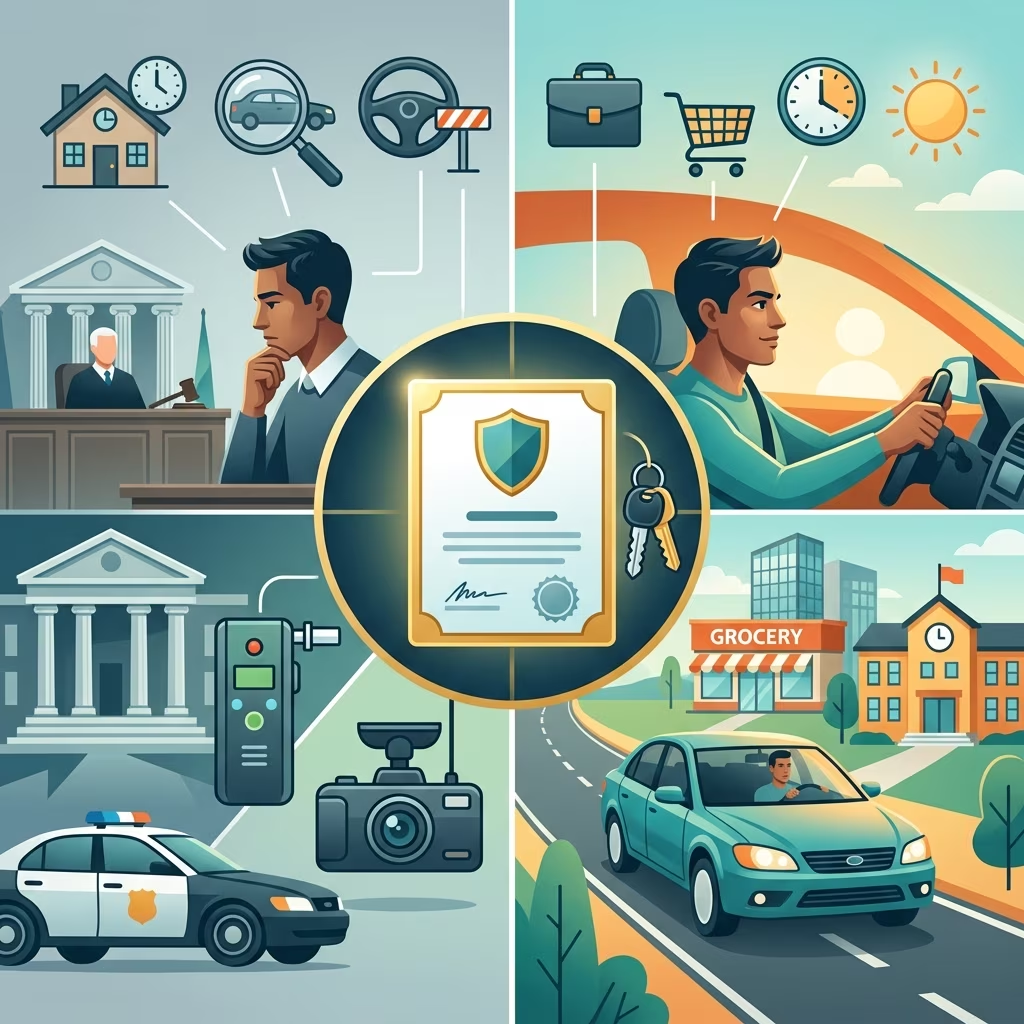
A normal driver’s license allows broad driving privileges, subject to general traffic laws. A hardship license, by contrast, is limited and conditional. It does not restore unrestricted driving rights. Instead, it usually permits travel only for approved activities and often only at approved times.
Common restrictions may include:
- Driving only to and from work
- Driving to school or training programs
- Traveling to medical or treatment appointments
- Using the license only within a certain geographic area
- Installing an ignition interlock device in some cases
Because the license is limited, violating its terms can lead to serious consequences, including additional suspension time, fines, or a complete loss of the privilege.
Who may qualify for limited driving privileges
Eligibility depends on state law and the reason for the suspension. In many jurisdictions, a person must show that they have a genuine need to drive and that limited driving access will support basic life responsibilities. That need is often tied to work, education, treatment, or medical care.
States commonly consider factors such as:
- The number of prior DUI offenses
- Whether the driver refused chemical testing
- Whether mandatory DUI education has been started or completed
- Whether the driver has insurance and other required documentation
- Whether the driver poses a public safety concern
Some states are more flexible for first-time offenders, while repeat offenders may face waiting periods or stricter requirements. Commercial drivers often face additional limits, and in some states they may not use a hardship license to drive a commercial vehicle at all.
Typical reasons a state may grant the license
Hardship licenses exist because a complete loss of transportation can make everyday responsibilities difficult to manage. States generally want to balance public safety with practical realities. That is why the most common reasons for approval are connected to necessities rather than convenience.
Examples of accepted purposes often include:
- Getting to and from a job
- Attending classes or educational programs
- Traveling to court-ordered treatment
- Visiting doctors, therapists, or pharmacies
- Transporting children when no reasonable alternative exists
A request is usually stronger when the applicant can document that no practical public transit, ridesharing, or family support option is available. The more clearly the applicant can show necessity, the better the chance of approval in many systems.
What the application process often looks like
The process usually starts with confirming that the person is eligible under state law. From there, the driver may need to complete education or treatment, gather documents, pay fees, and attend a hearing or administrative review. While the steps vary by jurisdiction, the basic sequence is often similar.
Common application steps include:
- Confirm eligibility after the DUI suspension or revocation begins
- Enroll in any required alcohol education or treatment program
- Obtain proof of enrollment or completion
- Collect insurance documents such as an SR-22 or other proof of financial responsibility where required
- File the application with the correct agency or court
- Attend a hearing or review appointment
- Pay the required filing or administrative fees
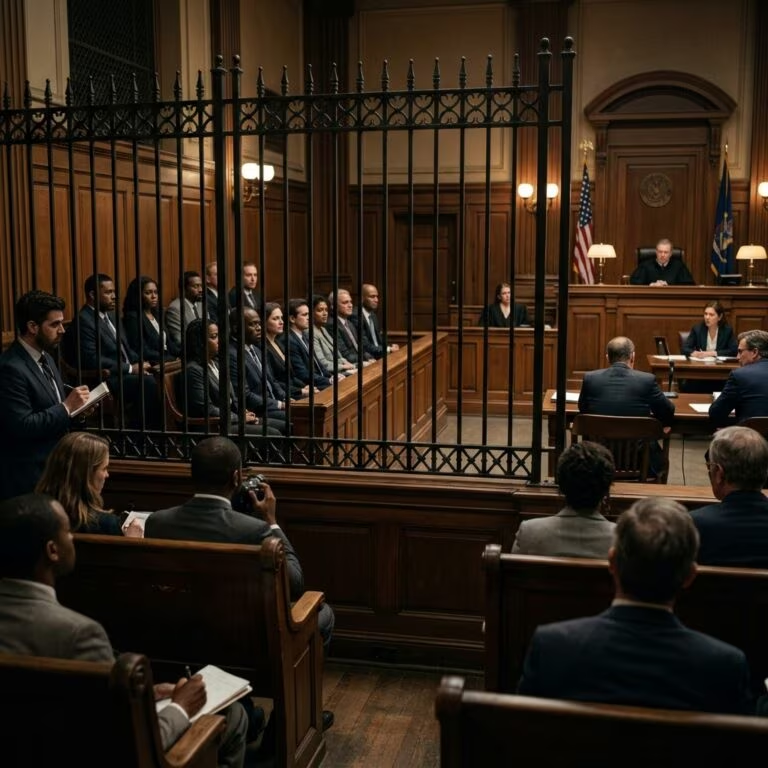
In some states, a hearing officer decides whether the driver has shown enough need and responsibility to justify limited privileges. In others, the court may issue the order first and the licensing agency then processes the restricted license.
Documents that are commonly required
Applicants are often asked to prove both need and compliance. That means the paperwork may address employment, treatment, insurance, and identity. Missing documents are one of the most common reasons an application is delayed.
| Document | Why it matters |
|---|---|
| Proof of identity | Confirms the applicant is the person seeking restricted privileges |
| Employment or school verification | Shows the driving need is tied to an essential obligation |
| Medical or treatment records | Supports travel for appointments or required rehabilitation |
| Insurance proof | Demonstrates financial responsibility where the state requires it |
| DUI program documentation | Shows compliance with court or agency requirements |
Some states may also require an ignition interlock certificate, proof of residence, a driving record, or a signed statement explaining why the applicant needs limited privileges. Because requirements differ, the safest approach is to review the exact checklist used by the state agency handling the request.
Common restrictions after approval
Getting a hardship license does not mean a person can drive freely. The license usually comes with explicit limits, and those limits may be printed on the card or described in a court or administrative order. The restrictions are enforceable, not advisory.
Typical limits may include:
- Specific days or hours when driving is allowed
- Approved destinations only
- Zero tolerance for alcohol or drug use while driving
- Mandatory ignition interlock installation
- Ban on driving outside the state or county
If the driver exceeds the approved route or uses the license for personal errands, the state may treat that as a violation. For that reason, many applicants keep a copy of the order in the vehicle and review the restrictions carefully before they drive.
First-time offenders versus repeat offenders
States often treat first-time DUI cases differently from repeat cases. A first-time offender may be eligible sooner, sometimes after enrolling in or completing DUI school. A repeat offender usually faces more conditions and may need to wait longer before applying.
For example, some states allow an earlier application if the person gives up the right to challenge the suspension, while others require a waiting period after a second or later offense. Prior refusals to submit to testing can also make the process more difficult, especially where the state imposes separate penalties for test refusal.
Repeat cases may also trigger closer scrutiny of whether the applicant is a safety risk. A state may ask whether the person has completed treatment, whether the driving record reflects other violations, and whether the request is genuinely necessary or merely convenient.
Why insurance and ignition interlock rules matter
Many states require proof of financial responsibility before restoring even limited driving privileges. That proof may take the form of a special insurance filing, such as an SR-22, or a comparable certificate. The point is to show that the driver can meet minimum liability coverage requirements.
Ignition interlock devices are also common in DUI-related hardship cases. An interlock device prevents the vehicle from starting unless the driver provides an alcohol-free breath sample. In some states, installation is mandatory for certain offenses; in others, it is ordered as a condition of the restricted license.
These requirements serve two purposes: they help reduce risk on the road and they give the state a way to monitor compliance. If the driver does not maintain insurance or remove the interlock too early, the hardship license can be suspended or revoked again.
Benefits and limits of applying early
In some situations, applying quickly can help a person avoid major disruptions in daily life. A driver who depends on a car for work may lose income without some form of limited license. Similarly, a person with ongoing medical treatment may need transportation to remain compliant with doctor instructions.
At the same time, applying too early without meeting the state’s conditions can waste time and money. If the applicant has not completed mandatory classes, gathered proof of insurance, or waited through the required suspension period, the request may be denied. Careful timing is important.
Applicants should also remember that a hardship license is not automatic. A hearing officer or judge may still deny the request if the record suggests a serious threat to public safety or if the paperwork is incomplete.
How to make a stronger request
A well-prepared application usually does three things: it proves eligibility, shows need, and demonstrates responsibility. The strongest requests are organized and consistent with the state’s requirements.
Helpful preparation steps include:
- Read the state’s DUI and licensing rules carefully
- Collect all required documents before the hearing
- Complete any ordered classes or evaluations as early as possible
- Be ready to explain why the driving need is essential
- Follow every restriction after approval
Keeping copies of appointment schedules, employer letters, and treatment records can make the process easier. If a state offers a formal review or hearing, arriving prepared and respectful can also matter, because the decision often turns on whether the applicant appears reliable and compliant.
Frequently asked questions
Is a DUI hardship license the same as a regular license? No. It is a restricted privilege that allows only limited driving for approved reasons.
Can everyone with a DUI suspension apply? No. Eligibility depends on state law, offense history, and whether the person has met required conditions such as treatment or waiting periods.
Can I drive anywhere I want with a hardship license? Usually not. Most hardship licenses limit driving to specific destinations, times, or purposes.
Do I need special insurance? Often yes. Many states require proof of financial responsibility before or during the restricted-license process.
Can a commercial driver use a hardship license for work driving? Often no. Many states place strict limits on commercial driving after a DUI conviction.
What happens if I violate the restrictions? The state may revoke the hardship license, extend the suspension, or impose additional penalties.
Why state rules vary so much
There is no single national hardship-license system. Each state writes its own DUI penalties, reinstatement rules, hearing procedures, and insurance requirements. That is why the details can look very different from one state to another.
Some states route the request through an administrative office, while others involve a court. Some states use the term “hardship license,” while others prefer “restricted driving permit” or “limited privilege.” Some states focus heavily on treatment compliance, and others emphasize waiting periods and proof of need.
Because of that variation, drivers should not assume that another person’s experience will match their own. The most reliable source is the state agency responsible for driver licensing in the state where the suspension occurred.
References
- DUI Hardship License in Florida — Musca Law. 2025-01-01. https://www.muscalaw.com/blog/dui-hardship-license-florida
- Can I Get a Hardship License After a DUI Charge? — DuPage County Criminal Lawyers. 2025-01-01. https://www.dupagecountycriminallawyers.com/wheaton-defense-attorneys/can-i-get-a-hardship-license-after-a-dui-charge
- Apply for a hardship driver’s license — Mass.gov. 2025-01-01. https://www.mass.gov/how-to/apply-for-a-hardship-drivers-license
- Hardship Driver License Frequently Asked Questions — Alabama Law Enforcement Agency. 2025-01-01. https://www.alea.gov/sites/default/files/inline-files/Hardship%20License%20FAQs_0.pdf