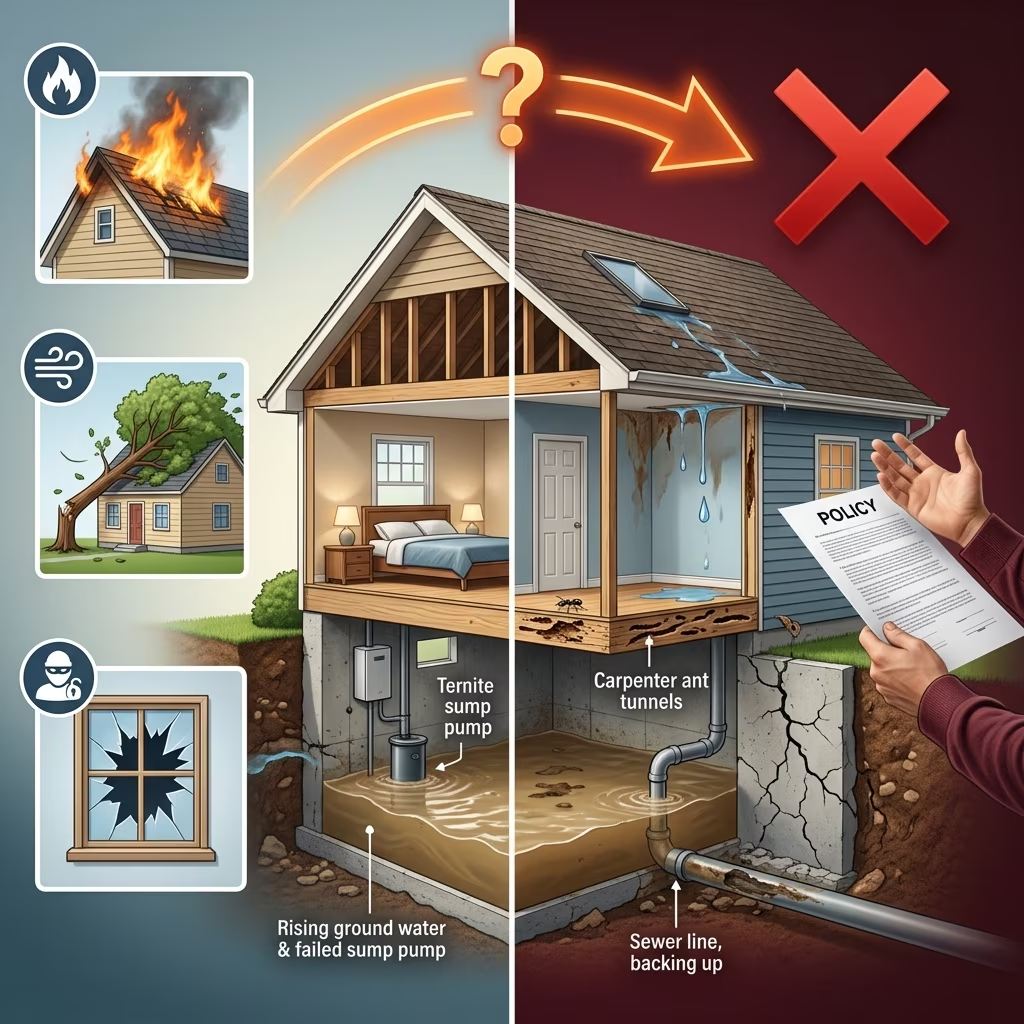
Homeowners insurance is designed to protect one of the biggest purchases most people ever make, but it does not cover every loss a homeowner can face. A standard policy usually handles common risks such as fire, theft, wind, and certain liability claims, yet many expensive events fall outside the basic contract. Understanding those gaps can help homeowners avoid unpleasant surprises after a storm, accident, or major repair.
This article explains the losses a typical homeowners policy often leaves out, why those exclusions matter, and what separate coverage options may help fill the gap. It also outlines practical steps homeowners can take to review their policy before a claim dispute or uncovered loss creates financial strain.
The Core Protections in a Standard Policy
Most homeowners policies are built around a familiar set of protections. These typically include coverage for the dwelling itself, other structures on the property, personal belongings, temporary living expenses, and personal liability. In practical terms, that means a policy may pay to repair damage to the house, replace a stolen television, reimburse hotel costs if the home becomes unlivable, or pay certain legal and medical expenses if a guest is injured on the property.
Those protections are valuable, but they are not unlimited. Policies are written to cover specified perils and specific categories of loss. If the cause of damage is excluded or the item is not covered under the policy terms, the insurer may deny part or all of the claim.
| Common coverage in a standard policy | What it generally helps with |
|---|---|
| Dwelling | Repairing the structure of the home after a covered event |
| Other structures | Damage to detached buildings, fences, and similar structures |
| Personal property | Belongings such as furniture, clothing, and electronics |
| Loss of use | Additional living expenses if the home cannot be lived in |
| Liability | Certain injuries or property damage claims against the homeowner |
Flood Damage Is Usually Not Included
One of the most important exclusions in residential insurance is flood damage. Water that enters a home because of rising ground water, overflowing rivers, storm surge, or similar flooding events is generally not covered by a standard homeowners policy. That matters because flood losses can be severe even when a home is not near a major body of water. Heavy rain, clogged drainage systems, and regional weather events can all produce damaging water intrusion.
For most homeowners, flood protection requires a separate policy. The need for that coverage is especially strong for properties in flood-prone zones, but it can also matter in places that have experienced recent weather extremes or shifting drainage patterns. Homeowners who assume their basic policy will handle a flood often learn otherwise only after filing a claim.
It is also worth remembering that not all water damage is treated the same. A burst pipe inside the home may be covered if the policy language supports it, while water entering from outside after flooding may not be. The source of the water and the policy wording both matter.
Earthquakes and Other Ground Movement Are Separate Risks
Earthquake damage is another major exclusion in many standard policies. Seismic events can cause foundations to crack, walls to separate, chimneys to collapse, and contents to shift or break. Those losses can be expensive to repair, yet a typical homeowners policy does not treat earthquake damage as a standard covered peril.
In earthquake-prone regions, a separate earthquake policy or endorsement can provide added protection. The same idea may apply to related ground movement losses, depending on the policy language and insurer. Homeowners in areas with a lower perceived risk sometimes skip this coverage, but moderate earthquakes can still create serious property damage.
The main lesson is simple: a home can be damaged by a natural event that is dramatic, sudden, and clearly beyond the owner’s control, yet the loss may still be excluded unless the policy specifically includes it.
Maintenance Problems Are Not the Same as Sudden Accidents
Homeowners insurance is built for accidental, sudden losses—not gradual wear and tear. That means problems caused by age, neglect, corrosion, deterioration, or poor upkeep are often excluded. A roof that slowly fails after years of neglect, plumbing that corrodes over time, or structural damage caused by long-term moisture intrusion may not qualify as a covered claim.
This distinction matters because many policyholders expect insurance to function like a home warranty. It does not. Insurers generally expect homeowners to maintain the property in a reasonable condition. When a loss stems from a problem that developed over time, the insurer may argue that the damage was preventable rather than accidental.
That does not mean every maintenance-related issue is excluded in every situation. A sudden pipe burst caused by an unexpected failure may be treated differently from a leak that went unaddressed for months. Claims often turn on facts, documentation, and the exact policy language.
High-Value Belongings May Need Extra Protection
Standard personal property coverage is helpful, but it may not fully protect expensive items. Many policies cap reimbursement for categories such as jewelry, watches, art, collectibles, firearms, or business equipment. That means a homeowner with valuable possessions could face a gap between the item’s actual value and what the policy pays after a loss.
Homeowners can often close this gap with scheduled personal property coverage or a similar endorsement. That type of addition lists specific valuables and provides higher, more tailored protection. It can be especially useful for family heirlooms, engagement rings, or collections that are difficult to replace.
Another important issue is replacement method. Some policies pay actual cash value, which subtracts depreciation, while others provide replacement cost. The difference can substantially affect what the homeowner receives after a theft or fire.
Liability Coverage Has Limits Too
Personal liability coverage is one of the most misunderstood parts of homeowners insurance. It can help if someone is injured on the property or if the homeowner accidentally damages another person’s property. But it has limits, exclusions, and dollar caps. Once the policy limit is exhausted, the homeowner may be responsible for the rest.
Liability coverage may also exclude certain situations, such as intentional acts, business activities, or claims tied to particular types of risk that require separate insurance. A homeowner who runs a business from home, boards animals, or hosts frequent gatherings may need to review whether the standard policy truly fits the way the property is used.
For many households, an umbrella policy can provide extra liability protection beyond the homeowners policy. That can be important when a serious injury claim or lawsuit exceeds standard limits.
Vacant Homes, Secondary Properties, and Special Uses Can Create Gaps
Coverage can also change when a property is vacant or used in unusual ways. A home left empty for an extended period may face exclusions or reduced protection because empty buildings can present greater risk. Similarly, a vacation property, rental home, or part-time residence may not fit neatly into a standard homeowners form.
The same issue arises when a residence is used for activities that create different exposures. Renting a room, operating a childcare business, or storing equipment for a side business may change the insurance picture. In those cases, the homeowner may need a landlord policy, business endorsement, or another form of specialty coverage.
Owners sometimes assume that a policy follows the property regardless of use. In reality, insurers often care as much about how the home is used as they do about the physical structure itself.
How to Reduce the Risk of an Uncovered Loss
There is no single solution that eliminates every insurance gap, but homeowners can reduce risk by taking a few practical steps:
- Review the declarations page and exclusions section of the policy each year.
- Ask whether flood, earthquake, or wind-related losses need separate coverage.
- Inventory valuable property and confirm whether limits are high enough.
- Document renovations, repairs, and expensive purchases with receipts and photos.
- Check whether business use, short-term rentals, or vacant periods affect the policy.
- Consider umbrella liability coverage if household assets or exposure are significant.
These steps do not guarantee a claim will be paid, but they can make a major difference in how a policy performs when damage occurs.
Why Policy Language Matters More Than Assumptions
Insurance disputes often begin with a simple mismatch between what a homeowner thought was covered and what the policy actually says. Coverage is determined by written terms, exclusions, endorsements, and state law. A homeowner who relies on assumptions rather than the policy itself may discover too late that a major loss falls outside the contract.
That is why it helps to read the policy before a loss happens. If the language is unclear, homeowners can ask the insurer or an independent insurance professional to explain how specific risks are treated. It is better to understand the limits now than to argue about them after a claim.
When a Denial Deserves a Closer Look
A denied claim does not always mean the insurer is right. Sometimes a policyholder receives an initial denial based on incomplete facts, a misunderstanding of the cause of loss, or an overly narrow interpretation of the policy. Homeowners should keep photos, repair estimates, correspondence, and any documents showing the condition of the home before and after the event.
If a large claim is denied or underpaid, the homeowner may benefit from a second review by a qualified insurance professional or lawyer. That is especially true when the loss involves a major property damage dispute, a complex exclusion, or a disagreement over causation.
FAQs
Does homeowners insurance cover flood damage?
Usually not. Flood damage is commonly excluded from standard homeowners policies and often requires separate coverage.
Is earthquake damage covered by a normal policy?
Usually no. Earthquake coverage is often purchased separately or added through an endorsement.
Are expensive items fully covered automatically?
Not always. Jewelry, art, collectibles, and similar items may have special limits unless they are scheduled individually.
Does homeowners insurance cover damage from poor maintenance?
Often not. Gradual deterioration, neglect, and wear and tear are commonly excluded because insurance is intended for sudden and accidental losses.
Can liability protection run out?
Yes. Liability coverage has limits, and once those limits are reached, the homeowner may be responsible for additional costs unless extra coverage applies.
Final Takeaway for Homeowners
A standard homeowners policy offers meaningful protection, but it is not a catch-all financial shield. Floods, earthquakes, maintenance problems, limited-value possessions, and special property uses are some of the most common areas where coverage falls short. The best way to avoid surprises is to treat the policy as a detailed contract, not a general promise, and to fill the gaps before a loss occurs.
References
- Washington Homeowners Insurance Coverage — Farmers Insurance. 2022-01-01. https://www.farmers.com/washington/home-insurance/
- Best Homeowners Insurance in Washington of 2026 — U.S. News & World Report. 2026-01-01. https://www.usnews.com/insurance/homeowners-insurance/local/washington
- Home insurance — Washington State Office of the Insurance Commissioner. 2025-03-01. https://www.insurance.wa.gov/insurance-resources/home-insurance
- Homeowner insurance guides — Washington State Office of the Insurance Commissioner. 2025-03-01. https://www.insurance.wa.gov/sites/default/files/2025-03/homeowner-insurance-guide.pdf