
What Homeowners Insurance Usually Leaves Out
A practical guide to the most common homeowners insurance exclusions and gaps.
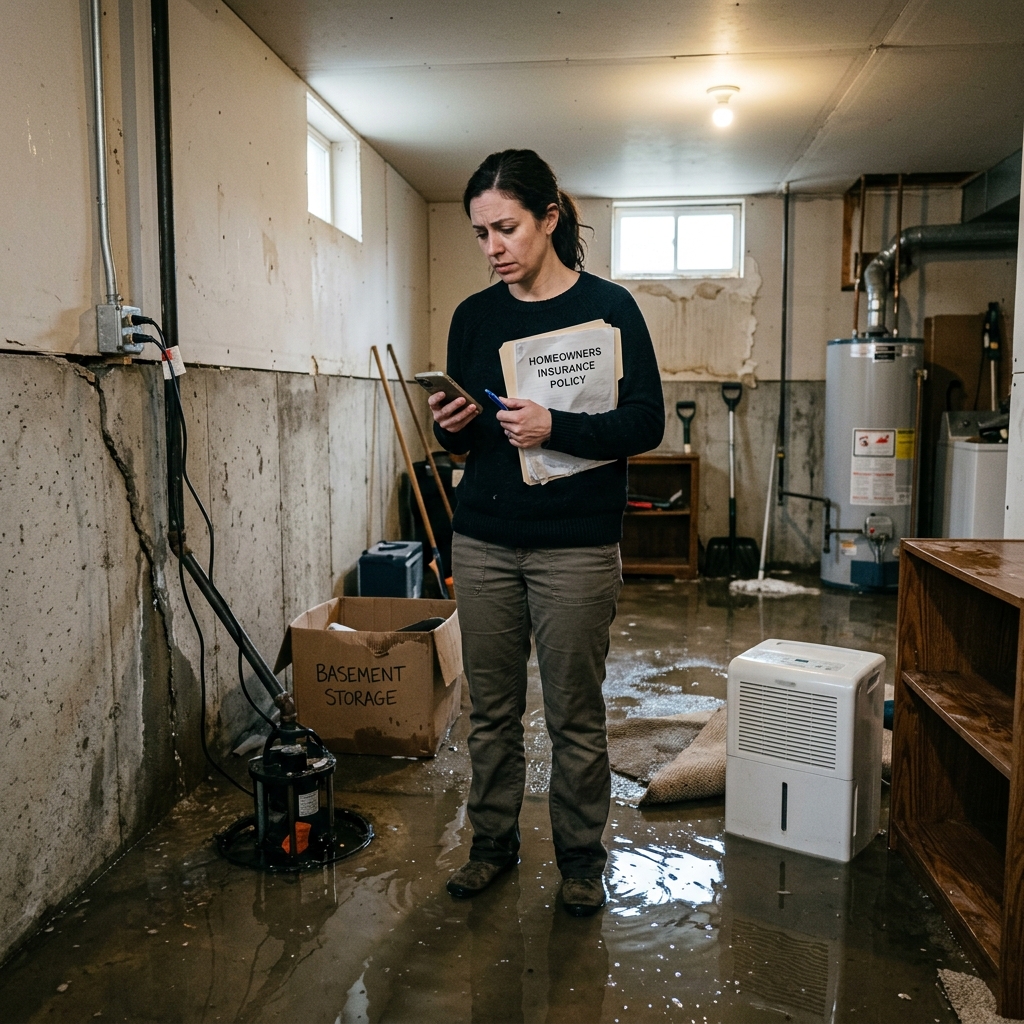
Understanding the limits of a standard homeowners policy
Homeowners insurance is designed to protect a house and the people who live in it from many common risks, but it is not a guarantee against every possible loss. Standard policies usually cover a broad range of sudden and accidental damage, yet they also contain important exclusions that can leave owners responsible for some expensive repairs or replacements.
Those exclusions are not unusual. Insurance is built around spreading predictable risks, while certain losses are treated as too severe, too preventable, or too specialized to include automatically. As a result, the details of what is not covered matter just as much as the coverage itself.
Common losses that are usually excluded
Several types of damage appear repeatedly in standard policy exclusions. These are among the most important gaps for homeowners to understand before a loss occurs.
- Flooding: Water from overflowing rivers, heavy rain, surface water, sewer backups, sump pump failures, and groundwater intrusion is generally not covered by a standard policy.
- Earth movement: Earthquakes, sinkholes, landslides, mudslides, volcanic eruptions, and similar ground shifting events are commonly excluded.
- Wear and tear: Normal aging, deterioration, and maintenance problems are usually treated as the homeowner’s responsibility.
- Neglect: Damage that grows out of failure to maintain the home, fix leaks, or take reasonable protective steps often falls outside coverage.
- Intentional damage: Losses caused on purpose by the policyholder or a household member are not covered.
- War and nuclear events: Damage tied to war, civil war, nuclear reaction, radiation, or radioactive contamination is typically excluded.
Why flood damage is usually handled separately
Flood losses are one of the clearest examples of a gap in standard homeowners insurance. Even when the water enters the house during a severe storm, the cause of the damage matters. Rising water, surface water, overflowing drainage, and similar events are usually treated as flood-related losses and therefore excluded from a basic policy.
This distinction matters because many homeowners assume that if water caused the damage, insurance should apply. In practice, insurers separate internal plumbing problems from outside water intrusion. A burst pipe may be covered, but a sewer backup, sump pump overflow, or flood from stormwater often requires separate protection or an endorsement.
In many cases, homeowners who want flood protection must buy a separate flood policy. That extra step is especially important for people in low-lying or storm-prone areas, but flood events can affect properties outside mapped flood zones as well.
Earthquakes, sinkholes, and ground movement
Standard policies also commonly exclude losses caused by earth movement. This category is broader than many owners realize. It can include shaking from earthquakes, landslides, mudslides, subsidence, sinkholes, and damage linked to volcanic activity.
The reason for this exclusion is largely tied to scale and uncertainty. Ground movement can cause widespread and catastrophic losses in a short time, so it is often insured separately rather than folded into ordinary homeowners coverage.
In some locations, insurers may be required to offer optional coverage for certain earth movement risks, while in others homeowners may need to buy a separate policy or endorsement. The exact availability depends on state law and the insurer’s product design.
Maintenance problems and gradual damage
Another major exclusion involves damage that develops slowly over time. Insurance is generally meant for sudden, accidental events, not for issues that arise because a homeowner postponed repairs or ignored warning signs.
Examples often include:
- Roof leaks that were visible for months before the claim
- Rot, corrosion, or mold linked to ongoing moisture problems
- Damage from old appliances that were never serviced
- Structural deterioration caused by ordinary aging
This does not mean every long-term problem is excluded, but homeowners should assume that routine upkeep is not an insurance function. When a loss could have been prevented through ordinary care, insurers often treat it as maintenance rather than a covered peril.
Damage caused by pests, insects, and animals
Pest infestations are another common source of uncovered loss. Termites, rodents, bees, bats, bedbugs, and similar pests can cause substantial damage, yet insurers frequently classify that damage as preventable or maintenance-related rather than accidental.
There are good reasons for that approach. If infestations were treated like ordinary insured losses, the cost of claims would rise quickly for problems that owners can often reduce with inspection, sealing, cleaning, and extermination. For that reason, property owners are usually expected to manage pest control themselves.
Homeowners should not assume, however, that every incident involving an animal is excluded. Liability coverage may still respond if a pet injures someone else, but damage caused by infestations or pests inside the structure is typically handled very differently.
Businesses run from the home can create coverage gaps
Many homeowners assume a policy will protect any activity conducted at the house, but that is not always true. A standard homeowners policy usually is not designed to function as a business policy.
That means losses tied to home-based businesses, including daycare operations, pet boarding, or other commercial activity, may fall outside the basic policy’s liability and property coverage. Some insurers offer business endorsements, while others require separate commercial coverage depending on the scale of the activity.
This is especially important for owners who keep equipment, inventory, or client property on-site. A policy may provide only limited coverage for business property, and the liability limits may not be enough if a client is injured during business operations.
Acts that are intentional or dishonest
Homeowners insurance is built to cover fortuitous losses, not deliberate acts. If the policyholder or a resident family member intentionally damages property or causes a loss, the insurer will usually deny the claim.
This exclusion is broader than fraud alone. It also includes situations where the damage was caused on purpose, whether or not the person expected to file a claim later. Insurance does not function as a backstop for deliberate destruction.
Government action, ordinance, and law-related costs
Some of the most overlooked gaps involve costs created by building codes, zoning rules, or other government requirements. If a home is damaged and must be repaired or rebuilt, the cost of bringing the structure up to current code may not be fully covered unless the policy includes ordinance or law protection.
For example, older wiring, plumbing, or structural features may no longer meet current standards. If local law requires an upgrade during reconstruction, those additional costs can be substantial. Standard coverage may pay to rebuild the original damage, but not necessarily the extra amount needed to satisfy new legal requirements.
In addition, if a public authority damages or condemns a property, ordinary homeowners insurance often does not pay for the loss. That kind of governmental action is treated differently from accidental property damage caused by a fire, storm, or theft.
Other exclusions that deserve attention
Policies can differ in their wording, but several other exclusions commonly appear in homeowners insurance forms.
| Exclusion area | Typical reason it is excluded | Possible solution |
|---|---|---|
| Mold | Often linked to slow leaks or poor maintenance | Endorsement, mitigation, or separate limits |
| Power failure from off-property events | May originate with the utility, not the home itself | Policy review or specialty endorsement |
| Nuclear hazard | Treated as an extreme and specialized risk | Usually no practical private-market solution |
| War-related damage | Excluded because of scale and unpredictability | Usually excluded entirely |
Not every insurer treats these issues in exactly the same way, and some policies impose dollar limits rather than a complete exclusion. Reading the policy language is the only reliable way to know where the line is drawn.
How homeowners can reduce unpleasant surprises
The best way to avoid denied claims is to review the policy before a loss happens. Homeowners should check not only the declarations page, but also the exclusions, endorsements, and special limits sections.
- Ask whether flood coverage must be purchased separately.
- Check whether sewer or drain backup protection is included.
- Confirm how the policy treats mold, rot, and hidden damage.
- Review whether ordinance or law coverage is included and at what limit.
- Ask about endorsements for home businesses, valuables, or special risks.
It also helps to keep records of maintenance and repairs. Photos, invoices, inspection reports, and service receipts can help show that damage was sudden rather than caused by neglect.
Questions homeowners often ask
Is every water leak excluded?
No. A sudden plumbing failure may be covered, while floodwater, sewer backup, or damage caused by long-term seepage is often excluded or limited.
Does homeowners insurance cover earthquakes anywhere?
Standard homeowners insurance usually does not cover earthquakes, landslides, or related earth movement. Some insurers sell separate earthquake coverage or require endorsements.
What if my home needs code upgrades after a fire or storm?
Those extra costs may fall under ordinance or law coverage if the policy includes it. Without that protection, the homeowner may have to pay the difference.
Will my policy cover termite damage?
Damage from termites and other infestations is typically excluded because insurers treat it as a maintenance issue rather than a sudden covered loss.
Can I insure a side business with a standard homeowners policy?
Usually not fully. Home-based business activity often needs a separate endorsement or commercial policy, especially when clients visit the property or business equipment is stored there.
A practical way to think about coverage gaps
A simple rule can help homeowners evaluate their insurance: if the damage is sudden, accidental, and within the policy’s listed perils, coverage is more likely to apply. If the damage is caused by water from outside the property, shifting earth, neglect, pests, deliberate acts, or legal upgrade costs, the claim may fall into an exclusion or a limited-coverage category.
That does not mean homeowners are helpless. It means they need to match the policy to the property. Homes in flood-prone areas, earthquake regions, older neighborhoods, or places with strict building codes may need added protection beyond the standard package.
References
- Homeowners Insurance Basics — Insurance Information Institute. 2025-01-01. https://www.iii.org/article/homeowners-insurance-basics
- What Is Not Covered by a Homeowners Insurance Policy — Rocky Mountain Insurance Information Association. 2024-01-01. http://www.rmiia.org/homeowners/Walking_Through_Your_Policy/What_is_not_covered.asp
- 10 Kinds of Damage Home Insurance Won’t Cover — NerdWallet. 2025-01-01. https://www.nerdwallet.com/insurance/homeowners/learn/home-insurance-exclusions
- Homeowners Insurance Exclusions: 13 Things NOT Covered — Policygenius. 2025-01-01. https://www.policygenius.com/homeowners-insurance/home-insurance-exclusions/
- What is Homeowners Insurance and What Does it Cover? — State Farm. 2025-01-01. https://www.statefarm.com/simple-insights/residence/what-is-homeowners-insurance-and-what-does-it-cover
- What isn’t covered by homeowners insurance? — Liberty Mutual. 2025-01-01. https://www.libertymutual.com/insurance-resources/property/what-is-not-covered-by-homeowners-insurance
Similar Articles








Read full bio of medha deb




