Falling behind on a car loan can lead to repossession, a stressful event that affects your transportation, your credit, and your budget. Understanding how repossession works and what rights you have can help you make informed decisions in the days and weeks that follow.
This guide explains what typically happens after your vehicle is taken, what you might still owe, and the options that may be available to help you regain control.
1. When Can a Lender Repossess Your Car?
In most states, your lender or leasing company can take your vehicle once you are in default under your contract, often after you miss payments or violate other loan terms. The exact point of default is defined in your agreement and by state law.
- Default usually begins after one or more missed payments, sometimes as soon as you are 30 days past due, though many repossessions occur around 60–90 days late.
- Advance notice may not be required: In many states, the lender is not required to warn you immediately before sending a repossession company to take the car.
- Self-help repossession: Lenders often can repossess without going to court, as long as they follow state rules and avoid disturbing the peace.
Your loan or lease contract, and your state’s laws, will specify what counts as default and what procedures the lender must follow.
2. What Happens On the Day of Repossession
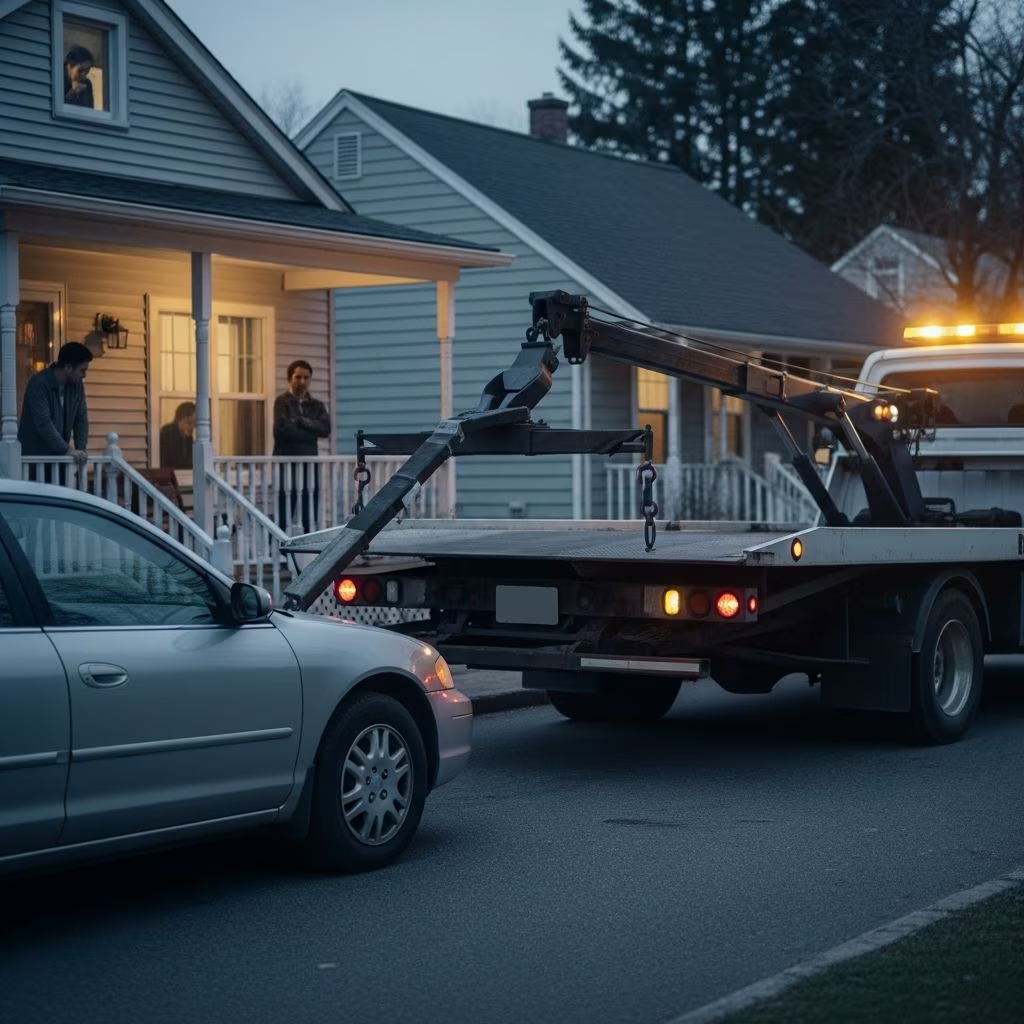
When a repossession company arrives, they are acting on behalf of the lender. They typically use a tow truck or a spare key to take the vehicle from your driveway, a parking lot, or another accessible location.
- No forced entry into a closed garage: In many states, the repossession company cannot enter a closed garage or locked area without permission to take the car; doing so may violate state law on “breach of the peace.”
- No threats or violence allowed: Repossession agents are generally prohibited from using physical force, threats, or other abusive tactics to remove the vehicle.
- Police involvement is limited: Law enforcement may be called to keep the peace but usually cannot order you to surrender the vehicle on behalf of a private lender unless there is a court order.
If you believe the repossession company behaved illegally or made threats, it is important to document what happened—write down names, dates, and details—and consider contacting law enforcement or a consumer attorney.
3. What Happens to Your Personal Belongings
When your car is repossessed, you may still have personal possessions inside. Your lender is taking only the vehicle, not your clothing, tools, documents, or other personal items.
- You retain ownership of personal property: The lender or repossession company generally cannot keep or sell your personal belongings that were in the car.
- There should be a process to retrieve items: Lenders must provide a reasonable opportunity for you to collect personal property, often by appointment at a storage yard or lender’s facility.
- Document what was in the car: Make a written list of items you believe were inside the vehicle, including any high-value or sentimental objects.
If a company refuses to return your belongings or demands payment as a condition for returning them, consider speaking with a consumer law attorney or your state attorney general’s office.
4. Your Rights After the Car Is Taken
After repossession, you may still have important rights. These depend on state law and the terms of your contract, but often include rights to notice and, in some cases, a chance to recover the vehicle.
4.1 Notices You Should Receive
In most states, the lender must send you written information after taking the car and before selling it.
- Post-repossession notice: This often explains that the vehicle was taken, how you can get it back, and what costs have been added.
- Notice of sale: The lender usually must inform you whether the car will be sold at a public auction or through a private sale, and when that sale is expected to occur.
- Information about any deficiency: After the sale, many states require the lender to tell you the sale price and how much you still owe, if anything, on the loan.
Keep these letters or emails and review them carefully; they may outline deadlines for exercising your rights.
4.2 Your Options to Get the Car Back
Depending on state law and your contract, you may have one or more ways to regain the vehicle:
| Option | What It Means | What You Usually Must Pay |
|---|---|---|
| Reinstatement | Bringing the loan current and continuing with the same contract. | Past-due payments, late fees, and reasonable repossession-related expenses. |
| Redemption | Paying off the full remaining balance to own the car free of the loan. | Entire remaining loan balance plus repossession and sale costs. |
| Buying at sale | Purchasing the car when the lender sells it, often at auction. | Winning bid amount, plus auction fees or related charges. |
- Reinstatement rights: Some states and some contracts give you a specific right to reinstate the loan by paying the overdue amount plus costs and then resuming normal payments.
- Redemption rights: Many states allow you to “redeem” the vehicle by paying off the entire outstanding balance and reasonable expenses before the sale occurs.
- Attending a public sale: If the car is sold through a public auction, you often have a right to attend and bid, potentially buying the vehicle back if you can afford it.
Your notice from the lender should explain which of these options exist in your situation and any deadlines for using them.
5. How the Lender Sells the Repossessed Vehicle
Once the lender has your car, it typically will sell the vehicle and apply the proceeds against your loan balance.
- Type of sale: The lender may choose a public auction or a private sale, depending on state law and market conditions.
- Commercially reasonable standard: The lender must usually sell the car in a “commercially reasonable” manner—meaning it must follow typical business practices for similar vehicles, not deliberately undervalue the car.
- Sale price matters: The amount the car is sold for directly affects how much you still owe after the sale.
If you believe the sale was handled improperly or the price was unreasonably low, a consumer attorney can review whether you have defenses or claims under state or federal law.
6. Understanding Deficiency Balances and Surpluses
Repossession does not automatically erase your debt. After the car is sold, the lender compares the sale proceeds to what you owed on the loan, plus allowed fees.
- Deficiency balance: If the sale price is less than the amount you owed and the costs of repossession and sale, the remaining amount is called a deficiency.
- Surplus funds: If the sale price is more than your outstanding balance and reasonable expenses, you may be entitled to receive the extra money, depending on state law.
- Collection efforts: Lenders often hire debt collectors or file lawsuits to collect a deficiency balance if you do not pay it.
For example, if you owed $10,000 on your loan and your lender sells the car for $7,500, you may owe a deficiency of $2,500 plus any authorized fees associated with towing, storage, and sale preparation.
7. Fees and Costs Added After Repossession
Repossession often results in additional costs that increase what you owe. These can vary but commonly include:
- Towing and repossession company fees
- Storage charges while the vehicle is held
- Auction or sale preparation costs
- Attorney’s fees where permitted by law and contract
- Administrative or title-transfer fees
These charges are typically added to your loan balance before the lender calculates any deficiency, making it important to obtain a detailed itemization from the lender.
8. How Repossession Can Affect Your Credit and Finances
A vehicle repossession is a serious negative event for your credit report and overall financial profile.
- Credit report damage: Late payments, default, repossession, and any charged-off deficiency balance can appear on your credit reports for up to seven years, making new credit more expensive or difficult to obtain.
- Higher future borrowing costs: Auto lenders and insurers may treat a prior repossession as a sign of risk, leading to higher interest rates or less favorable terms if you borrow again.
- Possible legal action: If you do not pay the deficiency, the lender may sue you, and a court judgment could lead to wage garnishment or bank account levies where permitted by law.
Monitoring your credit reports after a repossession can help you track how the event is reported and plan steps to rebuild your credit over time.
9. Practical Steps to Take After a Repossession
Although repossession is stressful, there are concrete actions you can take to protect yourself and explore your options.
- Contact the lender quickly: Ask for a written payoff amount, a reinstatement quote (if available), and the schedule for any sale.
- Collect your personal property: Arrange to pick up belongings from the vehicle promptly and in writing if possible, keeping copies of what you signed.
- Review all notices: Carefully read any letters about repossession and sale; note deadlines to reinstate or redeem the vehicle.
- Seek legal advice if needed: A consumer law attorney or legal aid office can clarify your rights, especially if you suspect illegal practices or face a deficiency lawsuit.
- Adjust your transportation plan: Consider lower-cost transportation options or a more affordable vehicle once your immediate legal and financial questions are addressed.
10. How to Reduce the Risk of Repossession in the Future
While you cannot change a past repossession, you can take steps to reduce the chance of it happening again.
- Budget carefully before financing: Aim for a payment that fits comfortably within your monthly income, accounting for insurance, fuel, and maintenance.
- Communicate early with lenders: If you anticipate trouble making payments, contact the lender before you fall behind; some may offer short-term relief or loan modifications.
- Compare loan terms: When financing another vehicle, compare interest rates, loan length, and total cost rather than focusing only on the monthly payment.
- Consider a less expensive vehicle: Choosing a lower-priced car can reduce the required monthly payment and your risk of future default.
Frequently Asked Questions About Car Repossession
Q1: Can my car be repossessed after just one missed payment?
A: In many states, your lender may have the right to repossess once you are in default under your contract, even if that occurs after only one missed payment, although many lenders wait until you are more seriously delinquent. Your loan agreement explains when you are considered in default.
Q2: Is the lender required to warn me before taking my vehicle?
A: Often, no advance warning is required, though some states or contracts may require specific notices. You are more likely to receive written information after the car has been taken and before it is sold.
Q3: Do I still owe money after the car is sold?
A: You usually still owe the difference between what you owed on the loan plus allowed fees and what the lender received from selling the car, known as a deficiency balance. If the sale price exceeds what you owe and costs, you may be entitled to any surplus.
Q4: Can the repo company keep my personal belongings?
A: No. The lender repossesses only the vehicle, not your personal property. They must provide a reasonable way for you to retrieve your belongings and generally cannot sell or keep them.
Q5: What should I do if I think the repossession was illegal?
A: Write down everything that happened, collect any documents, and consider contacting a consumer attorney, legal aid office, or your state attorney general. If there was violence or threats, you may also report it to law enforcement.
References
- Vehicle Repossession — Federal Trade Commission. 2023-06-01. https://consumer.ftc.gov/articles/vehicle-repossession
- What happens if my car is repossessed? — Consumer Financial Protection Bureau. 2022-11-30. https://www.consumerfinance.gov/ask-cfpb/what-happens-if-my-car-is-repossessed-en-865/
- How Does Car Repossession Work? — Bankrate. 2023-08-15. https://www.bankrate.com/loans/auto-loans/how-does-repossession-work/
- How Does Repossession Work? — Experian. 2023-05-24. https://www.experian.com/blogs/ask-experian/how-does-repossession-work/