
What Happens If You Vandalize a National Park?
National park vandalism can trigger federal penalties, restitution, and lasting legal trouble.
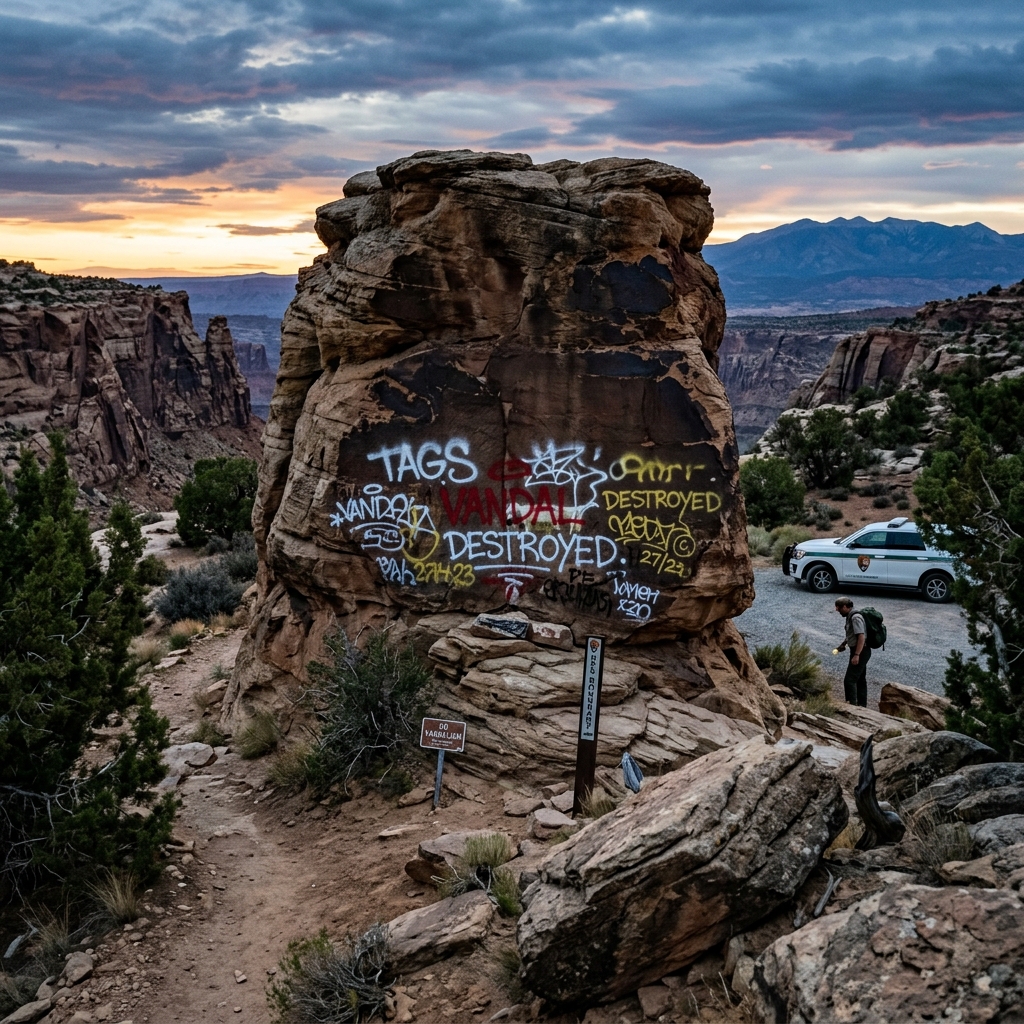
Why Damage to a National Park Is Taken Seriously
National parks are not just scenic destinations. They are protected public lands that contain natural resources, wildlife habitat, historic structures, archaeological sites, and visitor facilities. When someone spray-paints a rock face, breaks a sign, carves into a tree, or damages a trail marker, the harm extends far beyond the visible mark. The damage can affect ecosystems, create safety risks, and require expensive restoration work.
Because of that broader impact, vandalism in a national park is not treated like a minor mischief offense. Depending on the facts, it may be charged as a federal crime and may also involve state or local offenses if the conduct overlaps with other laws. Park authorities and federal prosecutors often view these cases as attacks on government property and on resources held in trust for the public.
- Damage can be physical, environmental, or cultural.
- Restoration often takes specialized labor and significant time.
- Even small acts can have large consequences in protected areas.
What Counts as Vandalism in a Protected Park Setting
Vandalism is a broad term that usually refers to intentional damage, defacement, destruction, or tampering with property. In a national park, that can include obvious acts such as graffiti, broken fixtures, or smashed glass, but it also can include conduct that harms archaeological sites, historic features, or natural formations.
Examples often include carving names into rock surfaces, painting on trail signs, removing artifacts, damaging restrooms or visitor centers, cutting trees without authorization, and disturbing protected features. In some situations, even a seemingly small alteration can be serious if it affects a cultural site or an object that federal law protects.
- Graffiti on rocks, buildings, signs, or bridges.
- Physical destruction of benches, railings, fences, or facilities.
- Environmental harm such as fire damage or destruction of vegetation.
- Cultural-site damage involving petroglyphs, ruins, or artifacts.
Why Federal Law Usually Applies
Most national parks are federally managed, so conduct inside their boundaries often falls under federal jurisdiction. That means the case may be investigated by federal authorities and prosecuted in federal court. The legal theory is straightforward: when a person damages federal land or federal property, the offense is often treated as a violation of federal criminal law or federal regulations.
Federal park rules are designed to protect public land and preserve it for future visitors. When a person violates those rules, the government may respond through criminal penalties, civil restitution, or both. The exact charge depends on the nature of the conduct, the amount of damage, whether the act was intentional, and whether the person has any prior record.
| Issue | Why It Matters |
|---|---|
| Location of the offense | Federal land often means federal jurisdiction |
| Type of damage | Graffiti, destruction, and cultural-site harm can be charged differently |
| Intent | Knowing or deliberate acts are treated more seriously |
| Amount of loss | Repair costs and resource damage can increase penalties |
Possible Criminal Penalties
The penalties for vandalizing a national park can vary widely. Some conduct may lead to misdemeanor charges, while more serious conduct can lead to felony exposure. Courts may impose fines, probation, jail time, or a combination of those sanctions. In addition, a defendant may be ordered to pay restitution for the cost of cleanup, repair, or restoration.
Federal law often allows punishment to rise based on the severity of the harm. For example, minor damage may result in a lighter sentence, but repeated conduct, significant property loss, or damage to sensitive historical or environmental resources can support more serious penalties. If the vandalism is tied to another offense, such as trespassing, burglary, theft, arson, or unlawful entry, the total exposure can grow quickly.
- Fines may be imposed even in lower-level cases.
- Jail or prison time becomes more likely as damage increases.
- Probation may include community service and park-related restrictions.
- Restitution can require payment for the actual cost of repairs.
Restitution and the Cost of Repair
One of the most important consequences of park vandalism is restitution. The government may seek reimbursement for cleaning graffiti, replacing broken property, restoring damaged trails, or repairing historic features. In a national park, these costs can be high because the work may require conservation specialists, careful documentation, and materials that match the original site.
Restitution is meant to make the public whole, but in practice it also reflects the fact that some damage is difficult to reverse. A carved rock surface, for example, may never return to its original condition. When a case involves irreplaceable resources, courts may look closely at the harm caused and the resources needed to attempt a repair.
- Cleanup costs can exceed the value of the object damaged.
- Specialized restoration may be required for historic or cultural sites.
- Some harm is permanent even after repair work is completed.
Aggravating Factors That Can Increase Exposure
Not every vandalism case is handled the same way. Prosecutors and judges often consider aggravating factors when deciding how to charge or sentence a case. A defendant who acted with planning, caused large-scale harm, targeted a protected cultural site, or ignored a direct warning from rangers may face a harsher outcome.
Offenses committed at night, as part of a group, or in connection with other criminal conduct can also make a case more serious. Damage that threatens public safety, such as fire-setting or destruction of structures used by visitors, may be especially significant. Repeated conduct or prior violations can matter as well, particularly if the same person has a history of ignoring park rules.
- Deliberate planning can show greater blameworthiness.
- Cultural or historic targets often receive heightened protection.
- Safety risks may justify stronger charges or sentencing.
- Repeat violations can lead to tougher treatment in court.
How Authorities Investigate Park Vandalism
National park rangers, federal investigators, and sometimes local law enforcement may work together to identify suspects and collect evidence. Investigators may rely on witness statements, photographs, video footage, damage assessments, paint or tool evidence, and admissions made by the suspect. Because many parks receive heavy visitor traffic, tips from the public can be important.
Once a suspect is identified, the government may file charges or pursue administrative remedies depending on the nature of the conduct. In serious cases, the evidence may also support additional allegations such as theft of artifacts, destruction of government property, or other federal offenses.
| Investigation Step | Possible Evidence |
|---|---|
| Initial report | Ranger observations, visitor complaints, emergency calls |
| Scene documentation | Photos, measurements, damage logs, surveillance video |
| Identification | Witness statements, license plates, online posts, admissions |
| Case building | Restoration estimates, expert reports, chain-of-custody records |
Can a Defendant Fight the Charges?
Yes. As with other criminal cases, a person accused of vandalizing a national park has legal defenses available. The right defense depends on the facts, the available evidence, and the exact charge. Some defenses may challenge whether the defendant actually caused the damage, whether the conduct was intentional, or whether the property belonged to the federal government.
Other defenses may focus on mistaken identity, unreliable witness accounts, lack of proof about the amount of damage, or whether the alleged conduct was accidental rather than purposeful. In some cases, defense counsel may also challenge the scope of restitution if the government cannot show the cost of repair with enough precision.
- No intent: the damage was accidental rather than deliberate.
- Wrong person: the accused was not the actual actor.
- Insufficient proof: the government cannot prove ownership, damage, or value.
- Overstated loss: repair estimates may be too high or unsupported.
What Happens After an Arrest or Citation
After an arrest or citation, the case may begin with an initial court appearance, followed by disclosure of evidence, plea discussions, and possibly trial. In lower-level cases, the government may offer a resolution that includes fines, restitution, and behavioral conditions. In more serious cases, the matter may proceed through the full federal criminal process.
A person accused of vandalism should take the allegation seriously, even if the damage seems minor. Statements made early in the process can affect the case later, and unresolved restitution demands can remain on the record. An attorney can evaluate whether the charge is supported, whether a diversion option exists, and how to limit the long-term consequences.
How Park Visitors Can Help Prevent Damage
Prevention is easier than cleanup. Visitors who respect park rules reduce the risk of harm to landscapes and public property. Simple choices make a difference, including staying on trails, not touching or removing artifacts, and reporting suspicious activity to park staff. If someone sees active vandalism, prompt reporting can help stop further damage and preserve evidence.
Educational efforts also matter. Many people do not fully understand that even a small mark or souvenir can violate federal protections. Public awareness helps reinforce that national parks are shared resources, not places where visitors can leave permanent signatures or take pieces of the environment home.
- Stay on marked paths and respect closure signs.
- Do not carve, paint, or scratch natural surfaces.
- Never remove rocks, artifacts, plants, or other park features.
- Report suspicious conduct to rangers as soon as possible.
Frequently Asked Questions
Is graffiti in a national park really a federal crime?
Yes, it can be. Because national parks are federally managed, graffiti and other intentional damage may be prosecuted under federal law or federal regulations.
Can someone go to jail for damaging park property?
Yes. Depending on the seriousness of the conduct and the amount of damage, a defendant may face jail or prison time in addition to fines and restitution.
What if the damage was small?
Even small damage can lead to enforcement action. The amount of harm matters, but so do intent, location, and whether the target was culturally or environmentally sensitive.
Will the person have to pay for cleanup?
Often, yes. Restitution is common in vandalism cases and may cover cleanup, repair, and restoration costs.
Are accidental damage cases treated the same way?
No. Intent matters. Accidental conduct may be handled differently from deliberate destruction, although the government may still seek reimbursement for harm caused.
References
- Vandalism hurts — U.S. National Park Service. 2024-10-01. https://www.nps.gov/articles/vandalism-hurts.htm
- Criminal Resource Manual 1632: Protection of Government Property — National Parks and Forests — U.S. Department of Justice. 2024-05-15. https://www.justice.gov/archives/jm/criminal-resource-manual-1632-protection-government-property-national-parks-and-forests
- Vandalism Harms our National Parks — Zion National Park website. 2024-02-12. https://zionnationalpark.net/vandalism-harms-national-parks/
Similar Articles








Read full bio of medha deb




