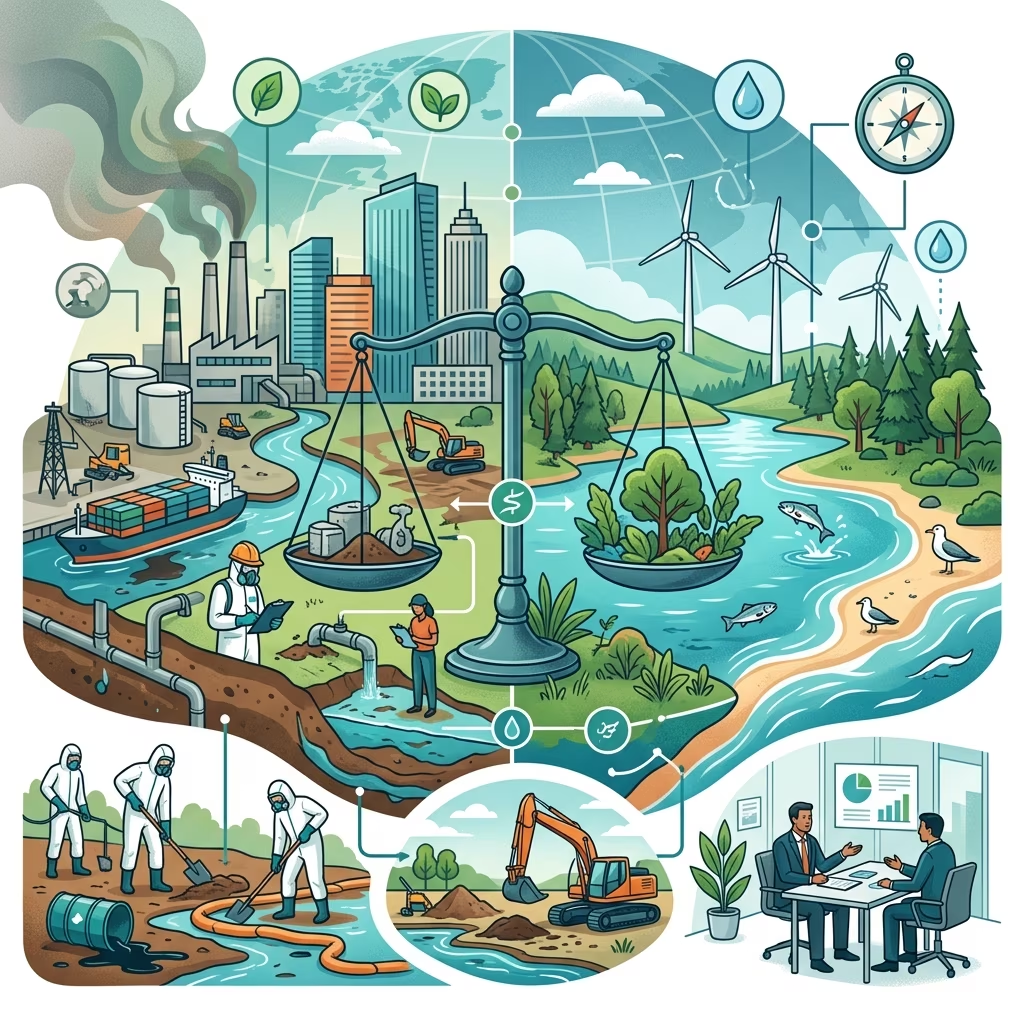
Environmental insurance is designed to fill a gap that many standard commercial policies leave behind: losses tied to pollution and other environmental harm. General liability and property insurance often exclude pollution events, which means a business can face cleanup bills, injury claims, property damage, and legal costs with little or no protection. A well-structured environmental policy helps transfer those risks before they become a financial crisis.
For businesses that handle chemicals, operate industrial equipment, store fuel, manage waste, or own older properties, the right coverage can be the difference between a manageable incident and a long-term balance-sheet problem. The most useful policies are not one-size-fits-all; they are built around the specific hazards of the operation, the site, and the company’s contractual responsibilities.
Why standard business insurance is usually not enough
Many business owners assume their general liability policy will respond if a spill, leak, or contamination event happens. In practice, those policies often exclude pollution-related loss or only provide very limited protection. Environmental insurance exists because contamination can trigger a unique mix of liabilities that do not fit neatly into ordinary property or casualty coverage.
The risk is not limited to a dramatic industrial disaster. Smaller releases, hidden contamination, or migration from one site to another can generate costs that continue for months or years. Those costs may include emergency response, sampling, soil or groundwater cleanup, third-party lawsuits, and regulatory defense. Environmental insurance is meant to address that broader financial exposure.
The core protections to look for
A strong policy should be built around the most common and expensive consequences of a pollution event. The exact wording will vary by insurer, but several protections are especially important.
| Coverage area | What it may pay for | Why it matters |
|---|---|---|
| Cleanup costs | Investigation, removal, treatment, disposal, and remediation of contamination | Cleanup is often the largest immediate expense after a pollution incident |
| Bodily injury | Claims by injured third parties exposed to pollutants | Protects against medical claims and related damages |
| Property damage | Damage to nearby buildings, land, or other property caused by a covered event | Important when contamination spreads beyond the insured site |
| Defense costs | Attorney fees, expert witnesses, court costs, and related legal expenses | Legal expenses can be significant even when a claim is disputed |
| Business interruption | Lost income and added operating costs after a covered incident | Helps preserve cash flow during shutdowns or cleanup periods |
1. Cleanup and remediation expenses
Cleanup coverage is often the centerpiece of an environmental policy. It may pay for site assessment, excavation, removal of contaminated material, transport and disposal of waste, groundwater treatment, and ongoing monitoring. In many cases, cleanup begins before a liability claim is even filed, so it is important that the policy responds quickly and clearly.
Businesses should ask whether the policy covers both on-site and off-site cleanup. Contamination may remain confined to the insured property, but it can also migrate into neighboring soil, surface water, or groundwater. Coverage that is limited to one location may be inadequate if the pollution spreads.
2. Third-party bodily injury claims
Environmental incidents can affect employees, neighbors, customers, tenants, or passersby. If someone alleges illness or injury from exposure to pollutants, the business may face a bodily injury claim. These claims can involve medical expenses, lost wages, pain and suffering, and other damages depending on the governing law and facts of the incident.
Coverage should be reviewed carefully to confirm that it applies to the types of exposure most relevant to the business. Some policies are written broadly, while others narrow coverage based on the pollutant involved, the location of the event, or whether the release was sudden, gradual, or historical.
3. Third-party property damage
Pollution can damage more than the insured’s own site. A leak, vapor intrusion event, runoff, or airborne release may affect nearby structures, crops, land, or equipment. Property damage coverage can help pay for claims made by adjacent owners or tenants whose property is harmed by a covered event.
For businesses in densely developed areas or near waterways, property damage protection may be especially important. The possibility of cross-property impacts makes it worthwhile to confirm whether the policy covers migration, transportation-related releases, and damage occurring away from the insured premises.
4. Legal defense and claim handling costs
Even a small environmental incident can generate a large legal response. Regulators may investigate, neighbors may sue, and contractors or landlords may seek indemnity. Defense costs often accumulate quickly, especially when environmental consultants or technical experts are needed.
A policy should clearly explain whether defense costs are inside or outside the liability limit. If defense costs erode the policy limit, there may be less money left for cleanup or settlements. That distinction can materially affect the value of the coverage.
5. Business interruption and extra expense
Cleanup may force a temporary shutdown or limit operations. In that situation, the company may lose revenue while still paying rent, payroll, debt service, and other fixed costs. Some environmental policies include business interruption or extra expense coverage, which can help replace lost income or pay for temporary measures needed to keep the business functioning.
This protection is especially useful for businesses that cannot easily relocate operations or that depend on continuous production. The policy should be checked to see what triggers the interruption coverage, how long the indemnity period lasts, and whether voluntary shutdowns are treated differently from mandatory closures.
Coverage for sudden events versus gradual pollution
One of the most important policy questions is whether coverage applies only to sudden and accidental releases or also to gradual and historical contamination. Some of the most costly environmental claims arise from leaks that occurred over time, buried contamination discovered during a transaction, or legacy pollution tied to prior owners.
Businesses buying or selling real estate, redeveloping older industrial sites, or assuming operations from another entity should focus closely on this issue. Historical contamination may not be obvious when a policy is purchased, but once discovered, it can create substantial cleanup and litigation costs. A policy that includes pre-existing or unknown conditions may be more valuable than one limited to new incidents.
Common policy features that deserve attention
- Location definition: Check whether coverage applies only to one site or to multiple locations, off-site transportation, and disposal operations.
- Retroactive date: Confirm whether prior acts or prior contamination are covered and, if so, from what date.
- Defense treatment: Determine whether defense costs reduce the policy limit or are paid separately.
- Claims-made structure: Many environmental policies respond only if the claim is made during the policy period, so renewal timing matters.
- Discovery and reporting rules: Some policies require prompt notice of a condition or potential claim, even before a formal lawsuit appears.
- Contractual liability: Review whether obligations under leases, sales agreements, or service contracts are covered.
Industries that often need broader protection
Although nearly any company can face environmental exposure, some industries are more likely to need specialized coverage. Manufacturing facilities, contractors, waste handlers, real estate owners, fuel storage operators, and companies that use solvents or other hazardous materials often face higher risk. So do businesses that renovate older properties or acquire land with an uncertain history.
Coverage can also matter for firms that do not think of themselves as “polluting” businesses. A dry cleaner, printer, auto service center, warehouse, or property manager may still face contamination claims. The key question is not whether the business intentionally pollutes, but whether its operations could create a release, disturb existing contamination, or be connected to a spill by a vendor or tenant.
How to match coverage to your risk profile
The best policy is the one that fits the business’s actual exposures. A careful review should begin with the operation itself, the age and condition of the property, prior uses of the site, and any contracts that create cleanup or indemnity obligations. Businesses should also think about whether they need coverage for owned property, leased sites, waste disposal, transportation, completed operations, or historical contamination.
It is also wise to compare policy limits against realistic worst-case scenarios. A small premium difference may not matter if the higher limit is the only thing that prevents an uncovered loss. Businesses should pay special attention to sublimits, deductibles or self-insured retentions, and exclusions for known conditions, asbestos, mold, or underground storage tanks.
Questions to ask before buying
- Does the policy cover cleanup ordered by a regulator, or only cleanup required because of a third-party claim?
- Are historical or pre-existing conditions included?
- Will defense costs reduce the policy limit?
- Does the policy cover transportation and disposal exposures?
- Are tenants, contractors, and additional insureds protected?
- What exclusions could leave the biggest gap in coverage?
Why professional review matters
Environmental policies are highly technical. Small wording differences can change whether a claim is covered, how much is payable, and when notice must be given. Because cleanup obligations and environmental disputes can unfold over many months, a business should not rely only on a quote summary or marketing brochure. The declarations page, insuring agreement, exclusions, endorsements, and conditions all matter.
For that reason, many businesses benefit from reviewing the policy with an insurance professional or lawyer familiar with environmental risk. That review can help identify gaps, coordinate coverage with other policies, and make sure the policy actually matches the company’s operations and property portfolio.
FAQs
Does environmental insurance replace general liability insurance?
No. Environmental insurance usually complements general liability coverage rather than replacing it. It is designed to address pollution-related losses that standard policies often exclude.
Can a policy cover older contamination discovered later?
Some policies may cover historical or pre-existing conditions, but only if the wording specifically includes them. This is one of the most important points to confirm before purchase.
Is cleanup coverage the same as legal defense coverage?
No. Cleanup coverage pays for environmental response and remediation, while defense coverage pays for legal and expert costs tied to a claim or investigation. Both are important, but they address different expenses.
Why do claims-made policies require careful timing?
Because many environmental policies are claims-made, coverage may depend on when the claim is first made and reported. Missing a notice deadline can create a serious coverage problem even if the underlying event is otherwise covered.
References
- Insurance Topics: Environmental Insurance — National Association of Insurance Commissioners. 2024-01-01. https://content.naic.org/insurance-topics/environmental-insurance
- Environmental Liability Insurance in Pennsylvania — Nestor Insurance. 2025-01-01. https://nestorins.com/environmental-liability/
- Environmental Liability Insurance — RLI Commercial Casualty. 2025-01-01. https://www.rlicorp.com/specialty-insurance/commercial-casualty/environmental
- Environmental Liability Insurance — Bowman’s Insurance. 2025-01-01. https://www.bowmansinsurance.com/business-insurance/pennsylvania-environmental-liability-insurance
- Environmental Insurance in NJ, PA, DE — HIG. 2025-01-01. https://hig.net/environmental-insurance/