Understanding the risk behind a famous face
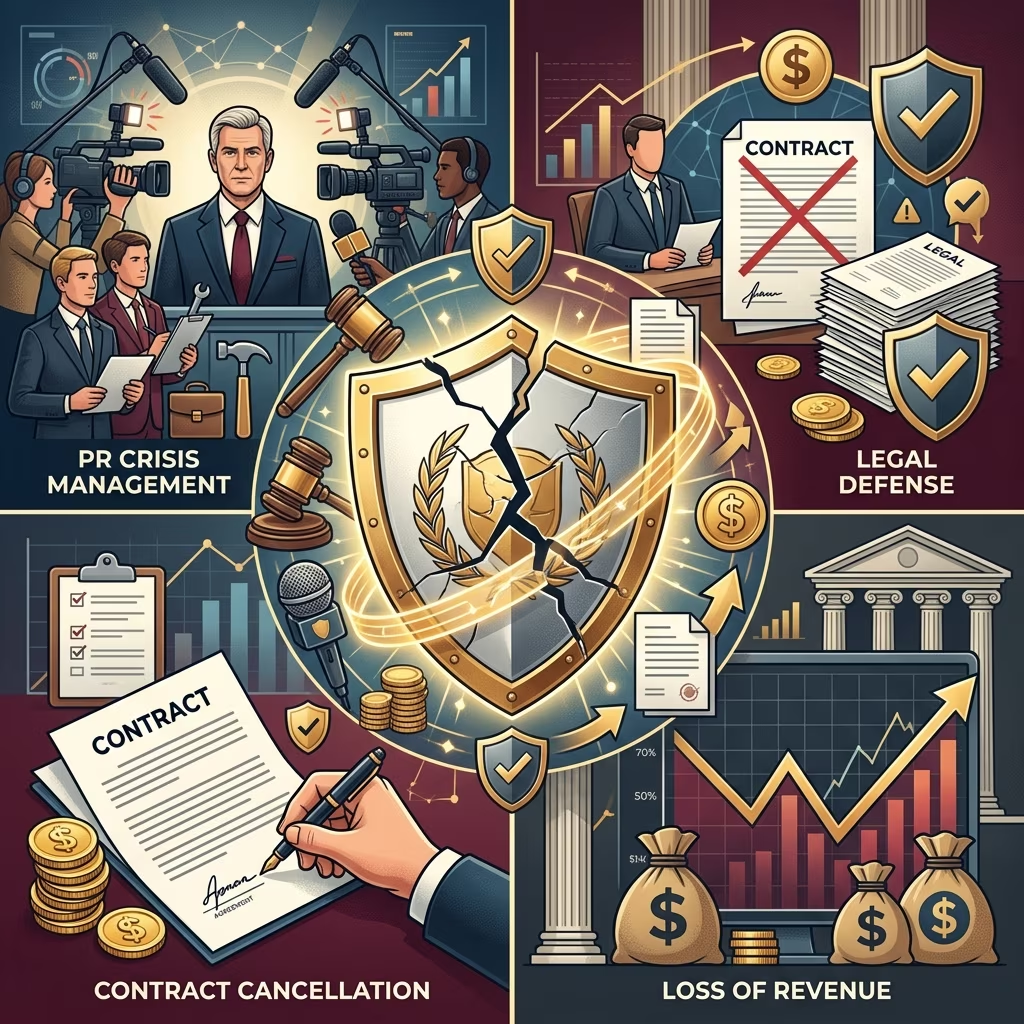
Brands often spend large sums to associate their products with a recognizable athlete, entertainer, or social media personality. The idea is simple: a trusted public figure can help a product stand out, build credibility, and boost sales. The problem is that the same visibility that makes a spokesperson valuable can also turn into a liability overnight when the individual becomes the subject of scandal.
That is where disgrace insurance enters the picture. This type of coverage is designed for companies that rely on a contracted endorser and want protection if that person’s misconduct, arrest, offensive conduct, or other public controversy causes the campaign to unravel. It is a specialized tool for managing the financial fallout of a reputation-driven marketing decision.
What disgrace insurance is designed to do
Disgrace insurance is intended to soften the financial impact of a spokesperson’s public downfall. It is not a general reputation policy for every kind of brand problem. Instead, it usually focuses on losses tied to a specific endorsement arrangement, product line, or advertising campaign that has been affected by the endorser’s behavior.
In practical terms, the policy may reimburse a company for costs that arise after a scandal breaks. Those costs can include fees already paid to the spokesperson, expenses for replacing the endorser, new production costs, and the work required to remove or revise advertising materials. The coverage is built around the reality that once a campaign is compromised, the brand may need to act quickly and spend heavily to contain the damage.
Common losses a policy may address
Coverage can vary widely by insurer and contract wording, but the most common protected expenses usually fall into a few business categories. Some policies focus on direct campaign costs, while others go further and address broader commercial harm.
- Money already paid to secure the endorsement
- Costs of hiring a substitute spokesperson
- Production expenses for reshooting ads or creating new materials
- Removing the celebrity’s name, face, or likeness from packaging
- Reworking promotional campaigns and media buys
- In some cases, expenses related to lost sales or crisis response
Some policies are narrow and only cover the hard costs of replacing an endorser. Others are more expansive and attempt to address the ripple effects of a scandal, including campaign interruption and reputational disruption. Because the wording matters so much, the details of coverage should be reviewed carefully before a contract is signed.
How this coverage differs from other endorsement insurance
Businesses often purchase several forms of insurance when using a public figure in advertising. Death and disability coverage protects against the risk that the spokesperson becomes unavailable because of injury or illness. Disgrace insurance, by contrast, is aimed at behavior-based risk. The trigger is not physical incapacity but public misconduct or conduct that makes the person unsuitable for continued association with the brand.
Many companies buy these protections together because endorsement risk rarely comes in one form only. A campaign can fail because the spokesperson cannot perform, because the message becomes outdated, or because a scandal forces the brand to sever ties. Each issue creates different costs, so the insurance structure should match the company’s exposure.
What usually triggers a claim
Policies do not all use the same trigger language, but they commonly rely on terms such as disgraceful conduct, moral turpitude, unlawful acts, or behavior that materially harms the commercial value of the endorsement. The exact trigger is important because some controversies are obvious and others are contested.
For example, a policy may respond when a spokesperson is arrested, publicly accused of misconduct, or makes offensive statements that provoke consumer backlash. In other cases, the policy language may require a more serious threshold, such as conduct that causes measurable damage to the brand or makes the endorser unavailable under the endorsement agreement. The broader the trigger language, the more carefully the insurer is likely to underwrite the risk.
Why contracts matter as much as the policy
Insurance is only one part of the protection stack. The endorsement contract itself should also include a strong morals clause. A morals clause gives the company the right to suspend, renegotiate, or terminate the agreement if the spokesperson engages in behavior that could harm the brand.
Without that contractual right, an insurer may still question whether the company had a clear legal basis to stop using the endorser or replace materials. In other words, the policy and the contract should work together. The contract gives the company leverage, while the insurance helps pay for the transition when that leverage is exercised.
Factors insurers consider before offering coverage
Insurers do not treat every celebrity or influencer the same. A public figure with a clean record and low controversy risk may be easier and cheaper to insure than someone with a history of erratic behavior. The more exposure the carrier sees, the more underwriting questions it is likely to ask.
- The endorser’s public profile and past conduct
- The size and importance of the campaign
- The duration of the endorsement agreement
- The type of product being marketed
- The geographic markets involved
- Whether the agreement includes a detailed morals clause
Insurers may also require warranties or disclosures from the endorser, especially if the person is known for an edgy public image or a history of risky behavior. In those cases, the policy may cost more, include exclusions, or require tighter conditions before coverage applies.
How pricing and structure typically work
Disgrace insurance can be purchased as a standalone policy or as part of a broader package of advertising and entertainment-related coverage. The way the policy is structured often depends on the scale of the endorsement and the company’s appetite for risk.
Premiums are often calculated as a percentage of the coverage limit. The final cost depends on how much money the company wants to protect, how risky the endorser appears, and how broad the policy language is. A policy that covers only replacement expenses may be cheaper than one that also contemplates lost sales or extensive campaign interruption.
| Policy feature | Typical purpose | Business impact |
|---|---|---|
| Standalone coverage | Protects one endorsement or campaign | Useful for high-value celebrity deals |
| Package coverage | Bundles disgrace risk with other endorsement risks | May be more efficient for broader campaigns |
| Narrow trigger wording | Covers only specific misconduct events | Lower cost, but less flexibility |
| Broader trigger wording | Responds to a wider range of harmful conduct | More protection, usually at a higher premium |
What the policy may not cover
As with any insurance product, exclusions matter. A policy may not respond if the brand ignored warning signs, failed to follow contractual procedures, or tried to use the policy for losses outside the endorsement relationship. Some forms of economic harm, such as broad market downturns or unrelated product problems, may also fall outside the policy.
Coverage may also be limited to losses connected to the actual contract term. If a scandal breaks after the endorsement has already expired, the insurer may argue that the claim is not within the covered period. That makes timing and contract administration especially important.
Why companies consider it in the first place
Brands buy celebrity endorsements because they want scale, attention, and instant familiarity. But those benefits come with concentration risk. If one person is closely tied to a product image, the company can be exposed when that person becomes a headline for the wrong reason.
Disgrace insurance gives decision-makers a way to plan for the worst-case scenario without abandoning the marketing strategy entirely. It is particularly attractive where the endorsement investment is large, the product is heavily public-facing, or the company cannot easily absorb the cost of a sudden campaign overhaul.
Best practices for brands using public figures
Insurance is more effective when it is part of a broader risk management plan. Companies should screen endorsers carefully, negotiate a strong morals clause, preserve documentation of campaign expenses, and align insurance terms with the contract language. That preparation can make it easier to establish a claim if the relationship falls apart.
- Vet the spokesperson’s public history before signing
- Use clear termination and suspension rights in the contract
- Match the policy trigger to the morals clause
- Track endorsement fees, production costs, and media spend
- Review whether the policy covers substitute talent and rebranding costs
Companies should also think about alternative messaging plans. If a scandal forces a sudden change, speed matters. A prepared brand can replace creative assets faster, preserve customer trust, and reduce the chance that a temporary controversy becomes a long-term sales problem.
Frequently asked questions
Is disgrace insurance the same as reputation insurance?
No. Disgrace insurance is usually tied to a specific endorser or campaign, while reputation-related products can be broader and may address a wider range of brand harm.
Can it cover lost sales?
Some policies may include broader commercial losses, but many are focused on direct costs such as replacement talent, reshoots, and packaging changes. The policy language determines how far the protection goes.
Does every endorsement need this coverage?
Not necessarily. It is most useful when the contract is large, the spokesperson is highly visible, or the brand would struggle to absorb the cost of a scandal-driven campaign reset.
Why is the morals clause so important?
Because insurance works best when the company already has a legal basis to end the relationship or stop using the spokesperson’s image. The clause helps connect the business decision to the insurance recovery.
References
- When Good Celebrity Endorsements Go Bad — Risk & Insurance. 2014-04-01. https://www.rmmagazine.com/articles/article/2014/04/01/-When-Good-Celebrity-Endorsements-Go-Bad-
- Athletes’ Scandals Spark Interest in Endorsement Insurance — The New York Times. 2010-02-01. https://www.nytimes.com/2010/02/01/sports/01insurance.html
- Risks of Celebrity Sponsors — Risk & Insurance. 2014. https://riskandinsurance.com/risks-celebrity-sponsors/
- Top Ten Insurance Considerations in Athlete and Celebrity Endorsements — American Bar Association, Forum on Entertainment and Sports Industries. 2015. https://www.acc.com/resource-library/top-ten-insurance-considerations-athlete-and-celebrity-endorsements
- Brand responses to influencer scandals: An action plan for managers — Elsevier / ScienceDirect. 2024. https://www.sciencedirect.com/science/article/pii/S0007681324001642