
What Counts as a Hate Crime in North Carolina?
How North Carolina treats bias-motivated offenses and when federal law may apply.
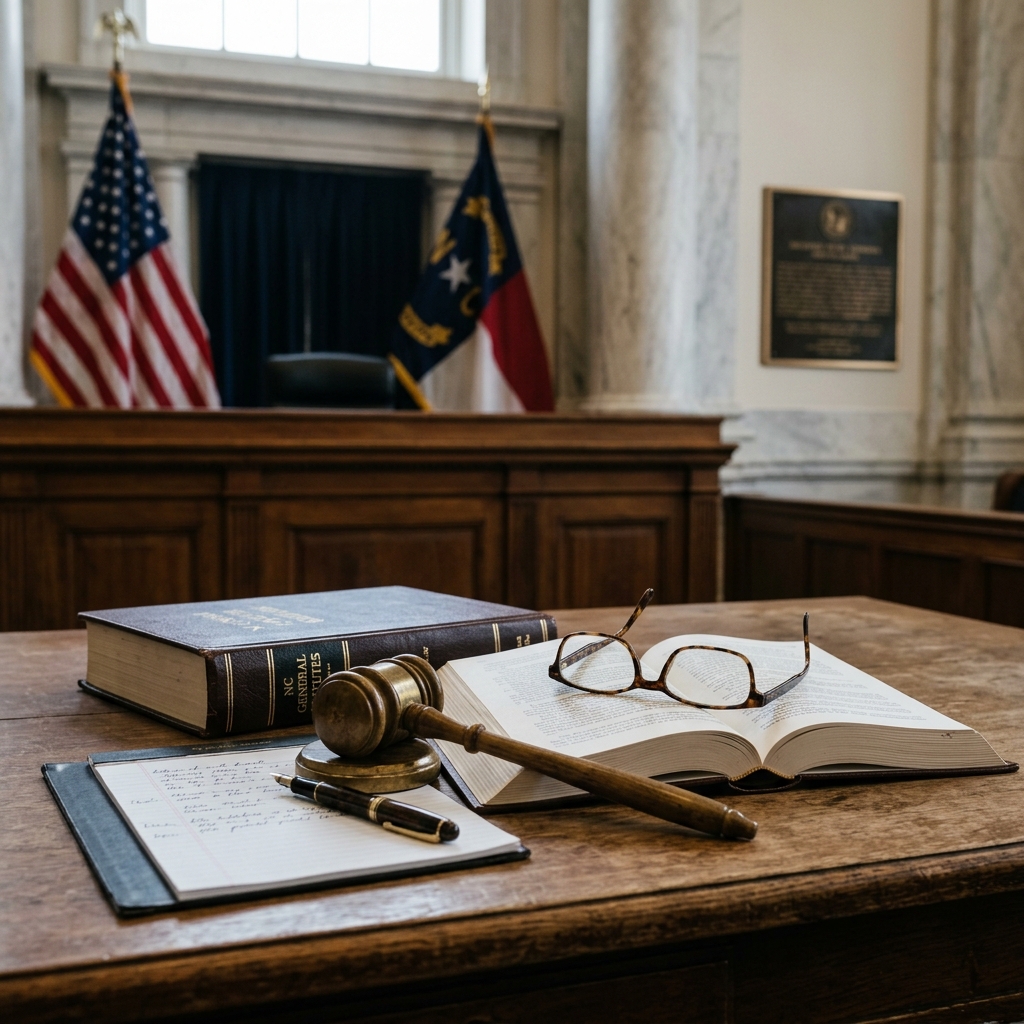
Understanding Hate Crimes Under North Carolina Law
North Carolina does not use a single all-purpose hate crime statute in the way some states do. Instead, the state addresses bias-motivated conduct through a combination of penalty enhancements and a separate offense known as ethnic intimidation.
That distinction matters. In many cases, the underlying conduct is already a crime, such as assault, damage to property, stalking, or threats. What can make the case more serious is proof that the act was driven by bias tied to the victim’s race, color, religion, nationality, or country of origin.
This article explains how North Carolina law works, what prosecutors must show, and where state law ends and federal hate crime law may begin.
How the State Structures These Cases
Rather than creating a single label for every hate crime, North Carolina uses an enhancement model. That means the state may increase the punishment for a misdemeanor if the offense was committed because of the victim’s protected characteristic.
North Carolina also recognizes ethnic intimidation under state statute. That offense covers assault, property damage, defacement, or threats when the conduct is motivated by the same protected categories.
Two common legal paths
- Penalty enhancement: A misdemeanor can be reclassified or punished more severely when bias is proven.
- Ethnic intimidation: A separate offense that punishes certain bias-motivated assaults, threats, and property crimes.
Which Biases Are Covered?
North Carolina’s hate-crime-related provisions are narrower than some people expect. The protected categories listed in the sources are race, color, religion, nationality, and country of origin.
That means the state provisions discussed here do not automatically mirror every category found in federal law or in other states. For example, some broader hate crime frameworks also cover sexual orientation, gender identity, disability, or other traits, but those categories are not the focus of the North Carolina provisions highlighted in the sources used here.
What Prosecutors Must Prove
A hate crime case is not just about what happened. It is also about why it happened. In practical terms, prosecutors must show that the defendant committed the base offense and that bias was a motivating factor.
That motive element is often the hardest part of the case. Evidence may include statements made before or during the incident, symbols or slogans, online posts, prior threats, or other facts showing discriminatory animus.
| Issue | What must be shown |
|---|---|
| Underlying offense | A separate crime such as assault, threat, stalking, or property damage |
| Bias motive | That the offense was committed because of a protected characteristic |
| Proof | Statements, conduct, online activity, affiliations, or surrounding circumstances |
| Result | Higher misdemeanor classification, felony treatment, or a separate ethnic intimidation charge |
Ethnic Intimidation in Everyday Terms
Ethnic intimidation is the state’s most direct hate-crime-style offense. Under the statute, a person who, because of race, color, religion, nationality, or country of origin, assaults someone, damages property, defaces property, or threatens to do any of those acts commits a Class 1 misdemeanor.
The law also makes it an offense to assemble with others to teach techniques or methods for committing ethnic intimidation. That feature shows that the statute is not limited to one-on-one violence; it can also reach organized preparation for bias-driven misconduct.
Although the phrase “hate crime” is often used in conversation, the actual charge in North Carolina may be framed differently depending on the facts and the prosecutor’s theory of the case.
Why the Same Conduct Can Lead to Different Charges
A punch thrown during a dispute is a criminal assault. A punch thrown because the victim belongs to a targeted racial or religious group may trigger a stronger charge or penalty.
That difference reflects a basic idea in criminal law: motive can change how the law evaluates an act. When bias is involved, the state treats the harm as broader than the immediate injury to one victim. The offense can also be seen as an attack on the safety of an entire community.
In North Carolina, this does not create a brand-new family of crimes for every bias-based incident. Instead, the legal system layers the bias evidence onto an existing crime or uses the ethnic intimidation statute.
How Federal Law Fits In
Federal hate crime law can sometimes apply when state law is limited or when a case has a federal hook. The Department of Justice enforces hate crime laws under statutes including the Matthew Shepard and James Byrd Jr. Hate Crimes Prevention Act.
Federal prosecution is not automatic. It depends on the facts, jurisdiction, and the type of conduct involved. But federal law becomes especially important when state law does not fully capture the victim’s protected characteristic or the seriousness of the conduct.
That overlap means a single incident can raise questions in both state and federal systems. One authority may handle the primary case, while the other may investigate or pursue additional charges if allowed by law.
Practical Evidence That May Matter
Bias is rarely proven by a single statement alone. Investigators usually look at the full picture. Prosecutors and police may examine what was said, what was posted online, who was targeted, and whether the act followed a pattern of prejudice.
- Verbal statements: Slurs, threats, or explicit references to race, religion, nationality, or origin
- Digital evidence: Social media posts, messages, or videos that reveal motive
- Behavioral context: Prior incidents, planning, or selection of a target because of group identity
- Group affiliations: Evidence that may help show ideological bias or animus
In a criminal case, the prosecution still must meet the normal burden of proof. The question is not whether bias is upsetting or offensive in the abstract; it is whether admissible evidence proves the required motive beyond a reasonable doubt.
Sentencing and Collateral Consequences
When bias is proven, the punishment can become more serious than the sentence for the base offense alone. Depending on the charge, a misdemeanor can be elevated or treated more harshly under state law.
There can also be collateral consequences beyond the courtroom. Giffords notes that North Carolina generally restricts firearm access for people convicted of most felonies, while people convicted of violent hate-motivated misdemeanors may not face the same state-level firearm disability. In practice, that makes the classification of the offense especially important.
Because sentencing outcomes depend on the exact charge, the underlying facts, and prior record, small differences in the evidence can produce very different results.
Why These Cases Draw Public Attention
Hate crime allegations often attract attention because they combine criminal conduct with community-wide fear. A case may be viewed not only as an individual assault or act of vandalism, but also as a message sent to a wider group.
That public concern is one reason prosecutors and investigators pay close attention to motive evidence. When the state can prove bias, the case may carry a broader symbolic and legal meaning than a standard assault or property offense.
Frequently Asked Questions
Is there a standalone hate crime law in North Carolina?
North Carolina does not rely on a single broad standalone hate crime statute. Instead, it uses penalty enhancements and the separate offense of ethnic intimidation.
What protected traits are covered?
The state provisions discussed here cover race, color, religion, nationality, and country of origin.
Does the state have to prove motive?
Yes. Prosecutors must show that the offense was committed because of the victim’s protected characteristic, not merely that the victim belonged to a protected group.
Can online posts be used as evidence?
Yes. Statements on social media, messages, and other digital evidence may help show bias or animus.
Can federal law apply too?
Yes. In some situations, federal hate crime law can apply alongside or instead of state law.
What to Take Away
In North Carolina, the legal meaning of a hate crime is more specific than the phrase suggests in everyday conversation. The state usually handles these matters through enhanced punishment for bias-motivated misdemeanors and through the ethnic intimidation statute.
The critical question is motive. If prosecutors can connect the offense to prejudice based on the victim’s race, color, religion, nationality, or country of origin, the case may become significantly more serious.
Because state and federal law can overlap, these cases often require careful factual review and a close look at the available evidence before any charge is filed or defended.
References
- Hate Crime Defense Attorney NC – Thomas Amburgey Law — Thomas Amburgey Law. 2026-07-09. https://amburgeylaw.com/areas-of-practice/violent-crime-2/hate-crimes-in-north-carolina/
- Hate Crime Gun Laws in North Carolina — Giffords Law Center. 2026-07-09. https://giffords.org/lawcenter/state-laws/hate-crimes-guns-in-north-carolina/
- Hate Crimes — Duke University Police Department. 2026-07-09. https://police.duke.edu/report-crime/hate-crimes/
- When is a Crime a Hate Crime? — The Marshall Project. 2015-06-19. https://www.themarshallproject.org/2015/06/19/when-is-a-crime-a-hate-crime
- Hate Crimes Case Examples — United States Department of Justice. 2026-07-09. https://www.justice.gov/hatecrimes/hate-crimes-case-examples
- G.S. 14-401.14 — North Carolina General Assembly. 2026-07-09. https://www.ncleg.net/enactedlegislation/statutes/html/bysection/chapter_14/gs_14-401.14.html
Similar Articles








Read full bio of medha deb




