
What Children See: Trauma in the Child Welfare System
Exploring the profound emotional effects of the child welfare system.
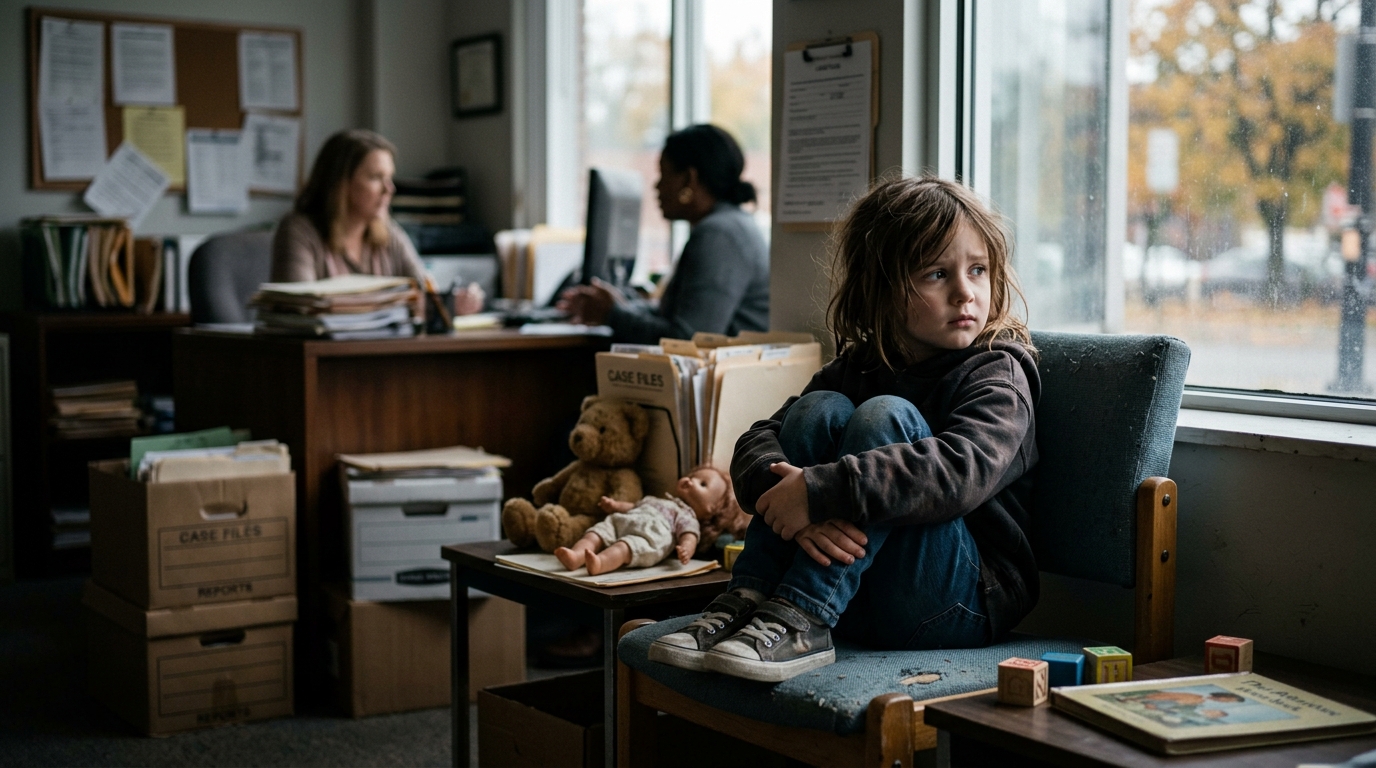
When adults discuss the child welfare system, the conversation frequently revolves around policy frameworks, legal statutes, funding allocations, and risk assessment matrices. The primary objective is nominally centered on protection—removing a vulnerable youth from a potentially dangerous environment. However, when we shift our perspective to look through the eyes of the child, the narrative changes drastically. For the youth experiencing these interventions, the system is rarely perceived as a protective shield. Instead, it often manifests as a labyrinth of confusion, abrupt transitions, and profound systemic trauma.
Understanding what children see when they are absorbed into foster care requires us to set aside our administrative lenses and acknowledge the deep emotional and psychological upheaval that defines their reality. By validating their lived experiences, society can begin to overhaul an archaic infrastructure and replace it with a model rooted in genuine compassion and relational stability. As advocates and policymakers debate the merits of various intervention strategies, the true measure of the system’s efficacy lies in the day-to-day reality of the children it serves. If we ignore their testimonies, we perpetuate a cycle of harm that contradicts the very foundation of child welfare.
The Immediate Shock of Family Separation
The journey into the child welfare system almost universally begins with a traumatic event: family separation. From an administrative standpoint, this is a calculated removal executed to ensure physical safety. From the perspective of a child, it is an inexplicable and terrifying rupture of their known universe. What children see in these moments is not safety, but flashing police lights, unfamiliar social workers, and the sudden, forced departure from their parents, siblings, and homes.
During these critical moments, children are rarely provided with developmentally appropriate explanations. They observe hushed, urgent conversations between adults in uniforms, while their own voices and questions go unanswered. The sensory overload of a removal—the sounds of crying, the sight of their belongings hastily stuffed into a plastic garbage bag, the clinical environment of an emergency intake facility—imprints deeply on their developing brains. This separation inherently acts as an Adverse Childhood Experience (ACE). Even when a home environment is flawed, it represents familiarity and foundational attachment.
Severing that bond without immediate, trauma-informed support plunges the child into a state of acute emotional distress, teaching them early on that their environment is fundamentally unpredictable. Furthermore, the absence of clear communication exacerbates this trauma. When children are not told where they are going or when they will see their parents again, their imagination often fills the void with self-blame. They internalize the chaotic imagery of the separation process, cementing a psychological wound that can take a lifetime of therapeutic intervention to heal. Therefore, mitigating the shock of this initial transition is a critical area for systemic improvement.
The Revolving Door: Navigating Placement Instability
Once embedded within the foster care system, many children are subjected to what is colloquially known as the revolving door of placement instability. What children see is a succession of temporary living arrangements, each with its own set of unfamiliar rules, expectations, and strangers. They see their personal history fragmented across multiple case files and constantly changing caseworkers who, despite their best intentions, are often too overburdened to forge a meaningful connection. This chronic instability disrupts every facet of a child’s life.
Educationally, they see a rotation of new schools, different curricula, and the constant loss of peer networks and supportive teachers. Emotionally, they learn that attachments are hazardous because permanence is an illusion. A child who is moved from a foster home to a group home, and then to another relative’s house, quickly realizes that they are viewed as a logistical challenge rather than a human being deserving of a permanent sanctuary. The visual of carrying their few earthly possessions in a trash bag from one doorstep to another is a stark, humiliating reminder of their transient status.
Moreover, the logistical nightmare of constantly transferring medical records, educational credits, and therapeutic histories means that crucial developmental needs frequently fall through the cracks. A child might finally begin to trust a school counselor, only to be abruptly relocated to a different county the following week. This systemic failure to provide a continuous, reliable safety net teaches children that they must rely solely on themselves, fostering an intense hyper-independence that complicates future interpersonal relationships and undermines their ability to develop self-worth.
The Stark Reality of Congregate Care Institutions
Perhaps the most visually and emotionally stark environments within the child welfare system are congregate care settings, which include group homes and residential treatment facilities. While designed as temporary interventions for youth requiring intensive behavioral or psychological support, what children see in these institutions is often indistinguishable from incarceration. They see barren, sterile walls, locked doors, and a rigid, rules-based environment that prioritizes compliance over emotional nurturing.
In these facilities, children witness a constant rotation of shift workers rather than dedicated parental figures. They see a distinct lack of privacy, where their daily routines, meals, and even bathroom schedules are strictly monitored and controlled by institutional protocols. Furthermore, children in congregate care frequently witness or experience peer-on-peer violence, staff restraints, and an overreliance on psychotropic medications to manage trauma-induced behaviors. Government accountability reports have consistently highlighted the dangers and elevated rates of abuse within these residential facilities. For the youth residing there, the message is unequivocal: they are problems to be managed rather than children to be loved.
The Troubled Teen Industry and other privatized residential facilities frequently prioritize profit margins over individualized therapeutic care. Consequently, the children housed within these walls are reduced to data points and daily stipends. The sheer scale of these operations makes authentic, individualized care nearly impossible. By isolating children from the broader community, these institutions effectively hide the systemic failures of the child welfare apparatus from public view, allowing substandard care and emotional neglect to persist unchecked.
The Weight of Systemic Bias and Racial Disparities
The lens through which a child views the system is also heavily colored by their cultural and racial identity. Children of color, particularly Black and Indigenous youth, are disproportionately represented in the child welfare system. What these children see is an institution that frequently penalizes their communities through the guise of neglect, which is often inextricably linked to systemic poverty rather than malicious parenting.
When removed from their homes, marginalized youth frequently find themselves placed in environments entirely disconnected from their cultural heritage. They see foster parents who do not understand their hair care needs, their cultural traditions, or their community values. They observe a system that disproportionately filters youth of color into restrictive congregate care settings rather than family-based foster homes. This racialized disparity compounds their trauma, adding layers of cultural erasure and alienation to their experience of family separation. By navigating a system that inherently exhibits bias, these children internalize the societal inequities that facilitated their removal, reinforcing a profound sense of disenfranchisement. The psychological impact of losing one’s cultural identity cannot be overstated; it strips away a foundational pillar of their self-worth.
The Psychological Toll: Internalizing Systemic Failures
The cumulative effect of what children see and experience in the system takes a severe psychological toll. Instead of viewing themselves as victims of circumstance, children often internalize the systemic failures surrounding them. They look at the constant rejections from foster placements, the institutionalized nature of their care, and the loss of their biological family, and they conclude that they are inherently unlovable or broken.
This internalized trauma manifests in various ways, including chronic anxiety, complex post-traumatic stress disorder (C-PTSD), depression, and severe behavioral challenges. Unfortunately, the system frequently misinterprets these trauma responses. What a child experiences as a desperate plea for autonomy and safety, the system labels as defiance or delinquency. This mischaracterization often leads to further punitive measures, including transitions to more restrictive environments or the juvenile justice system. The psychological burden of navigating a childhood heavily surveilled by courts, caseworkers, and institutional staff forces children into a perpetual state of hypervigilance. They are never allowed the simple luxury of just being a child; they are always a case to be managed.
Pathways to Reform: Centering the Lived Experience
To change what children see, society must fundamentally redesign the child welfare system by centering the lived experiences of the youth it claims to serve. True reform requires a paradigm shift from a reactionary model of child removal to a proactive model of family preservation and community support. By investing in preventative resources—such as accessible mental health care, addiction treatment, and financial assistance—agencies can mitigate the crises that precipitate family separation. To achieve this, several key initiatives must be prioritized:
- Prioritizing Family Preservation: Reallocating funding from institutional care to community-based preventative services can effectively reduce the number of children entering the system in the first place, honoring the fundamental bond of the biological family.
- Phasing Out Congregate Care: Institutional settings must be replaced with trauma-informed, family-based environments that offer relational permanency. When out-of-home placement is absolutely necessary, the system must prioritize kinship care, ensuring that children remain connected to their extended families.
- Elevating Lived Experience Experts: Policymakers must actively listen to former foster youth. These individuals provide the most accurate blueprint for reform, advocating for transparency, therapeutic support, and the fundamental right of every child to grow up in a loving, stable home rather than an impersonal institution.
Frequently Asked Questions (FAQs)
What does trauma-informed care mean in the context of child welfare?
Trauma-informed care is an organizational framework that acknowledges the widespread impact of trauma on children and families. It shifts the perspective from asking ‘What is wrong with you?’ to ‘What happened to you?’ In child welfare, it means training all professionals to recognize trauma symptoms and ensuring that interventions do not re-traumatize the child.
Why is placement instability harmful to foster youth?
Frequent moves between foster homes or facilities disrupt a child’s education, social networks, and ability to form secure attachments. This instability compounds their initial trauma, leading to feelings of rejection, increased behavioral challenges, and poor long-term outcomes in adulthood.
What is congregate care, and why is it controversial?
Congregate care refers to group homes and residential treatment facilities. It is controversial because research consistently shows that children thrive best in family environments. Congregate settings often resemble institutional or punitive environments, lack relational permanency, and carry higher risks for peer and staff abuse.
How do systemic racial disparities manifest in child welfare?
Systemic bias results in marginalized groups, particularly Black and Indigenous children, being disproportionately investigated, removed from their homes, and placed in restrictive institutional settings compared to their white peers. This often stems from confusing systemic poverty with willful child neglect.
References
- Trauma-Informed Practice — Child Welfare Information Gateway (U.S. Department of Health & Human Services). 2024-01-01. https://www.childwelfare.gov/topics/responding/trauma/
- CHILD WELFARE: Abuse of Youth Placed in Residential Facilities — Government Accountability Office (GAO). 2024-06-12. https://www.gao.gov/products/gao-24-106560
- New Report Reveals New York State Congregate Settings are Unsafe, Isolating, and Unhealthy for Youth in Foster Care — Children’s Rights. 2023-01-24. https://www.childrensrights.org/news-voices/new-report-reveals-new-york-state-congregate-settings-are-unsafe-isolating-and-unhealthy-for-youth-in-foster-care/
- The trajectory of PTSD among youth in foster care: A survival analysis examining maltreatment experiences prior to entry into care — European Journal of Psychotraumatology. 2017-08-31. https://www.ncbi.nlm.nih.gov/pmc/articles/PMC5632766/
Similar Articles








Read full bio of Sneha Tete


