
What Can Happen If a Child Commits Vandalism?
Understand how juvenile vandalism cases are handled, from restitution to probation and detention.
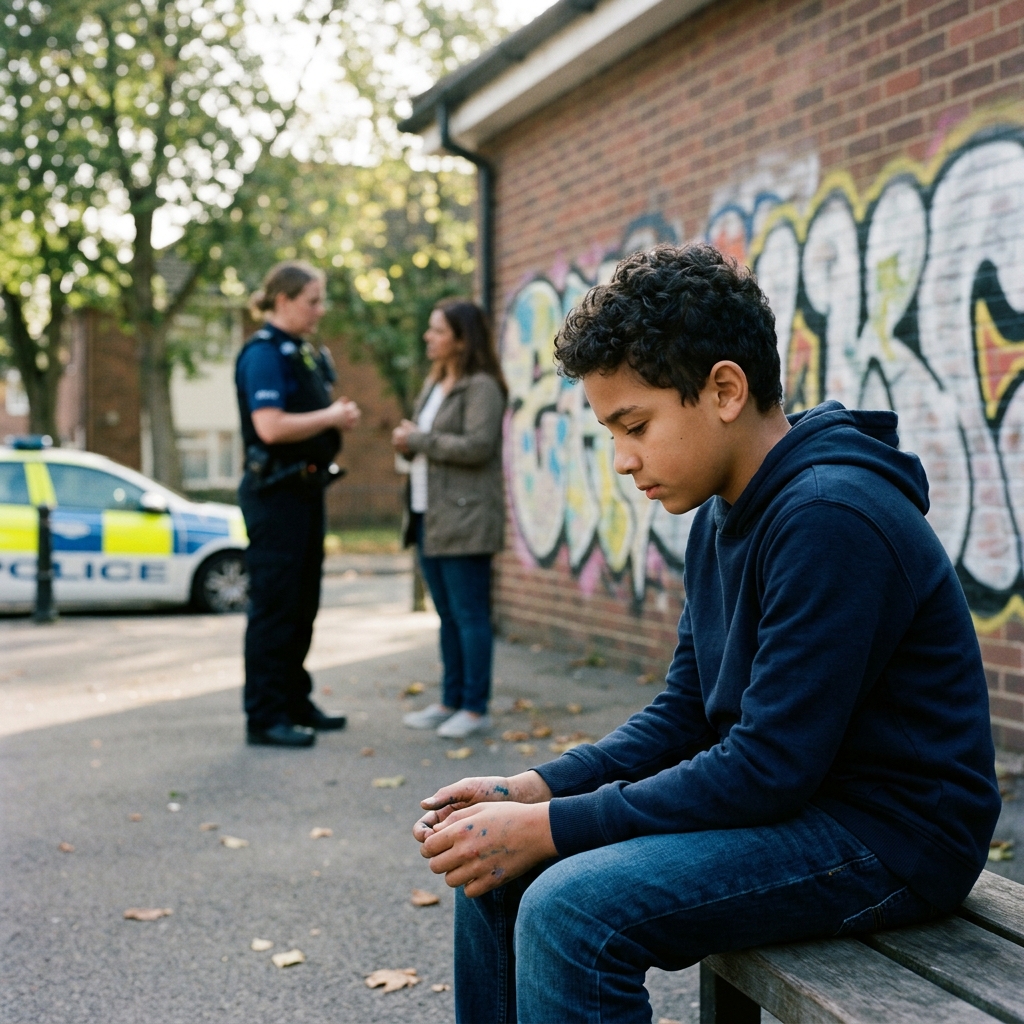
When a child is accused of vandalism, the legal system usually treats the case differently from an adult case, but that does not mean the consequences are minor. Juvenile courts often focus on accountability, repair of harm, and reducing the chance of repeat behavior. Depending on the facts, a child may face restitution, fines, probation, community service, counseling, or detention in a juvenile facility. In many cases, parents may also be responsible for paying part or all of the financial losses caused by the child’s conduct.
The exact outcome depends on the amount of damage, the child’s age, prior record, whether the conduct involved graffiti or another type of property destruction, and whether the child has already been involved in other juvenile proceedings. Some cases are resolved through diversion or informal supervision, while others move forward as formal delinquency matters with more serious court supervision.
How Juvenile Vandalism Cases Are Different
Juvenile cases are not simply smaller versions of adult criminal cases. Courts that handle minors often have broader discretion to choose responses that combine punishment with rehabilitation. That means a judge may look beyond the damaged property and consider school attendance, home environment, prior misconduct, substance use concerns, or behavioral issues that may have contributed to the incident.
In practice, this means two children who commit similar acts may receive very different outcomes. One may be referred to a diversion program after a first offense, while another may be placed on probation or ordered into detention if the damage was extensive or the child has a history of similar conduct.
Restitution Is Often the First Financial Consequence
Restitution is one of the most common outcomes in a juvenile vandalism case. It is designed to make the victim whole by covering the cost of repair or replacement. If the child spray-painted a wall, restitution may include cleaning and repainting costs. If a window was broken, restitution may include the price of replacing the glass and related labor. If property was destroyed beyond repair, the amount may be based on the value of the item.
Because juveniles usually do not have enough money of their own, parents often end up paying restitution in practice. Some states limit parental liability, and those limits can vary significantly. A court may also consider whether the act was isolated or whether the child acted with others in a coordinated way, especially if the conduct involved gang-related activity or repeated misbehavior.
Fines, Court Costs, and Additional Fees
In addition to restitution, a court can impose fines and court costs. These payments are separate from the amount needed to repair the damaged property. Even when the child is the one adjudicated in juvenile court, families may still be responsible for the financial burden. The total amount can become substantial once filing fees, supervision fees, testing fees, and program costs are added together.
Some courts also require payment for services linked to the case, such as electronic monitoring, drug testing, or mental health evaluations. If the court believes a child needs treatment or special supervision, those expenses may become part of the case plan. This means that a vandalism case can create much larger financial exposure than many families expect at the outset.
| Common Juvenile Vandalism Outcome | What It Usually Means |
|---|---|
| Restitution | Payment for repair or replacement of damaged property |
| Fines | Court-imposed financial penalty separate from restitution |
| Court costs | Administrative and filing-related charges |
| Program fees | Costs for supervision, testing, or treatment services |
Probation Can Be a Major Part of the Sentence
Probation is a common juvenile court response when the child does not receive detention. During probation, the child remains in the community but must follow specific rules. Those rules may include regular meetings with a probation officer, curfews, school attendance requirements, counseling, drug testing, and restrictions on associating with certain peers.
Probation is not simply a warning. A child who violates probation can face more serious sanctions, including confinement. Courts often use probation to monitor behavior over time and to determine whether the child is following the court’s expectations. In vandalism matters, probation may also be tied to completing cleanup work, attending anti-theft or anti-vandalism programming, or performing service for the community.
Community Service and Cleanup Work
Community service is frequently used in juvenile vandalism cases because it connects the punishment to the harm caused. A judge may order a child to help remove graffiti, clean public areas, or complete service hours at a nonprofit organization. The idea is not only to punish the conduct but also to create a direct lesson about the impact of property damage on others.
Service requirements may be imposed alone or alongside probation and restitution. In some cases, a court will use service as part of a structured agreement that helps the child avoid more serious consequences later. Failure to complete service can lead to additional penalties or a stricter supervision plan.
Detention Is Reserved for More Serious Situations
Juvenile detention is generally used when the facts are more severe, the damage is significant, or the child has a prior record. A court may order detention if the child repeatedly vandalized property, committed the act as part of a larger pattern of delinquency, or ignored earlier court orders. Detention may also be used where the conduct involved threats, organized activity, or extensive destruction.
Detention is usually intended to be temporary and structured, unlike adult incarceration. Still, it can have lasting effects on school progress, family life, and future court proceedings. Judges often view detention as a last resort, especially when there is an opportunity for rehabilitation through supervision, counseling, or treatment.
Parents May Face Their Own Financial Exposure
One of the most important issues in juvenile vandalism cases is parental liability. In many states, parents can be held financially responsible for damage their child causes. That responsibility may arise through restitution ordered by the juvenile court or through a separate civil lawsuit brought by the property owner.
In some places, state law places a cap on how much parents must pay, while other jurisdictions allow broader recovery. If the victim has already been paid through restitution, the same loss usually cannot be recovered a second time in civil court. That rule helps prevent duplicate compensation, but it does not eliminate the family’s financial burden when the case first arises.
Factors Courts Commonly Consider
Judges usually do not choose a penalty based on damage alone. They often look at several factors before deciding how to respond. A first-time offender may receive a more lenient outcome than a repeat offender. A child who accepts responsibility early may be treated differently from a child who denies involvement or refuses to cooperate. The child’s age, maturity, school history, and home support can also matter.
Courts may also weigh the type of property damaged, whether the act was planned, whether other people were involved, and how much the damage cost to repair. Graffiti cases are often treated differently from acts like breaking windows, slashing tires, or damaging public equipment. The broader the harm, the more likely the court is to impose tighter supervision.
Possible Outcomes at a Glance
- Informal diversion: The case may be resolved outside formal adjudication if the child meets certain conditions.
- Restitution order: The child or family may have to pay for cleanup, repair, or replacement.
- Fines and fees: Courts may add financial penalties and administrative costs.
- Probation: The child may remain at home under court supervision and conditions.
- Community service: The child may be ordered to perform service or graffiti removal.
- Detention: Serious or repeated conduct may lead to placement in a juvenile facility.
Can a Vandalism Case Affect the Child Later?
Yes. Even though juvenile cases are generally handled more privately than adult criminal cases, they can still matter later. A record or adjudication may affect future juvenile proceedings, school discipline, extracurricular participation, or certain background checks, depending on local law and whether the record is sealed or eligible for expungement. Repeat conduct can also make later cases more serious because the court sees the child as someone who has not responded to earlier interventions.
That is why early intervention matters. A family that responds quickly, addresses restitution, and takes the court process seriously may be able to reduce the risk of harsher outcomes. Courts often respond better when there is evidence that the child is learning from the incident and taking real steps to repair the harm.
Common Questions About Children and Vandalism
Can a child go to jail for vandalism? In juvenile matters, the more typical outcome is detention rather than adult jail, but serious or repeated conduct can lead to confinement in a juvenile facility.
Will the parents have to pay? Often yes, at least for restitution and related costs, though the exact rule depends on state law and any liability cap that applies.
Is every vandalism case treated the same? No. Courts look at the amount of damage, the child’s history, and whether the case involves graffiti, property destruction, or other aggravating facts.
Can a child avoid formal punishment? Sometimes. Diversion and informal resolution may be possible in lower-level cases, especially when the child has no prior record and accepts responsibility.
What if the property owner sues? A civil lawsuit may still be possible, but recovery is usually limited if the victim has already been fully compensated through restitution.
Why Early Legal Guidance Matters
A juvenile vandalism case can move quickly, and important decisions may be made early. Whether a family is negotiating restitution, contesting the allegations, or trying to keep the child in a diversion program, the first steps often shape the outcome. Legal counsel can help explain the charges, evaluate whether the child qualifies for a lesser resolution, and work toward a sentence that focuses on accountability without unnecessary long-term harm.
Because vandalism cases can involve both criminal consequences and financial responsibility, families should pay close attention to deadlines, hearing dates, and any court-ordered conditions. The sooner a case is handled carefully, the better the chance of resolving it in a way that addresses the damage while keeping the child’s future on track.
FAQs
What is the most common punishment for juvenile vandalism?
Restitution is one of the most common consequences, often paired with probation, community service, or fines.
Can parents be required to pay for the damage?
Yes. In many states, parents may be financially responsible for restitution or civil claims tied to the child’s conduct.
Does a first offense always lead to detention?
No. First offenses are often handled with diversion, probation, or community service, especially when the damage is limited.
Can the court require counseling?
Yes. Juvenile courts may order counseling, treatment, or other supportive services if they believe those measures will help prevent future misconduct.
Is graffiti treated differently from other vandalism?
Sometimes. Some jurisdictions have specific rules for graffiti, including separate fines or cleanup-related penalties.
References
- Juvenile Vandalism: Laws and Penalties — CriminalDefenseLawyer.com. 2026-07-10. https://www.criminaldefenselawyer.com/crime-penalties/juvenile/vandalism.htm
- The Consequences of Juvenile Vandalism — Hager & Schwartz, P.A.. 2020-10-01. https://www.defendyourbrowardcase.com/blog/2020/october/the-consequences-of-juvenile-vandalism/
- Child Charged With Vandalism: What Punishments Are Possible? — FindLaw. 2026-07-10. https://www.findlaw.com/legalblogs/criminal-defense/child-charged-with-vandalism-what-punishments-are-possible/
Similar Articles








Read full bio of Sneha Tete


