
West Virginia Marriage License: Complete Checklist And Tips Now
A practical guide to West Virginia marriage license rules, fees, timing, and paperwork.
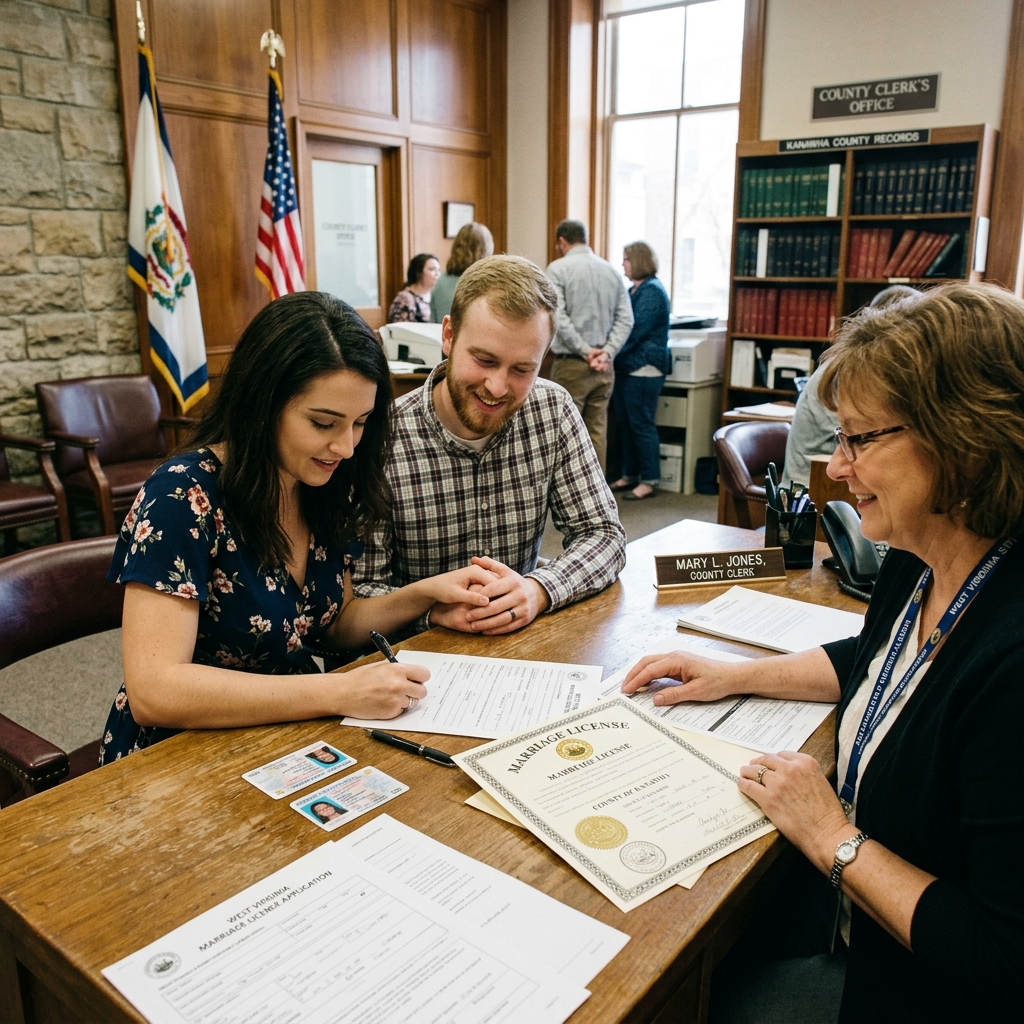
Getting married in West Virginia requires a few specific steps, but the process is straightforward once you know what the county clerk expects. Couples must apply together, provide identifying information, and meet the state’s eligibility rules before a license is issued. West Virginia does not require a blood test, and the modern rules focus instead on identity, age, prior marriages, and proper filing with the clerk.
What couples need to know first
The most important point is that a marriage license is not issued automatically. Both applicants must appear in person at a county clerk’s office and complete the application together. Online or mailed applications are not permitted under the state’s marriage license process.
- Both parties must apply in person.
- The application is filed with the county clerk.
- The license is valid for marriage in West Virginia only.
- A license is generally effective immediately for adult applicants.
Because marriage is a legal status, the clerk verifies that both people are eligible to marry. That means the office will ask for identification, personal details, and information about any prior marriages.
Where to apply and who may file
Residents of West Virginia usually apply in the county where at least one of them lives. Nonresidents may apply in any county in the state. That flexibility matters for couples who are traveling, living near a county border, or planning a wedding in a different part of West Virginia than their home county.
In practice, county clerk offices may vary slightly in their local procedures, but the statewide rule remains that the application is handled through the clerk. Couples should check the office hours and any local payment rules before arriving. County offices commonly require applicants to arrive together and bring complete documentation so the process can be completed in one visit.
Documents and information commonly requested
The clerk will usually ask for proof of identity and age, along with basic biographical details. Acceptable identification often includes a driver’s license, passport, state identification card, military ID, or a certified birth certificate. Some counties also ask for Social Security numbers and parent information as part of the application.
| Common item | Why it is needed |
|---|---|
| Photo ID | Shows identity and age |
| Social Security number | Part of the application record |
| Birthplace and date | Confirms basic personal information |
| Parents’ names and birthplaces | Completes the marriage application |
| Prior marriage details | Shows whether a previous marriage ended legally |
If either applicant was previously married, the clerk will want the date and reason the marriage ended, such as divorce, death, or annulment. Some offices may require a divorce decree or death certificate depending on how recent the prior marriage ended.
Age rules and consent for younger applicants
West Virginia’s marriage rules are designed for adults, and applicants who are 18 or older generally do not face a waiting period. For younger applicants, extra requirements can apply, including parental consent and, in some situations, a court order. The exact process depends on age and the county’s procedures, so minors should contact the clerk’s office before applying.
Because underage marriage involves additional legal protections, counties often require notarized consent, proof of custody where relevant, and supporting documents such as birth certificates. Applicants under 16 may need judicial approval in addition to parental involvement.
Fees and the premarital education discount
The standard marriage license fee in many West Virginia counties is $57. Some counties also reduce the fee by $20 if the couple completes a qualifying premarital education course and submits a signed certificate. The education course must usually be at least four hours long and taken within the time period required by the statute.
This discount is one reason couples should plan ahead. If they want the lower fee, they need proof of the course before applying. Counties may accept different payment methods, such as cash, credit card, debit card, or check, but the accepted forms vary by office.
How long the license lasts
A West Virginia marriage license is not open-ended. It remains valid for 60 days from the date it is issued. That means the ceremony must take place within that window or the couple may need to apply again.
For most adults, there is no waiting period after the license is issued, so a wedding can happen the same day if the couple and officiant are ready. However, the ceremony must still be performed legally and the license must be returned to the county clerk afterward.
What happens at the ceremony
A marriage license is only part of the process. The ceremony must be performed by an authorized officiant, and both parties must be physically present. West Virginia does not allow marriage by proxy, so one spouse cannot complete the marriage in place of the other.
After the ceremony, the officiant must complete the license with the date, time, and place of the marriage and return it to the issuing county clerk within the required time frame. One county source notes that return should be made by the sixth day of the following month.
This step is important because the return of the license creates the official record. Without proper filing, the marriage record may be delayed or incomplete. Couples who want certified copies later will need the record on file with the clerk.
Blood tests are no longer required
One of the clearest modern rules is that West Virginia does not require a blood test for a marriage license. That requirement existed in some places historically, but it is not part of the current West Virginia marriage application process.
Instead of medical screening, the state focuses on legal eligibility, identification, and documentation. For couples, this makes the process simpler and faster than marriage-license systems that still involve health testing or medical certificates.
Common-law marriage and legal recognition
West Virginia does not recognize new common-law marriages formed within the state. Couples who live together or present themselves as married do not create a valid West Virginia marriage just by doing so. At the same time, the state may acknowledge common-law marriages that were validly established under the law of another jurisdiction.
That distinction matters for couples moving to West Virginia from another state or trying to understand whether their relationship has legal marriage status. A formal license and ceremony remain the standard path to a legally recognized marriage in the state.
Practical checklist before you apply
Before heading to the county clerk, couples can avoid delays by confirming that they have the necessary information and documents. A simple checklist helps keep the visit efficient and reduces the chance of a second trip.
- Bring both applicants together to the clerk’s office.
- Carry valid identification for each person.
- Know each applicant’s full legal name, birth date, and place of birth.
- Have Social Security numbers ready if requested.
- Collect parent names and birthplaces if the county asks for them.
- Bring divorce or death records if a previous marriage ended.
- Confirm the fee and accepted payment methods in advance.
- Bring premarital education proof if you want the reduced fee.
Why county offices matter so much
Although state law controls the broad rules, county clerk offices manage the actual application process. That means local office practices matter for timing, hours, document review, and payment rules. Some counties provide detailed checklists online, while others recommend calling ahead to confirm what to bring.
Couples planning a wedding should not assume that every county handles the paperwork the same way. The legal requirements are statewide, but the clerk’s office is the place where those requirements are checked and recorded. If you prepare carefully, the process is usually efficient and predictable.
Frequently asked questions
Do both people have to appear in person?
Yes. West Virginia requires both applicants to apply together in person at the county clerk’s office. Mail and online applications are not allowed.
Is a blood test needed?
No. West Virginia does not require a blood test for marriage license purposes.
How long is the license valid?
The license is valid for 60 days from the date it is issued. The marriage must be completed within that period.
Can a couple marry by proxy?
No. Both parties must be physically present for the ceremony.
Does West Virginia recognize common-law marriage?
The state does not recognize new common-law marriages formed within West Virginia, although it may recognize valid common-law marriages from another jurisdiction.
Is there a way to lower the fee?
Yes. Some counties reduce the fee by $20 if the couple completes a qualifying premarital education course and provides the proper certificate.
What if one person was married before?
The clerk will usually ask for the date and reason the prior marriage ended. Depending on the situation, a divorce decree or death certificate may be needed.
Planning ahead for a smoother application
The easiest way to handle a West Virginia marriage license application is to treat it like any other legal filing: verify the rules first, bring complete documentation, and leave enough time to correct any missing details. Since counties can differ on local procedures, a quick call to the clerk’s office can prevent delays and confusion.
For couples who want a simple path to marriage, West Virginia’s current system is fairly direct. There is no blood test, the adult process has no waiting period, and the license can often be issued the same day as the application. The key is making sure both people arrive prepared and that the ceremony and return of the license are handled correctly.
References
- Marriage License | Clerk | Monroe County West Virginia — Monroe County Clerk. 2026. https://www.monroecountywv.gov/clerk/marriage-license/67
- West Virginia Code §48-2 — West Virginia Legislature. 2026. https://code.wvlegislature.gov/email/48-2/
- Marriage License – Monongalia County Clerk — Monongalia County Clerk. 2026. https://www.monongaliacountyclerk.com/index.php/marriage-license
- Marriage License Requirements — Berkeley County, WV. 2026. https://www.berkeleywv.org/DocumentCenter/View/8265
- Marriage License – Clerk of Boone County, West Virginia — Boone County Clerk. 2026. https://www.boonecountyclerkwv.com/marriage-license-info/
- Applying for a Marriage License | Jefferson County Commission, WV — Jefferson County Commission. 2026. https://www.jeffersoncountywv.org/county-government/elected-officials/county-clerk/main-office-vital-statisitics/marriage-licenses
- Applying for Marriage License — Ohio County WV Clerk. 2026. https://ohiocountywvclerk.com/applying-for-marriage-license/
- Marriage Licenses — Putnam County Clerk’s Office. 2026. https://www.putnamcountywv.gov/county-clerk/marriage-licenses/
- Applying For A Marriage License — Brooke County. 2026. https://www.brookecountywv.gov/government/county_clerk/applying_for_a_marriage_license.php
Similar Articles








Read full bio of medha deb


