
Wedding Services, Same-Sex Marriage and Discrimination Law
How wedding vendors can navigate same-sex marriage rights, anti-discrimination rules, and religious liberty laws without risking costly legal disputes.
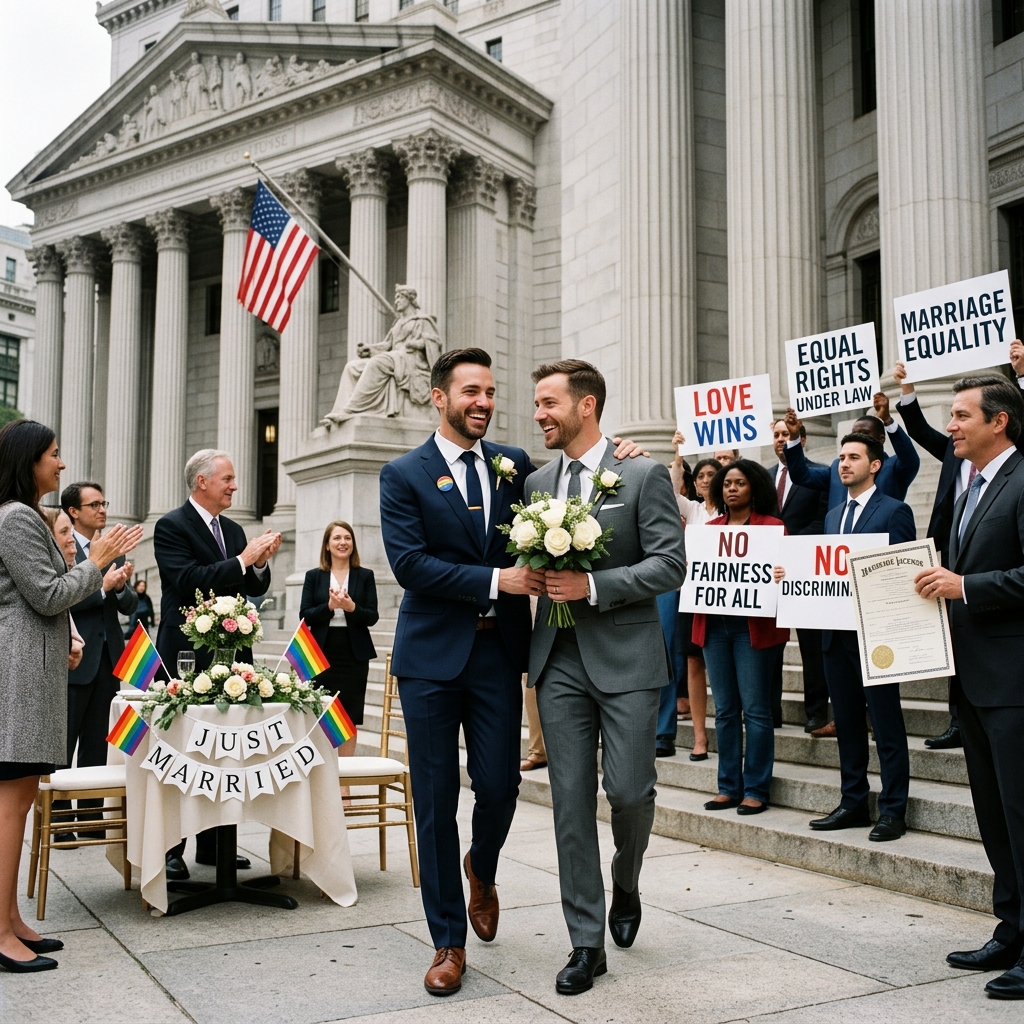
Since the nationwide recognition of same-sex marriage in the United States, wedding businesses have faced complex questions about what the law requires when they are asked to serve lesbian, gay, bisexual, transgender, and queer (LGBTQ) couples. At the same time, business owners with strong religious objections have sought clarity on how far their beliefs can limit the services they must provide. Understanding this legal landscape is essential for avoiding lawsuits, government enforcement actions, reputational damage, and business disruption.
This article explains the key rules and risks for wedding vendors, including venues, caterers, photographers, florists, bakers, planners, and other service providers. It draws on federal law, state and local protections, and major court decisions to outline what counts as unlawful discrimination, where religious liberty laws apply, and what practical steps businesses can take to operate lawfully and respectfully.
1. Same-Sex Marriage and the Legal Baseline for Weddings
The modern debate about wedding discrimination is inseparable from the legal status of same-sex marriage. In Obergefell v. Hodges (2015), the U.S. Supreme Court held that the Fourteenth Amendment requires every state to license and recognize marriages between two people of the same sex. This decision made marriage equality the law across all fifty states, meaning same-sex couples are entitled to marry “on the same terms and conditions” as opposite-sex couples.
- Licensing requirement: States must issue marriage licenses to same-sex couples under the same rules they apply to different-sex couples.
- Recognition requirement: States must recognize same-sex marriages lawfully performed in other states.
- Fundamental right: The Court confirmed that the right to marry is a fundamental liberty interest, protected for same-sex couples by both due process and equal protection principles.
Although Obergefell directly governs the actions of governments rather than private businesses, it set a powerful constitutional backdrop. Same-sex couples now approach wedding vendors not as customers seeking a controversial service, but as couples exercising a recognized civil right. Businesses that refuse service based on sexual orientation or the same-sex nature of a wedding may therefore be seen as undermining that equality and, in many jurisdictions, violating anti-discrimination law.
2. Public Accommodation Laws: Where Wedding Businesses Fit
In U.S. law, many businesses are treated as places of public accommodation, meaning they hold themselves out to the general public and must comply with specific anti-discrimination rules. Wedding vendors nearly always fall into this category, especially when they advertise broadly, accept walk-in clients, or rent space and services to anyone willing to pay the standard rate.
| Business Type | Typical Legal Status | Common Example |
|---|---|---|
| Wedding venues | Public accommodation when open to general public | Banquet hall, event center, hotel ballroom |
| Service providers | Public accommodation when offering services to any customer | Photographers, bakers, florists, caterers |
| Membership clubs | Sometimes exempt if truly private | Members-only social club with selective admission |
Under Title II of the Civil Rights Act of 1964, discrimination is prohibited in public accommodations such as hotels, restaurants, theaters, and certain other establishments open to the public. However, this federal statute covers only race, color, religion, and national origin—not sexual orientation or gender identity. As a result, there is no single federal law that universally forbids private businesses from refusing wedding-related services to same-sex couples based solely on sexual orientation.
The critical protections therefore come from state and local civil rights laws. Many states, counties, and cities have enacted statutes or ordinances that add sexual orientation and gender identity to their list of protected characteristics, alongside race, sex, and religion. In those jurisdictions, a wedding vendor that declines services for same-sex weddings faces potential fines, damage awards, or other sanctions for unlawful discrimination.
Key Takeaways on Public Accommodation Rules
- Federal law sets a baseline but does not currently outlaw sexual-orientation discrimination in all private wedding businesses.
- State and municipal laws frequently fill the gap by protecting LGBTQ customers in public accommodations.
- Wedding vendors should assume they are covered by public accommodation rules unless they operate as a genuinely private, non-commercial club.
3. State and Local LGBTQ Protections: A Patchwork System
The U.S. today has a patchwork of LGBTQ protections, with some jurisdictions offering comprehensive safeguards and others providing few or none. For wedding vendors, this means the legality of refusing same-sex couples can vary dramatically depending on where they operate.
In many states and large cities, public accommodation laws explicitly bar discrimination based on sexual orientation or gender identity. Complaints can be filed with civil rights commissions or human rights agencies, which may investigate and impose penalties or require businesses to change policies. High-profile enforcement actions against wedding-related businesses, including bakeries and event venues, have arisen under such laws when owners declined to serve same-sex couples.
By contrast, some states have either limited or no explicit statutory protections for LGBTQ people in public accommodations. In those areas, same-sex couples may rely on a narrower set of legal arguments, and some refusals of wedding services may be technically lawful, though still subject to public criticism, boycotts, and litigation under other theories.
Practical Steps for Businesses
- Review governing law: Identify state civil rights statutes and local ordinances that regulate discrimination in public accommodations.
- Check definitions: Confirm whether “sexual orientation” and “gender identity” are expressly listed as protected characteristics.
- Monitor updates: Follow legislative or regulatory changes, as LGBTQ protections have expanded in many jurisdictions in recent years.
- Assess enforcement risk: Evaluate how active local agencies are in investigating discrimination complaints against businesses.
Because couples often cross city or county lines to marry, multi-location wedding vendors may be subject to different rules in different venues. A uniform policy that complies with the strictest applicable law can reduce complexity and legal risk.
4. Religious Freedom Laws and Their Limits
Many business owners objecting to same-sex weddings cite religious freedom as justification for refusing services. In the U.S., federal and state Religious Freedom Restoration Acts (RFRAs) aim to protect individuals from laws that substantially burden their religious exercise unless the government has a compelling interest and uses the least restrictive means.
However, RFRAs are primarily designed to regulate how government entities treat religious practice, not to grant private businesses an unconditional right to discriminate against customers. Most RFRAs do not automatically override anti-discrimination statutes, and courts have been cautious about allowing religious objections to defeat civil rights protections for protected groups.
- Scope: Many RFRAs apply when a government action burdens religious exercise, not when a private business chooses its customers.
- Compelling interest: Courts often recognize preventing discrimination as a compelling government interest.
- Limited success: Religious liberty defenses have struggled when they directly conflict with clear anti-discrimination laws protecting LGBTQ people.
Some recent controversies involve government actors rather than private businesses. For example, certain state-level rules have allowed judges or justices of the peace to refuse officiating same-sex weddings based on sincerely held religious beliefs, while same-sex marriage itself remains legal. These policies illustrate ongoing tensions between religious freedom and equality, but they do not give private wedding vendors carte blanche to deny services in jurisdictions with strong LGBTQ protections.
5. Service Refusals and Discrimination: How Courts Analyze Cases
When a wedding vendor declines services for a same-sex couple, legal disputes often turn on how the refusal is framed. Some businesses argue that they are objecting to the message or event (a same-sex wedding ceremony) rather than to the customers’ sexual orientation. Recent Supreme Court cases have examined these distinctions under free speech and religious liberty doctrines.
In cases like 303 Creative LLC v. Elenis, the Court has recognized that some expressive businesses, such as custom web designers, cannot be compelled to create speech celebrating same-sex weddings if doing so would violate their sincerely held beliefs. The Court treated the refusal as a matter of content and expression rather than straightforward anti-gay discrimination, emphasizing that a business cannot be forced to design every possible message requested by any customer.
At the same time, anti-discrimination law remains in force for non-expressive services and for outright denials based on customer identity. Selling pre-made goods or standard services on a neutral basis, while refusing only when the customers are a same-sex couple, is more likely to be treated as unlawful discrimination where sexual orientation is protected.
Factors Courts Consider
- Nature of the service: Is the service predominantly expressive (e.g., custom artwork, personalized messaging) or more functional (e.g., renting chairs, providing food)?
- Consistency: Does the business refuse similar services for other weddings (for example, declining all custom wedding content), or only for same-sex weddings?
- Legal coverage: Does local law explicitly protect sexual orientation and gender identity in public accommodations?
- Framing of the refusal: Is the vendor objecting to the specific message or ceremony, or to the customers as a group?
Because these questions are fact-specific and evolving, wedding vendors should seek legal advice before adopting any policy that differentiates between same-sex and different-sex weddings.
6. Business Consequences Beyond the Law
Even in jurisdictions where refusing to serve same-sex couples might be technically lawful, the business consequences can be serious. Publicized refusals have led to boycotts, online backlash, negative media coverage, and long-term reputational harm. Customers increasingly expect inclusivity, and many couples—including heterosexual ones—avoid vendors perceived as discriminatory.
Wedding businesses that decline same-sex couples may face:
- Lost revenue: Reduced bookings from both LGBTQ couples and allies who choose more inclusive vendors.
- Brand damage: Negative reviews and social media campaigns can quickly affect future business.
- Staff morale issues: Employees may object to discriminatory policies or feel uncomfortable enforcing them.
- Legal costs: Even if a business ultimately prevails, defending a discrimination claim can be expensive and time-consuming.
For these reasons, many vendors choose to adopt neutral, inclusive policies that comply with applicable law and promote a welcoming environment for all couples.
7. Compliance Strategies for Wedding Vendors
Wedding businesses can reduce legal risk and promote fairness through deliberate policy design, staff training, and documentation. The goal is to apply consistent rules that focus on business criteria (such as date availability, pricing, and capacity) rather than protected characteristics.
Policy Design and Documentation
- Written non-discrimination policy: State that the business does not discriminate on the basis of race, religion, sex, sexual orientation, gender identity, or other protected traits, as required by local law.
- Standardized booking criteria: Use objective factors like date, location, and service scope to accept or decline events, and apply them consistently.
- Service definitions: Clearly define which services are offered, including any limits on custom expressive work that apply equally to all couples.
- Complaint procedures: Establish internal processes for addressing customer concerns quickly and respectfully.
Training and Implementation
- Staff training: Educate employees on anti-discrimination obligations, respectful communication, and how to handle inquiries from LGBTQ customers.
- Scenario planning: Role-play difficult situations, such as navigating religious objections within a lawful framework.
- Legal review: Periodically consult with qualified counsel to ensure policies align with current law, including new court decisions and statutes.
For businesses whose owners hold strong religious beliefs, it may be possible to design policies that respect those beliefs while avoiding unlawful discrimination—such as focusing on general business limits that apply to all weddings rather than singling out same-sex couples. However, because these issues are delicate and legally complex, individualized legal advice is essential.
8. Frequently Asked Questions (FAQs)
Can a wedding vendor legally refuse to serve a same-sex couple?
The answer depends heavily on location and the type of service. In jurisdictions with public accommodation laws that protect sexual orientation and gender identity, a blanket refusal to serve same-sex couples for weddings is likely to be unlawful discrimination. In places without such protections, some refusals may be legal but still carry significant reputational and business risks.
Does federal law explicitly protect LGBTQ customers in all wedding businesses?
Federal public accommodation law, including Title II of the Civil Rights Act of 1964, does not currently list sexual orientation or gender identity as protected categories for private businesses. Instead, LGBTQ protections typically arise from state and local civil rights statutes, as well as certain constitutional and statutory interpretations.
How does the Obergefell decision affect private wedding vendors?
Obergefell v. Hodges requires states to license and recognize same-sex marriages and confirms that same-sex couples have a fundamental right to marry. While the ruling directly governs government actors, it strengthens the legal and social expectation that same-sex couples should be treated equally in access to wedding-related services, and many subsequent laws and policies reflect that expectation.
Do religious freedom laws allow a business to ignore anti-discrimination rules?
Generally, no. RFRAs are not broad exemptions that permit businesses to disregard valid anti-discrimination statutes. Courts often treat preventing discrimination as a compelling government interest, and religious liberty defenses have had limited success when they conflict with clear civil rights protections for LGBTQ people.
What should a wedding business do to stay compliant?
Wedding vendors should consult local law, adopt written non-discrimination policies, train staff, and periodically review their practices with legal counsel. Consistent, neutral criteria for accepting or declining events and clear policies on any limits to expressive services can help avoid disputes.
References
- Obergefell v. Hodges, 576 U.S. 644 (2015) — Supreme Court of the United States. 2015-06-26. https://supreme.justia.com/cases/federal/us/576/644/
- Obergefell v. Hodges — Summary and analysis, Wikimedia-derived source linked to primary decision. 2015-06-26. https://en.wikipedia.org/wiki/Obergefell_v._Hodges
- Wedding Discrimination After the Same-Sex Marriage Ruling — FindLaw Small Business Legal Blog. 2015-07-XX. https://www.findlaw.com/legalblogs/small-business/wedding-discrimination-after-the-same-sex-marriage-ruling/
- Discrimination Denials: Are Same-Sex Wedding Service Refusals Discriminatory? — Columbia Law Review. 2024-01-XX. https://columbialawreview.org/content/discrimination-denials-are-same-sex-wedding-service-refusals-discriminatory/
- A 10-Year Reflection on Obergefell and the Ongoing Fight for Equality — Lambda Legal. 2025-11-10. https://lambdalegal.org/protecting-lgbtq-families-couples-marriage-equality-obergefell/
- Texas Supreme Court allows judges to refuse performing same sex weddings — KHOU / CBS local reporting. 2025-XX-XX. https://www.youtube.com/watch?v=ApVv_qNO7LA
Similar Articles








Read full bio of medha deb


