
Wayfair Credit Cards: Rewards, Costs, and Key Alternatives
Understand how Wayfair credit cards work, what they really cost, and when their rewards might or might not be worth it.
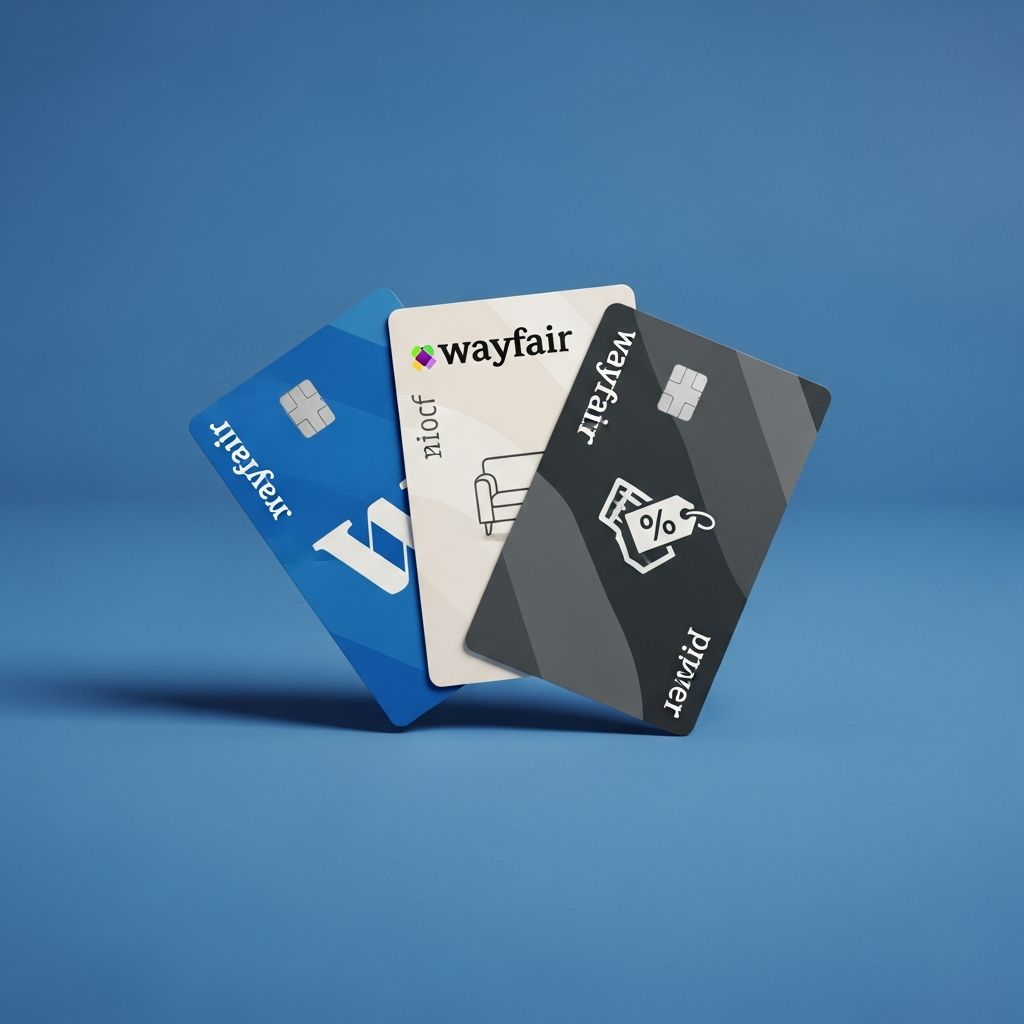
Retail credit cards that work with a single store or a small group of brands can look appealing because of their high rewards and special financing offers. Wayfair’s co-branded credit cards are a typical example: they promise cash-back style rewards on furniture and home décor, but also come with relatively high interest rates and narrow ways to redeem those rewards. Understanding how these cards really work can help you decide whether they fit your budget and goals or if another option would be safer.
1. What Is a Store-Branded Credit Card?
Wayfair credit cards are part of a broader category called store-branded or co-branded credit cards. These are cards issued by a bank, but marketed around a particular retailer or brand.
In general, a store card:
- Is issued by a bank or card issuer (not by the retailer itself).
- Often has lower credit requirements than many general rewards cards.
- May be used only at that retailer (closed-loop) or anywhere the network (e.g., Mastercard) is accepted (open-loop).
- Typically offers bonus rewards or discounts at the partner store, but few benefits elsewhere.
- Frequently has higher interest rates than many mass-market credit cards, especially for customers with fair or limited credit history.
Wayfair’s cards follow this pattern by providing outsized rewards on Wayfair purchases, while charging a higher annual percentage rate (APR) than many low-rate general-purpose cards for everyday use.
2. How Wayfair Credit Cards Generally Work
Wayfair partners with a major bank to issue branded cards connected to the Mastercard network. While details can change over time, the structure usually includes the following features:
- No annual fee: You typically do not pay a yearly membership cost, which can make the card easier to keep long-term if used carefully.
- Enhanced rewards at Wayfair: Cardholders may earn comparatively high reward rates on qualifying purchases at Wayfair family sites, often in the form of points or percentage cash back that can only be redeemed for future purchases with Wayfair.
- Standard rewards elsewhere: If the card is on a major network like Mastercard, it can often be used at any merchant that accepts that network, but non-Wayfair purchases usually earn much lower rewards.
- Special financing options: Promotional offers may allow you to pay off large purchases over time with deferred interest or reduced interest, if paid within a specific period.
- High ongoing APR: Purchases that are not covered by promotional financing—or promotional balances that are not paid in full by the deadline—generally accrue interest at a steep variable rate that can exceed the average for general-purpose cards.
Because of this mix of generous rewards and high financing costs, these cards tend to work best for disciplined pay-in-full users who shop regularly at Wayfair and do not carry a balance.
3. Rewards: Where These Cards Shine
The main selling point of Wayfair credit cards is the potential for enhanced rewards when you buy furniture, décor, or other household items from Wayfair-owned sites.
3.1 Reward Types You May See
While the exact offer can change, store-brand cards often provide:
- Elevated earning at the partner store: For example, a significantly higher percentage back at Wayfair than what many cash-back cards offer on general purchases.
- Lower rewards on other spending: Purchases outside the Wayfair ecosystem sometimes receive only a small base reward rate.
- Redemption limited to store purchases: Many co-branded retailer cards allow you to redeem only as statement credits on store purchases or as special rewards vouchers, rather than as unrestricted cash.
- Occasional welcome bonuses: New cardholders might get a one-time discount on their first purchase or bonus rewards after meeting a spending threshold.
3.2 Comparing Rewards Value
It can be helpful to compare the rewards design of a retailer card with a general cash-back card. The following table shows a simplified example to illustrate how value might play out for someone who shops heavily at one retailer:
| Feature | Wayfair-Style Store Card | Flat Cash-Back Card |
|---|---|---|
| Wayfair purchases | High rewards rate | Lower flat rate on all purchases |
| Other purchases | Low base rewards | Same flat rate as Wayfair purchases |
| Redemption options | Store-only credits or discounts | Flexible cash back or statement credits |
| Typical APR range | Often higher than average | Often moderate, depending on card and credit profile |
If you make frequent large purchases at Wayfair and always pay your statement balance in full, the extra reward rate may offset the inflexibility of store-only redemptions. If your spending is more diversified, or if you sometimes carry a balance, a simple low-rate or flat cash-back card may be more suitable.
4. Interest Rates, Deferred Interest, and Fees
Understanding the cost side of any credit card is just as important as looking at rewards. Store cards commonly come with higher APRs than many general-purpose cards, especially for cardholders with limited or less-than-perfect credit.
4.1 Purchase APR
The purchase APR on a retailer card like Wayfair’s is often set as a variable rate tied to a benchmark, such as the U.S. prime rate, plus a margin that depends on creditworthiness. When market rates rise, the cost of carrying a balance on variable-rate credit cards rises too, because the APR adjusts upward.
Key implications of a high purchase APR include:
- Carrying a balance becomes expensive: Even a modest unpaid balance can generate substantial monthly interest charges.
- Rewards are quickly outweighed: The interest you pay on carried balances often exceeds the value of any rewards earned.
- Minimum payments can keep you in debt longer: If you pay only the minimum, a high APR can greatly extend the payoff time of your debt.
4.2 Promotional and Deferred Interest Offers
Store cards sometimes offer promotional financing such as “no interest if paid in full within X months.” These deferred interest offers differ from true 0% introductory APR deals:
- Deferred interest: Interest accrues in the background during the promo period. If you do not pay the full promotional balance by the end date, all accumulated interest can be added to your balance retroactively.
- True 0% intro APR: Interest does not accrue on the promotional balance during the intro period. After the period ends, new interest applies only to any remaining balance going forward.
Federal regulators have noted that deferred interest products can be confusing and costly when consumers misinterpret the terms or underestimate how long payoff will take. Always read promotional language carefully and plan payments so you can clear the promotional balance on time if you use one of these offers.
4.3 Other Costs to Watch
In addition to interest, potential fees can include:
- Late payment fees: Charged if your payment is not received by the due date. Consistently paying late can also hurt your credit scores.
- Returned payment fees: Sometimes charged if your bank returns a payment.
- Foreign transaction fees: May apply to purchases processed outside the United States if the card is used internationally.
Reading the card’s pricing and terms disclosure before applying can help you anticipate these costs and decide how to use (or avoid) the account effectively.
5. Credit Score Impact and Account Management
Like most revolving credit products, a Wayfair-branded card can affect your credit profile in several ways—both positive and negative—depending on how you manage the account.
5.1 Potential Benefits for Your Credit
If used responsibly, an additional credit line can help build or strengthen your credit history. Major scoring models consider factors such as payment history, credit utilization, and the mix of credit types you have.
- On-time payments: Making at least the required payment by the due date each month supports a positive payment history, which is one of the most important factors in your credit scores.
- Lower utilization ratio: If you keep balances low relative to your total available credit, your credit utilization ratio may improve, which can support higher scores.
- Account age and mix: Over time, maintaining an open revolving account in good standing can add positive information to your credit file and contribute to a mix of installment and revolving credit.
5.2 Risks to Your Credit Health
On the other hand, these cards can harm your credit if mismanaged:
- High utilization: Charging a large purchase and leaving it unpaid relative to the card’s limit can spike your utilization ratio and may reduce your scores.
- Late or missed payments: Delinquencies reported to the credit bureaus can have a substantial negative impact and may stay on your reports for up to seven years.
- Multiple new accounts: Applying for several retail cards in a short time can generate multiple hard inquiries and reduce the average age of your accounts, both of which can temporarily lower scores.
To reduce the risk, it is wise to consider whether you need another card at all and how the new account fits into your broader financial plan before submitting an application.
6. When a Wayfair Credit Card Might Make Sense
Because these cards are highly specialized, they work best for some shoppers and not for others. Consider your habits and financial situation.
6.1 Situations Where It Could Be a Good Fit
- Frequent Wayfair shopper: You consistently purchase furniture, décor, or home goods from Wayfair and can earn meaningful rewards from the elevated earn rate.
- Pay-in-full user: You are disciplined about paying your entire statement balance each month, which avoids interest and makes rewards essentially a discount on your purchases.
- Looking to build credit: You want to establish a positive payment history and can manage another line of credit responsibly.
6.2 Situations Where You May Want to Avoid It
- Carrying balances regularly: If you often revolve balances on your credit cards, the high APR of a store card can be especially costly.
- Infrequent Wayfair purchases: If you rarely buy from Wayfair, the card’s main reward advantage is unlikely to matter.
- Already managing multiple cards: Adding another account may make budgeting and tracking payments harder, increasing the risk of missed due dates.
7. Alternatives to a Wayfair Credit Card
Before deciding, compare Wayfair’s offering with other options. Many consumers can reach similar goals—saving on purchases, spreading out payments, or building credit—without taking on the restrictions of a store-branded line.
7.1 General-Purpose Cash-Back Cards
A simple cash-back credit card can be an attractive alternative:
- Flexible rewards: You usually can redeem for statement credits, direct deposit, or checks, rather than being locked into a single retailer.
- Broad earning categories: Cards may offer flat rewards on all purchases or bonus categories like groceries or gas.
- Competitive APRs for qualified applicants: Many mainstream cards offer APRs that may be lower than retailer cards, especially for borrowers with strong credit profiles.
7.2 0% Intro APR Purchase Cards
If your main goal is to finance a large furniture purchase over time, you may want to look at a general card with a 0% introductory APR on purchases instead of a deferred interest plan. With a true 0% offer, interest does not accrue on that balance during the intro period, as long as you pay at least the minimum amount due.
However, once the introductory period ends, the standard purchase APR applies to any remaining balance, so it is still important to have a payoff plan.
7.3 Personal Loans for Large Purchases
Another choice for big-ticket items is a fixed-rate personal loan. While not as flexible as revolving credit, installment loans offer:
- Predictable monthly payments: Fixed amounts over a set term can make budgeting easier.
- Clear payoff date: The debt is fully repaid at the end of the term, assuming all payments are made as agreed.
Some consumers find this structure easier to manage because it reduces the temptation to keep adding new charges, as can happen with revolving lines.
8. Safe Use Tips for Wayfair and Other Retail Cards
If you decide a Wayfair credit card is right for you, a few habits can reduce risk and increase the chance that the card will work in your favor.
- Pay in full each month: Treat the card more like a charge card than a long-term borrowing tool. This approach lets you benefit from rewards while avoiding the high cost of interest.
- Set up automatic payments: Automatic payments at least for the statement balance or a set amount can help prevent late fees and protect your payment history.
- Monitor your statements: Regularly review transactions for accuracy and watch for ongoing subscriptions or charges you no longer need. Federal regulations require that card issuers provide periodic statements with detailed information on transactions and fees.
- Keep utilization low: Try to avoid using most of your available credit. Many experts suggest keeping revolving utilization well below 30% of your total limit to support healthy credit scores.
- Revisit the card’s value each year: As your spending patterns and credit profile change, you may find that another card offers better rewards, lower rates, or more useful benefits.
9. Frequently Asked Questions (FAQs)
Q1: Is a Wayfair credit card a good way to build credit?
A Wayfair-branded card can help you build credit if you use it responsibly—pay on time, keep your balance low, and avoid opening multiple new accounts at once. Payment history and utilization are key factors in most credit scoring models.
Q2: Will applying for a Wayfair card hurt my credit score?
When you apply, the issuer typically performs a hard inquiry on your credit report, which may cause a small, temporary decrease in your credit scores. Over time, responsible use can offset this effect.
Q3: What happens if I miss a payment?
Missing a payment can trigger a late fee and, if the payment is reported as late to the credit bureaus, can negatively affect your credit history. Severe or repeated delinquency may lead to additional fees, penalty APRs, or account closure.
Q4: Are Wayfair credit card rewards taxable?
In most cases, rewards like cash back or points earned from personal spending are treated as rebates, not income, and are not taxed. However, if rewards are earned through business spending or promotional bonuses without a spending requirement, the tax treatment can differ, so consulting a tax professional is advisable.
Q5: How do deferred interest promotions differ from 0% APR deals?
With deferred interest, interest accrues during the promotional period and is charged retroactively if the balance is not paid in full by the deadline. With a true 0% introductory APR, no interest accrues on the promotional balance during the intro period; interest begins only on any remaining balance after the period ends.
References
- 12 CFR Part 1026 (Regulation Z) — Consumer Financial Protection Bureau. 2023-05-01. https://www.consumerfinance.gov/rules-policy/regulations/1026/
- Credit cards — Consumer Financial Protection Bureau. 2024-01-10. https://www.consumerfinance.gov/consumer-tools/credit-cards/
- How credit scores are calculated — Consumer Financial Protection Bureau. 2023-09-15. https://www.consumerfinance.gov/ask-cfpb/how-are-credit-scores-calculated-en-1883/
- Credit cards and interest rates — Federal Reserve Board. 2024-02-29. https://www.federalreserve.gov/creditcard/faq
- What is a deferred interest promotion? — Consumer Financial Protection Bureau. 2022-11-03. https://www.consumerfinance.gov/ask-cfpb/what-is-a-deferred-interest-promotion-en-1793/
- Your credit report and your credit score — Federal Trade Commission. 2023-06-08. https://consumer.ftc.gov/articles/credit-scores
- Credit card interest and fees — Consumer Financial Protection Bureau. 2023-04-20. https://www.consumerfinance.gov/ask-cfpb/what-is-the-interest-rate-on-a-credit-card-en-31/
Similar Articles








Read full bio of medha deb




