
Water, Weed, and the Law: Understanding Cannabis-Related Water Theft
How cannabis cultivation, scarce water, and complex legal rules collide to create conflicts over water use and theft in Western states.
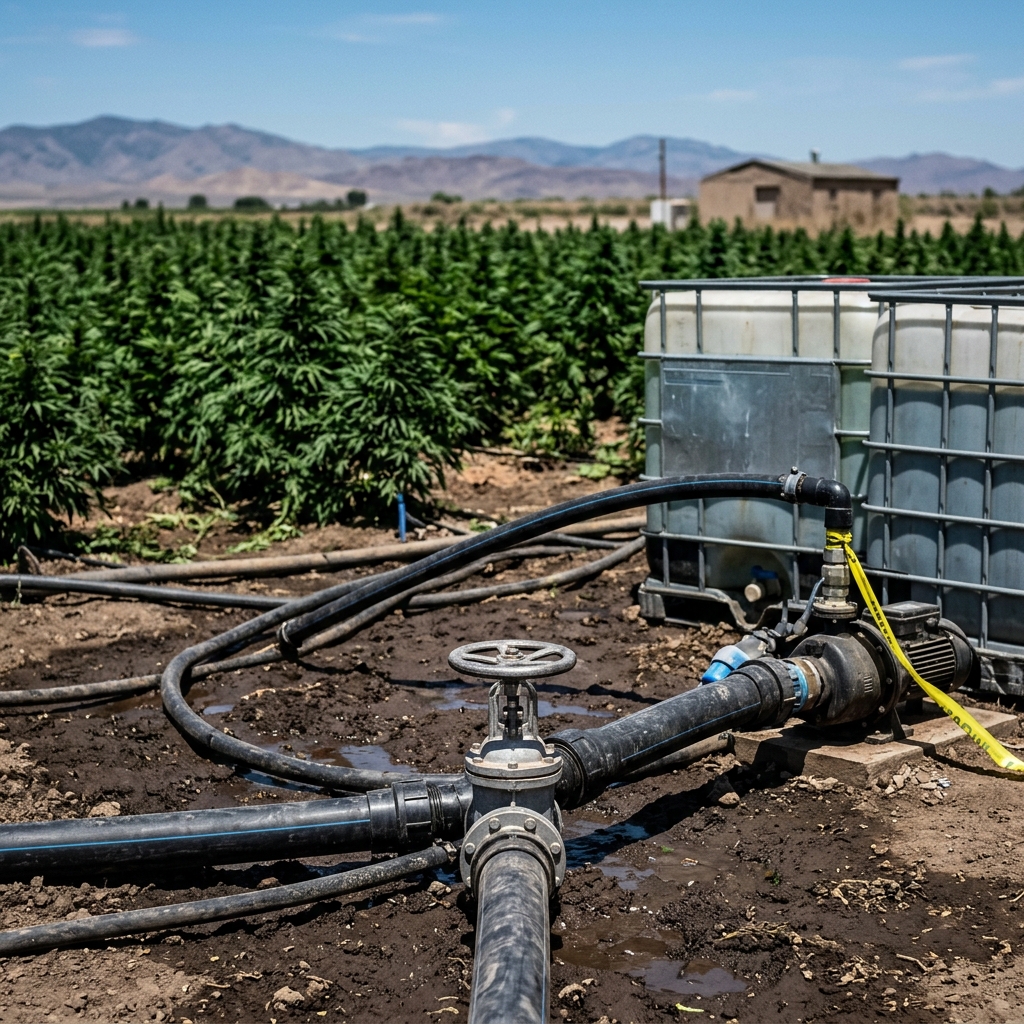
Cannabis is a water-intensive crop, and in regions already struggling with drought and competition over limited water resources, marijuana cultivation has become a flashpoint for conflict. Legalization did not erase disputes about who may use water, how much they may take, or what happens when cultivators bypass the rules. Instead, it pushed these questions to the forefront of environmental policy and cannabis law, especially in states like Oregon, California, and Colorado.
This article explores how cannabis agriculture interacts with Western water law, what water theft looks like in practice, why it matters for communities and ecosystems, and how cultivators can reduce water impacts through better technology, planning, and compliance.
Why Cannabis Cultivation Puts Pressure on Water Resources
Cannabis plants require substantial water throughout the growing cycle, especially in hot, dry climates where supplemental irrigation is essential. Large-scale operations—whether legal or illegal—can strain rivers, streams, aquifers, and rural water systems.
How Much Water Does Cannabis Use?
Estimating the exact water use of cannabis cultivation is challenging because it varies by climate, growing method, and management practices. However, research and policy reports point to some key patterns.
- Outdoor cultivation: Outdoor cannabis grown in arid or semi-arid regions often requires intensive irrigation throughout the season. Some analyses have estimated that a single plant grown outdoors to harvest can require close to twice the water of an indoor plant.
- Indoor cultivation: Indoor grows rely on controlled environments with irrigation systems and environmental controls. One estimate suggested that cultivating a single plant indoors to harvest can use around 450 gallons of water, though modern systems can reduce this through recycling and precise metering.
- Greenhouse cultivation: Greenhouses often use less water than fully indoor facilities because they benefit from natural light and more stable temperatures. One industry report found that greenhouse cannabis operations yielded marginally more product per gallon of water compared with indoor grows.
University and policy studies in the Western United States note that cannabis operations draw water from diverse sources—surface flows, springs, groundwater wells, municipal systems, and stored rainwater. The choice of source affects both legal obligations and environmental impact.
Primary Water Sources for Cannabis Farms
Cannabis cultivators commonly rely on the following water sources:
- Groundwater wells serving individual farms or domestic properties.
- Surface water diversions from rivers, streams, or irrigation canals.
- Municipal or community water systems, sometimes subject to specific use restrictions.
- Stored or captured rainwater and onsite storage ponds.
Where water rights are tightly regulated—as in Oregon—cultivators must navigate both cannabis licensing rules and the broader system of water law to avoid violations.
Western Water Law Basics: Who Owns the Water?
To understand water theft in the context of cannabis, it helps to start with the legal framework governing water in Western states like Oregon. These states generally rely on prior appropriation—sometimes summarized as “first in time, first in right.”
Prior Appropriation and Senior Water Rights
Under prior appropriation, the right to use water is typically tied to a legally recognized diversion and beneficial use, not simply land ownership. A person or entity that first lawfully diverted water and put it to beneficial use may gain a senior right. Later users are junior right holders, whose access can be curtailed in times of shortage.
Key principles include:
- Beneficial use: Water must be used for a recognized beneficial purpose, such as irrigation, domestic use, or industrial processes.
- Priority system: Senior rights have priority; in drought, junior users may be cut off before seniors.
- Permits and certificates: Many states require formal permits or certificates for surface water and certain kinds of groundwater use.
Cannabis cultivation, particularly when commercial, typically counts as agricultural or industrial use and therefore must comply with these rules. Failure to secure appropriate water rights can place an operation in legal jeopardy even if the cannabis itself is lawfully licensed.
Domestic Wells and Small Farm Exemptions
In Oregon, domestic well laws historically allowed landowners to use a limited amount of groundwater for household and small-scale irrigation without going through the full permit process. These exemptions often include daily gallon limits and constraints on acreage.
Policy debates have arisen over whether—and to what extent—commercial crops may rely on domestic well exemptions. Advocacy organizations have highlighted proposals that would allow small farms to use domestic wells for limited commercial activity up to specific daily water caps, while maintaining a total ceiling on commercial and irrigation use.
Importantly, cannabis cultivation has often been explicitly excluded from some domestic well exemptions, meaning growers cannot assume that ordinary household water rules apply to marijuana. This exclusion increases pressure to obtain formal water rights and makes unauthorized use more likely to be treated as a violation.
What Counts as Water Theft in the Cannabis Context?
Water theft occurs when someone uses water they are not legally entitled to, in violation of water rights, permits, or local regulations. In the cannabis sphere, water theft can occur in both legal and illegal grows, and may involve surface water, groundwater, or municipal supplies.
Common Patterns of Water Theft in Cannabis Operations
Reports from law enforcement and policy researchers describe recurring patterns of unlawful water use linked to marijuana cultivation.
- Direct diversion from canals and ditches: Growers may tap into agricultural canals or irrigation ditches without authorization, routing water to their fields or greenhouses.
- Unauthorized connections to neighbor systems: In rural areas, some operators have been found using hoses or buried pipes to siphon water from neighboring farm irrigators or domestic wells without consent.
- Illegal pumping from streams and rivers: Filling portable tanks or establishing pumps on rivers and streams without permits or contrary to regulatory limits is a common type of violation.
- Purchasing illicit water: Some growers reportedly buy water from community wells or small systems where the seller lacks legal authority to transfer that volume for cannabis irrigation.
- Hidden or unregistered pipelines: Investigations have uncovered unpermitted pipelines laid across properties to draw water from distant sources without proper approvals.
Even where cannabis cultivation is licensed by a state regulatory agency, using water outside permitted rights or beyond authorized allocations can qualify as water theft, subjecting operators to fines, enforcement actions, or criminal charges.
Legal vs. Illegal Cannabis: How Water Issues Differ
| Type of operation | Water access | Typical issues |
|---|---|---|
| Licensed legal cultivation | Often relies on registered wells, permitted surface diversions, or municipal supplies. | Compliance with water permits, reporting, conservation requirements; risk of violations if expanding without updating rights. |
| Unlicensed / illegal cultivation | Frequently relies on unauthorized diversions, hidden infrastructure, or unpermitted groundwater pumping. | Higher risk of outright water theft, large-scale depletion, and environmental damage; often beyond regulatory oversight. |
Because illegal cultivators typically do not pay for water rights or infrastructure, they may use water at wasteful rates, exacerbating local scarcity and environmental harms.
Environmental and Community Impacts of Water Theft
Water theft linked to cannabis cultivation is not simply a paperwork problem—it has tangible consequences for rivers, aquifers, and rural communities.
Impacts on Rivers, Streams, and Aquatic Ecosystems
In regions with sensitive watersheds, unauthorized withdrawals can reduce streamflows, elevate water temperatures, and alter habitat for fish and other species. When diversions occur during low-flow periods, the impact is especially severe.
Potential consequences include:
- Reduced instream flows critical for fish migration and spawning.
- Higher water temperatures, which can stress cold-water species such as salmon and trout.
- Altered sediment and nutrient dynamics due to changed flow regimes and runoff from irrigated fields.
- Cumulative watershed impacts when many small diversions add up to significant reductions in water availability.
Impacts on Rural Communities and Small Farms
Rural residents in parts of Oregon and other Western states have expressed concern that cannabis grows contribute to declining groundwater levels and strain local water systems. While detailed studies sometimes find that legal cannabis operations are only one part of a broader picture of groundwater stress, perceptions of unfair use can fuel tension and resent resentment.
Key community-level concerns include:
- Competition with domestic wells, where heavy pumping by large operations may affect local water tables.
- Infrastructure strain on small water systems not designed for significant new commercial users.
- Equity issues, where smaller farms feel disadvantaged compared with larger, well-capitalized operations with more ability to secure permits and water rights.
- Trust and transparency, as neighbors question whether cannabis growers are reporting their water use accurately or hiding withdrawals.
These social dynamics inform legislative debates, enforcement priorities, and community attitudes toward cannabis businesses, even when those businesses are otherwise compliant with licensing requirements.
Regulatory Responses and Enforcement Trends
States and local governments have responded to cannabis-related water concerns through a mix of licensing conditions, environmental regulations, and targeted enforcement.
Integrating Water Rules Into Cannabis Licensing
Many jurisdictions now require cannabis license applicants to demonstrate lawful water access. This may involve proof of water rights, confirmation from local water providers, or documentation of permits for wells and surface diversions.
Regulators may impose conditions such as:
- Limits on total annual or seasonal water use.
- Requirements to install meters and maintain usage records.
- Restrictions on locations near sensitive watersheds or impaired streams.
In some cases, failure to comply with water rules can lead to license denial, suspension, or revocation, independent of other aspects of cannabis regulation.
Law Enforcement and Water Theft Crackdowns
Law enforcement agencies in states such as Oregon and California have investigated and prosecuted water theft cases linked to marijuana cultivation. These investigations may uncover patterns of illegal diversion, falsified documentation, or unpermitted infrastructure.
Reported enforcement measures include:
- Shutting down illegal grows that rely on stolen water.
- Removing illegal pipelines or pumps from rivers, canals, and wells.
- Imposing fines or pursuing criminal charges for water theft or unauthorized diversion.
- Coordinating with water resource agencies to monitor high-risk areas and respond to complaints.
As drought conditions persist and climate pressures intensify, water enforcement is likely to remain a central feature of cannabis oversight in the Western United States.
Pathways to Sustainable Water Use in Cannabis Agriculture
Despite the challenges, legal and environmentally responsible cannabis cultivation is possible. Research and regulatory guidance emphasize tools and strategies that can substantially reduce water use and prevent waste.
Efficiency Measures for Cultivators
State-level guidance on water conservation for agriculture—including cannabis—includes both technological and management improvements.
- Water metering and audits: Installing meters, conducting regular water audits, and tracking usage over time help cultivators identify leaks, inefficiencies, and opportunities for conservation.
- Drip and micro-irrigation systems: Subsurface drip and other micro-irrigation technologies deliver water directly to root zones, greatly reducing evaporation and runoff compared with overhead sprinklers.
- Automated irrigation: Automated watering systems calibrated to plant needs can cut waste and reduce variability in plant health due to overwatering or underwatering.
- Scheduling and uniform application: Developing irrigation schedules based on crop stage, weather, and soil conditions—and ensuring uniform application—advances both productivity and conservation goals.
Policy analyses indicate that sustainable systems using recycled water and carefully metered delivery can reduce daily per-plant water use from around six gallons to under two gallons in some contexts, illustrating the potential scale of savings.
Site Selection and Regulatory Awareness
Water-smart cannabis cultivation also depends on choosing appropriate sites and understanding local rules.
- Location in suitable watersheds where water use will not unduly impact other users or ecologically sensitive streams.
- Awareness of buffer zones and runoff rules, particularly for outdoor cultivation near streams or drainage channels.
- Compliance with domestic well limits and exemptions, recognizing that cannabis is often excluded from some simplified regimes.
- Coordination with local water providers to ensure adequate infrastructure and avoid harming neighboring users.
By combining good planning, technological innovation, and legal compliance, cannabis growers can minimize conflict and operate as responsible water users.
Frequently Asked Questions (FAQs)
1. Why is cannabis often associated with water theft?
Cannabis is a high-value, water-intensive crop. In regions where water is scarce and carefully regulated, some operators—especially illegal grows—seek to avoid the cost and complexity of obtaining lawful water rights by tapping into unauthorized sources. This has led to notable cases of water theft linked to marijuana cultivation in states like Oregon, California, and Colorado.
2. Does legalization automatically solve water problems?
No. Legalization provides a framework for licensing and regulation, but it does not guarantee sustainable water use. Licensed growers still must comply with water rights, permits, and conservation rules. Illegal cultivation continues in many areas, and those operations are more likely to engage in water theft or unsustainable practices.
3. Are small cannabis farms treated differently under domestic well laws?
In Oregon, domestic well laws provide certain exemptions and daily limits for household and small-scale irrigation, but cannabis cultivation has often been excluded from these simplified regimes. That means even small cannabis farms may need formal water rights or permits, and cannot assume that domestic well exemptions cover their operations.
4. How can cannabis growers reduce their water footprint?
Growers can reduce water use by installing meters, using drip or micro-irrigation, automating irrigation schedules, repairing leaks quickly, and recycling water where legally permitted. Choosing sites with appropriate water capacity and complying with local regulations also helps avoid conflict and environmental harm.
5. Do cannabis operations really cause groundwater depletion?
Some rural residents believe cannabis farms significantly worsen groundwater decline, while officials and researchers sometimes find a more complex picture involving multiple users and climate factors. Where cannabis operations are large, concentrated, or rely on unpermitted pumping, they can contribute to local groundwater stress, underscoring the need for careful monitoring and regulation.
References
- Water Use in Cannabis Agriculture — Cannabis Research Center, University of California Berkeley. 2020-12-05. https://crc.berkeley.edu/wp-content/uploads/2020/12/CRC_Brief_WaterUse_2020_1205.pdf
- Pot, water theft, and environmental harms in the US and Mexico — Brookings Institution. 2021-08-16. https://www.brookings.edu/articles/pot-and-water-theft-and-environmental-harms-in-the-us-and-mexico/
- Water Usage Guidance for Marijuana Cultivation — Cannabis Control Commission (Massachusetts). 2020-06-01. https://masscannabiscontrol.com/efficiency-sustainability/water-usage/
- Small Farm Water Access — Friends of Family Farmers (Oregon). 2021-05-01. https://friendsoffamilyfarmers.org/small-farm-water-access/
- Oregon Residents Resent Cannabis Cultivation Water Usage—But Is It Justified? — High Times. 2021-08-05. https://hightimes.com/news/oregon-residents-resent-cannabis-cultivation-water-usage-justified/
- Marijuana cultivators should rethink how they measure water use — MJBizDaily. 2021-11-23. https://mjbizdaily.com/news/rethinking-water-use-measurements-in-marijuana-cultivation/242649/
Similar Articles








Read full bio of medha deb




