Washington Workplace Drug Testing Laws: 4 Exempt Positions
Navigate Washington's rules on drug testing, cannabis restrictions, and employee rights in the modern workplace.
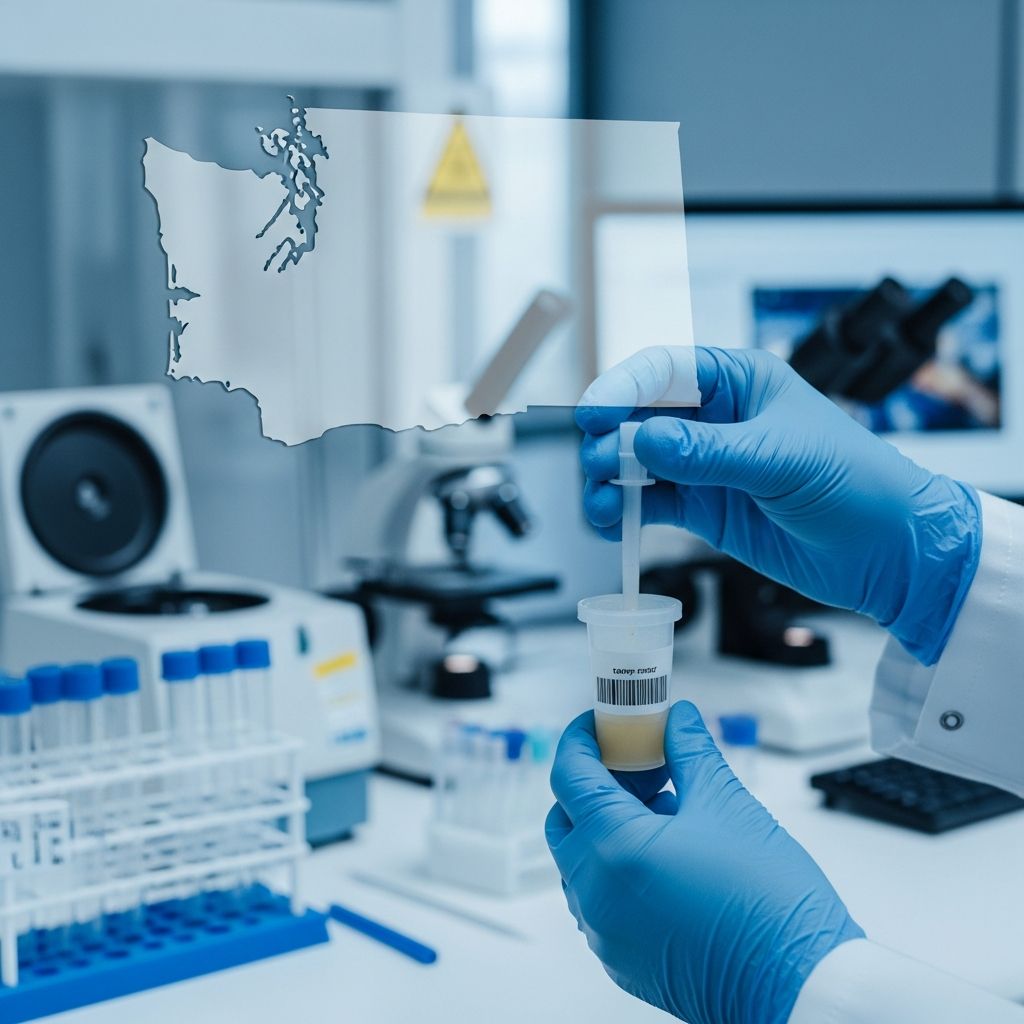
Washington Workplace Drug Testing Laws: A Complete Guide
Washington state’s workplace drug testing policies balance employee privacy with workplace safety, especially after recreational cannabis legalization in 2012. A pivotal 2024 law transformed pre-employment screening by limiting cannabis tests, recognizing that nonpsychoactive metabolites linger long after impairment ends.
Key Changes from the 2024 Cannabis Testing Ban
The law effective January 1, 2024 (SB 5123), prohibits most employers from rejecting job applicants based on positive cannabis results from pre-employment drug screens detecting nonpsychoactive metabolites in urine, blood, hair, or other samples. This addresses how THC remnants can persist up to 30 days, unrelated to current impairment or job performance.
- Scope: Applies to private and public employers statewide, promoting fair hiring for legal off-duty activities.
- Rationale: Aligns cannabis with alcohol, both legal substances not predictive of work ability when used off-hours.
- Testing allowances: Employers can use methods avoiding nonpsychoactive metabolite detection, though such tests are rare.
This shift reduces discrimination against cannabis users while preserving tools for real-time impairment checks.
Positions Exempt from the Pre-Employment Cannabis Ban
Not all roles fall under the ban; exemptions protect high-risk environments. Employers must designate safety-sensitive positions before applications.
| Exempt Category | Description | Examples |
|---|---|---|
| Federal Requirements | Roles under federal contracts, funding, or clearances | Federal employees, contractors, certain transportation workers |
| Law Enforcement & Fire | Positions involving public protection | Police officers, firefighters |
| First Responders | Critical emergency roles | 911 dispatchers, corrections officers |
| Safety-Sensitive | Impairment risks death or injury | Aerospace, airlines; must be predefined |
Local governments with federal ties must prioritize contract terms over state law. State employers follow similar rules under WAC 357-37-200 for targeted testing.
Permitted Drug Testing Practices Post-2024
Employers retain flexibility for ongoing safety. Pre-employment cannabis screens are curtailed, but other tests persist.
- Post-Offer/Employment Testing: Allowed after hiring, including post-accident, reasonable suspicion of impairment, or random for high-risk roles.
- Non-Cannabis Substances: Full screening for alcohol, opioids, cocaine, etc., remains unrestricted.
- Random Testing Conditions: Limited to suspicion, incidents, or roles handling firearms, medications, or public safety.
- Alcohol Testing: Permissible under similar circumstances as drugs.
Policies must outline procedures, ensure confidentiality, and comply with laws. No specimen type or lab restrictions exist.
Employer Compliance Strategies
To avoid violations, businesses should update protocols proactively.
- Review Policies: Eliminate pre-employment cannabis discrimination language; clarify exemptions.
- Define Exempt Roles: Document safety-sensitive positions with job descriptions before postings.
- Train HR: Educate on legal distinctions between metabolites and active THC.
- Alternative Screening: Consider impairment-focused tests like saliva for recent use, if available.
- Federal Alignment: Segregate federally regulated employees.
Violations risk discrimination claims; consult legal experts for tailored advice.
Rights and Protections for Employees and Applicants
Workers gain safeguards against off-duty activity penalties, but must understand limits.
- Applicants cannot be denied for past cannabis use unless exempt.
- Employees face tests only under policy-defined conditions like accidents.
- Confidentiality required for all results.
- Medical marijuana users retain ADA protections federally, despite state cannabis laws.[10]
Unionized workers may have CBA-specific rules. Report suspected violations to state labor agencies.
Comparing Drug Testing Across U.S. States
Washington joins states like California and Nevada in restricting cannabis tests. A broader view:
| State | Pre-Employment Cannabis Policy | Key Exceptions |
|---|---|---|
| Washington | Banned for nonpsychoactive metabolites | Safety-sensitive, federal |
| California | Similar ban effective 2024 | Federal, safety roles |
| Nevada | No discrimination for lawful use | Public safety |
| Federal | Zero-tolerance cannabis | All covered roles |
Trends favor off-duty protections as legalization spreads.
Maintaining a Drug-Free Workplace
SB 5123 explicitly allows drug- and alcohol-free policies. Focus on impairment:
- Implement reasonable suspicion training for supervisors.
- Use post-incident testing protocols.
- Promote EAPs for substance issues.
- Monitor for other drugs unaffected by the law.
Cannabis impairment facts: Effects last 2-4 hours for occasional use, longer for heavy users, unlike lingering metabolites.
Frequently Asked Questions
Can employers still test for cannabis after hiring?
Yes, for post-accident, suspicion, or random in permitted roles; pre-employment is restricted.
What makes a job ‘safety-sensitive’?
Roles where impairment risks death, predefined by employer before applications.
Does this apply to medical cannabis users?
The ban covers lawful use; federal ADA may protect disabilities.[10]
Can I test applicants without sharing cannabis results?
Yes, if results aren’t used in decisions.
What about random drug testing for all employees?
Limited to specific conditions like incidents or safety duties.
Are there lab or specimen requirements?
No state mandates; follow best practices for accuracy.
Future Outlook for Workplace Testing
As technology advances, oral fluid tests detecting recent use may become standard, bridging gaps in current laws. Employers adapting now position for compliance amid evolving norms. Stay informed via official state resources for updates.
References
- Washington state now bans most pre-employment marijuana testing — Axios Seattle. 2024-01-03. https://www.axios.com/local/seattle/2024/01/03/washington-state-law-ban-marijuana-testing-weed-pre-employment
- Washington State to Bar Employers From Relying on Off-Duty Use of Marijuana in Hiring Decisions — Jackson Lewis P.C. 2023. https://www.jacksonlewis.com/insights/washington-state-bar-employers-relying-duty-use-marijuana-hiring-decisions
- Workplace Drug Testing Laws in Washington — Health Street. Accessed 2026. https://www.health-street.net/state-laws/washington-drug-testing-compliance/
- WAC 357-37-200 — Washington State Legislature (official .gov). 2005-05-27 (effective 2005-07-01). https://app.leg.wa.gov/wac/default.aspx?cite=357-37-200
- AWC Drug & Alcohol Consortium: Impacts of SB 5123 on drug testing — Association of Washington Cities. 2024-02-07. https://wacities.org/advocacy/News/advocacy-news/2024/02/07/awc-drug-alcohol-consortium-impacts-of-sb-5123-on-drug-testing
- RCW 49.44.240: Discrimination based upon cannabis — Washington State Legislature (official .gov). 2023. https://app.leg.wa.gov/RCW/default.aspx?cite=49.44.240
- Cannabis in the Workplace FAQs — MRSC. Accessed 2026. https://mrsc.org/explore-topics/personnel/policies/cannabis-in-the-workplace
Similar Articles








Read full bio of Sneha Tete