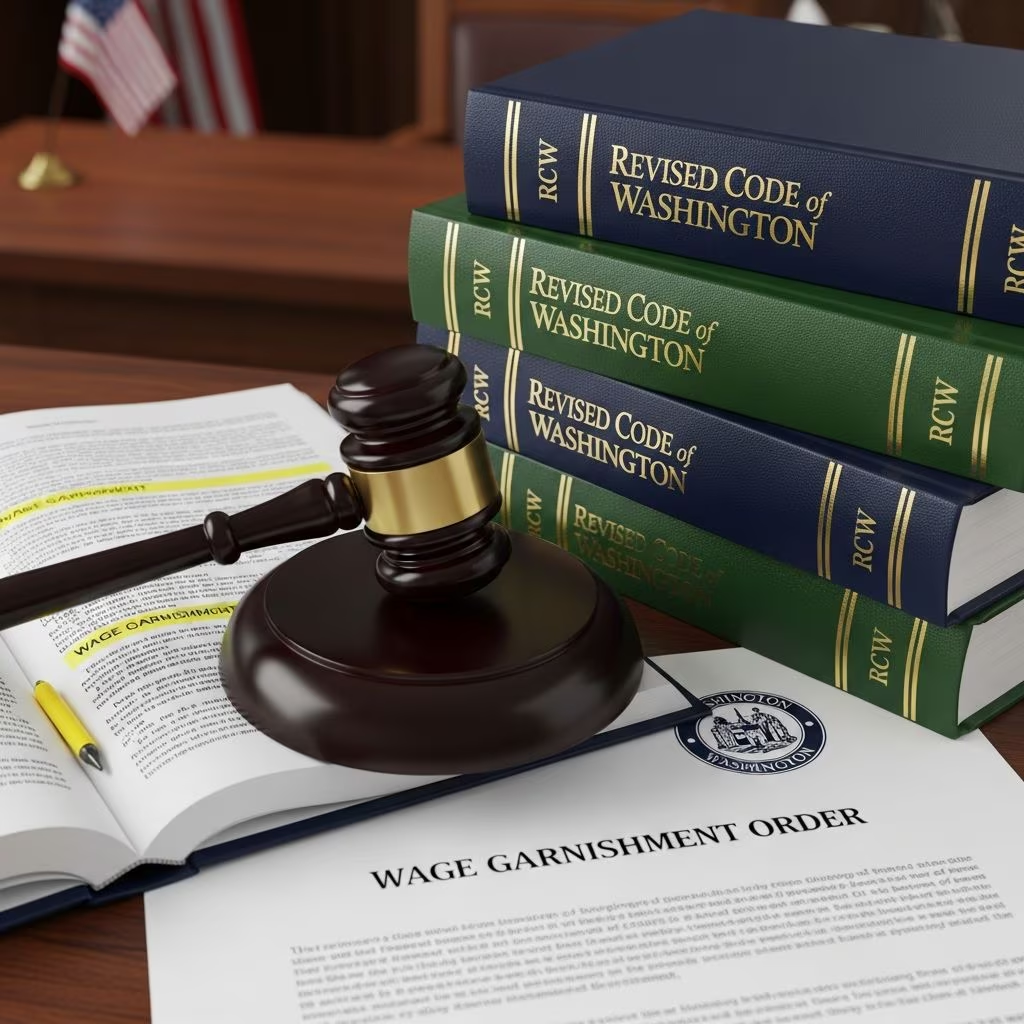
Wage garnishment in Washington State allows creditors to collect debts by withholding portions of a worker’s paycheck, but robust state protections limit how much can be taken. These rules, outlined primarily in Chapter 6.27 RCW, exceed federal minimums to safeguard employee financial security.
Core Principles of Earnings Withholding
At its essence, garnishment directs an employer to divert disposable earnings—pay after legally required deductions like taxes—to a creditor. Washington’s framework prioritizes worker stability, exempting substantial income amounts. For general consumer debts, protections shield the greater of 80% of disposable earnings or 35 times the state minimum wage, set at $17.13 per hour in 2026, equating to $599.55 weekly.
This dual-layer exemption ensures most workers retain enough for essentials. Federal baselines under the Consumer Credit Protection Act cap non-support garnishments at 25% or amounts exceeding 30 times the federal minimum wage, but Washington applies stricter standards.
Types of Debts Subject to Garnishment
Creditors pursue various obligations through wages, categorized by required processes and limits:
- Consumer Debts: Credit cards, medical bills, personal loans—require court judgment first.
- Child Support/Alimony: Up to 50-65% possible without judgment in some cases.
- Federal Student Loans/Taxes: No judgment needed; higher limits apply.
- Spousal Maintenance: 50% exemption under specific orders.
Private student loans face tailored caps, often aligning with consumer debt protections.
Step-by-Step Garnishment Procedure
The path from debt to deduction involves court oversight for most cases. Here’s the sequence:
- Lawsuit Filing: Creditor serves summons and complaint; debtor has 20 days to respond.
- Judgment Entry: If uncontested or lost, court issues judgment after hearing evidence.
- Waiting Period: 10 days (superior court) or 30 days (district court) post-judgment.
- Writ Issuance: Creditor obtains and serves writ on employer (garnishee) and debtor.
- Employer Action: Withholds funds, reports earnings at start/end of 60-day period, remits per court order.
- Continuation: Renew writ every 60 days until debt satisfied.
Employers must comply promptly, facing penalties for non-adherence. Debtors receive notice, enabling objections.
Exemption Thresholds by Debt Category
Washington tailors protections precisely. The table below summarizes weekly disposable earnings exemptions:
| Debt Type | Exemption (Greater of…) | Key Notes |
|---|---|---|
| Consumer Debt | 80% disposable or 35x state min. wage ($599.55) | Stricter than federal 25% |
| Child Support (Supporting others) | 50% disposable | Up to 60% if not; +5% arrears |
| Federal Student Aid/Taxes | Varies, often higher | No judgment required |
| Spousal Maintenance | 50% disposable | Per RCW 26.18 orders |
| Private Student Loan | Lesser of 85% or specific calc. | Special limits |
These ensure creditors cannot strip essentials, promoting repayment without destitution.
Challenging and Halting Garnishment
Debtors aren’t powerless. Key defense mechanisms include:
- Objection Filing: Within 7 days of notice, contest validity, amount, or exemptions.
- Exemption Claim: Prove higher protected amount via pay stubs, family needs.
- Bankruptcy Option: Automatic stay halts most garnishments upon filing.
- Negotiation: Settle with creditor post-judgment to withdraw writ.
Courts resolve disputes quickly; successful claims refund over-withheld funds. Pre-judgment garnishment possible if debtor admits debt or faces eviction foreclosure.
Employer Duties and Employee Safeguards
Employers, as neutral garnishees, must:
- Provide debtor wage info to creditor.
- Withhold accurately, remit timely.
- Refrain from discharge: Protected unless three+ garnishments in 12 months.
This anti-retaliation rule preserves job stability amid collections.
Financial Fallout and Prevention Tactics
Garnishment shrinks take-home pay, straining budgets for rent, food, utilities. Ripple effects include credit damage, heightened stress. Proactive steps mitigate risks:
- Respond to lawsuits promptly.
- Seek legal aid via Washington Law Help.
- Consolidate debts pre-judgment.
- Build emergency funds against defaults.
Understanding limits empowers negotiation, often yielding payment plans over aggressive collections.
2026 Updates and Future Outlook
With minimum wage at $17.13, exemptions rise annually, bolstering protections. Legislative tweaks may further fortify worker rights amid rising living costs. Stay informed via RCW updates.
Frequently Asked Questions
Can creditors garnish wages without a court order in Washington?
Generally no for consumer debts; yes for child support, federal taxes, student loans.
How much of my paycheck is safe from garnishment?
For consumer debt, at least 80% or $599.55 weekly—whichever greater.
What if I disagree with the garnishment amount?
File objection within days, claiming exemptions; court reviews.
Can my boss fire me over garnishment?
No, unless third separate order in 12 months.
How long does a garnishment last?
60 days per writ; renewable until debt paid.
Does bankruptcy stop garnishment?
Yes, automatic stay pauses most actions.
References
- So You Have a Judgment – Now What? — Montgomery Purdue. 2024. https://www.montgomerypurdue.com/blog/so-you-have-a-judgment-now-what/
- Chapter 6.27 RCW: GARNISHMENT — WA.gov (Official State Legislature). Accessed 2026. https://app.leg.wa.gov/rcw/default.aspx?cite=6.27&full=true
- A Guide to Washington Wage Garnishment Laws — Nolo. 2024. https://www.nolo.com/legal-encyclopedia/washington-wage-garnishment-law.html
- How Wage Garnishment Works in Washington State (2025 Guide) — Upsolve. 2025. https://upsolve.org/wa/wage-garnishment/
- Avoid or stop garnishment — Washington Law Help. Accessed 2026. https://www.washingtonlawhelp.org/en/avoid-or-stop-garnishment
- Fact Sheet #30: Wage Garnishment Protections — U.S. Department of Labor. 2024. https://www.dol.gov/agencies/whd/fact-sheets/30-cppa