
Washington’s Mobile Device DUI: Understanding the E-DUI Era
How Washington’s Driving Under the Influence of Electronics law reshapes distracted driving rules and everyday behavior on the road.
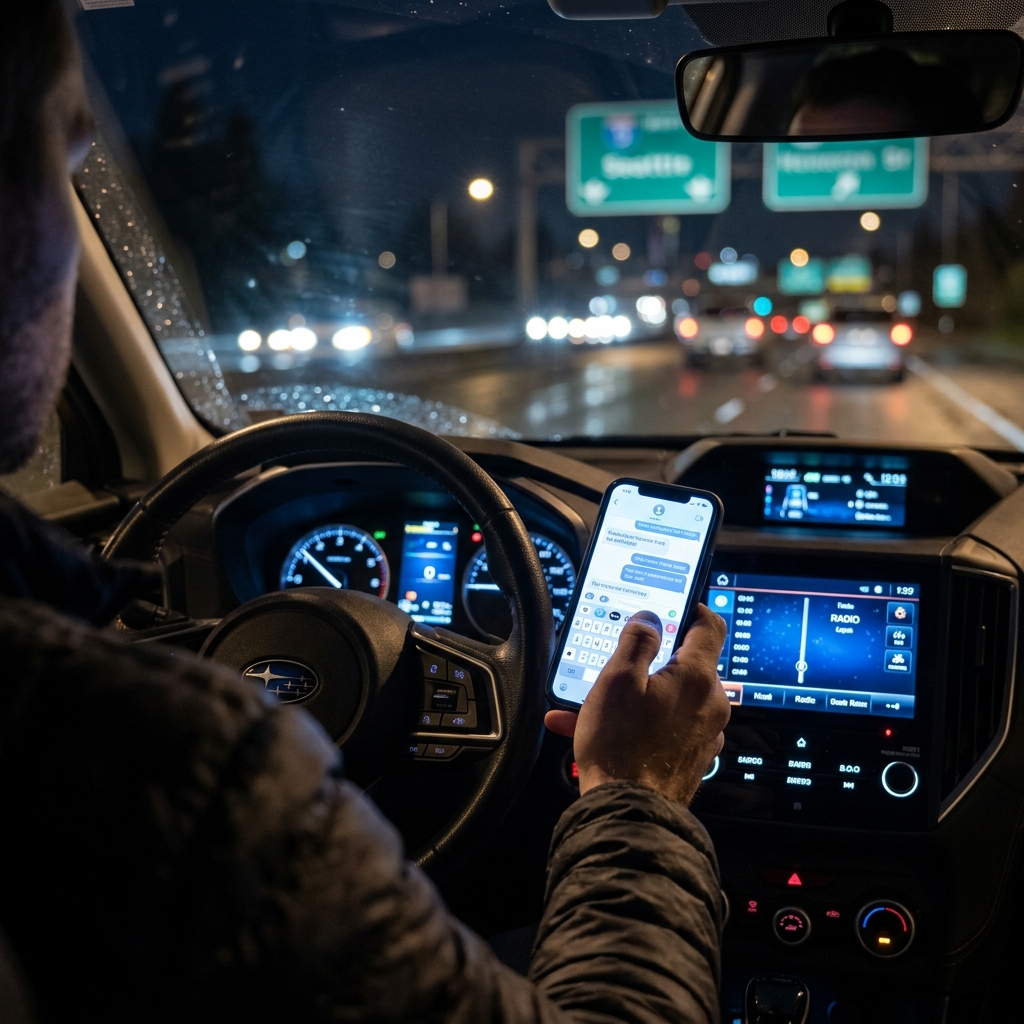
Washington State has transformed distracted driving enforcement by treating certain mobile device use behind the wheel like a specialized form of driving under the influence. The state’s Driving Under the Influence of Electronics (E-DUI) framework makes it a traffic infraction to use hand-held phones and other personal electronic devices while driving, even when stopped in traffic. This article explains what the law covers, what it prohibits, the penalties involved, and how drivers can adapt their behavior to stay safe and avoid costly citations.
From Texting Bans to E-DUI: How Washington Got Here
Before Washington adopted its comprehensive E-DUI rules, state law already restricted some forms of phone use while driving, such as texting or holding a phone to the ear. Over time, however, crash data and enforcement experience showed that partial bans were not enough. The legislature responded by creating a broader standard that addresses the full range of modern personal electronic devices, not just traditional cell phones.
Under RCW 46.61.672, Washington now treats most hand-held device interaction as a traffic infraction when the vehicle is being driven on a public highway. This shift reflects a policy decision: electronic distraction can impair driving in ways that are functionally similar to other forms of impairment, and clear, enforceable rules are needed to reduce risk.
- Policy goal: reduce crashes linked to distraction from phones, tablets, and other devices.
- Legal approach: define “use” broadly and apply the rules even in stopped traffic.
- Enforcement tool: allow citations that appear on driving records and can affect insurance premiums.
What Counts as a “Personal Electronic Device”?
Washington’s law does not limit itself to cell phones. Instead, it covers a wide range of portable electronics capable of wireless communication or electronic data retrieval. That includes devices drivers commonly use for calls, messaging, navigation, and entertainment.
Examples of covered devices include:
- Smartphones and basic cell phones
- Tablets and e-readers
- Laptops and handheld computers
- Two-way messaging devices
- Portable gaming devices
- Smartwatches and similar wearables, when actively interacted with
By defining the category broadly, the statute anticipates technological change. New devices that allow messaging, streaming, or app use can be treated similarly to phones, rather than requiring constant legislative updates.
What “Use” Really Means Under RCW 46.61.672
One key to understanding Washington’s E-DUI framework is the legal meaning of “use.” The statute and related guidance make clear that “use” goes beyond making a call. It includes holding the device and engaging with it to write, send, read, or view electronic data.
Common actions that qualify as prohibited use include:
- Holding a phone in your hand while driving
- Reading or sending text messages or emails
- Browsing the web, social media feeds, or apps
- Watching videos or live streams
- Taking photos, recording video, or using the camera interface
- Actively interacting with a smartwatch for non-emergency communication
Importantly, the law applies when the vehicle is on a public highway and the driver is behind the wheel, even if the car is temporarily stopped at a traffic light or in congestion. Simply being in a traffic queue does not create an exception.
Hands-Free Use: What Is Still Allowed?
Although the E-DUI rules are strict about hand-held devices, they do allow limited, hands-free interaction. The idea is to permit essential functions that can be controlled in a minimal, low-distraction way.
Under Washington’s hands-free standard, drivers may:
- Use Bluetooth or other integrated hands-free systems to talk
- Perform a single touch or swipe to activate, deactivate, or initiate a function, as long as the device is not being held
- Start GPS or music apps before driving and then let them run without further interaction
- Use a personal electronic device to contact emergency services, such as dialing 911
To comply, the device should be secured in a mount, integrated into the vehicle’s system, or otherwise positioned so the driver is not physically holding it. Repeated taps, scrolling, or typing on a screen will generally exceed the “minimal use” allowance.
Where and When the Law Applies
The E-DUI law applies whenever a person is driving a motor vehicle on a public highway in Washington. This includes urban streets, rural roads, and limited-access freeways. Since the statute does not require the vehicle to be moving at high speed, drivers should assume the restrictions apply throughout a trip.
Key points about location and timing:
- Stopped in traffic: Using or holding a device at a red light or in a traffic jam is still prohibited.
- Public highway context: The rules apply to driving on public roads; private property situations may be treated differently, though other safety laws can still apply.
- Safe stationary exception: Drivers may use devices if they have left the flow of traffic and parked where the vehicle can safely remain stationary.
The law also includes a preemption clause: Washington state has taken over the field of regulating device use in motor vehicles, superseding local ordinances that might otherwise conflict with state standards.
Penalties, Repeat Offenses, and Insurance Consequences
Violating Washington’s E-DUI rules is a traffic infraction with financial and administrative consequences. A first offense carries a base fine comparable to other common traffic citations, but the impact can extend beyond the immediate cost.
| Type of Violation | Typical Base Fine | Additional Notes |
|---|---|---|
| First E-DUI citation (device use) | About $136 | Recorded on driving record; reported to insurers. |
| Second E-DUI within five years | About $234 (double penalty) | Higher fine based on repeat offense under RCW 46.61.672(4). |
| “Dangerously distracted” secondary citation | Often around $99 | Added when another violation is caused by non-device distraction. |
Distracted driving citations can remain on a driver’s record for several years, and insurers may treat them similarly to speeding or other moving violations when setting rates. This means that a quick glance at a phone can turn into long-term financial consequences.
Beyond Electronics: The “Dangerously Distracted” Law
In addition to the E-DUI statute, Washington has a separate “dangerously distracted” provision that targets activities unrelated to vehicle operation that interfere with safe driving. This law recognizes that distraction can come from many sources beyond screens.
Examples of non-electronic distractions include:
- Eating or drinking while driving, including coffee or other beverages
- Applying makeup or grooming
- Reading printed materials
- Adjusting music or other controls in a way that takes eyes off the road
- Reaching for objects or interacting with pets
Under this framework, officers can issue a secondary citation when a driver is pulled over for another violation and distraction is a contributing factor. This structure reinforces the message that anything competing with driving attention can lead to legal consequences.
Recognized Exceptions for Necessary Communications
While Washington’s rules are strict, the statutes do recognize specific situations where device use may be necessary and appropriate. These exceptions are narrow, designed to cover emergency and operational needs rather than convenience.
Key exceptions under RCW 46.61.672 include:
- Emergency services: Using a device to contact 911 or other emergency services.
- Transit system employees: Using time-sensitive communication systems between employees and dispatch.
- Commercial motor vehicle drivers: Use within the scope of employment when permitted under federal safety regulations (49 U.S.C. § 31136).
- Authorized emergency vehicles: Device use by police, fire, and medical responders as part of their duties.
For typical private drivers, these exceptions rarely apply. Most everyday communication, navigation changes, and entertainment adjustments should wait until the driver is safely parked out of the traffic flow.
Practical Strategies to Avoid E-DUI Citations
Staying compliant with Washington’s E-DUI law requires a combination of planning and self-discipline. Transportation safety guidance from the state emphasizes simple behavior changes that reduce temptation and keep attention on driving.
Proactive Steps Before You Drive
- Set it and forget it: Turn your phone off, use “do not disturb” or airplane mode, and configure navigation and music before leaving.
- Out of reach, out of mind: Place the device in the glove box, center console, back seat, or another location where you cannot easily pick it up.
- Plan time for communication: Schedule a few minutes before departure to handle calls, messages, or emails.
Smart Choices While on the Road
- Use hands-free systems: Rely on Bluetooth or integrated vehicle controls, and limit interaction to a single touch when necessary.
- Pull over when needed: If a call or message cannot wait, stop in a safe location where the vehicle can remain stationary and only then handle the device.
- Let passengers help: Ask others in the vehicle to manage navigation changes or respond to texts.
- Avoid multitasking: Skip eating, grooming, or extensive adjustments while driving to prevent additional distraction.
By adopting these habits, drivers reduce their risk of both electronic and non-electronic distraction citations and support a safer road environment.
Common Misconceptions and Clarifications
Because the E-DUI rules are relatively strict, many drivers have questions about what is allowed. Misunderstandings can lead to unintentional violations.
- “I can use my phone at red lights”: In Washington, using or holding a device while stopped at a light or in traffic is still prohibited and can result in a citation.
- “Short texts are fine”: Any typing or reading of electronic messages while driving on a public highway can qualify as illegal use, regardless of length.
- “Only phones are covered”: The law reaches tablets, laptops, gaming devices, and other personal electronics, not just smartphones.
- “Smartwatch glances are safe”: If interaction with a wearable distracts from driving or involves active messaging or app use, it can support a citation.
Understanding these nuances helps drivers make informed choices and avoid assumptions that are inconsistent with the legal framework.
FAQs About Washington’s Mobile Device DUI Rules
Is using my phone while holding it considered an E-DUI violation?
Yes. Holding a phone or other personal electronic device while driving on a public highway can qualify as illegal “use” under Washington law, even if you are not speaking or typing at that moment.
Can I check a message if I am stopped at a traffic light?
No. The E-DUI rules apply when your vehicle is in the roadway, including stops at lights or in congestion. Device use in these situations can still result in a citation.
What if I need to update my GPS route?
Ideally, set your route before driving. If a significant change is needed, pull over where the vehicle can safely remain stationary and then adjust the navigation. Minimal single-touch interaction in a hands-free setup may be allowed, but extended typing or scrolling is not.
Do these laws apply to rideshare and commercial drivers?
Yes, rideshare and most commercial drivers are subject to the same rules. Limited exceptions exist for commercial motor vehicle drivers operating within federal regulatory allowances, but ordinary convenience use is still restricted.
How long will an E-DUI citation stay on my driving record?
Distracted driving citations can remain on a Washington driving record for multiple years, and insurers may consider them during and beyond that period when setting premiums.
Is drinking coffee while driving illegal under these laws?
Drinking coffee is not automatically illegal, but it can be treated as a distracting activity under the “dangerously distracted” law if it contributes to a separate traffic violation. In that case, an additional secondary citation may be issued.
Why Washington Treats Device Use Like a DUI Problem
While the term “mobile device DUI” is not a formal legal label, Washington’s approach reflects a recognition that electronic distraction can lead to serious crashes, injuries, and fatalities in ways comparable to other impairments. By creating clear, enforceable rules around electronic device use and combining them with broader distraction provisions, the state aims to reduce risk across everyday driving situations.
Ultimately, the law asks drivers to treat attention as a critical safety resource. Preserving that attention—by keeping devices put away, avoiding multitasking, and relying on hands-free tools only when necessary—is central to responsible driving under Washington’s E-DUI regime.
References
- RCW 46.61.672 – Using a personal electronic device while driving — Washington State Legislature. 2017-07-23. https://app.leg.wa.gov/rcw/default.aspx?cite=46.61.672
- Washington Distracted Driving Accidents & Cell Phone Laws — Enjuris. 2023-03-15. https://www.enjuris.com/washington/auto-accidents/distracted-driving/
- Using a Handheld Device While Driving and Distracted Driving Laws — Washington State Attorneys. 2022-09-01. https://www.washingtonstateattorneys.com/tacoma/tacoma-practice-areas/tacoma-traffic-violation/using-a-handheld-device-while-driving-and-distracted-driving-law/
- Distracted Driving — Together We Get There (Washington Traffic Safety Commission). 2023-05-10. https://www.togetherwegetthere.com/distracted-driving/
- Distracted Driving Laws in WA: Drinking Coffee While Driving — Abeyta Nelson Injury Law. 2018-08-20. https://abeytanelson.com/can-i-still-drink-coffee-while-driving-washingtons-distracted-driving-law/
- What If I Get Pulled Over While Using My Cell Phone? — Autohomeboat. 2019-06-12. https://www.autohomeboat.com/blog/e-dui/
Similar Articles








Read full bio of Sneha Tete




