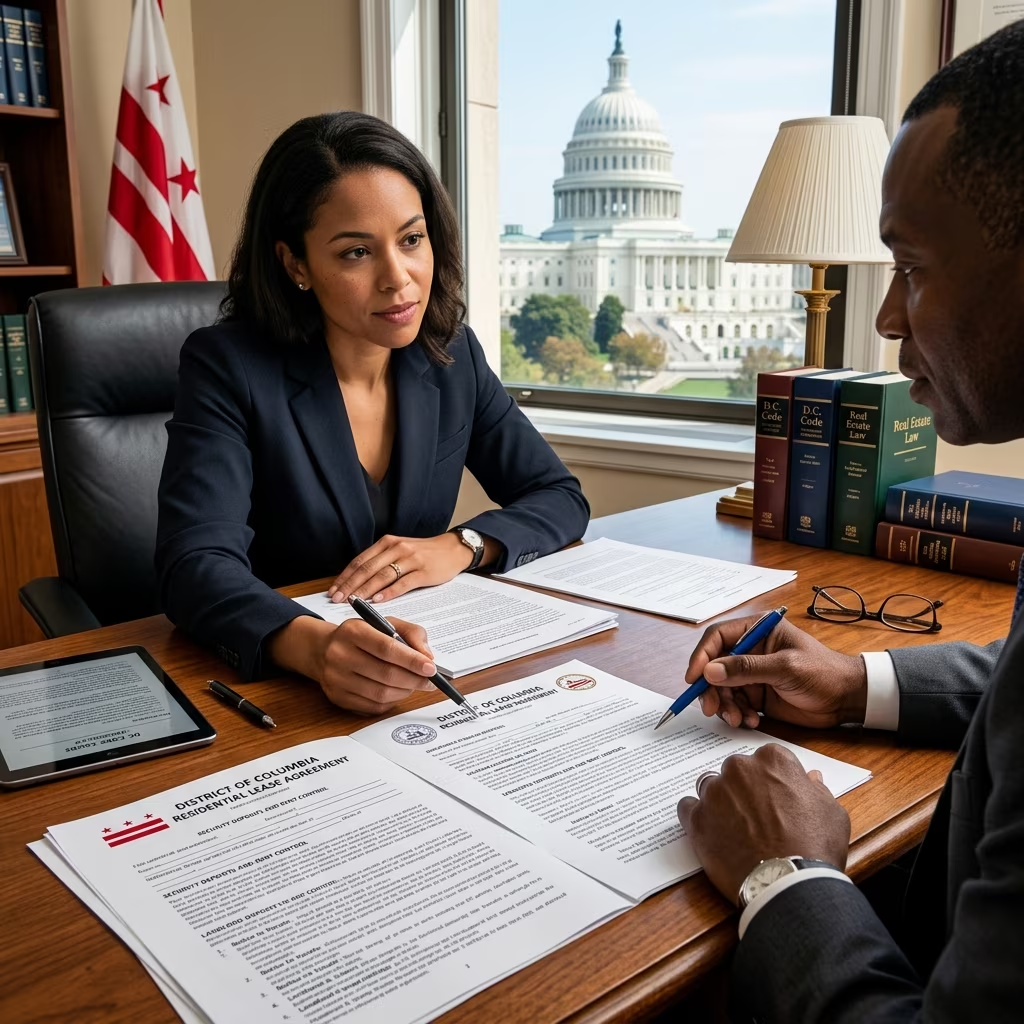
Washington DC has some of the most detailed landlord-tenant laws in the United States, designed to balance tenant protections with the rights and obligations of housing providers. Much of this law is found in Title 42 of the District of Columbia Official Code and Title 14 of the DC Municipal Regulations, which together govern rent control, lease terms, disclosures, security deposits, and eviction procedures. This guide explains the key rules that affect most residential leases and rental agreements in the District.
Legal Framework Governing Leases in DC
Residential rentals in Washington DC are not governed by a single statute. Instead, several overlapping laws and regulations set out rights and duties for landlords and tenants. Understanding this framework helps you see how specific rules about rent, deposits, and disclosures fit together.
- DC Official Code, Title 42: Contains core landlord-tenant provisions, including rental housing, rent control, eviction standards, and tenant remedies.
- DC Municipal Regulations, Title 14: Provides detailed housing regulations, habitability requirements, and procedural rules for rental housing.
- Rental Housing Act and related laws: Address rent control, notice requirements for rent increases, and registration of rental accommodations.
- Recent legislation (e.g., RENTAL Act): Updates rules around tenant opportunities to purchase, notices of transfer, and certain exemptions.
Together, these sources define what must be included in a lease, how rent may be increased, what disclosures are required, and how disputes are resolved.
Types of Rental Agreements and Basic Lease Terms
Washington DC recognizes different types of rental arrangements, but the law treats many of them similarly once a tenant has moved in.
- Fixed-term leases: Often for one year or more, specifying start and end dates and the agreed rent.
- Month-to-month tenancies: Common after an initial term ends or where the parties agree to a more flexible arrangement; most legal protections still apply.
- Written vs. oral agreements: While oral leases can be enforceable, DC law strongly favors written agreements and requires housing providers to give tenants written copies of the lease and rules.
Most leases address key issues such as rent amount, payment due date, late fee policies, maintenance responsibilities, and rules about guests and subletting. Under DC law, these terms cannot contradict mandatory statutes or regulations; if they do, the illegal provisions are unenforceable.
Rent Control and Rent Increases
Rent control is a major feature of DC’s rental system. Many older buildings are subject to limits on annual rent increases, while newer buildings and certain small properties may be exempt.
Which Units Are Generally Covered by Rent Control?
- Older multifamily buildings: Properties built before the mid-1970s are often subject to rent control unless a specific exemption applies.
- Newer construction: New multifamily buildings built in recent years are usually exempt, though owners still must comply with disclosure and notice requirements.
- Small landlord exemptions: Some small buildings with limited numbers of units may be exempt under specific rules.
Limits on Rent Increases
Rent increases in rent-controlled units are generally tied to inflation measures and specific caps.
- In rent-controlled housing, annual increases are typically limited to a formula based on the Consumer Price Index (CPI) plus a small percentage.
- Separate rules may apply when a unit becomes vacant, sometimes allowing for a larger one-time increase subject to overall statutory caps.
- Housing providers must give written notice of rent increases with enough lead time—commonly at least 30 days—before the new rent takes effect.
| Type of Unit | Rent Control Status | Typical Rent Increase Limits | Notice Required |
|---|---|---|---|
| Older apartment building | Often subject to rent control | CPI-based formula, annual cap | Minimum 30 days written notice |
| New multifamily building | Commonly exempt from rent control | Contract-based, still subject to general law | Minimum 30 days written notice recommended |
| Small 2–4 unit property | May qualify for exemptions under certain conditions | Depends on exemption and lease terms | Notice rules similar to other rentals |
Mandatory Disclosures and Tenant Information
DC law requires landlords to provide a broad set of disclosures so tenants can make informed decisions before signing a lease. These disclosures are often bundled with the application packet or provided at lease signing.
Common Required Disclosures
- Licensing and registration information: Basic Business License number and proof that the unit is registered or exempt under rental housing laws.
- Rent and rent control status: The current rent, any petitions that could affect the rent, and whether the unit is subject to rent control or exempt.
- Housing code history: Copies or summaries of housing code violation reports for the unit within the last year or any uncorrected violations.
- Fees and deposits: Any nonrefundable application fees, the amount of the security deposit, and the interest rate that will be paid on the deposit.
- Occupancy and building documents: Certificate of occupancy where applicable, and other documents required by DC regulations.
- Environmental and safety disclosures: Lead paint safety information for older buildings and, in many cases, information about known mold conditions.
Housing providers must also supply tenants with a copy of the written lease, any house rules, and a move-in checklist describing the condition of the unit at the start of the tenancy.
Security Deposits, Fees, and Rent Payment Rules
DC law strictly regulates security deposits and certain fees. These rules aim to reduce abuse and provide clear standards for returning deposits when tenants move out.
Security Deposit Limits and Handling
- Deposit cap: Residential landlords generally may not charge more than one month’s rent as a security deposit.
- Interest-bearing account: Deposits must be placed in an interest-bearing account, and tenants are entitled to the accrued interest as specified by law.
- Written receipt and conditions: Tenants should receive a receipt and a written statement describing the conditions for refund of the deposit.
- Return of deposit: At move-out, the landlord must account for any lawful deductions and return the remaining deposit within the time frame set by DC law, along with an itemized list if funds are withheld.
Application Fees and Late Fees
- Application fees: DC places a limit on residential application fees, and landlords must clearly disclose whether any portion is nonrefundable.
- Late fees: Late fees are regulated and typically capped at a percentage of the monthly rent, with a short grace period before they can be charged.
- Rent due dates: Leases normally specify when rent is due and how it must be paid; statutory rules supplement these terms by requiring reasonable practices and prohibiting unconscionable penalties.
Habitability Standards and Maintenance Obligations
DC housing regulations require landlords to keep rental units in a safe, sanitary, and habitable condition.[10] These standards are enforced through inspections, tenant remedies, and potential fines.
Landlord Responsibilities
- Maintain essential services such as heat, hot water, and electricity.
- Keep the premises free from serious health and safety hazards, such as significant mold, pest infestations, or structural defects.
- Address housing code violations in a reasonable time once they are identified.
- Comply with building, fire, and health codes applicable to residential housing.[10]
Tenant Remedies for Poor Conditions
When landlords fail to meet habitability standards, DC law gives tenants several options.[10]
- Request repairs in writing and document the problems through photos and records.[10]
- Contact city inspectors to report conditions; the Department of Buildings (and related agencies) can issue violation notices and fines.[10]
- File a case in the Housing Conditions Calendar of DC Superior Court to ask a judge to order repairs.[10]
- Withhold rent under certain circumstances if the landlord refuses to correct serious problems, understanding the legal risks and best practices for doing so.[10]
Tenants should keep detailed records of communications, inspection reports, and photos, as these may be critical evidence in any formal proceeding.[10]
Eviction Rules and Tenant Protections
Evictions in DC are tightly regulated. Housing providers must have a lawful reason and follow specific procedures; self-help or informal lockouts are prohibited.[10]
When Eviction Is Allowed
- Nonpayment of rent: If a tenant falls behind on rent, and the landlord complies with notice and court requirements.[10]
- Serious lease violations: Material breaches such as significant damage, unauthorized subletting, or dangerous behavior may justify eviction.[10]
- Certain other legal grounds: Including owner move-in or substantial rehabilitation, but these often involve extra protections and notice requirements under DC law.[10]
Eviction Procedure
- Landlord provides written notice stating the grounds and giving the tenant an opportunity to cure where required.[10]
- Landlord files a case in court if the issue is not resolved.
- Court order is required before any eviction can occur; the US Marshals Service typically carries out physical evictions.[10]
- Landlord may not change locks, shut off utilities, or remove possessions without a lawful court-supervised eviction.[10]
Tenants have the right to defend themselves in court, raise counterclaims (for example, based on habitability issues), and seek legal help.
Tenant Organizations and Opportunity to Purchase
DC gives tenants significant collective rights, including the ability to organize and, in some circumstances, to purchase their buildings when owners seek to sell.[10]
Tenant Organizing Rights
- Tenants may form associations to advocate for better conditions or negotiate with landlords.[10]
- Landlords are not permitted to interfere with tenant organizing activities, such as meetings or communications among tenants.[10]
- Tenants are encouraged to document any interference and contact legal or organizing resources for assistance.[10]
Tenant Opportunity to Purchase and Recent Changes
The Tenant Opportunity to Purchase Act (TOPA) and subsequent laws give tenants and tenant organizations certain rights when an owner intends to sell a rental property.
- Tenants may receive a notice of transfer and have a period to decide whether to pursue purchase, assign rights, or negotiate.
- Recent legislation, including the RENTAL Act, has modified how TOPA applies, adding exemptions for some new multifamily buildings and certain small properties.
- New rules may include cooling-off periods, expanded definitions of owners and tenants, and training requirements for tenant organizations.
Because TOPA-related rights are complex and evolving, tenants and housing providers should consult current official guidance or legal counsel when they receive a sale or transfer notice.
Practical Tips for Tenants and Landlords in DC
DC’s landlord-tenant framework can be dense, but a few practical habits can help both sides navigate leases and rental agreements more effectively.
- Get everything in writing: Leases, rule changes, notices, repair requests, and agreements should be documented.
- Keep copies of disclosures: Licensing information, rent control status, and inspection reports may be critical later.
- Use move-in and move-out checklists: Detailed condition reports help avoid disputes over security deposits.
- Monitor rent increases: Tenants should confirm that rent hikes comply with rent control and notice requirements; landlords should track formulas and caps carefully.
- Address problems early: Communication and prompt repair requests often resolve issues before they escalate into legal disputes.[10]
- Consult credible resources: Official DC agencies, tenant advocates, and reputable legal guides can provide up-to-date information on changes such as the RENTAL Act.[10]
Frequently Asked Questions about DC Leases
1. Do I need a written lease for my DC rental?
Oral agreements can be enforceable, but DC law strongly favors written leases. Housing providers are required to give tenants a copy of the rental agreement and any rules and regulations that apply to the unit.
2. How much can my landlord charge as a security deposit?
In most residential situations, DC landlords may not charge more than one month’s rent as a security deposit, and they must keep the deposit in an interest-bearing account and provide written documentation of the terms for its return.
3. How much notice is required for a rent increase?
Landlords typically must give written notice at least 30 days before a rent increase takes effect, and rent-controlled units are subject to additional limits based on the Consumer Price Index and statutory caps.
4. Can my landlord evict me without going to court?
No. DC prohibits self-help evictions. Any eviction must be based on lawful grounds, follow statutory notice procedures, and be carried out pursuant to a court order, usually enforced by the US Marshals Service.[10]
5. What can I do if my apartment is in poor condition?
Tenants can request repairs in writing, contact city inspectors to document violations, file a case in the Housing Conditions Calendar of DC Superior Court, and in some cases withhold rent. Each option has procedural requirements and risks, so tenants should seek guidance and maintain careful documentation.[10]
6. Are all buildings in DC subject to rent control?
No. Many older multifamily buildings are rent-controlled, but newer construction and certain small properties may be exempt. Landlords must disclose whether a unit is subject to rent control or exempt, and tenants can request documentation to confirm.
References
- District of Columbia Housing Regulations — Office of the Tenant Advocate (DC.gov). 2024-01-10. https://ota.dc.gov/page/district-columbia-housing-regulations
- Chapter 35. Rental Housing Generally — D.C. Law Library. 2023-11-01. https://code.dccouncil.gov/us/dc/council/code/titles/42/chapters/35
- D.C. Renters’ Rights 101 — Office of the Tenant Advocate & GWU Off-Campus Student Affairs. 2023-08-15. https://offcampus.students.gwu.edu/sites/g/files/zaxdzs5606/files/downloads/OTA%20Renters%20Rights%20101%20Final.pdf
- Landlord Rules in District of Columbia: Renting Out Property — DocDraft Legal Guides. 2026-02-01. https://www.docdraft.ai/legal-guides/renting-out-my-property/washington-dc
- Washington Landlord Tenant Law (Ultimate Landlord Guide) — Nest DC. 2024-05-20. https://www.nest-dc.com/washington-dc-landlord-tenant-law
- D.C. Council Passes RENTAL Act, Including Significant Tenant Opportunity — Holland & Knight. 2025-09-30. https://www.hklaw.com/en/insights/publications/2025/09/dc-council-passes-rental-act-including-significant-tenant-opportunity
- Rental Act Homepage — Government of the District of Columbia (DC.gov). 2025-10-15. https://rentalact.dc.gov/