
Warrants and Cell Phone Location Data After Carpenter
How the Supreme Court’s Carpenter ruling reshaped Fourth Amendment protection for cell phone location data and modern criminal investigations.
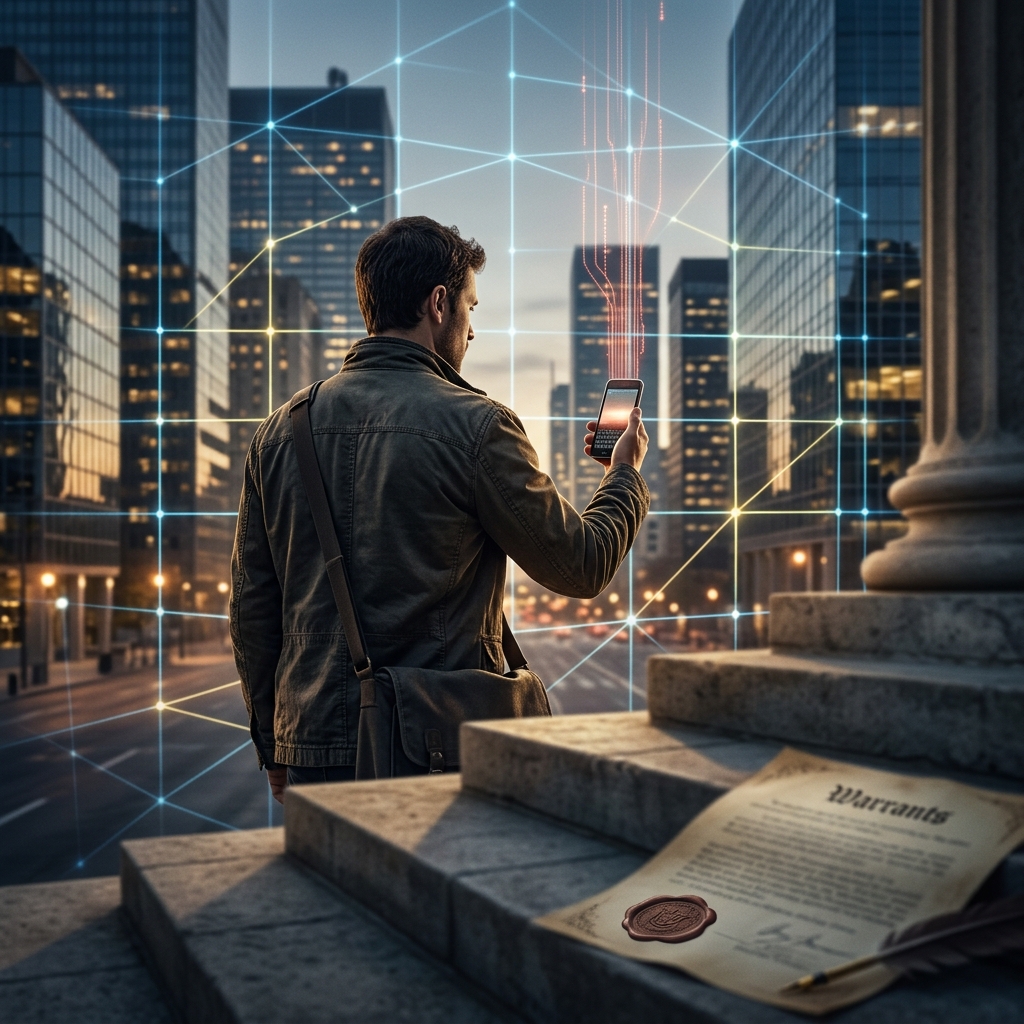
In the last decade, the United States Supreme Court has made clear that cell phone location data is protected by the Fourth Amendment, and that police generally need a search warrant to obtain it from a provider.
This HTML guide explains what that landmark shift means: why location data is so sensitive, how the decision in Carpenter v. United States transformed the law, when officers still may get data without a warrant, and what practical consequences arise for defendants, investigators, and everyday cell phone users.
Understanding Cell Phone Location Data
Cell phones constantly interact with nearby cell towers and, in many cases, GPS satellites and Wi‑Fi networks. Those interactions generate location records that can reveal where a device was at particular dates and times.
- Historical cell-site location information (CSLI) – records created by phone carriers showing which towers a device used over days, weeks, or months.
- Real-time location tracking – ongoing monitoring that shows where a device is now or in the very recent past.
- App-based and platform data – companies like mapping apps and major tech platforms may store detailed histories of a user’s movements, sometimes for years.
Individually, a single record might show only one tower or coordinate. Taken together, however, thousands of entries can provide a rich picture of a person’s daily routines: where they sleep, work, socialize, worship, and seek medical care.
The Fourth Amendment and Digital Privacy
The Fourth Amendment protects people against unreasonable searches and seizures and specifies that warrants must be based on probable cause and must particularly describe the place to be searched and the items to be seized.
Traditionally, courts applied the so‑called third‑party doctrine: when you voluntarily share information with a company, you lose any expectation of privacy in that information. Phone records, bank statements, and similar data stored with businesses were often accessible to law enforcement with subpoenas or court orders that fell short of probable cause.
The explosive growth of digital technology challenged these older rules. Modern devices generate vast quantities of data, and much of that information is highly revealing even though it is held by private companies rather than the user. Courts and legislators have had to ask: do people still have a reasonable expectation of privacy in these digital records?
Carpenter v. United States: A Turning Point
In Carpenter v. United States (2018), the Supreme Court confronted whether police could obtain months of historical CSLI from a cell phone provider without a warrant.
| Issue | Traditional Rule | Carpenter Holding |
|---|---|---|
| Access to historical CSLI | Often available with a lower standard under the Stored Communications Act | Usually a search that requires a warrant supported by probable cause |
| Third‑party doctrine | Information shared with a company not protected | Limited when the records reveal a detailed chronicle of physical movement |
| Expectation of privacy | Less protection outside the home | Individuals retain privacy in their movements even in public spaces |
The Court described location records as an “intimate window into a person’s life” and held that obtaining seven days or more of CSLI was a search under the Fourth Amendment. Because of that, police must generally obtain a warrant based on probable cause before accessing such records.
Importantly, the Court characterized the ruling as narrow. It did not invalidate the third‑party doctrine in all contexts or address every type of digital information. Instead, the majority focused on the special nature of cell phone location data: its precision, volume, and ability to reveal long‑term patterns of movement.
How Police Obtained Location Data Before Carpenter
Prior to Carpenter, investigators often relied on the federal Stored Communications Act (SCA), which allows government access to certain communications records with a showing that the data is “relevant and material to an ongoing criminal investigation,” a lower standard than probable cause.
- Law enforcement could approach a judge with an SCA application and obtain orders to compel carriers to provide historical CSLI.
- Those orders did not require a traditional warrant, meaning no detailed probable cause showing tied to a particular person’s alleged criminal conduct.
- The practice allowed officers to reconstruct movements around the time of a crime, sometimes for extended periods before and after the incident.
The Supreme Court rejected the idea that this statutory mechanism was sufficiently protective when the government sought detailed, long‑term location histories. The Constitution, not just the SCA, sets the floor for what the government must do before accessing sensitive digital records.
When a Warrant Is Required for Location Data
After Carpenter, the default rule is straightforward: when law enforcement seeks a person’s historical cell phone location data, it is generally engaged in a Fourth Amendment search and must obtain a warrant based on probable cause.
In practice, this means:
- Investigators must draft an affidavit explaining why they believe the data will show evidence of a specific crime and why the targeted person’s device is likely involved.
- A neutral judge or magistrate reviews the application and either issues or denies the warrant.
- Carriers and, increasingly, technology companies will require a warrant before releasing qualifying location records, consistent with their legal obligations and internal policies.
The ruling applies most clearly to longer-term historical CSLI. Short‑term or limited access may raise different questions, though many courts treat substantial requests as requiring full warrant protection. The logic of Carpenter has also influenced debates about newer tools, such as geofence warrants, where police seek data about all devices within a defined area during a specific time window.
Exceptions and Open Questions
The Supreme Court did not declare an absolute bar on warrantless access to location data. Some traditional exceptions to the warrant requirement remain available.
- Exigent circumstances – In emergencies, such as an imminent threat to life or serious physical harm, officers may act without a warrant and seek location data to respond to the crisis.
- Consent – A user who voluntarily consents to disclosure may allow officers to obtain their location records without a warrant.
- Limited or anonymized data – Some courts are still working through how the Fourth Amendment applies when data is initially provided in anonymized form or only for very short windows of time.
The decision also left unanswered how the Fourth Amendment should treat other, emerging forms of digital location tracking. As new technologies develop, courts continue to rely on the core principles articulated in Carpenter: people retain privacy interests in their movements, and long‑term, detailed surveillance requires robust judicial oversight.
Impact on Criminal Investigations
For law enforcement, the Carpenter ruling changed both investigative strategy and paperwork. It did not prohibit the use of location records; rather, it raised the constitutional threshold officers must satisfy.
- Investigators must plan ahead to secure warrants when they anticipate relying on location data.
- Prosecutors need to ensure evidence was obtained in compliance with Carpenter to avoid suppression motions and constitutional challenges.
- Agencies have revised training materials and policies to emphasize the warrant requirement for CSLI and similar data.
The ruling also affects how courts handle cases where location evidence was obtained before the decision or without a warrant. Defendants may argue that their rights were violated and seek to exclude the data. Outcomes can depend on timing, good‑faith reliance on prior law, and other doctrines such as the exclusionary rule.
What Carpenter Means for Everyday Users
For ordinary cell phone users, Carpenter acknowledges a reality: carrying a smartphone should not mean giving the government unfettered access to a comprehensive log of your movements. The Supreme Court confirmed that you retain constitutional privacy protection in your physical whereabouts, even though providers collect and store location records.
Practical implications include:
- Police cannot routinely request your long‑term location history from your carrier without going through the warrant process.
- Providers may push back on informal or low‑threshold requests for detailed location data and ask officers to obtain warrants instead.
- You may have more leverage when challenging government access to your digital records in court, through counsel.
Even with stronger protections, users should recognize that location data remains highly pervasive. Choosing device settings, limiting app permissions, and understanding how platforms store your information can contribute to greater privacy in practice.
Key Takeaways for Defendants and Counsel
Defense attorneys evaluating a criminal case that involves digital location data should carefully assess how the information was obtained and whether Carpenter’s requirements were met.
- Determine what type of location data is at issue (CSLI, GPS, app-generated records).
- Review the government’s documentation: was there a warrant? If so, was probable cause properly established and the warrant sufficiently particular?
- Consider whether any exceptions (exigent circumstances, consent) are claimed and whether they are supported by the facts.
- Evaluate potential motions to suppress, especially when long‑term histories were obtained without full warrant protection.
Defense strategy in the digital age increasingly turns on mastery of constitutional rules governing electronic evidence. Carpenter provides a critical foundation for challenging overbroad or insufficiently justified access to location data.
Frequently Asked Questions
Do police always need a warrant to get my phone’s location history?
Not always, but in most criminal investigations seeking historical cell-site location data, the Supreme Court has said that obtaining this information is a search and therefore generally requires a warrant supported by probable cause.
What is the difference between a subpoena and a warrant for location data?
A subpoena usually demands records under a lower legal standard and can be issued by prosecutors or agencies, while a warrant must be approved by a judge after a probable cause showing. For long‑term cell phone location histories, Carpenter requires the higher, warrant standard.
Does it matter that my location data is stored by a phone company or tech platform?
Yes. Historically, the third‑party doctrine meant less privacy when information was shared with a company. Carpenter limited that doctrine for location data, recognizing that even though carriers and platforms hold the records, people still have a reasonable expectation of privacy in the detailed log of their movements.
Are geofence warrants treated the same way as standard location requests?
Geofence warrants seek information about all devices within a geographic area, rather than a single known suspect. Courts have begun applying Fourth Amendment principles from Carpenter to these newer tools, emphasizing the need for careful judicial scrutiny and particularity.
What should I do if I think my location data was obtained unlawfully?
If you are involved in a criminal case, discuss the issue with a qualified attorney. Counsel can review how the data was accessed, identify any Fourth Amendment concerns under Carpenter, and advise you about potential motions to suppress or other remedies.
References
- Supreme Court Defends Privacy in Cell Phone Location Data Collection — Stanford Law School. 2018-06-22. https://law.stanford.edu/2018/06/22/supreme-court-defends-privacy-in-cell-phone-location-data-collection/
- Supreme Court Rules Police Need a Warrant to Track Cellphones — American Civil Liberties Union (ACLU). 2018-06-22. https://www.aclu.org/press-releases/supreme-court-rules-police-need-warrant-track-cellphones
- In Win for Privacy, Supreme Court Rules Police Need Warrants for Cellphone Tracking Data — Governing. 2018-06-22. https://www.governing.com/archive/tns-supreme-court-privacy.html
- Supreme Court Considers Scope of Government Access to Cellphone Location Data — National Constitution Center. 2026-01-16. https://constitutioncenter.org/blog/supreme-court-considers-scope-of-government-access-to-cellphone-location-data
- Supreme Court Justices Ruled that Constitutional Privacy Protections Apply to Cellphone Location Data — PBS NewsHour (via Facebook). 2019-06-XX. https://www.facebook.com/newshour/videos/the-supreme-court-justices-ruled-on-monday-that-constitutional-privacy-protectio/2039316166957460/
Similar Articles








Read full bio of medha deb


