
Voice-to-Text Tools: Boosting Legal Efficiency
Discover how instant speech transcription revolutionizes legal workflows, saving time and enhancing accuracy for modern attorneys.
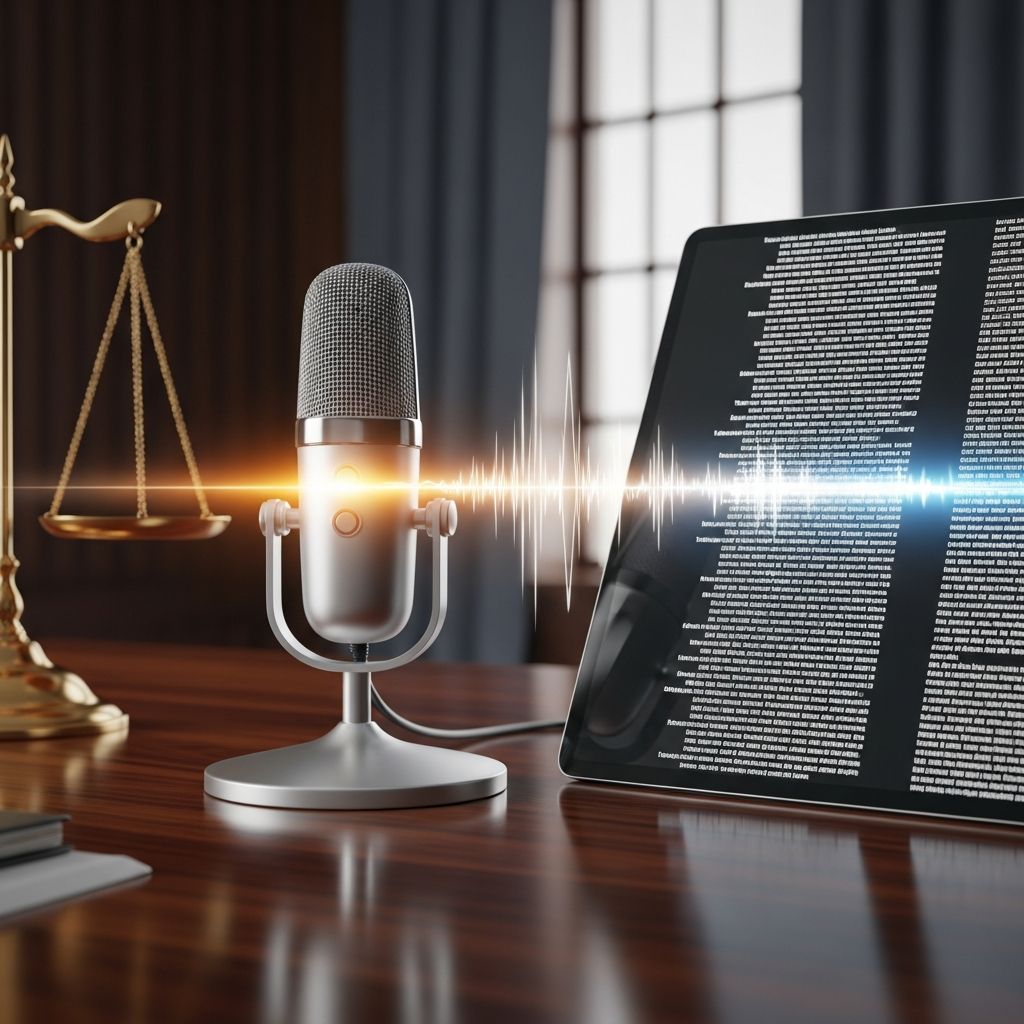
Automated speech transcription technology is reshaping the legal profession by converting spoken words into searchable, editable text in real time or near-instantly. This innovation allows attorneys to focus on strategy rather than manual note-taking, streamlining everything from client meetings to courtroom preparations.
Why Lawyers Need Instant Transcription Solutions
In high-stakes legal environments, every second counts. Traditional methods like handwritten notes or replaying audio recordings consume valuable hours. Instant transcription uses AI and natural language processing to produce verbatim records of depositions, hearings, and consultations, making information instantly accessible.
Key advantages include:
- Time efficiency: Process hours of audio in minutes, freeing lawyers for billable work.
- Searchability: Use CTRL+F to locate specific phrases without scrubbing through files.
- Speaker identification: Distinguish between participants, aiding analysis of discussions.
These features turn raw audio into a strategic asset, enabling quicker case reviews and better outcomes.
Core Benefits for Legal Professionals
Voice-to-text tools deliver measurable improvements across legal workflows. Here’s a breakdown:
| Benefit | Description | Impact on Legal Work |
|---|---|---|
| Accessibility | Timestamps and text format simplify navigation. | Review complex cases with multiple witnesses faster. |
| Highlighting | Mark critical sections for quick reference. | Prepare arguments without repeated listens. |
| Cost Reduction | AI handles initial draft, minimizing human hours. | Save client money on transcription fees. |
| Speed | Instant drafts for urgent needs. | Meet tight deadlines for filings. |
According to industry analyses, these tools can cut review time by up to 80%, allowing firms to handle more cases efficiently.
Practical Applications in Law Practice
Legal transcription isn’t just a novelty—it’s a daily essential. Consider these scenarios:
- Trial Preparation: Analyze witness statements to craft precise questions and anticipate objections.
- Appeal Strategies: Reference exact jury deliberations or rulings for compelling arguments.
- Client Interactions: Transcribe meetings to document verbal agreements accurately.
- Training Juniors: Use historical transcripts to mentor new associates on case nuances.
- Evidence Compilation: Create searchable archives for court submissions.
In litigation, identifying timeline inconsistencies via speaker-labeled transcripts can uncover pivotal evidence, strengthening positions.
From Audio Chaos to Organized Insights
Disorganized audio files lead to inefficiencies. Centralized transcription platforms store all recordings in one searchable hub, with features like bookmarks and annotations. This is vital for ongoing cases requiring cross-references to prior proceedings.
For example, during discovery, attorneys can query transcripts for keywords like “contract breach” across multiple files, accelerating document review. Security protocols ensure compliance with confidentiality standards, protecting sensitive data.
AI vs. Traditional: A Game-Changer Comparison
Manual transcription demands skilled typists familiar with legal jargon, often taking days. AI delivers drafts in minutes, with optional human review for 99%+ accuracy.
- AI excels in speed and scalability for high-volume firms.
- Combines with human oversight for precision in formal filings.
- Adapts to accents and terminology via machine learning.
Realtime options during live events provide immediate text feeds, ideal for virtual depositions.
Security and Compliance in Legal Transcription
Handling confidential information requires robust safeguards. Top tools encrypt files, limit human access, and comply with HIPAA and legal data standards. Automated systems process data without exposing it to outsiders, reducing breach risks.
Firms benefit from audit trails tracking access, ensuring ethical handling during collaborations.
Integrating Tools into Daily Workflows
Seamless adoption starts with user-friendly platforms supporting desktop, mobile, and integrations like Zoom or case management software. Train staff on annotation features to maximize value.
Start small: Transcribe one deposition weekly to measure time savings, then scale firm-wide.
Top Voice-to-Text Solutions for Attorneys
Select tools based on needs:
- Fireflies.ai: AI-powered for meetings, with speaker ID and search.
- Rev: Affordable per-minute rates, glossary features for legal terms.
- SpeakWrite: Fast drafts for depositions.
- Simon Says: Secure, no-human-access transcription.
- Sonix: Multilingual support, AI analysis.
Many offer free trials to test fit.
Frequently Asked Questions (FAQs)
What accuracy can lawyers expect from AI transcription?
Modern tools achieve 95-99% accuracy, improving with legal-specific training; human edits ensure perfection for court.
Is instant transcription secure for client confidentiality?
Yes, enterprise-grade encryption and compliance features protect data end-to-end.
How much time does it save in case preparation?
Up to 80% reduction in review time, per user reports.
Can it handle legal jargon and accents?
Advanced NLP adapts to terminology and regional speech patterns.
What’s the cost compared to manual services?
Significantly lower—often $0.25-$1 per minute vs. $3+ for humans.
Future Trends in Legal Speech Recognition
By 2026, expect deeper AI integrations: predictive analytics from transcripts, automated summarization, and VR courtroom support. Voice commands will further automate drafting, positioning early adopters ahead.
Firms ignoring this shift risk falling behind in efficiency and client satisfaction.
References
- 10 Benefits of Automated Transcription for Lawyers — Fireflies.ai. 2023. https://fireflies.ai/blog/10-benefits-of-automated-transcription-for-lawyers
- 11 Benefits of Legal Transcription — Rev. 2023. https://www.rev.com/blog/benefits-legal-transcription
- AI Legal Transcription: A Comprehensive Guide (2025) — SpeakWrite. 2025. https://speakwrite.com/blog/ai-legal-transcription/
- Benefits of Legal Transcription Services — LingArch. 2023. https://www.lingarch.com/blog/benefits-of-legal-transcription-services/
- How Simon Says Automated Transcription Saves Time for Law Firms — Simon Says AI. 2023. https://www.simonsaysai.com/blog/how-simon-says-automated-transcription-saves-a-lot-of-time-for-law-firms-44301516cae4
- Transcription for Lawyers: Why It’s Important — U.S. Legal Support. 2023. https://www.uslegalsupport.com/blog/transcription-for-lawyers/
- Take Your Foot Off the Pedal: Dictation and Transcription Options for Lawyers — North Carolina Bar Association. 2025-04-29. https://www.ncbar.org/2025/04/29/hit-the-brakes-dictation-and-transcription-options-for-lawyers/
Similar Articles








Read full bio of medha deb




