
The Vital Importance of Marriage Equality
Exploring the deep social, legal, and emotional need for marriage equality.
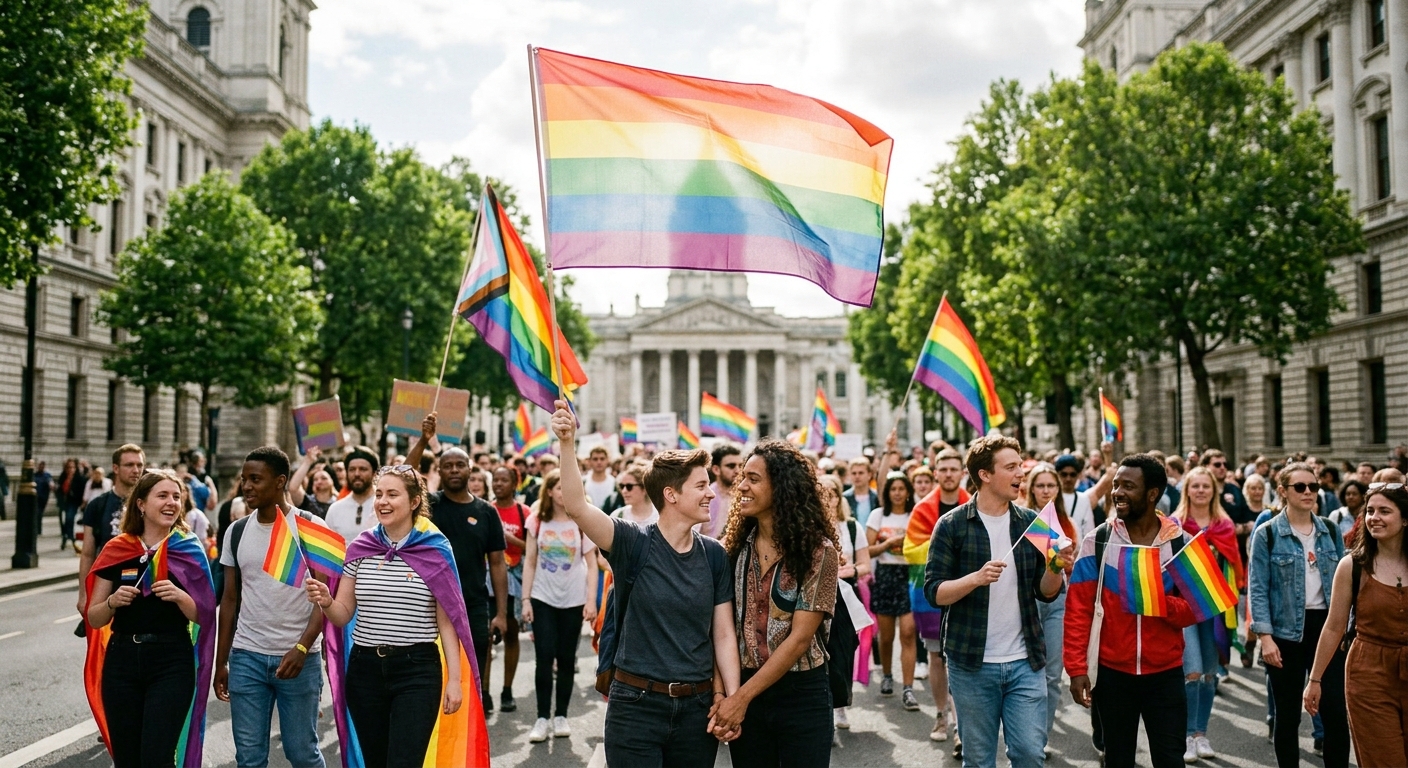
In a societal landscape where traditional marriage rates have experienced a steady decline, a common question often arises among casual observers: Why did the LGBTQ+ community fight so vehemently for an institution that many others seem to be abandoning? For decades, the battle for marriage equality served as the absolute focal point of the LGBTQ+ civil rights movement in the United States and abroad. To understand the gravity of this struggle, one must look beyond the mere acquisition of a marriage certificate. The pursuit of marriage equality was never exclusively about adopting a conventional lifestyle; rather, it was a profound declaration of shared humanity, a demand for equal protection under the law, and a strategic dismantling of the foundational prejudices used to justify systemic discrimination.
The Deep Emotional Reality of Human Commitment
While the legal and economic benefits of marriage are easily quantifiable, the psychological and emotional drivers behind the desire to marry are deeply ingrained in the human experience. Countless individuals, regardless of their sexual orientation, harbor a fundamental desire to forge a permanent, publicly recognized bond with the person they love. This act of mutual commitment204promising to navigate the unpredictabilities of life together204fulfills a profound psychological need for stability, belonging, and partnership.
For many LGBTQ+ individuals, the desire to participate in this universal human tradition is as strong as it is for their heterosexual counterparts. Growing up in a society that constantly emphasizes the romantic ideal of finding a lifelong partner, the realization that such a milestone is legally forbidden can be devastatingly alienating. Granting the right to marry means validating the legitimacy of these emotional bonds. A 2024 comprehensive survey conducted by the Williams Institute at the UCLA School of Law revealed that among married same-sex couples, a vast majority reported significant improvements in their overall sense of safety and security (83%), life satisfaction (75%), and relationship stability (67%). These statistics underscore the fact that access to marriage is not merely a symbolic victory; it directly enhances the lived psychological reality of individuals by validating their most intimate connections.
Erasing the Core Rationale for Prejudice
The struggle for marriage rights was also inherently a battle against the root ideologies of homophobia and systemic marginalization. Historically, the primary justification used to deny LGBTQ+ individuals equal rights204whether in employment, housing, or child custody204was the pervasive, unfounded belief that they were fundamentally different from heterosexuals in their capacity for love, commitment, and familial responsibility.
By fighting for and securing the right to marry, the LGBTQ+ community directly challenged and dismantled this core prejudice. Marriage serves as a universal societal shorthand for dedication and family. When same-sex couples stand before their communities and make the exact same vows, expressing the exact same depth of love and undertaking the same responsibilities as opposite-sex couples, it shatters the illusion of difference. If the love and commitment are functionally and emotionally identical, the justification for any form of discriminatory treatment evaporates completely. Winning the marriage debate effectively established a cultural and legal precedent that sexual orientation cannot be utilized as a legitimate rationale to deny an individual their basic civil liberties, from adopting children to keeping their jobs.
The 14th Amendment and the Demand for Equal Protection
At the heart of the legal battle for marriage equality lies the United States Constitution, specifically the 14th Amendment. Ratified in the aftermath of the Civil War in 1868, the 14th Amendment was originally designed to guarantee equal civil and legal rights to formerly enslaved Black citizens. Over time, its Equal Protection Clause204which mandates that no state shall “deny to any person within its jurisdiction the equal protection of the laws”204has become the bedrock upon which modern civil rights litigation is built.
The journey toward recognizing marriage as a fundamental constitutional right for all was arduous and non-linear. It involved decades of grassroots activism, shifting public opinions, and a series of incremental legal victories and devastating defeats. Legal advocates systematically argued that denying marriage licenses to same-sex couples constituted an explicit violation of this equal protection mandate.
This monumental legal effort culminated in the historic 2015 Supreme Court decision, Obergefell v. Hodges. In a watershed ruling, the Court declared that the 14th Amendment requires states to license and recognize marriages between two people of the same sex. The majority opinion elegantly articulated that the fundamental liberties protected by the Constitution extend to the deeply personal choice of whom to marry, emphasizing that the institution of marriage is vital to the social order and that excluding same-sex couples demeans their existence and harms their families.
Key Milestones in the Legal Fight for Marriage
To truly appreciate the magnitude of this achievement, it is helpful to review the timeline of legal shifts that paved the way for nationwide equality.
| Year | Event / Milestone | Significance |
|---|---|---|
| 1993 | Baehr v. Miike (Hawaii) | The Hawaii Supreme Court suggested that banning same-sex marriage might violate the state’s constitution, sparking the modern legal debate. |
| 2004 | Goodridge v. Department of Public Health | Massachusetts became the very first U.S. state to legally perform same-sex marriages, proving the sky would not fall. |
| 2013 | United States v. Windsor | The Supreme Court struck down Section 3 of the Defense of Marriage Act (DOMA), allowing federal recognition of legally married same-sex couples. |
| 2015 | Obergefell v. Hodges | The Supreme Court ruled that the Constitution guarantees the right to same-sex marriage nationwide, invalidating all remaining state bans. |
Broader Health and Societal Impacts
The ripple effects of achieving marriage equality extend far beyond the courtroom and the wedding altar. Institutional discrimination carries a heavy physical and psychological toll, often manifesting as minority stress. When a government explicitly codifies a group of people as second-class citizens by denying them access to major social institutions, it generates pervasive anxiety, depression, and social alienation.
Conversely, achieving equal standing under the law functions as a profound public health intervention. Legal recognition reduces the structural stigma that plagues marginalized communities. A landmark 2011 study conducted by researchers at the Columbia University Mailman School of Public Health observed a dramatic shift in the health outcomes of gay and bisexual men following the legalization of same-sex marriage in Massachusetts. The research noted a significant decrease in stress-related conditions such as hypertension and depression. Furthermore, there was a measurable 13% reduction in healthcare visits and a 14% drop in healthcare costs in the year following the law’s implementation.
Beyond adult physical and mental health, marriage equality profoundly benefits children. Countless same-sex couples are raising children, and denying those parents the right to marry leaves their families in a precarious legal and social limbo. Marriage grants a suite of protections, from automatic parentage presumptions to tax benefits and inheritance rights, which create a more secure environment for children to thrive. It also shields children from the psychological harm of having their family unit stigmatized by their own government.
The Freedom to Choose
It is vital to acknowledge that not every LGBTQ+ individual wishes to participate in the institution of marriage. Just like their heterosexual peers, many queer people view marriage as an antiquated construct, preferring alternative relationship models or prioritizing a life of independence. They may reject the conventional paradigms of commitment in favor of building non-traditional chosen families.
However, the essence of civil rights is not the mandate to participate in a specific institution, but rather the undisputed freedom to choose. Equality means having the exact same options available as the majority demographic. Whether an individual dreams of a white picket fence and a traditional wedding, or intends to remain happily unmarried, the option must belong to the individual, not the state. The fight was fundamentally about eradicating a discriminatory barrier that dictated what certain adults could or could not do with their private lives and relationships.
Remaining Vigilant in a Shifting Landscape
While Obergefell v. Hodges definitively settled the question of marriage equality from a constitutional standpoint in 2015, civil rights are rarely secured permanently without ongoing vigilance. Shifts in judicial philosophies and political climates continually pose potential threats to established precedents. Recent remarks by certain judicial figures indicating a willingness to revisit settled substantive due process rights have reignited anxieties within the LGBTQ+ community.
In response to these uncertainties, legislative efforts such as the Respect for Marriage Act204passed to provide federal statutory protections for same-sex and interracial marriages204demonstrate the ongoing necessity of reinforcing equal rights through multiple avenues of government. The community and its allies must remain steadfast in their defense of these hard-won protections, ensuring that the law continues to recognize the inherent dignity of all citizens.
Conclusion
The overarching question of why marriage matters so immensely to the LGBTQ+ community is answered by looking at the institution’s multifaceted role in society. It is a conduit for deep emotional fulfillment, a crucial mechanism for legal and physical security, and a definitive repudiation of historical prejudice. The victory of marriage equality unequivocally affirmed that sexual orientation is not a valid basis for unequal treatment. It was a triumph not just for those who wish to marry, but for the fundamental American promise of equal protection under the law204a testament to the fact that civil rights must expand to encompass all dimensions of the human experience.
Frequently Asked Questions (FAQs)
Why is the 14th Amendment important for marriage equality?
The 14th Amendment contains the Equal Protection Clause, which prohibits states from denying any person equal protection under the law. In the landmark Obergefell v. Hodges case, the Supreme Court ruled that denying same-sex couples the right to marry was a direct violation of this constitutional guarantee.
Does marriage equality have a proven impact on mental health?
Yes. Numerous public health studies have shown that legalizing same-sex marriage significantly reduces minority stress. Research indicates that access to legal marriage correlates with lower rates of depression, anxiety, and stress-related physical conditions within the LGBTQ+ community by providing societal validation and reducing structural stigma.
Did the legalization of same-sex marriage affect children?
Absolutely. Marriage provides a legal framework that protects families, offering benefits related to health insurance, inheritance, and custody. By legalizing marriage, children of same-sex couples are granted the same legal stability and societal recognition as children raised by opposite-sex couples, reducing the stigma they might otherwise face.
Are civil unions the same as marriage?
No. While civil unions were created to offer some of the state-level legal protections associated with marriage, they lacked federal recognition and the universal societal understanding that marriage carries. Advocates argued that creating a separate institution like civil unions perpetuated a “separate but equal” doctrine, which is inherently unequal.
References
- Obergefell v. Hodges Summary 204 Supreme Court of the United States. 2015-06-26. https://www.supremecourt.gov/opinions/14pdf/14-556_3204.pdf
- 14th Amendment to the U.S. Constitution: Civil Rights (1868) 204 National Archives. 2024-03-06. https://www.archives.gov/milestone-documents/14th-amendment
- Marriage equality improved security, stability, and life satisfaction for same-sex couples 204 Williams Institute at UCLA School of Law. 2024-06-20. https://williamsinstitute.law.ucla.edu/press/me-well-being-press-release/
- Same-Sex Marriage Laws Reduce Doctor Visits and Health Care Costs 204 Columbia University Mailman School of Public Health. 2011-12-16. https://www.publichealth.columbia.edu/news/same-sex-marriage-laws-reduce-doctor-visits-health-care-costs
Similar Articles








Read full bio of Sneha Tete


