
Visitation Rights for Non-Parents in Virginia
Understanding when grandparents, stepparents and other relatives can seek court-ordered time with a child in Virginia.
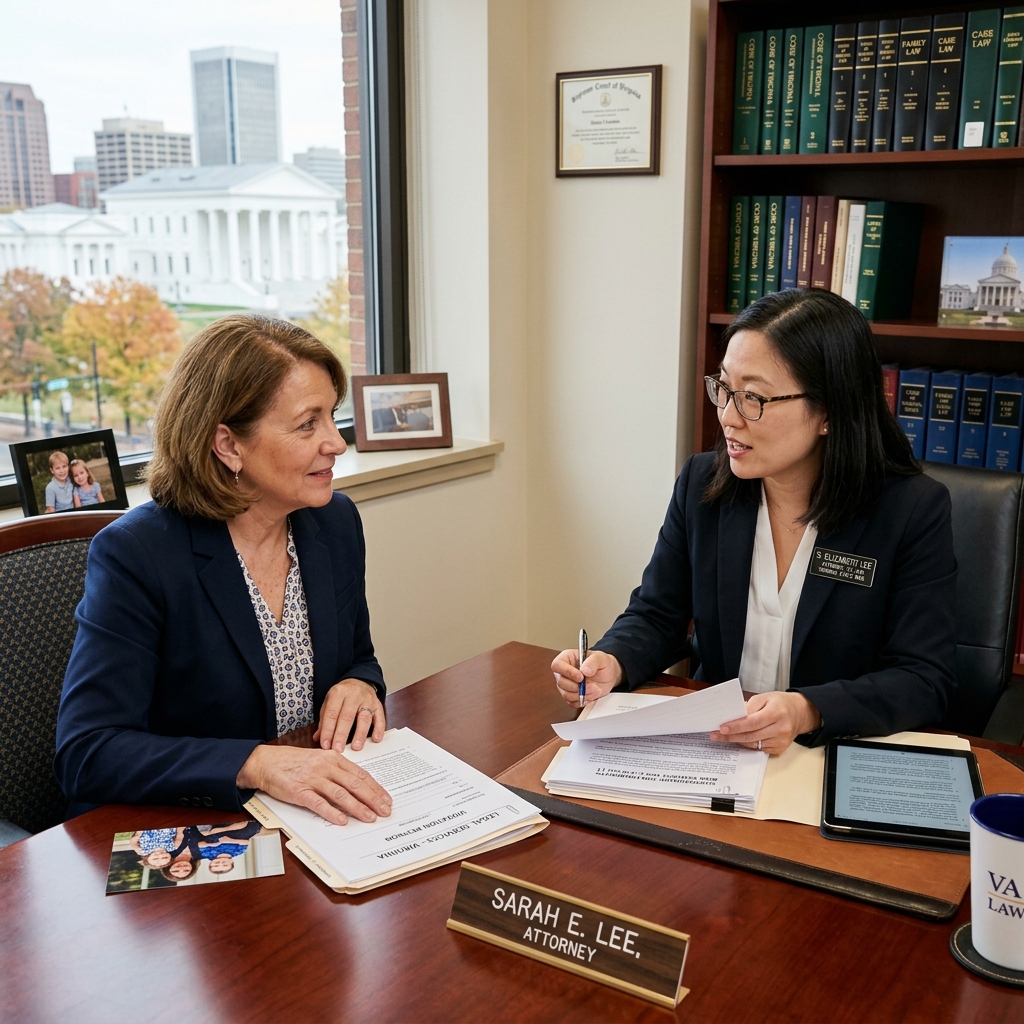
In Virginia, biological and adoptive parents have strong legal and constitutional rights to raise their children and decide who spends time with them. At the same time, grandparents, stepparents, adult siblings and other relatives often play central roles in a child’s life and may wish to maintain contact even when family relationships break down. This guide explains when and how a non-parent can seek court-ordered visitation rights in Virginia, the legal standards that apply, and what to expect from the process.
Who Counts as a Non-Parent with Potential Visitation Rights?
In everyday language, a non-parent is anyone who is not the child’s biological or adoptive parent. Virginia law further defines many of these individuals as “persons with a legitimate interest” in the child. This concept is critical because it determines who can even ask a court for custody or visitation.
Common examples of non-parents who may qualify include:
- Grandparents, including maternal and paternal grandparents
- Stepparents and step-grandparents
- Adult siblings and half-siblings
- Aunts, uncles and other extended family members
- Other individuals who have formed a substantial, parent-like bond with the child
Virginia courts interpret “legitimate interest” broadly, but it is not automatic. The judge must still be convinced that the relationship is significant enough to justify involving the court in decisions affecting the child.
Parents’ Rights vs. Non-Parents’ Rights
Any non-parent seeking visitation must understand that Virginia law starts from a strong presumption in favor of the child’s parents. Parents generally have a constitutional right to make decisions about their children’s upbringing, including whether non-parents may spend time with them.
| Issue | Between Parents | Between Parent and Non-Parent |
|---|---|---|
| Starting legal presumption | No parent automatically preferred; focus is on best interests of the child | Parent is presumed to be the proper custodian and decision-maker |
| Main legal standard | Best interests of the child | Non-parent must show actual harm if visitation or custody is denied |
| Burden of proof | Shared between parents depending on claims | Non-parent must present clear and convincing evidence to overcome parental presumption |
| Effect of one parent’s support | Not applicable in the same way | If at least one parent supports non-parent visitation, courts may move directly to best-interest analysis once certain thresholds are met |
These differences mean that a non-parent faces a significantly higher bar than a parent when asking a court to order custody or visitation over the parent’s objection.
The “Legitimate Interest” Requirement
Before a judge will seriously evaluate a non-parent’s request, the non-parent must be considered a person with a legitimate interest under Virginia law. This is a legal threshold that filters out casual acquaintances or individuals with weak ties to the child.
To demonstrate legitimate interest, a non-parent typically needs to show:
- A meaningful and ongoing relationship with the child (for example, regular care, contact or emotional support)
- A connection to the child’s family (through blood, marriage, or longstanding involvement)
- Evidence that the non-parent’s involvement has contributed positively to the child’s well-being
Once the court finds that the non-parent has legitimate interest, the case moves to much more demanding questions: whether denying contact would result in actual harm, and if not, whether visitation nevertheless serves the child’s best interests in specific circumstances.
Understanding the “Actual Harm” Standard
The most challenging hurdle for non-parents in Virginia is the actual harm standard. When both parents oppose visitation, courts will not order contact with a non-parent unless there is clear and convincing evidence that the child will suffer actual harm if the relationship is cut off.
This standard exists to protect the constitutional rights of parents and to prevent courts from casually second-guessing parental decisions. Demonstrating actual harm is very fact-specific, but may include evidence such as:
- Past incidents of abuse, neglect or serious mistreatment by the parent
- Documented emotional or psychological harm experienced by the child when separated from a non-parent caregiver
- Situations where the parent is unable or unwilling to meet the child’s basic needs
- A history showing that the child’s safety or healthy development is compromised under current parental care
Virginia courts generally do not act preemptively; they expect to see evidence that harm has already occurred or is very likely to occur again if the requested arrangement is not implemented. Mere disagreement with the parents’ choices or a belief that a non-parent relationship is beneficial is not enough.
Best Interests of the Child: When Does It Apply?
For disputes between parents, the core standard for custody and visitation decisions is the best interests of the child. Courts consider numerous factors to determine what arrangement most supports the child’s health, safety and emotional development.
These factors, found in Virginia law and judicial guidance, commonly include:
- The child’s age, physical and mental condition
- The parents’ age, physical and mental condition
- The relationship between each parent and the child, including emotional bonds
- The needs of the child, including relationships with siblings and extended family
- Each parent’s role in the child’s upbringing and care
- Each parent’s willingness to support the child’s relationship with the other parent
- The child’s preferences, if the child is old and mature enough
For non-parents, the best-interest analysis comes into play in two main ways:
- After the non-parent has rebutted the presumption in favor of the parents by proving extraordinary reasons or actual harm.
- When at least one parent supports the non-parent’s request, making it easier for the court to focus on what is beneficial for the child.
In other words, best interests are always important, but a non-parent cannot rely solely on that standard when both parents object. Actual harm must be proven first.
When One Parent Supports the Non-Parent’s Request
Non-parent visitation cases look very different when at least one parent supports the request. For example, a mother might ask the court to allow her parents (the child’s grandparents) to have scheduled visitation, while the father objects.
In these situations:
- The supporting parent’s testimony can significantly strengthen the non-parent’s case.
- Courts may treat the dispute more like a disagreement over how to structure the child’s time, rather than whether to allow contact at all.
- The judge may move directly to a best-interest analysis once satisfied that visitation will not undermine core parental rights.
This does not mean the non-parent is guaranteed visitation. It does, however, lower the burden compared to a case where both parents stand united against the request.
Key Legal Principles Governing Non-Parent Visitation
Virginia case law and statutes set out several principles courts follow when non-parents seek custody or visitation.
- Presumption favoring parents: The law assumes parents are best suited to care for their children unless convincing evidence shows otherwise.
- Extraordinary reasons required: To overcome this presumption for custody, non-parents must show parental unfitness, abandonment, prior loss of parental rights or similarly serious circumstances.
- Actual harm for visitation over united parental objection: When both parents oppose non-parent visitation, courts must find that denying visitation would cause actual harm to the child.
- Clear and convincing evidence: The non-parent’s proof must be stronger than a mere preponderance; the judge must be firmly convinced of the facts supporting intervention.
- Best interests analysis: Only after parental presumptions are overcome do courts weigh which arrangement best serves the child’s overall welfare.
How to Begin the Legal Process
The process for seeking custody or visitation typically begins in the Juvenile and Domestic Relations District Court, which handles most family law matters involving minors. Parents must start custody and visitation paperwork through their local Court Services Unit, and non-parents usually follow similar procedures with assistance from the clerk or legal counsel.
Steps a non-parent may take include:
- Consulting with an experienced family law attorney to assess whether the legal standards can realistically be met
- Gathering documentation of the relationship, such as photos, messages, school records or testimony from neutral observers
- Collecting evidence of harm to the child, if relevant, including medical or psychological evaluations, reports or prior court findings
- Preparing to explain to the judge how continued contact serves the child’s specific needs and development
Virginia’s official self-help resources emphasize the importance of understanding the structure of custody and visitation cases and the role of the juvenile courts. Non-parents engaging in the process should expect formal hearings, rules of evidence and strict attention to statutory standards.
Practical Challenges Non-Parents Should Expect
Even with a strong emotional bond to the child, non-parents face significant obstacles when asking a court to override parental decisions. Some practical challenges include:
- Emotional strain: Litigation can intensify family conflict and place the child in the middle of adult disputes.
- Time and expense: Collecting evidence, attending hearings and working with counsel may be lengthy and costly.
- Uncertain outcomes: Because the legal standards are demanding, many petitions fail even when the non-parent’s motives are sincere.
- Impact on future relationships: Court involvement can change how parents and non-parents interact long after the case ends.
Given these realities, some families benefit from exploring mediation or negotiated arrangements before turning to the courts. However, when a child’s safety or well-being is at risk, judicial intervention may be necessary.
FAQs about Non-Parent Visitation in Virginia
Can grandparents automatically get visitation if parents cut off contact?
No. Grandparents do not have automatic visitation rights in Virginia. They must qualify as persons with a legitimate interest and, when both parents object, prove that denying visitation would cause actual harm to the child.
What if I have been raising the child for years, but I am not a legal parent?
Long-term caregiving can strengthen a non-parent’s case by showing a deep, parent-like relationship. Courts may consider this in determining legitimate interest, harm and best interests, but the non-parent must still overcome the presumption favoring the parents and meet the applicable legal standards.
Does the child’s preference matter?
Yes, but it is only one factor. If the child is sufficiently mature, the court may consider the child’s wishes regarding contact with a non-parent as part of the broader best-interest analysis. The child’s preference alone does not eliminate the need to prove harm or other required elements.
Can a noncustodial parent be denied visitation?
Yes, but only under specific circumstances. A noncustodial parent generally has a right to visit the child unless visitation is found not to be in the child’s best interests, such as where there is emotional harm, violence or serious risk to the child’s welfare. Any denial or restriction must be ordered by the court, not unilaterally imposed by the custodial parent.
Is it easier to get visitation than custody as a non-parent?
In many cases, yes. Seeking full custody requires overcoming very strong presumptions in favor of parents and demonstrating extraordinary reasons or unfitness. Visitation still demands proof of actual harm when both parents object, but courts may be more open to limited contact than a full change in custody arrangements.
Do I need a lawyer to file for visitation as a non-parent?
While it is legally possible to file without counsel, the standards and procedures are complex. Because non-parents carry a heavy burden of proof and must present clear and convincing evidence, most people benefit from advice and representation by a family law attorney familiar with Virginia custody and visitation law.
References
- Court-ordered custody and visitation arrangements — Virginia Code § 20-124.2, Virginia Law Portal. 2024-01-01. https://law.lis.virginia.gov/vacode/title20/chapter6.1/section20-124.2/
- Custody, Visitation & Support — Virginia Judicial System, Court Self-Help. 2023-06-01. https://selfhelp.vacourts.gov/page/13/custody-visitation-support
- Third Party Custody and Visitation Rights — Smith Strong, PLC. 2022-05-10. https://www.smithstrong.com/library/non-parent-custody-rights.cfm
- Non Parent Rights Attorney – Virginia — Hofheimer Family Law Firm. 2022-08-15. https://hoflaw.com/practice-areas/custody-visitation/non-parent/
- What Are the Legal Rights of Non-Parents in Custody Cases? — Malm & Tatton, Attorneys at Law. 2023-09-12. https://mrt.law/what-are-the-legal-rights-of-non-parents-in-custody-cases/
- Visitation Laws in Virginia — The Daugherty Law Firm. 2023-03-02. https://www.daughertylawpc.com/family-law/virginia-visitation-laws/
- Can a non-parent get custody or visitation? — WomensLaw.org, National Network to End Domestic Violence. 2022-11-01. https://www.womenslaw.org/laws/va/custody/who-can-get-custody-and-visitation/can-non-parent-get-custody-or-visitation
Similar Articles








Read full bio of Sneha Tete


