
Virtual Visitation Orders in Modern Family Law
How courts use electronic contact to preserve parent-child bonds when in-person visits are difficult.
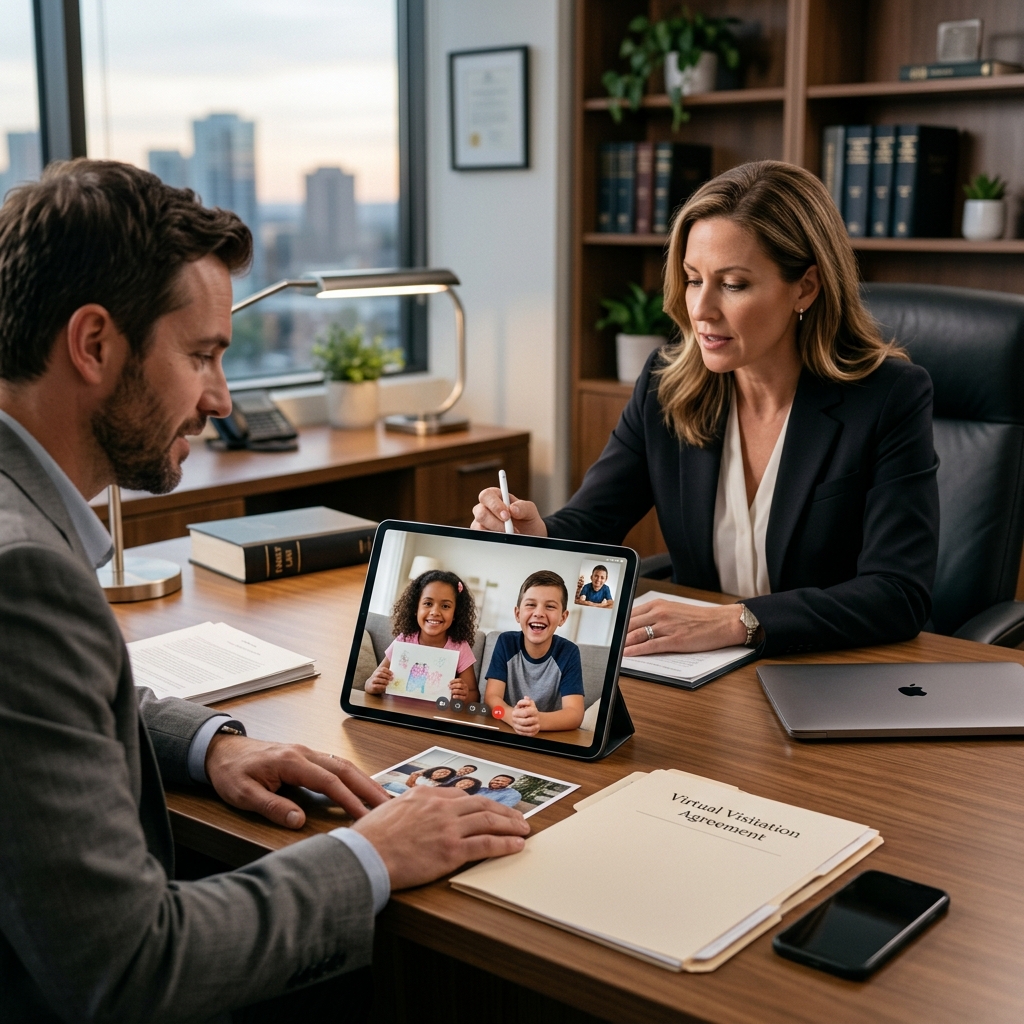
Family courts increasingly recognize that parenting does not always happen face to face. When distance, safety concerns, scheduling conflicts, or temporary disruptions make in-person contact harder, judges may allow or require virtual visitation so that children can still maintain a meaningful connection with both parents.
Virtual visitation is not a replacement for every in-person visit, and it is not treated the same way in every jurisdiction. Still, courts commonly view electronic communication as a practical tool that can support a child’s relationship with a parent when traditional visitation is limited or unavailable.
What virtual visitation means in practice
Virtual visitation refers to real-time or scheduled electronic contact between a parent and child. That contact may happen through video calls, phone calls, messaging platforms, email, or other forms of interactive communication.
In many families, the most familiar version is a video call, because it allows the child to see and hear the parent at the same time. Courts and parenting plans may also include other forms of electronic contact, especially when the child is older or when the goal is to supplement, rather than replace, in-person time.
Why courts have become more open to it
Virtual visitation has grown because family life has changed. Parents may live in different cities, one parent may work irregular hours, or a child may be temporarily unable to travel. In those situations, electronic contact can reduce the sense of separation and help preserve routine.
Courts are also responding to practical realities. When in-person visitation is interrupted by relocation, illness, transportation barriers, or safety concerns, judges may see virtual visitation as a flexible way to keep the parent-child relationship active while the larger custody issues are addressed.
How courts decide whether to order virtual contact
The central issue in most custody cases is the child’s best interest. That standard guides decisions about whether virtual communication should be added to a parenting order, how often it should occur, and whether it should stand alone or function alongside in-person visits.
Courts may consider:
- The child’s age and ability to participate in electronic communication
- The distance between the parents’ homes
- Whether in-person visitation is feasible
- The level of conflict between the parents
- Whether technology is available, affordable, and reliable
- Whether the arrangement supports, rather than disrupts, the child’s routine
Some states have specific statutes or local practices recognizing virtual visitation, while others rely on the court’s general authority to shape parenting plans in the child’s best interest.
Virtual contact is usually secondary to in-person parenting time
A recurring theme in family law is that electronic communication is generally treated as different from physical visitation. One reason is simple: video contact can help a child stay connected, but it does not fully replicate shared time in the same room.
That distinction matters when a court order already provides for face-to-face visitation. In some jurisdictions, a parent or agency cannot unilaterally replace in-person visits with video calls just because it is convenient. If a court order requires physical parenting time, changing that arrangement may require judicial review.
The practical result is that virtual visitation often works best as one part of a broader parenting schedule, not as a vague substitute for all other contact.
Situations where virtual visitation is especially useful
Virtual visitation is often most helpful when families face obstacles that make regular visits difficult but not impossible. Common examples include long-distance parenting, temporary separation after a move, recovery from illness, or a gap in available supervised visitation resources.[10]
It can also be useful when a child needs a lower-pressure way to stay in touch with a parent after a period of conflict or transition. In those situations, a brief scheduled call may serve as a bridge toward more stable in-person contact later.[10]
| Common situation | How virtual visitation helps |
|---|---|
| Long-distance parenting | Maintains frequent contact between in-person visits |
| Temporary relocation | Keeps the child connected while travel arrangements are adjusted |
| Health or safety concerns | Preserves contact when physical visits must pause or be limited |
| Supervised visitation delays | Provides a stopgap form of parent-child communication |
What a strong virtual visitation order should cover
Vague orders create confusion. A well-written virtual visitation provision should spell out the method of communication, the schedule, the duration of each session, and how technical problems will be handled.
It is also wise for the order to identify who initiates the contact, who provides the equipment, and what happens if one parent fails to make the child available at the agreed time.
- The platform to be used, such as video calling or messaging
- The days and times for contact
- The length of each session
- Whether contact is limited to certain hours
- Who must ensure the device is working
- How missed or interrupted calls will be rescheduled
- Whether either parent may record the call
- Whether a third party may supervise the communication
Technology and access issues matter more than they seem
Electronic communication sounds simple until a family must actually use it. Courts and parents often have to address internet service, device availability, platform access, login problems, and age-appropriate supervision.
That is why some parenting plans include detailed responsibility rules. If one parent must provide a tablet, pay for service, or keep a camera-enabled device available, the order should say so clearly. Otherwise, one missed technical step can turn into a custody dispute.
Good orders also anticipate interruptions. A child may be at school, in an activity, or asleep. A parent’s device may fail. The most durable plans explain how soon a missed call should be rescheduled and whether repeated failures can be brought back to court.
How courts balance flexibility and enforcement
Family law courts want parenting orders to be workable, but they also expect compliance. If a court includes virtual visitation in an order, the parents are generally expected to follow it just as they would any other custody term.
When one parent repeatedly blocks or interferes with virtual contact, the other parent may seek enforcement or modification. The available remedy depends on the wording of the order and the law of the jurisdiction, but courts usually prefer clear evidence that the communication right was established and then denied.
Because of that, parents benefit from documenting missed calls, technical failures, and schedule changes. A simple log can be useful if the dispute later returns to court.
Best practices for parents using virtual visitation
Parents can make virtual contact more effective by treating it as a real part of the relationship rather than an informal favor. Predictability is especially important for children, who usually respond better to routine than to last-minute requests.
- Set a regular day and time for calls
- Use the same platform whenever possible
- Keep sessions age-appropriate and not overly long
- Have backup options if the internet fails
- Avoid arguing during the call
- Respect school, meals, and bedtime routines
- Keep notes about completed and missed visits
It also helps to think about the purpose of the call. Younger children may do best with short, frequent contact. Older children may prefer fewer but more interactive sessions. The ideal schedule often depends on the child’s temperament, the parents’ conflict level, and the practical limits of the household.
Common legal questions about virtual visitation
Parents often ask whether a court can order virtual visitation over objection, whether it can replace in-person parenting time, and whether one parent can refuse it if it is written into the order. The answer to each question depends on local law, the exact wording of the order, and the facts of the case.
In some jurisdictions, courts have made clear that electronic contact does not automatically count as traditional visitation. In others, judges may order it as a supplement or as a temporary measure when circumstances justify it.
| Question | Typical legal focus |
|---|---|
| Can a judge order it? | Usually yes, if the court has authority and the order serves the child’s best interest |
| Can it replace all in-person time? | Sometimes only in limited circumstances; many courts treat it as a supplement |
| Can a parent ignore the order? | No, not if the order is valid and in effect |
| Can the plan be changed? | Yes, but usually through agreement or court modification |
Why careful drafting prevents future conflict
The biggest problem with virtual visitation is not the concept itself, but the uncertainty that surrounds it when orders are vague. Clear language can reduce arguments about timing, equipment, supervision, and whether missed contacts count as violations.
A detailed plan also helps children. When the rules are predictable, the child is less likely to experience each call as a surprise or a source of adult tension. That stability is often one of the strongest reasons courts support structured electronic contact.
Frequently asked questions
Is virtual visitation the same as regular visitation?
No. Courts often view it as a separate form of contact, and many treat it as a supplement rather than a full substitute for in-person parenting time.
Can a court order video calls in a custody case?
Yes. Many courts have authority to include electronic communication in parenting plans, especially when it supports the child’s best interest.
What should a virtual visitation schedule include?
A good schedule should state the platform, frequency, duration, start time, backup plan for technical failures, and responsibility for providing access.
What if one parent keeps missing the calls?
Repeated missed contacts may support enforcement or a request to modify the order, depending on the facts and local procedure.
Does a child have to be available at every scheduled time?
If the order requires it, yes, subject to practical exceptions such as school, illness, or other legitimate conflicts that the order addresses.
Final thoughts for parents and practitioners
Virtual visitation works best when it is specific, realistic, and tied to the child’s needs. Courts are more likely to support arrangements that preserve meaningful parent-child contact without creating unnecessary friction between households.
For parents, that means treating electronic communication as part of the parenting plan, not an afterthought. For lawyers and judges, it means drafting orders that are clear enough to enforce and flexible enough to survive real-life interruptions.
References
- Virtual Visits Between Parents and Their Children — University of North Carolina School of Government. 2020-09-10. https://civil.sog.unc.edu/2020/09/10/sometimes-you-just-need-a-hug-virtual-visits-between-parents-and-their-children/
- Child custody and parenting time — California Courts Self Help Guide. 2026-07-10. https://selfhelp.courts.ca.gov/child-custody
- Virtual Visitation, Child Custody, and Technology — Arizona Law Group. 2026-07-10. https://www.arizonalawgroup.com/child-custody/virtual-visitation-child-custody-and-technology/
- Creating Effective Virtual Visitation Schedules In Dallas Parenting Plans — Onda Family Law. 2026-07-10. https://ondafamilylaw.com/creating-effective-virtual-visitation-schedules-in-dallas-parenting-plans/
- Court-Ordered Visitation and Child Safety — Texas Law Help. 2026-07-10. https://texaslawhelp.org/article/court-ordered-visitation-and-child-safety
- Virtual Visitation Rights: Navigating Custody in Long-Distance Parenting — Smolka Law Group. 2026-07-10. https://smolkalawgroup.com/blog/virtual-visitation-rights-navigating-custody-in-long-distance-parenting/
Similar Articles








Read full bio of medha deb


