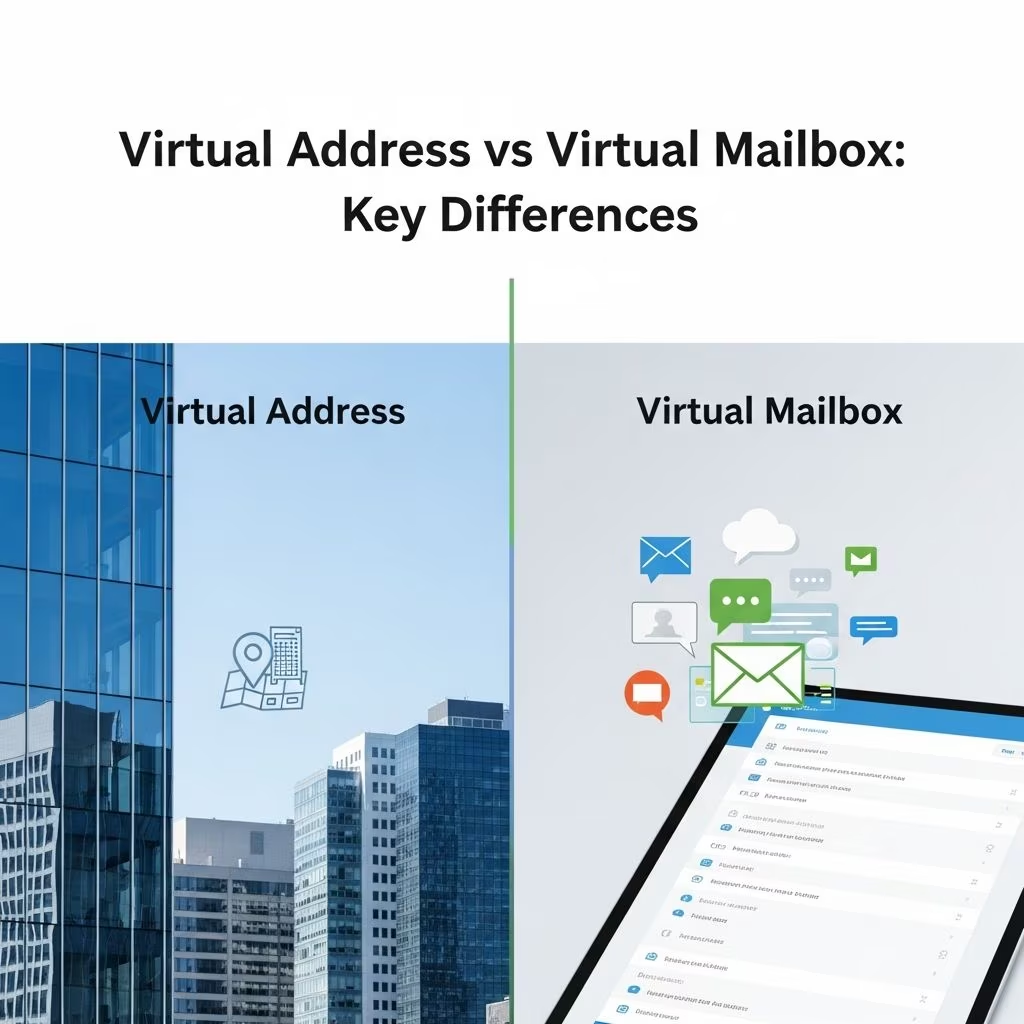
Modern businesses, especially remote and online operations, increasingly rely on digital solutions for managing physical mail. Two popular options are **virtual addresses** and **virtual mailboxes**, which provide professional street addresses without requiring a physical office lease. A virtual address offers a prestigious location for business registration and mail receipt, while a virtual mailbox extends this with advanced digital management tools like scanning and remote access. This article breaks down their features, benefits, and ideal use cases to help you decide which fits your needs.
Understanding Virtual Addresses for Businesses
A virtual address is a real street address provided by a service provider, typically in a commercial building, that businesses can use as their official mailing address. Unlike a home address, it enhances credibility and protects personal privacy by keeping your residence off public records.
Key features include:
- Receipt of mail and packages from all major carriers like USPS, UPS, FedEx, and DHL.
- Use on business licenses, LLC registrations, bank accounts, and government forms.
- Basic forwarding or pickup options, often with compliance as a Commercial Mail Receiving Agency (CMRA) via USPS Form 1583.
These addresses are essential for startups and solopreneurs establishing a professional presence without overhead costs. They signal legitimacy to clients and partners, often located in high-profile business districts.
Exploring Virtual Mailbox Services in Depth
A virtual mailbox builds on the virtual address concept by digitizing mail handling. Mail arrives at the physical address, gets photographed externally, and you access scans via a secure online dashboard from any device. This allows remote management without ever visiting the location.
Core functionalities encompass:
- Mail scanning: View envelopes and contents digitally after requesting opens.
- Forwarding and storage: Ship items worldwide or store them securely for pickup.
- Check deposits: Remote deposit of payments directly to your bank.
- Digital archiving: Unlimited cloud storage for scanned documents, searchable and organized.
Virtual mailboxes suit digital nomads, e-commerce sellers, and international teams needing flexibility. Providers often offer add-ons like integrations with Dropbox or Google Drive for seamless workflows.
Core Distinctions: Virtual Address Compared to Virtual Mailbox
While both provide a street address, virtual mailboxes offer comprehensive digital tools, making them more versatile for active mail management. A basic virtual address focuses on the address itself with minimal handling, whereas virtual mailboxes emphasize remote control.
| Feature | Virtual Address | Virtual Mailbox |
|---|---|---|
| Street Address | Yes | Yes |
| Mail Scanning | Limited or None | Full (Exterior & Interior) |
| Remote Access | Basic Notifications | Secure Online Portal |
| Check Deposit | Rare | Common |
| Cost (Monthly) | $10–$30 | $15–$50+ |
| Ideal For | Static Address Needs | Dynamic Mail Volume |
This table highlights how virtual mailboxes provide superior convenience at a slightly higher price, justified by time savings and features.
Virtual Options Versus Traditional PO Boxes
PO Boxes from USPS are a budget alternative but come with limitations. They use a box number instead of a street address, which can appear less professional and restrict package deliveries from private carriers.
- PO Boxes: USPS-only, physical pickup required, no scanning.
- Virtual solutions: All carriers, remote management, professional image.
For businesses needing compliance (e.g., EIN applications), virtual addresses are often required as they qualify as CMRAs. PO Boxes suffice for low-volume personal use but falter for growing enterprises.
Virtual Mailbox and Address Versus Full Virtual Offices
Virtual offices expand beyond mail with phone services, live receptionists, and on-demand meeting rooms. They suit client-facing businesses but cost more ($50–$200/month).
| Service | Mail Handling | Phone/Reception | Meeting Space | Starting Price |
|---|---|---|---|---|
| Virtual Mailbox/Address | Advanced | No | No | $15 |
| Virtual Office | Basic | Yes | Yes (Extra Fee) | $50 |
Choose virtual office only if physical presence matters; otherwise, mailboxes offer better value for core mail needs.
Benefits Driving Adoption of Virtual Mail Solutions
These services empower remote work by:
- Privacy protection: Shields home addresses from public databases, reducing risks like identity theft.
- Professionalism: Prestigious addresses in major cities boost brand trust.
- Cost efficiency: Avoids rent (average US office: $30/sq ft annually) while scaling easily.
- Global reach: Forwarding to any location supports international operations.
- Compliance: Meets state requirements for registered agents and incorporations.
According to USPS guidelines, CMRAs ensure secure handling compliant with federal standards (usps.com).
Potential Drawbacks and Considerations
No solution is perfect. Virtual services require notarized Form 1583 for authorization, and high-volume users may face per-item fees. Reliability varies by provider—select those with clear SLAs for scanning (e.g., daily) and support.
- Setup time: 3–7 days for approval.
- Fees: Watch for overages on large packages or frequent forwards.
- Limitations: Not all accept restricted items like perishables.
Research providers using scorecards evaluating compliance, security, and pricing transparency.
Selecting the Right Provider: Step-by-Step Guide
- Assess needs: Mail volume, forwarding frequency, integrations.
- Verify CMRA status and Form 1583 process.
- Compare locations: Choose markets aligning with your audience (e.g., NYC for finance).
- Review pricing: Base + add-ons; aim for no hidden fees.
- Test support: Responsive chat/email critical for issues.
Top providers offer trials or money-back guarantees for risk-free starts.
Real-World Use Cases Across Industries
E-commerce: Handle supplier shipments and customer returns remotely.
Consultants: Use for proposals and contracts without home exposure.
Startups: Register LLCs affordably while bootstrapping.
Expats: Maintain US presence for banking and taxes.
These examples show versatility for solopreneurs to enterprises.
Frequently Asked Questions (FAQs)
Can I use a virtual address for my LLC registration?
Yes, most states accept CMRA virtual addresses for formation documents, but confirm with your Secretary of State.
Is a virtual mailbox secure for sensitive mail?
Reputable providers use encrypted portals, secure storage, and comply with USPS privacy rules.
How much does a virtual mailbox cost?
Plans start at $10–$20/month, scaling with features like unlimited scans ($30+).
Do virtual addresses accept packages from Amazon?
Yes, all major carriers deliver to virtual addresses, unlike PO Boxes.
Can I switch providers easily?
Yes, but update all records promptly to avoid mail disruptions.
Future Trends in Virtual Mail Management
Advancements include AI-powered mail sorting, blockchain for secure logs, and deeper integrations with CRM tools. As remote work persists—projected 32% of workforce by 2025 per Upwork—demand grows for hybrid physical-digital solutions.
In summary, virtual addresses suit basic needs, while mailboxes excel in management. Evaluate based on your operations for optimal results.
References
- How a Virtual Mailbox is Different From a Virtual Office — VirtualPostMail. 2023-05-15. https://www.virtualpostmail.com/blog/article/virtual-office-vs-virtual-mailbox-services/
- Bridging the Gap Between Physical and Virtual Mailbox — PhysicalAddress.com. 2024-02-10. https://physicaladdress.com/blog/the-difference-between-a-physical-and-virtual-mailbox/
- P.O. Box vs. Virtual Business Address: Full Comparison — Davinci Virtual. 2023-11-20. https://www.davincivirtual.com/blog/po-box-vs-virtual-business-address
- Virtual Business Address vs. Virtual Office: What’s the Difference? — iPostal1. 2024-01-05. https://ipostal1.com/virtual-business-address-vs-virtual-office.php
- Pros and Cons of Virtual Mailbox and P.O. Box For Business Mail — Northwest Registered Agent. 2023-08-12. https://www.northwestregisteredagent.com/business-address/po-box-virtual-mailbox