
Starting Your Virginia Business: Licensing & Registration
Complete guide to obtaining licenses and permits for your Virginia business.
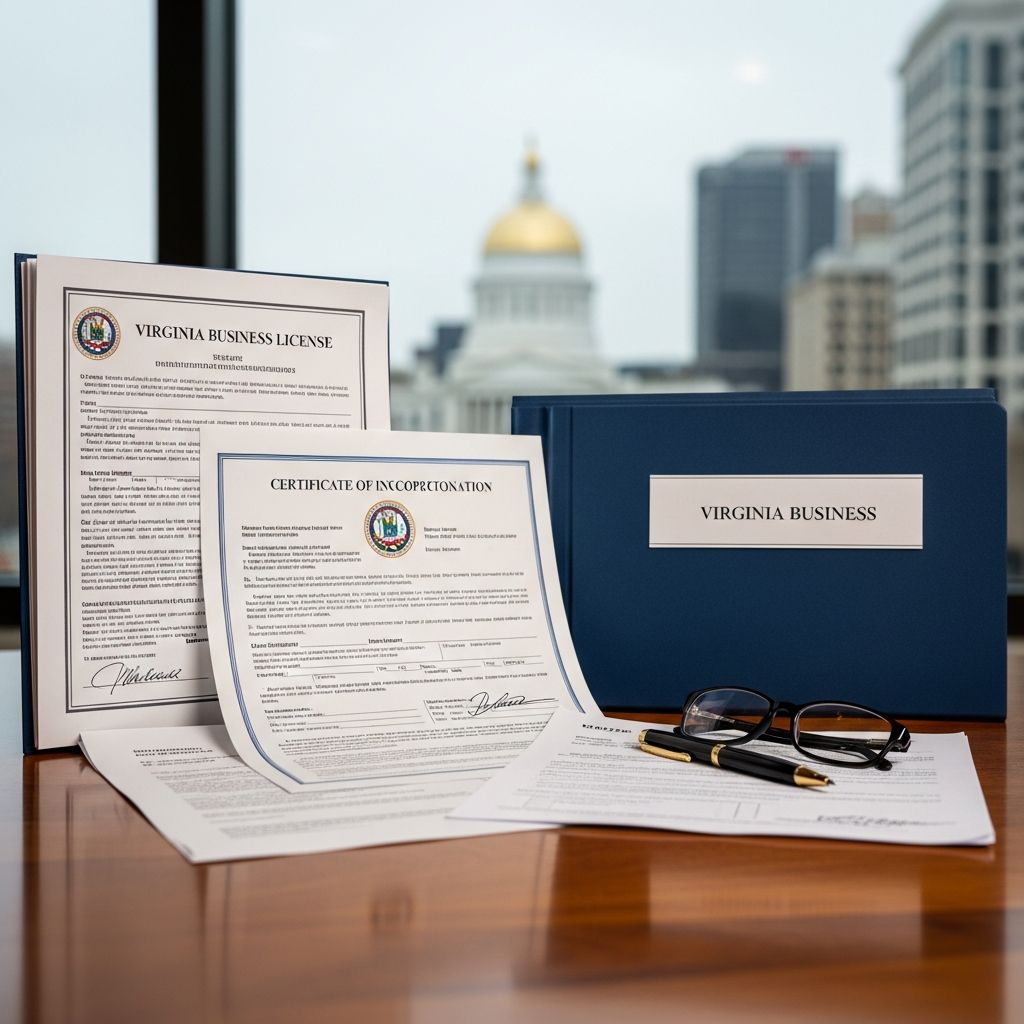
Understanding Virginia’s Business Licensing Framework
Starting a business in Virginia involves navigating a multi-layered regulatory system that combines state, local, and potentially federal requirements. Unlike some states that require a universal business license for all enterprises, Virginia takes a more nuanced approach based on your specific business type and location. The Commonwealth of Virginia does not mandate a general business license that applies statewide to every business. However, this does not mean you can simply start operations without meeting any regulatory obligations. Instead, Virginia requires compliance with a system of targeted licensing and registration requirements that vary significantly depending on what your business does and where it operates.
The Role of State Registration and Tax Compliance
Every business operating in Virginia must complete a fundamental step that serves as the foundation for all other licensing requirements: obtaining a Virginia State Tax Account Number. This is mandatory for all business entities, regardless of size or industry. This state tax account differs from your federal Employer Identification Number (EIN) and is essential for conducting business legally in the state. The Virginia Department of Taxation oversees this registration process and provides online tools to streamline the application for new businesses.
To register for your state tax account, you have two primary options. The first involves using the Virginia Tax Online Services for Businesses, which allows eligible businesses to complete registration electronically. For those unable to access online registration, the Virginia Department of Taxation provides a Business Registration Form (R-1) that can be submitted by mail. This dual-access approach ensures that all business owners, regardless of their technical capabilities, can meet this essential requirement.
Upon completion of state registration, you will receive documentation confirming your tax account status. Keep this documentation secure, as you will likely need it when applying for local licenses, permits, and potentially federal registrations. The state tax account number becomes a critical identifier throughout your business licensing journey.
Navigating the Three-Tier Licensing Structure
Virginia’s business licensing system operates across three distinct jurisdictional levels: state-level requirements, local municipal requirements, and federal requirements. Understanding which tier applies to your business is essential for ensuring full compliance. Many business owners mistakenly believe they need only one license, when in reality their business may require licenses at multiple levels.
State-Level Licensing Requirements
At the state level, Virginia distinguishes between general business licenses and occupational licenses. Since Virginia does not impose a general business license requirement statewide, most businesses focus on determining whether they need an occupational license. Occupational licenses apply to specific professions and industries where the state has determined that regulatory oversight is necessary to protect public welfare. These might include professions in healthcare, real estate, construction, and various service industries.
The Virginia State Corporation Commission (SCC) handles the registration of business entities such as limited liability companies, corporations, and partnerships. However, it is important to note that the SCC does not issue business licenses itself. Instead, the SCC provides registration for the business entity, which is a prerequisite for obtaining licenses from appropriate regulatory bodies. This distinction is crucial: registering your business entity with the SCC is different from obtaining a business license, and both may be necessary.
Local Municipal Licensing
Local governments in Virginia maintain the authority to impose their own business licensing requirements. Cities such as Fairfax, Richmond, Virginia Beach, and Arlington County require businesses to obtain local licenses regardless of what the state requires. Many other municipalities, including both cities and counties, have similar requirements. The specific requirements vary considerably from one jurisdiction to another, making it essential to research your specific city or county regulations.
Local business licenses typically require basic information about your business, including your business name, owner information, business location, description of activities, and estimated gross revenue. Some jurisdictions require these applications to be submitted within a specific timeframe after beginning operations, often within 30 days. Failure to timely apply can result in penalties or fines, making prompt compliance essential.
Federal-Level Requirements
For most small businesses in Virginia, federal licensing requirements do not apply. However, certain industries and business activities fall under federal regulatory jurisdiction and therefore require federal licenses or permits. Examples include broadcasting, alcohol production and retail sales, firearms manufacturing or sales, and various forms of transportation. If your business operates in any of these regulated sectors, you must identify and apply with the appropriate federal agency.
The Distinction Between Licenses and Permits
While often used interchangeably, business licenses and permits serve different purposes in Virginia’s regulatory framework. A business license authorizes your business to operate within a jurisdiction and typically has a longer validity period, often one year. A permit, by contrast, authorizes your business to engage in specific activities and may need renewal more frequently or may be required before beginning that specific activity.
Common types of permits include building permits for construction projects, health permits for food-handling businesses, zoning permits for land use, and alarm system permits. Each permit addresses a specific aspect of business operations and ensures compliance with particular safety, health, or operational standards. Understanding which permits your business requires is as important as understanding license requirements.
Industry-Specific Licensing Considerations
Certain industries face heightened regulatory scrutiny in Virginia and may require multiple licenses or permits:
- Food Service and Hospitality: Businesses handling food must obtain health permits from local health departments and undergo regular inspections. Restaurants, catering services, and food trucks all fall into this category.
- Construction: Contractors and construction companies often need building permits for projects, and may need occupational licenses depending on the specific work performed.
- Childcare: Daycare facilities and childcare providers face state licensing requirements designed to protect children’s welfare and safety.
- Professional Services: Lawyers, accountants, real estate agents, and other professionals typically need occupational licenses from their respective state licensing boards.
- Vehicle Sales: Used car dealers and other vehicle-related businesses may need industry-specific occupational licenses.
- Personal Services: Hair salons, massage therapy services, and similar businesses often require occupational licenses for practitioners.
The Business Entity Registration Process
Before obtaining licenses or permits, you must establish your business entity legally in Virginia. For limited liability companies (LLCs), this involves filing Articles of Organization with the Virginia State Corporation Commission. Corporations must file Articles of Incorporation, while partnerships have similar requirements under Virginia law. This registration process establishes your business as a legal entity distinct from its owners.
The registration process typically requires choosing an available business name, appointing a registered agent to receive official documents, and providing basic information about the business structure and ownership. Many business owners hire registered agent services to fulfill this requirement. After filing with the SCC, you will receive a Certificate of Good Standing or similar documentation confirming registration.
Obtaining Your Federal Employer Identification Number
Concurrent with state registration, you should apply for a Federal Employer Identification Number (EIN) from the Internal Revenue Service. The EIN functions as your business’s tax identification number for federal purposes and differs from your Virginia State Tax Account Number. Many businesses apply for their EIN online through the IRS website, which typically provides immediate approval.
Even if your business has no employees initially, an EIN is important for separating personal and business finances, establishing a business bank account, and fulfilling federal tax obligations. You can apply for an EIN free of charge through the IRS, and the application process is straightforward for most business structures.
Completing the Application Process
Business license applications, whether state or local, typically require consistent information presented in different formats depending on the jurisdiction:
- Legal business name and any fictitious business names (DBAs)
- Owner and manager names and addresses
- Business location and mailing address
- Description of business activities and industry classification
- EIN and state tax account number
- Number of employees or anticipated staffing levels
- Estimated annual gross receipts or revenue
- Copies of any required state or federal licenses or permits
Filing fees vary considerably depending on the jurisdiction and business type. Some licenses are issued free of charge, while others may cost hundreds of dollars annually. Researching fee structures before applying helps you budget appropriately for compliance costs.
Building Compliance and Zoning Considerations
If your business operates from a physical location, you may need building permits or occupancy permits demonstrating that your premises comply with local building codes. This is particularly important if you are constructing new spaces, renovating existing ones, or operating from a location that will undergo changes. Building inspections ensure that electrical systems, plumbing, fire safety equipment, and structural integrity meet applicable standards.
Zoning compliance is equally important. Your business location must be zoned for your intended use, and you may need to obtain zoning permits or variances if your business use differs from the area’s standard zoning designation. This is particularly relevant if you are operating a business from your residence, which may not be permitted in all residential zones.
Timeline and Renewal Obligations
Business licenses in Virginia typically expire at the end of the calendar year and require annual renewal. Some jurisdictions allow renewal through simple administrative processes, while others require reapplication each year. Marking renewal deadlines in your business calendar helps ensure you maintain compliance and avoid penalties for operating with expired licenses.
The timeline for obtaining initial licenses varies. Some applications receive approval within days, while others may take several weeks, particularly if inspections or additional documentation are required. Planning for this variance helps you avoid starting operations before obtaining necessary approvals.
Compliance and Ongoing Obligations
Obtaining licenses and permits is not a one-time event but rather the beginning of ongoing compliance responsibilities. You must maintain your licenses, keep them current through timely renewal, and ensure that any changes to your business operations are reported to relevant regulatory agencies. Additionally, you must comply with all conditions specified in your licenses and permits, which might include regular inspections, reporting requirements, or operational restrictions.
Maintaining organized records of all licenses, permits, and regulatory documents protects your business and facilitates efficient renewal processes. Digital organization systems help track renewal deadlines and requirements across multiple jurisdictions.
Common Questions About Virginia Business Licensing
Q: Does Virginia require all businesses to have a general business license?
A: No, Virginia does not require a statewide general business license for all businesses. However, your business must register for a state tax account, and you may need licenses or permits depending on your industry and location.
Q: What is the difference between a Virginia state tax account number and a federal EIN?
A: The state tax account number, issued by the Virginia Department of Taxation, identifies your business for Virginia tax purposes. The federal EIN, issued by the IRS, identifies your business for federal tax purposes. Both are required for most businesses.
Q: Can I operate my business from my home without a license?
A: That depends on your location and industry. Some residential areas prohibit business operations, while others allow certain types of home-based businesses. You should check local zoning regulations and contact your city or county government.
Q: How long does it take to obtain a business license in Virginia?
A: Timelines vary. State tax registration typically processes within days, while local licenses may take weeks depending on whether inspections are required.
Q: What happens if I operate without proper licenses?
A: Operating without required licenses can result in fines, penalties, legal liability, and in some cases, orders to cease operations. Insurance may also be voided if you lack required licenses.
Q: Do I need a federal license for my Virginia business?
A: Most small Virginia businesses do not need federal licenses. However, certain industries such as broadcasting, alcohol sales, and firearms handling require federal licenses.
References
- Virginia Business License Requirements for LLC (2026) — LLC University. 2026. https://www.llcuniversity.com/virginia-llc/business-licenses-permits/
- Business License Requirements — City of Hopewell, Virginia. 2026. https://hopewellva.gov/292/Business-License-Requirements
- Virginia Business License: How to Apply and What You Need — Tailor Brands. 2026. https://www.tailorbrands.com/start-a-business/virginia/licenses-permits
- Business License Tax — City of Alexandria, Virginia. 2026. https://www.alexandriava.gov/taxes/business-license-tax
- How to Start a Business in Virginia 2026 Guide — Remitly. 2026. https://www.remitly.com/blog/business/how-to-start-a-business-in-virginia/
Similar Articles








Read full bio of Sneha Tete


