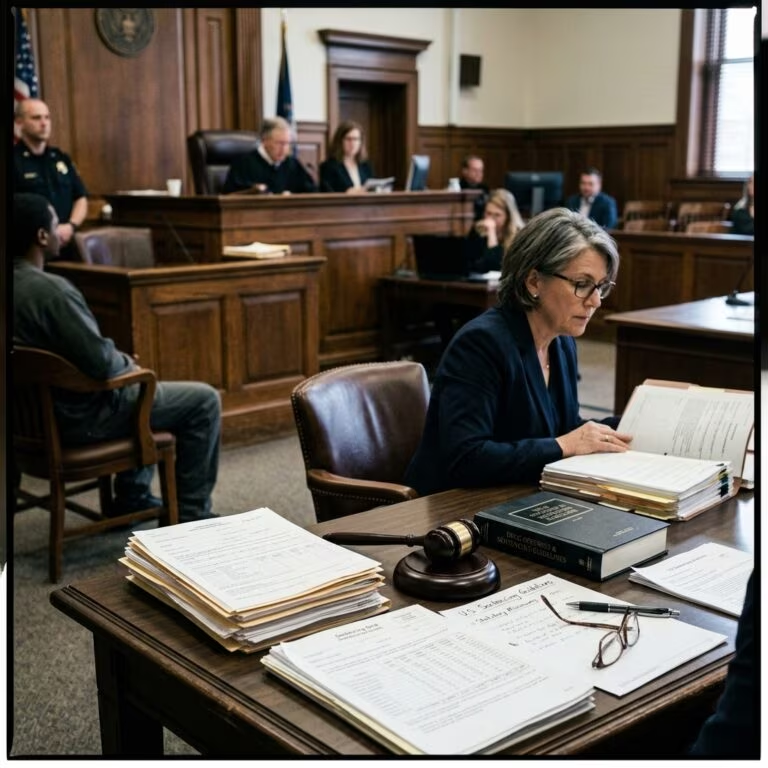
Virginia treats assault and assault and battery as serious crimes that can lead to jail time, fines, and a permanent criminal record. Even a situation that did not result in physical injury can still qualify as a criminal offense if it created a reasonable fear of harm in another person. This guide explains how Virginia law defines these offenses, the different levels of charges, and the potential consequences of a conviction.
Core Legal Definitions in Virginia
Virginia does not define assault and battery in a single detailed statute. Instead, courts have developed definitions over time through case law, and the main statute, Va. Code § 18.2-57, specifies the penalties. Understanding the difference between assault and battery is critical.
What is Assault?
In Virginia, assault is generally understood as either:
- An attempt to cause bodily harm to another person, with a present ability to carry out that harm; or
- An overt act intended to place someone in reasonable fear of imminent bodily harm, which actually causes such fear.
Importantly, assault does not require physical contact. A threatening gesture, attempted punch, or lunging at someone in a way that makes them reasonably believe they are about to be harmed may be enough for an assault charge.
What is Battery?
Battery in Virginia refers to the unlawful touching of another person in a rude, angry, or vengeful way. The contact itself can be minor; it does not need to cause visible injury.
Examples of actions that may constitute battery include:
- Slapping, punching, or kicking another person
- Pushing or shoving someone in anger
- Throwing an object that hits another person
- Offensive touching, even without injury, done intentionally and unlawfully
When both the threat (assault) and the offensive contact (battery) occur, the crime is often referred to as assault and battery. In most criminal cases, Virginia prosecutes both together under the same statute.
Simple Assault and Assault & Battery: Basic Offenses
The most common form of this crime in Virginia is called simple assault or simple assault and battery. These basic offenses are covered by Va. Code § 18.2-57(A) and are usually charged as a Class 1 misdemeanor.
Elements of Simple Assault / Assault & Battery
To secure a conviction for simple assault or assault and battery, the prosecution must generally prove several elements beyond a reasonable doubt, including that:
- The defendant committed an intentional act (not an accident or mere negligence).
- The act either attempted to cause bodily harm, caused reasonable fear of imminent harm, or involved unlawful physical contact.
- The alleged victim’s fear was reasonable under the circumstances (for assault situations).
- Any contact was offensive or unlawful (for battery situations).
Penalties for Simple Assault / Assault & Battery
Under Virginia law, a Class 1 misdemeanor is the most serious misdemeanor level. For simple assault or assault and battery as a Class 1 misdemeanor, potential penalties include:
- Up to 12 months in jail
- Up to a $2,500 fine
- Possible restitution to the victim for medical bills or other losses
- A permanent criminal record if convicted
| Offense Type | Classification | Maximum Jail | Maximum Fine |
|---|---|---|---|
| Simple assault | Class 1 misdemeanor | 12 months | $2,500 |
| Assault and battery | Class 1 misdemeanor | 12 months | $2,500 |
Domestic Assault and Battery (Family or Household Members)
Virginia creates a separate offense when the alleged victim is a family or household member. This is governed by Va. Code § 18.2-57.2. It is sometimes referred to as domestic assault or family abuse.
Who Counts as a Family or Household Member?
Virginia law includes a broad range of relationships within the term “family or household member,” such as:
- Current or former spouses
- People who share a child together, regardless of marriage
- Parents, children, and certain other relatives living in the same household
- Some individuals who have lived together in the past
Criminal Consequences of Domestic Assault
A first offense of assault and battery against a family or household member is a Class 1 misdemeanor, with the same general sentencing range as other simple assault and battery cases. However, repeat offenses can carry enhanced penalties, including the possibility of a felony charge after certain prior convictions.
Domestic assault cases also often involve additional consequences, such as:
- Emergency or permanent protective orders
- Restrictions on firearm possession under federal and state law
- Impacts on child custody and visitation rights
Enhanced Penalties for Protected Victims and Bias-Motivated Crimes
Virginia law increases penalties when an assault or assault and battery targets certain categories of victims or is motivated by bias against protected characteristics.
Hate Crime Enhancements (Bias-Motivated Assault)
Under Va. Code § 18.2-57(A)–(B), if a person intentionally selects the victim based on protected traits such as race, religious conviction, gender, disability, gender identity, sexual orientation, color, or national origin, additional penalties apply.
- If the offense is a simple assault or assault and battery against a person chosen because of a protected characteristic, it remains a Class 1 misdemeanor, but the sentence must include at least six months in jail (with a minimum mandatory portion specified by statute).
- If the assault and battery results in bodily injury and is motivated by the same bias, the offense is elevated to a Class 6 felony, with a mandatory minimum of six months in jail and up to five years in prison.
Assault and Battery Against Certain Public Servants
Virginia law also provides specific protections for some categories of public servants, including law enforcement officers and certain other professionals. When a defendant knows or has reason to know the person is in a protected role and acting within the scope of their duties, enhanced penalties may apply.
Examples of protected roles include:
- Law enforcement officers
- Teachers and school staff (such as principals and guidance counselors) while performing their duties
- Certain emergency health care providers working in emergency settings
For some of these victims, the law imposes mandatory minimum jail terms if the defendant is convicted, even when the offense remains a misdemeanor.
Felony-Level Assault and Battery Offenses
Although many assault and battery cases are charged as misdemeanors, certain circumstances raise the offense to a felony. In addition to bias-motivated assaults causing injury, Virginia law recognizes several other situations that can lead to felony charges.
Class 6 Felony for Bias-Motivated Assault with Injury
As noted above, when an assault and battery causes bodily injury and the victim is intentionally selected because of a protected characteristic, the offense becomes a Class 6 felony. The potential punishment for a Class 6 felony is:
- Mandatory minimum of six months in jail
- Up to 5 years in prison
- Potential fines and restitution
Other Serious Assault-Related Felonies
Beyond § 18.2-57, other Virginia statutes cover more serious assaultive behavior, such as malicious wounding or aggravated malicious wounding, which involve intent to maim, disfigure, disable, or kill and cause significant bodily injury. These offenses carry much higher penalties, including substantial prison terms.
| Type of Offense | Typical Classification | Example Circumstances | Maximum Penalty |
|---|---|---|---|
| Simple assault / assault & battery | Class 1 misdemeanor | Threat or offensive contact without special victim or bias | 12 months in jail and $2,500 fine |
| Bias-motivated assault & battery with injury | Class 6 felony | Victim chosen because of race, religion, etc., and suffers bodily injury | 5 years in prison and fines |
| More serious bodily wounding offenses | Felony (varies) | Intent to maim, disfigure, disable, or kill, and serious injury | Substantial prison terms under separate statutes |
What the Commonwealth Must Prove
In any criminal case, including assault and battery, the Commonwealth’s Attorney must prove each element of the charge beyond a reasonable doubt. Failing to prove even one essential element should result in an acquittal.
Key Elements in Dispute
Some of the most commonly contested issues in Virginia assault and battery cases include:
- Intent: Whether the defendant acted deliberately rather than accidentally.
- Overt act: Whether the defendant’s behavior was sufficiently threatening or demonstrative to support an assault charge.
- Reasonable fear: Whether a reasonable person in the victim’s position would have feared imminent harm.
- Nature of contact: Whether any touching was truly unlawful or offensive.
- Identity of the aggressor: Especially in mutual altercations or bar fights.
Common Defenses to Assault and Battery Charges
The best defense strategy depends on the facts of the specific case, but several recurring legal defenses appear in Virginia assault and battery prosecutions.
Lack of Intent or Accident
Because assault and battery generally require an intentional act, showing that any contact or threatening movement was accidental can be a powerful defense. For example, being jostled in a crowded space or accidentally bumping into someone usually does not meet the standard for criminal battery.
Self-Defense or Defense of Others
Virginia recognizes the right to use reasonable force to defend oneself or another person against an imminent unlawful attack. Key considerations often include:
- Who initiated the confrontation
- Whether the defendant reasonably believed they were in imminent danger
- Whether the level of force used was proportional to the perceived threat
If a defendant used only the force necessary to ward off an attack, self-defense may justify conduct that would otherwise constitute assault or battery.
Consent and Mutual Combat
In some situations, particularly where both parties voluntarily engage in a fight, questions can arise about consent or “mutual combat.” Although consent does not automatically excuse unlawful conduct, the nature of the encounter can affect how the case is charged and prosecuted and can influence defenses and sentencing outcomes.
Mistaken Identity or False Accusations
Assault and battery charges sometimes rest heavily on eyewitness testimony, which can be mistaken or incomplete. Evidence such as surveillance video, additional witnesses, or digital communications may help establish what actually occurred and who was responsible.
Practical Consequences of an Assault or Battery Conviction
Beyond jail and fines, an assault or assault and battery conviction in Virginia can have long-lasting consequences.
Criminal Record and Employment
A conviction will appear on a person’s criminal record and can affect employment, professional licensing, housing, immigration status, and educational opportunities. Many employers consider a history of violence or threatening behavior to be especially serious.
Protective Orders and No-Contact Terms
Especially in domestic cases, courts may issue protective orders that limit or prohibit contact with the alleged victim. Violating a protective order is a separate crime and can result in additional penalties.
Restitution and Civil Liability
In addition to criminal penalties, courts can order defendants to pay restitution to compensate victims for medical bills or other direct losses. Victims may also pursue separate civil lawsuits seeking money damages for injuries, emotional distress, or lost wages.
Frequently Asked Questions About Virginia Assault and Battery
Is it assault in Virginia if no one was actually touched?
Yes. In Virginia, assault can be based solely on a threat or attempt to cause harm that makes another person reasonably fear imminent injury, even if no physical contact occurs.
What is the difference between assault and assault and battery?
Assault generally refers to the attempt or threat to cause bodily harm or to place someone in reasonable fear of imminent harm, while assault and battery includes the additional element of unlawful physical contact. Many criminal charges in Virginia combine them under the label “assault and battery.”
Can a verbal argument alone be considered assault?
Words alone are usually not sufficient for an assault charge. However, when threatening words are accompanied by an overt act and a present ability to carry out the threat, they may amount to assault if they create a reasonable fear of imminent harm.
What happens if the alleged victim wants to drop the charges?
In Virginia, the decision to proceed with a criminal prosecution belongs to the Commonwealth’s Attorney, not the complaining witness. Even if the alleged victim asks to drop the case, the prosecutor can choose to continue if they believe the evidence supports a conviction.
Is domestic assault treated differently from other assaults?
Yes. Assault and battery against a family or household member is a separate offense under Va. Code § 18.2-57.2 and can involve unique procedures, protective orders, and enhanced penalties for repeat offenses.
Should someone charged with assault or battery talk to police without a lawyer?
Because statements to law enforcement can be used in court, many defense lawyers advise that anyone facing investigation or charges consult an attorney before answering questions. This helps ensure that the person understands their rights and the potential consequences of any statements.
References
- § 18.2-57. Assault and battery; penalty — Code of Virginia, Virginia General Assembly. 2024-01-01. https://law.lis.virginia.gov/vacode/title18.2/chapter4/section18.2-57/
- Code of Virginia, Title 18.2, Chapter 4, Article 4: Assaults and Bodily Woundings — Virginia General Assembly. 2024-01-01. https://law.lis.virginia.gov/vacodefull/title18.2/chapter4/article4/
- 18.2-57.2. Assault and battery against a family or household member — Virginia General Assembly; WomensLaw.org summary. 2023-05-01. https://www.womenslaw.org/laws/va/statutes/18-2-57-2-assault-and-battery-against-family-or-household-member
- Virginia Assault & Battery Laws & Penalties — Medvin Law PLC. 2023-07-01. https://medvinlaw.com/virginia-assault-and-battery-laws-penalties-criminal-defense-attorney/
- Assault and Battery Virginia: What the Commonwealth Must Prove — Phoenix Criminal Trial Group. 2022-11-01. https://www.phoenixtrialfirm.com/blog/assault-and-battery-virginia-what-the-commonwealth-must-prove/
- Simple Assault and Assault and Battery | Va. Code § 18.2-57 — The Wilson Law Firm. 2022-08-15. https://www.tkevinwilsonlawyer.com/library/virginia-simple-assault-and-assault-and-battery-va-code-18-2-57.cfm
- Assault Charges in Virginia — Williams & Stone, PC. 2023-03-10. https://williamsstonelaw.com/criminal-defense/assault-charges/