
Understanding Vehicle Collision Fault and Legal Responsibility
Navigate liability questions after a crash with essential legal guidance and expert insights.
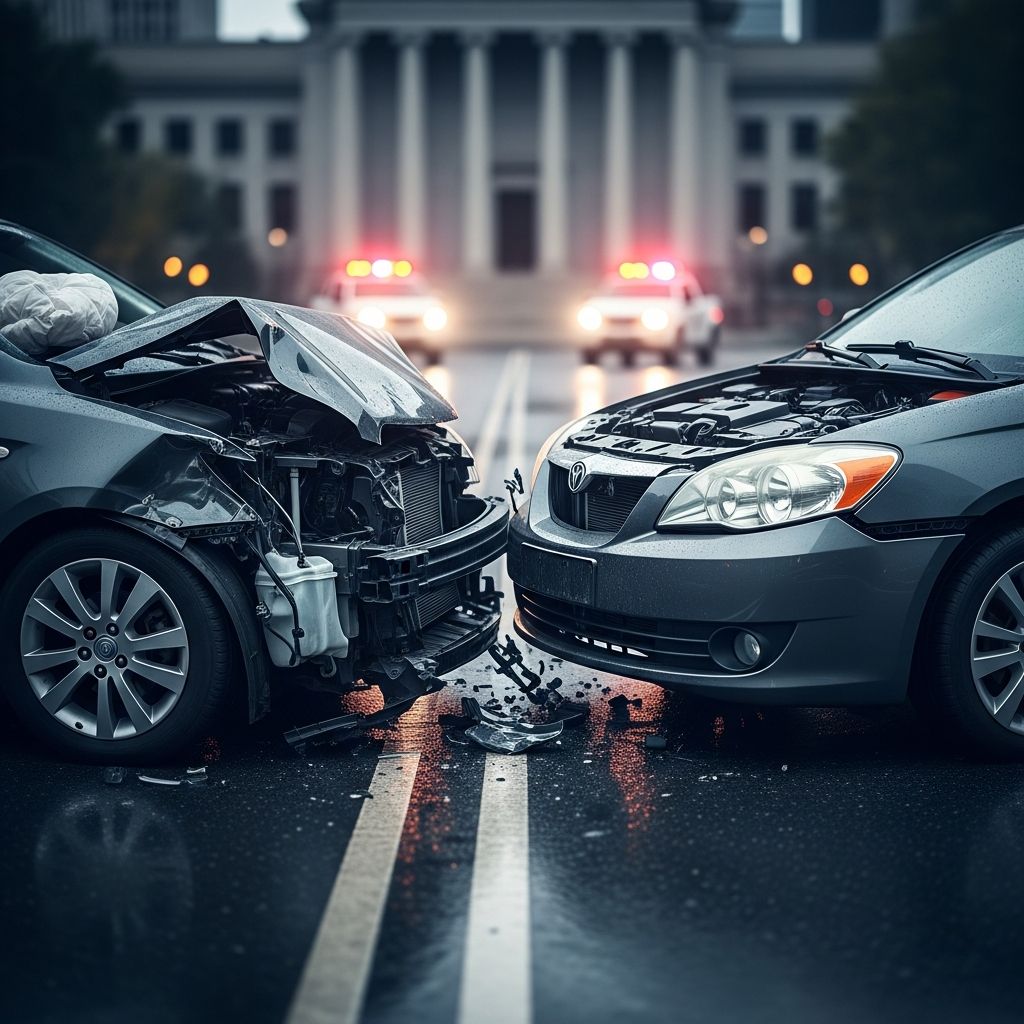
Understanding Liability Following a Traffic Collision
When a vehicle collision occurs, one of the most pressing concerns for involved parties is understanding who bears legal responsibility for the incident. Liability—the legal obligation to compensate for damages—forms the foundation of insurance claims and potential lawsuits. Determining liability requires careful examination of the circumstances surrounding the crash, applicable traffic laws, and evidence from the scene. This process can be straightforward in some cases but remarkably complex in others, particularly when multiple contributing factors exist or when liability appears shared between parties.
The concept of liability extends beyond simple blame assignment. It encompasses the legal duty one party owed to another, the breach of that duty, and the resulting damages. In traffic collisions, drivers have a fundamental duty to operate vehicles safely and obey traffic regulations. When a driver fails to meet this duty—by running a red light, exceeding speed limits, or driving under the influence—they may be found liable for resulting injuries and property damage.
How Fault Gets Determined After a Crash
Several mechanisms work together to establish fault in vehicle accidents. Initially, responding police officers document the scene and may issue citations if they observe traffic violations. These police reports serve as important but not conclusive evidence. Insurance adjusters investigate the incident by reviewing police documentation, interviewing involved parties and witnesses, examining vehicle damage patterns, and collecting available surveillance footage.
The physical evidence at the crash scene often tells a compelling story. The location and extent of vehicle damage can indicate which vehicle struck which, vehicle speeds at impact, and the sequence of events. Skid marks on pavement suggest braking distance and vehicle trajectory. Witness statements provide additional perspective, though they require careful evaluation for accuracy and bias. In complex situations, accident reconstruction specialists may be hired to analyze the physics of the collision and determine how the impact occurred.
Traffic laws play a crucial role in fault determination. If one driver violated a traffic statute that directly contributed to the accident, that violation typically establishes liability. However, some jurisdictions recognize comparative fault, allowing liability to be apportioned based on each party’s degree of responsibility. Understanding your jurisdiction’s specific rules regarding fault allocation is essential.
Establishing Your Own Role in the Incident
Beyond external determination of fault, it’s critical to carefully assess your own actions leading up to and during the collision. Were you operating within posted speed limits? Were you focused on the road or distracted? Did you have adequate visibility? Were there vehicle maintenance issues that could have contributed?
Honest self-assessment serves multiple purposes. It helps you communicate accurately with insurance representatives and legal counsel, ensuring they understand the full context. It also prepares you for potential challenges to your claim. If you bear some responsibility for the accident, this needs to be addressed proactively rather than discovered later during investigation.
Documentation of conditions at the time of impact strengthens your account. Weather conditions, traffic congestion, lighting circumstances, and road surface conditions all contribute to accident causation. Photographs taken at the scene—showing vehicle positions, traffic signals, road markings, and environmental factors—create a visual record that supports your recollection.
Insurance Companies and Their Investigation Process
Insurance adjusters function as investigators for their companies, tasked with determining liability and assessing claim validity. They examine police reports, interview all parties involved, collect witness statements, review medical records, and analyze vehicle damage. This investigation protects the insurance company’s financial interests while theoretically establishing whether the claim is valid.
When communicating with insurance adjusters, remember that their primary loyalty is to their employer, not to you. While they may seem personable and helpful, every statement you make becomes part of the record and may be used to minimize your claim. Providing basic information—names, policy numbers, vehicle details—is necessary and appropriate. However, detailed explanations of how the accident occurred should be reserved for your attorney, if one has been retained.
Insurance companies also investigate the other party’s claim against you. They may contact you seeking detailed information about your perspective. Before providing extensive statements, consult with a personal injury attorney. Early legal representation can prevent inadvertent statements that undermine your position.
Third-Party Liability and Complex Scenarios
Not all accident liability rests solely with the vehicle operators. Third parties—including vehicle manufacturers, government entities responsible for road maintenance, and property owners—may bear partial or complete responsibility in certain circumstances.
If vehicle failure contributed to the accident, such as sudden brake failure unrelated to driver negligence, the manufacturer might bear liability through a product liability claim. Similarly, a government agency could be liable if negligent road maintenance, such as failure to fill a hazardous pothole or inadequate signage at a dangerous intersection, contributed to the collision. Property owners might face liability if accident-causing obstacles existed on their property.
Identifying potential third-party defendants requires thorough investigation and often specialized expertise. An attorney experienced in personal injury law can recognize these liability sources and pursue claims appropriately.
The Impact of Traffic Violations on Liability
Traffic citations issued at the accident scene serve as significant evidence in fault determination. A ticket for running a red light, improper lane change, or failure to yield creates a strong presumption of liability. However, citations alone don’t determine liability—they simply establish that a traffic violation occurred.
In some jurisdictions, a traffic violation constitutes negligence per se, meaning violation of a traffic statute automatically establishes negligence. In others, the violation is merely evidence of negligence, which can be rebutted by other evidence. Understanding your jurisdiction’s legal framework is important for evaluating claim strength.
Conversely, the absence of a citation doesn’t establish freedom from responsibility. Police officers cannot observe every contributing factor or may not identify all violations. Thorough investigation may reveal liability despite no citation being issued.
No-Fault Insurance Systems and Liability Questions
Some states operate under no-fault or personal injury protection (PIP) insurance systems. In these jurisdictions, your own insurance covers medical expenses and lost wages regardless of fault, up to policy limits. This system streamlines initial medical payment but doesn’t eliminate liability questions entirely.
Even in no-fault states, serious injuries may permit claims against the at-fault driver. If injuries meet specific thresholds—defined by statute as either a monetary threshold or specific injury types—the injured party can pursue a negligence claim. Understanding whether your injuries qualify under your state’s threshold is essential for determining available remedies.
No-fault systems exist in selected states including Michigan, Florida, New York, and Pennsylvania. Residents of these states should familiarize themselves with their specific statutory requirements for pursuing liability claims.
Evidence Collection That Strengthens Your Position
Immediately following a collision, gathering evidence becomes crucial. Photograph the accident scene from multiple angles, including vehicle positions, damage patterns, traffic signals, road markings, and environmental conditions. Capture images of license plates, VIN numbers, and insurance information from the other vehicle. These photographs create a contemporaneous record that memory alone cannot provide.
Exchange complete information with the other driver: full name, address, phone number, driver’s license number, license plate, vehicle identification number, insurance company and policy number. Obtain contact information from all witnesses. Secure a copy of the police report by filing a public records request if necessary. Preserve any surveillance footage from nearby businesses or traffic cameras by promptly requesting retention.
Medical documentation establishes the connection between the accident and your injuries. Seek medical evaluation even if injuries seem minor, as some injuries develop or intensify over time. Detailed medical records create a clear record of injury causation and severity, essential for any liability claim.
When Multiple Parties Share Responsibility
Comparative fault jurisdictions recognize that accidents often result from multiple contributing factors. A driver who was speeding might bear 60% responsibility while another driver who failed to yield bears 40%. Compensation is then reduced by the injured party’s percentage of fault.
These apportionments require careful analysis of all contributing conduct. An attorney experienced in comparative fault cases can present evidence highlighting the other party’s negligence while appropriately acknowledging any limitations in your own conduct. This balanced approach often proves more credible and persuasive than attempting to deny any fault whatsoever.
Understanding Comparative vs. Contributory Negligence
Jurisdictional variations significantly impact liability and compensation. Pure comparative fault states allow recovery even if the plaintiff bears significant responsibility, though compensation is reduced proportionally. Modified comparative fault states limit recovery to situations where the plaintiff bears no more than 50% or 51% of responsibility, depending on the specific statute.
Contributory negligence, followed by only a few remaining jurisdictions, eliminates recovery entirely if the plaintiff bears any responsibility whatsoever. Understanding which rule applies in your jurisdiction is fundamental to evaluating claim viability and potential outcomes.
Settlement Negotiations and Liability Assessment
Insurance companies base settlement offers on their assessment of liability. When they believe liability is clear against the other party, they offer more generous settlements. When liability appears disputed or shared, settlement values decrease. Your understanding of the accident and its contributing factors informs negotiation strategy.
Settlement discussions require balancing the strength of your liability position against the costs and uncertainties of litigation. Even a strong liability case carries litigation risks, including jury unpredictability, expense, and delay. An experienced personal injury attorney can advise whether a settlement offer appropriately reflects your claim’s value or whether pursuing litigation makes strategic sense.
The Role of Legal Representation
Personal injury attorneys bring specialized expertise to liability analysis and claim development. They understand jurisdictional legal nuances, recognize evidence that strengthens your position, identify third-party defendants, and negotiate effectively with insurance companies. Early attorney involvement, ideally before providing detailed statements to insurance adjusters, protects your interests and optimizes outcomes.
Many personal injury attorneys work on contingency, meaning they recover fees only if you receive compensation. This arrangement aligns attorney and client interests and removes financial barriers to legal representation for injured individuals.
Frequently Asked Questions About Accident Liability
Q: Can I be held liable for an accident if I wasn’t cited by police?
A: Yes. Police citations provide evidence of liability but don’t determine it conclusively. Insurance adjusters and courts evaluate all available evidence, including witness statements, physical evidence, and traffic laws, regardless of whether a citation was issued. A thorough investigation may establish liability despite no traffic citation.
Q: What happens if both drivers claim the other caused the accident?
A: Insurance companies investigate competing claims by examining physical evidence, witness accounts, police reports, and traffic law violations. Evidence analysis typically reveals inconsistencies in one account or supports one party’s version more than the other. In genuinely ambiguous situations, comparative fault rules may apply, allocating responsibility proportionally.
Q: Does my insurance have to cover damages even if I’m found at fault?
A: Liability insurance coverage applies when you’re found liable for damaging another person’s property or causing their injuries. Coverage typically applies regardless of fault determination, up to policy limits. However, your insurer may dispute coverage if policy exclusions apply or if you misrepresented information when obtaining insurance.
Q: How long does a liability investigation typically take?
A: Simple cases with clear liability may be resolved within weeks. Complex accidents involving multiple parties, serious injuries, or disputed facts may require months of investigation. Insurance companies have specific timeframes to respond to claims, typically ranging from 15 to 45 days depending on jurisdiction.
Q: Can surveillance footage from nearby businesses help establish liability?
A: Absolutely. Video documentation showing the accident sequence, vehicle movements, and traffic signal status provides objective evidence that can definitively establish or clarify liability. Promptly requesting retention of surveillance footage before it’s automatically deleted significantly improves your claim.
References
- 7 Mistakes That Ruin Your Car Accident Claim — Herrman & Herrman. https://www.herrmanandherrman.com/blog/7-mistakes-ruin-claim/
- Answering Your Top Car Accident Questions — Mickey Keenan, P.A. https://mickeykeenan.com/answering-your-top-car-accident-questions/
- Car Accident Questions: The Top 10 Answered — Tario Law. https://www.tariolawmtvernon.com/10-car-accident-questions/
- Top 10 Commonly Asked Personal Injury Case Questions — Van Law Firm. https://vanlawfirm.com/blog/top-10-commonly-asked-personal-injury-case-questions/
- Top 7 Car Accident Questions Answered — Helping Hand Inc. https://helpinghandinc.com/blog/top-7-car-accident-questions-answered
- 7 Common Car Accident Questions — Zirkin & Schmerling Law Firm. https://www.zirkinandschmerlinglaw.com/blog/top-7-car-accident-questions/
Similar Articles








Read full bio of medha deb




