
Vehicle Black Boxes: Courtroom Evidence in Crashes
Unlocking the truth in car accidents: How black box data reveals speed, braking, and fault to shape legal outcomes.
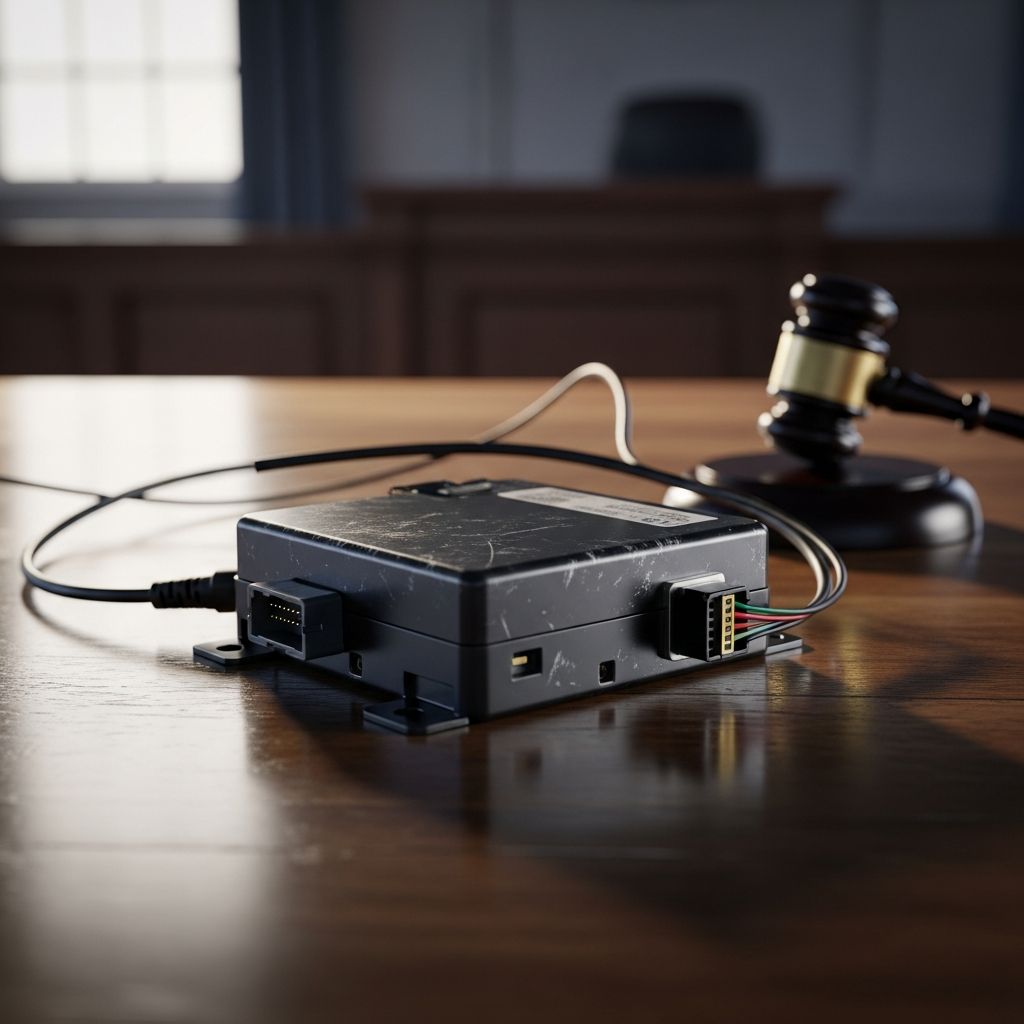
Modern vehicles equipped with event data recorders (EDRs), commonly known as black boxes, capture vital information during collisions that can decisively influence legal proceedings. These devices store objective data on speed, braking, and other factors, often tipping the scales in disputes over fault.
Understanding Event Data Recorders in Today’s Cars
Event data recorders have become standard in vehicles manufactured after 2013, triggered by events like airbag deployment to preserve a snapshot of the moments leading to a crash. Unlike subjective eyewitness accounts, EDRs offer precise, tamper-proof records that reconstruct vehicle behavior objectively.
These systems monitor dozens of parameters, providing investigators with a digital timeline. Federal regulations under 49 CFR Part 563 standardize certain EDR functions, ensuring consistency across manufacturers while allowing variations in recorded metrics.
Critical Data Captured by Automotive Black Boxes
EDRs typically record information from 5 to 10 seconds pre-impact, focusing on dynamics that reveal driver actions and vehicle state. Key metrics include:
- Speed: Velocity before and at the point of collision, debunking claims of prudent driving.
- Braking and Acceleration: Whether brakes were applied, throttle position, and sudden changes indicating evasive maneuvers or recklessness.
- Steering Inputs: Wheel angle and stability control activation, showing lane changes or swerves.
- Safety Systems: Seatbelt usage, airbag deployment timing, and impact force/direction.
- Environmental Factors: Headlight status, vehicle tilt, and multi-event sequencing in chain reactions.
This data proves invaluable in scenarios like rear-end collisions or intersections, where parties dispute signals, speeds, or attentiveness. For instance, failure to brake recorded by an EDR can directly contradict a driver’s testimony.
Legal Admissibility of Black Box Evidence Nationwide
Courts across states like New York, Oregon, New Jersey, and Georgia routinely admit EDR data as evidence, provided it meets foundational requirements. Judges demand proof of device reliability, proper extraction by certified experts, and an intact chain of custody to prevent tampering claims.
In New York, black box records have been upheld in personal injury suits, with experts authenticating downloads to sway juries toward objective facts over biased recollections. Oregon courts emphasize standardized protocols, mirroring federal guidelines for credibility. Similarly, New Jersey’s N.J.S.A. 39:10B-8 governs access, reinforcing admissibility when legally obtained.
| State | Key Admissibility Rule | Example Use Case |
|---|---|---|
| New York | Owner consent or warrant required; expert authentication mandatory. | Proving speeding in disputed liability crashes. |
| Oregon | Chain of custody and professional download confirmed. | Reconstructing braking failures. |
| New Jersey | Court order or consent per statute; privacy protections apply. | Refuting seatbelt non-use claims. |
| Georgia | Federal standards (49 CFR 563) guide reliability tests. | Analyzing throttle in acceleration disputes. |
Challenges arise if opponents question context, such as road conditions not captured by the EDR, but robust expert testimony often overcomes these hurdles.
Accessing Data: Ownership, Privacy, and Protocols
Black box data belongs to the vehicle owner, restricting access without permission, subpoena, or court order. Insurers or police may seek it via warrant, while civil litigants use discovery processes. Privacy laws, like New Jersey’s, limit uses to legal or safety research, protecting against unwarranted surveillance.
Victims must act swiftly: EDRs overwrite data after 30 days or upon new events, and repairs can erase records. Attorneys notify parties via preservation letters or temporary restraining orders to secure vehicles at tow yards or shops.
- Owner’s vehicle: Direct consent enables immediate download.
- Opposing vehicle: Subpoena or joint inspection with experts preserves chain of custody.
Strategic Advantages for Plaintiffs in Injury Claims
In personal injury litigation, EDRs shift narratives from ‘he said, she said’ to verifiable proof. They establish negligence—e.g., excessive speed or no braking—bolstering demands for medical bills, lost wages, and pain compensation.
Accident reconstructionists pair EDR outputs with scene analysis, creating 3D simulations for settlements or trials. This multi-source approach counters defenses, as seen in cases refuting phantom braking excuses.
For severe injuries or fatalities, data on impact severity supports damage claims, while seatbelt disputes resolve via recorded status.
Preservation Tactics to Safeguard Crucial Evidence
Post-crash, immediate legal intervention prevents data loss. Experienced counsel:
- Issues spoliation notices to insurers, repair shops, and towers.
- Secures court orders halting vehicle alterations.
- Hires certified technicians for proprietary downloads, often vehicle-specific.
Defendants sometimes preemptively extract data; countering requires documented protocols ensuring joint access and neutrality. Costly equipment underscores the need for specialized firms.
Limitations and Defense Counterarguments
While powerful, EDRs have bounds: they ignore external factors like weather or visibility, record briefly, and vary by model. Defenses may highlight incomplete context or extraction errors, necessitating comprehensive corroboration with photos, telematics, or witnesses.
Not all vehicles have EDRs—older models or some imports lack them—limiting utility in mixed-fleet crashes.
Frequently Asked Questions About Black Box Data
Do all cars have black boxes?
Most U.S. vehicles post-2013 mandate EDRs per federal rules, but capabilities differ by manufacturer.
Can insurance companies access my black box without permission?
No, owner consent or legal process is required; unauthorized access violates property rights.
How soon must black box data be retrieved?
Ideally immediately, as overwriting occurs within 30 days or next trigger event.
Is black box data always accurate in court?
Yes, when properly authenticated with chain of custody and expert validation.
What if the at-fault driver’s car lacks an EDR?
Your vehicle’s data, witnesses, or scene evidence can still build the case.
Partnering with Legal Experts for Optimal Results
Navigating EDR complexities demands attorneys versed in digital forensics and state nuances. They orchestrate preservation, extraction, and presentation, maximizing compensation while mitigating risks. In contested claims, this expertise turns raw data into compelling narratives for juries and adjusters.
Crash victims benefit from prompt consultation: black boxes not only prove fault but quantify crash forces, validating long-term injury impacts.
References
- Can Black Box Data Be Used as Evidence in a NY Accident Case? — James Newman Law. 2023. https://www.jamesnewmanlaw.com/blog/what-should-i-know-about-black-box-data/
- How Car Black Box Data Can Prove Fault in a Car Accident — Pacific Cascade Legal. 2024. https://www.pacificcascadelegal.com/blog/how-car-black-box-data-can-prove-fault-in-a-car-accident/
- The Role of Black Box Data in Forest Hills Car Accidents — Tucker Lawyers. 2023. https://www.tuckerlawyers.com/blog/black-box-data-forest-hills-accident/
- How to Use Black Box Data in Auto Accidents — Atlanta Injury Lawyer. 2024. https://www.atlantainjurylawyer.com/practice-areas/serious-personal-injury/auto-accidents/how-to-use-black-box-data-in-auto-accidents/
- “Black Box” Evidence After a NJ Crash — Rudnick Law. 2023. https://www.rudnicklaw.com/blog/black-box-evidence-after-a-nj-crash-what-event-data-recorders-can-prove/
- How a Car’s Black Box Data Can Impact Your Personal Injury Case — CT Law SC. 2024. https://www.ctlawsc.com/how-a-cars-black-box-data-can-impact-your-personal-injury-case/
- Black Box Data — Dysart Law Firm. 2023. https://dysart-law.com/the-importance-of-preserving-evidence-2/black-box-data/
Similar Articles








Read full bio of Sneha Tete




