Vaping Legality in 2026: State-by-State Guide
Navigate the complex landscape of vaping regulations across U.S. states in 2026, from flavor bans to product registries.
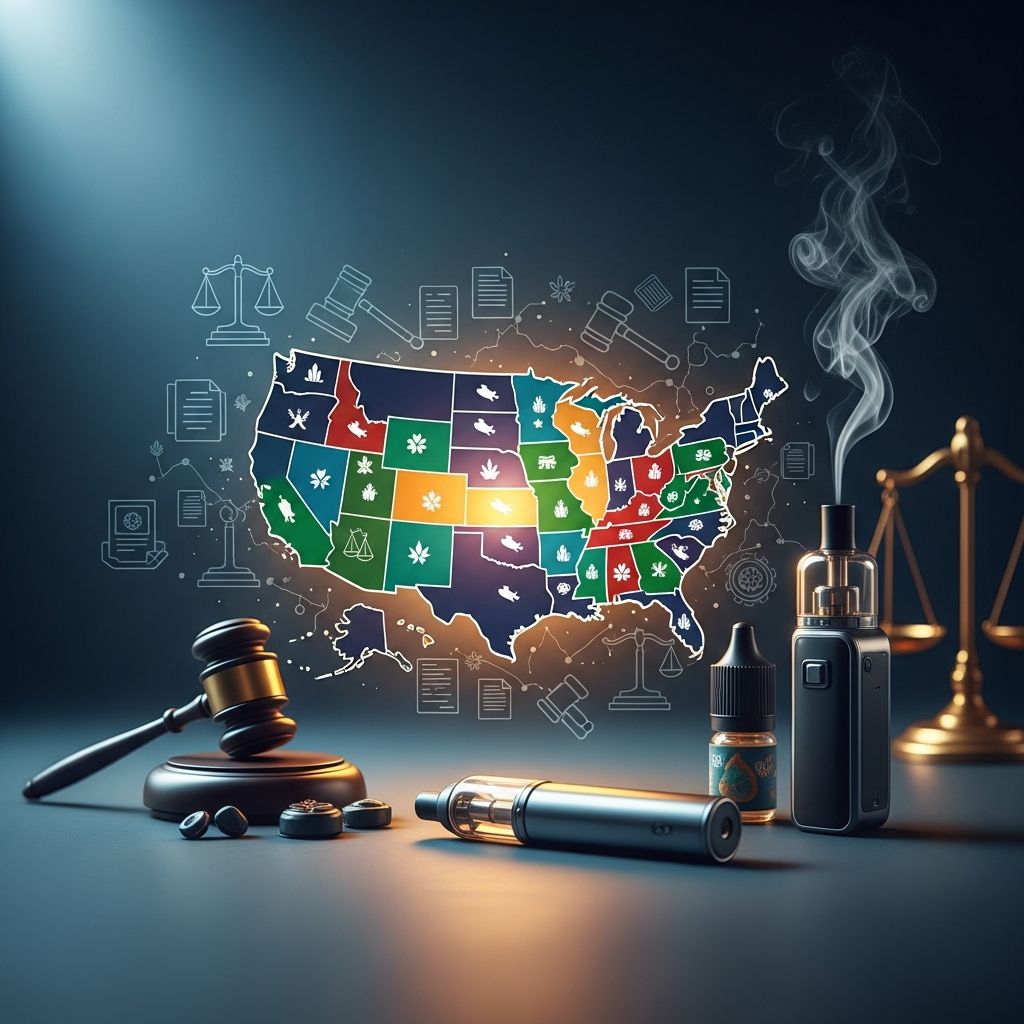
The landscape of vaping regulations in the United States has evolved dramatically by 2026, driven by concerns over youth access, public health, and product safety. Federal oversight from the FDA sets a baseline, but states have introduced stringent measures like flavor prohibitions, mandatory product registries, and bans on disposables. This guide breaks down the key rules, helping consumers and businesses understand what remains permissible.
Federal Foundation: FDA’s Role in Vaping Oversight
At the federal level, the Food and Drug Administration (FDA) maintains strict control over electronic nicotine delivery systems (ENDS). Only products with marketing authorization can be legally marketed and sold nationwide. As of late 2025, the FDA has authorized just 39 e-cigarettes, primarily tobacco-flavored options from major manufacturers. These approvals stem from Premarket Tobacco Product Applications (PMTAs) submitted by the September 2020 deadline, with many still under review or subject to court stays following denials.
Unauthorized products face marketing denial orders, import alerts, and warning letters. Retailers risk seizures and fines for stocking non-compliant items. This federal framework influences state laws, as many now require FDA authorization or pending PMTA status for legal sales.
California’s Pioneering Restrictions: Unflavored Lists and Disposable Bans
California leads with some of the nation’s toughest vaping rules. Starting January 1, 2026, retailers may only sell products listed on the state’s Unflavored Tobacco List, managed by the Department of Justice. Despite the name, this applies to tobacco-flavored vapes and nicotine pouches; flavors like fruit, mint, menthol, desserts, or even non-menthol ‘coolant’ additives are banned under a 2020 law expanded in 2024[10].
Manufacturers must apply by October 9, 2025, paying a $300 fee (or $150 for renewals), and prove FDA authorization or a timely PMTA submission. Online sales of flavored products into the state are also prohibited. Additionally, AB762 bans new or refurbished disposable, battery-embedded vapor products from January 1, 2026, with fines escalating from $500 for first offenses. A 2025 study confirms these measures have reduced e-cigarette and cigarette sales without spillover to neighboring states.
- Key Compliance Steps for CA Retailers: Verify products against the state directory daily; destroy or return non-listed inventory by deadline.
- Consumer Impact: Limited to ~40 FDA-approved tobacco flavors; expect shelf scarcity.
Flavor Bans Sweeping the Nation: States Limiting Choices
Beyond California, numerous states enforce flavor restrictions to curb youth appeal. These typically allow only tobacco and sometimes menthol, aligning with FDA priorities.
| State | Flavor Policy | Effective Date | Exemptions |
|---|---|---|---|
| California | Tobacco-only via state list | Jan 1, 2026 | FDA-authorized/PMTA |
| New York | Bans flavored except tobacco | 2025 | None specified |
| Wisconsin | Flavored ban (tob/menthol allowed) | July 1, 2025 | State-approved directory |
| North Carolina | Bans flavored except tobacco/menthol | 2025 (challenged) | Pending litigation |
These bans extend to synthetic nicotine and analogs, closing loopholes used by some brands. Retailers in non-compliant states face civil penalties up to $10,000 per violation, plus product seizures.
Disposable Vape Crackdowns: Registries and Outright Bans
Disposable vapes, popular for convenience, are prime targets due to youth usage rates. Florida pioneered a ‘Nicotine Dispensing Devices’ registry in 2024, listing unauthorized disposables attractive to minors—effectively all flavored ones, as none have FDA approval. Refillable systems and bottled e-liquids are exempt.
Similar registries operate in Tennessee (effective July 2025 via SB 763) and others, requiring PMTA compliance and imposing 10% wholesale taxes. North Carolina’s House Bill 916 (Oct 1, 2025) limits sales to FDA-authorized ENDS, with flavored licensing. Proposed bans loom in states like Idaho (HB 244), with ‘ban’ and ‘exemption’ lists leading to $5,000 fines and license revocations.
- Tennessee Highlights: ID verification mandatory; U.S.-sourced e-liquid only; unlisted ban Jan 1, 2027.
- Florida Enforcement: AG publishes non-authorized list by Jan 1, 2025; no flavored disposables.
Taxation and Licensing: Economic Tools for Regulation
Twenty-one states plus D.C. tax vaping products as of 2026, using percentage-of-price, per-ml rates, or hybrids to fund prevention programs. Minimum age is uniformly 21 federally, but states like Kentucky propose licensing with $2,000+ fines for minor sales.
Indoor vaping mirrors smoking bans in workplaces, schools, and public spaces, with criminal penalties in some areas. Vending practices face scrutiny, limiting sales to age-verified adults.
Retailer Survival Strategies in a Regulated Market
Compliance is paramount. Businesses should:
- Monitor FDA’s authorized list weekly.
- Subscribe to state health department alerts for registries.
- Implement robust age-verification tech and training.
- Stock open-system refillables, which often evade disposable bans.
- Plan for sell-through periods (e.g., 60 days in some states).
Non-compliance risks escalate: fines, inventory loss, permit revocation. Yet, tobacco-flavored, FDA-compliant options provide a viable niche.
Consumer Guide: Vaping Responsibly and Legally
Adults seeking smoke-free alternatives must verify local laws via state health sites. Prioritize FDA-authorized products; avoid gray-market imports. Open systems offer flavor variety in permissive states, but always check PMTA status.
Health agencies emphasize quitting aids over recreational use, with resources from the CDC and state quitlines.
Frequently Asked Questions
Can I still buy flavored vapes in 2026?
Only in states without bans; most restrict to tobacco flavors. Check FDA authorization.
What happens if I order online from out-of-state?
Shipping flavored products to ban states like California is illegal; expect seizures.
Are refillable vapes exempt from disposable bans?
Often yes, as in Florida and Tennessee, promoting customizable systems.
How many FDA-approved vapes exist?
39 as of December 2025, mostly tobacco.
What are the penalties for retailers selling unauthorized products?
Fines from $500-$10,000+, seizures, license loss varying by state.
References
- California to Enforce Strict Unflavored Tobacco List Starting January 2026 — MiPod. 2025. https://mipod.com/blogs/mipodblog/california-to-enforce-strict-unflavored-tobacco-list-starting-january-2026
- Navigating New Vape Regulations: June 2025 Legal Developments — VapeTM. 2025. https://vapetm.com/blogs/vape-vending-compliance-guide/navigating-new-vape-regulations-june-2025-legal-developments
- California Proposes Ban of Disposable E-Cigarettes — NACS. 2025-02-24. https://www.convenience.org/Media/Daily/2025/February/24/1-California-Proposes-Ban-Disposable-E-Cig_GR
- The Rising Wave of State Bans on Disposable Vapes — Duke UNC TTS. 2025. https://www.dukeunctts.com/post/the-rising-wave-of-state-bans-on-disposable-vapes-what-s-the-actual-impact
- USA: Tobacco Regulation & Legislation — Tobacco Insider. 2025. https://tobaccoinsider.com/usa-tobacco-legislation-regulation/
- Vaporizer and E-Cigarette Laws by State 2026 — World Population Review. 2026. https://worldpopulationreview.com/state-rankings/vaping-laws-by-state
- Bill Text: CA AB762 | 2025-2026 — LegiScan. 2025. https://legiscan.com/CA/text/AB762/id/3193862
Similar Articles





Read full bio of medha deb