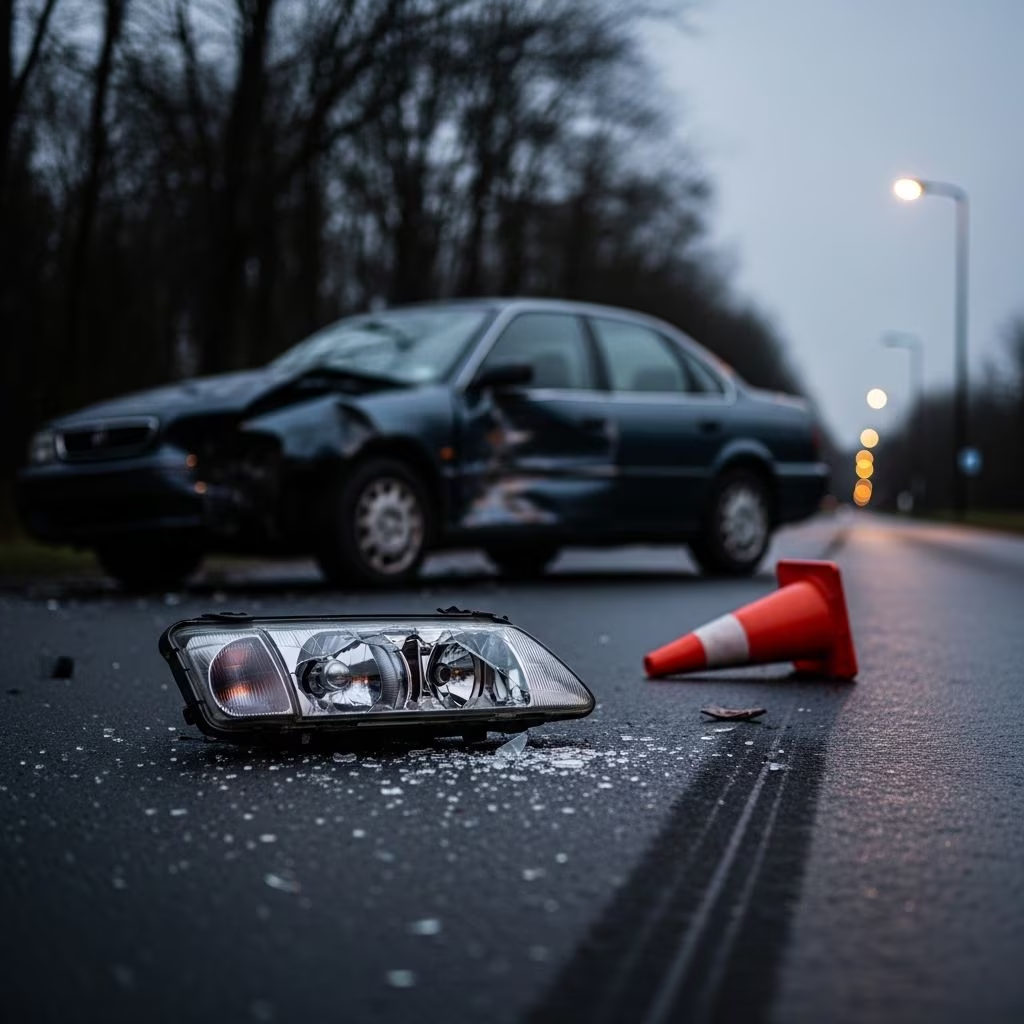
Hit-and-run accidents leave victims facing unique challenges in pursuing justice and financial recovery. Unlike standard collisions where the at-fault driver can be identified and sued directly, these incidents often force reliance on personal insurance policies like uninsured motorist (UM) or underinsured motorist (UIM) coverage. Settlements typically range from $10,000 for minor incidents to over $750,000 in severe or fatal cases, depending on injury extent, policy limits, and state laws.
Core Elements Driving Hit-and-Run Settlement Values
The worth of a hit-and-run claim hinges on several interconnected factors. Understanding these helps victims set realistic expectations and build stronger cases.
- Injury Severity: Minor soft-tissue damage might yield $10,000-$50,000, while fractures, surgeries, or permanent disabilities push values to $200,000+ or millions.
- Medical and Economic Losses: Bills for treatment, therapy, lost wages, and future care needs form the ‘special damages’ baseline, often multiplied for pain and suffering.
- Property Losses: Vehicle repairs or replacement add thousands, directly reimbursed under UM property damage coverage where available.
- Insurance Policy Limits: UM/UIM caps dictate maximum payouts; low limits like Texas’s $30,000 minimum often fall short of actual damages.
- Evidence Quality: Police reports, witness statements, photos, and medical records substantiate claims against skeptical insurers.
In practice, moderate injury cases settle between $50,000-$200,000 if policies allow, but victims with inadequate coverage may recover far less despite equivalent harm.
Real-World Settlement Examples from Hit-and-Run Cases
Actual outcomes illustrate how these factors play out. Law firms report varied results based on client preparation and negotiation.
| Case Description | Injuries/Damages | Settlement Amount | Key Factors |
|---|---|---|---|
| Motorcycle hit-and-run on highway exit | Torn ACL in knee, leg/ankle injuries | $101,000 | $100K UM policy; rejected $25K initial offer |
| Fatal pedestrian strike while placing flares | Wrongful death of tow truck driver | $750,000 | UM coverage stacked; driver later pled guilty |
| Severe Texas hit-and-run with strong UM | Life-altering injuries | $2,000,000 | High policy limits; aggressive negotiation beat lowball offers |
| Typical minor injury claim | Soft tissue, short recovery | $10,000-$25,000 | Standard UM/PIP limits |
These examples show settlements scaling with provable losses. A $101,000 recovery covered medical payments and UM benefits after a motorcyclist was rear-ended and launched into a median—no witnesses, driver fled. In contrast, fatal cases leverage emotional and economic wrongful death damages for higher sums. Texas firms note averages around $250,000 overall but lower for hit-and-runs without robust UM.
Role of Uninsured Motorist Coverage in Recovery
UM/UIM insurance acts as the primary safety net, stepping in when the fleeing driver lacks identifiability or coverage. It reimburses medical bills, wage loss, property damage, and non-economic harms like pain.
State variations matter: Some mandate UM (e.g., higher minimums in certain jurisdictions), others make it optional. Texas allows just $30,000/$60,000 liability minimums, often insufficient, underscoring the need for supplemental UM/UIM—inexpensive yet vital. Experts urge buying maximum affordable limits, as they can transform ‘lowball’ outcomes into life-changing payouts.
Process overview:
- Report to police immediately for official record.
- Notify your insurer promptly, providing all evidence.
- Document ongoing losses meticulously.
- Consult an attorney to counter insurer minimization tactics.
Without UM, victims may receive nothing beyond personal injury protection (PIP), leaving major gaps.
Navigating Legal and Insurance Hurdles
Insurers often undervalue claims, offering fractions of worth (e.g., 1/24th in one case, settled higher via negotiation). Comparative fault rules can reduce awards; if partially at blame (e.g., speeding exacerbating injuries), recovery drops by your percentage in most states.
Texas personal injury verdicts average $826,892, but hit-and-runs settle lower due to no liable party lawsuit—relying instead on policy maxes. Shared fault example: 10% plaintiff blame cuts a $29,500 verdict to $14,250.
Strategies to Maximize Your Hit-and-Run Payout
To avoid undervaluation:
- Gather Comprehensive Evidence: Scene photos, dashcam footage, medical imaging, expert prognoses.
- Treat Fully Before Settling: Premature agreements forfeit future care claims.
- Hire Experienced Counsel: Attorneys secure 3-4x higher averages by negotiating policy stacks and proving full damages.
- Calculate Total Damages: Specials (bills/wages) x multiplier (1.5-5+) for pain, plus property.
- Appeal Low Offers: Insurers expect pushback; persistence pays.
Firms like those cited average $250,000+ by leveraging UM fully and avoiding pitfalls.
State-Specific Considerations and Averages
Values vary by jurisdiction. Texas hit-and-runs trend lower without strong UM, contrasting national ranges up to millions for catastrophes. Pedestrian claims often exceed minimums, highlighting coverage gaps. Uber cases cap at $250,000 via company UM. Always check local statutes for UM mandates and fault rules.
Frequently Asked Questions
What is the typical settlement range for minor hit-and-run injuries?
A: $10,000-$50,000, covering bills, repairs, and short-term wages if UM limits allow.
Can I sue if the driver is never found?
A: Yes, via your UM/UIM policy; no identifiable at-fault party needed.
How does injury permanence affect value?
A: Dramatically—permanent cases exceed $200,000+, factoring lifelong care and lost capacity.
Does fault sharing apply in hit-and-runs?
A: Yes, your percentage reduces recovery in comparative negligence states.
Should I accept the first insurance offer?
A: Rarely; they often lowball—attorneys negotiate far higher.
Steps to Take Immediately After a Hit-and-Run
Prompt action preserves claim strength:
- Call 911 for report and medical eval.
- Collect any debris/plates/witness info.
- Photograph everything.
- Avoid insurer statements without counsel.
- Track all expenses/losses.
Delays weaken cases; early attorney involvement boosts outcomes significantly.
Hit-and-run claims demand proactive strategy. By prioritizing evidence, coverage, and expertise, victims can secure compensation reflecting true losses—from routine repairs to transformative recoveries.
References
- Hit And Run Compensation Amounts: Two Real Examples — Cantor Injury Law. 2023 (accessed 2026). https://www.cantorinjurylaw.com/blog/what-is-the-average-settlement-for-a-hit-and-run-car-accident-two-real-examples/
- What’s an average settlement for a hit-and-run car accident in Texas? — Crosley Law. 2023 (accessed 2026). https://crosleylaw.com/blog/whats-an-average-settlement-for-a-hit-and-run-car-accident-in-texas/
- All You Need to Know About Hit and Run Settlements — Berry Law AZ. 2023 (accessed 2026). https://www.berrylawaz.com/blog/hit-and-run-settlements/
- Texas Personal Injury Settlement Amounts and Statistics (2026) — Lawsuit Information Center. 2026-07. https://www.lawsuit-information-center.com/texas_average_personal_injury.html
- Average Settlement for Hit and Run Car Accident — Morris Bart. 2023 (accessed 2026). https://www.morrisbart.com/faqs/average-settlement-hit-and-run-car-accident/