
Understanding Utility Service Termination Rights
Learn your rights when utility companies threaten service disconnection and how to protect essential services.
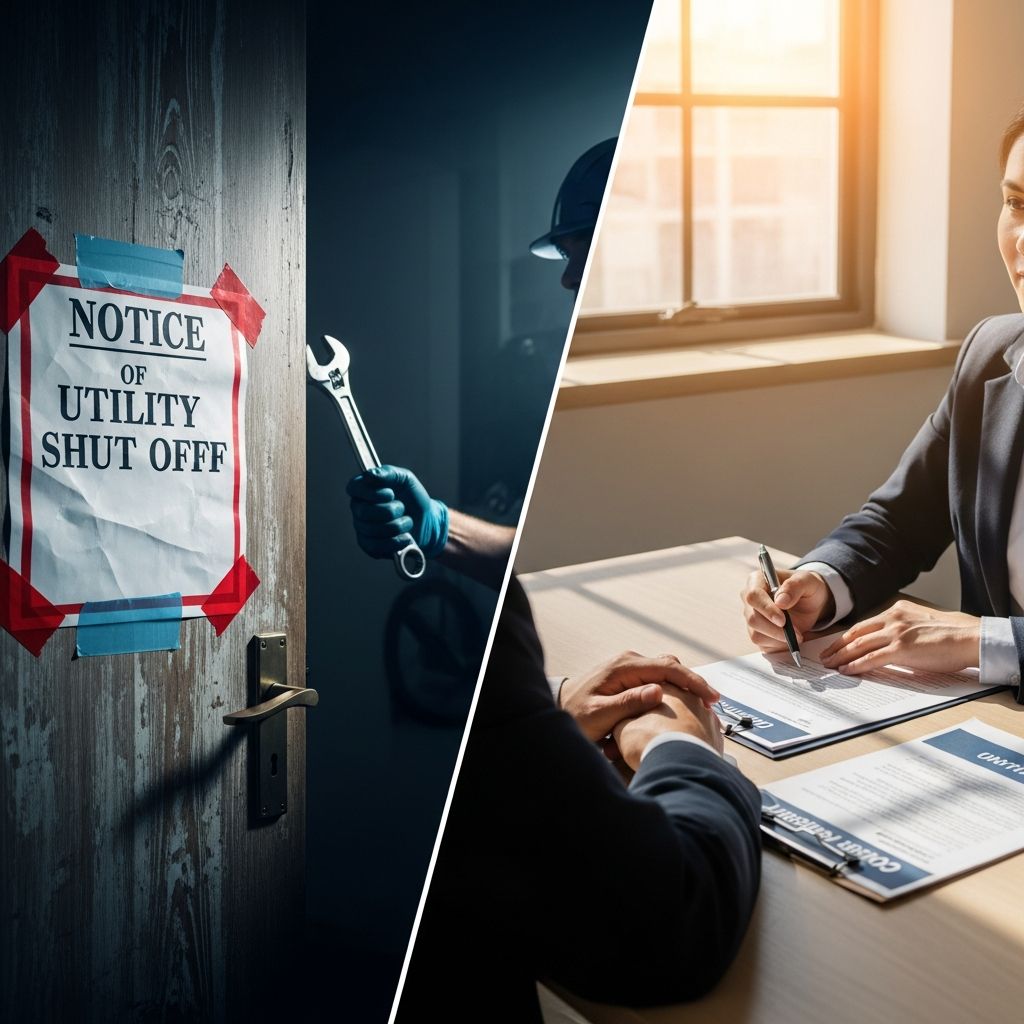
Legal Grounds for Utility Service Disconnection
Utility companies operate under strict regulatory frameworks that outline the specific circumstances under which they may disconnect residential service. While nonpayment of bills is the most common reason for termination, utility providers are limited to disconnecting service only when certain conditions are met. Understanding these grounds helps consumers recognize when a threatened disconnection may be unlawful or premature.
The primary reason utility companies initiate disconnection procedures involves failure to pay outstanding balances on utility accounts. However, disconnection authority extends beyond simple nonpayment. Utilities may also terminate service when customers fail to honor payment arrangements they have agreed to, refuse to pay required deposits, or prevent company representatives from accessing equipment necessary for service maintenance and safety inspections. Additionally, utilities possess authority to disconnect without standard notice procedures when they discover evidence of service theft, fraudulent account creation, meter tampering, or hazardous conditions that threaten safety.
Mandatory Notice Requirements Before Service Termination
Before disconnecting utility service for nonpayment, companies must follow established procedures designed to protect consumers. These requirements vary by jurisdiction but generally include substantial notice periods and personal contact attempts. Consumers who understand these requirements can identify when a utility company has failed to follow proper procedures and take corrective action.
Most utility regulations mandate that companies provide written notice at least ten days before disconnecting service. This notice period gives customers a reasonable opportunity to address the underlying issue, whether through paying the bill in full, establishing a payment arrangement, or disputing the charges. During this ten-day window, the utility company must make a genuine attempt to contact the customer or a responsible adult in the household at least three days before the scheduled disconnection date. This personal contact requirement ensures that customers receive actual knowledge of the impending disconnection rather than discovering it only when service is lost.
As the disconnection date approaches, utilities must make another contact attempt on the actual day of termination. For regions with winter weather concerns, additional protections apply. When disconnection is scheduled during winter months and personal contact cannot be established beforehand, utility companies must post a visible notice at the residence stating that service will be disconnected and providing at least forty-eight hours’ advance warning. This extended notice period during winter months reflects recognition that losing heating services during cold weather poses serious health and safety risks.
Immediate Action Steps When Facing Disconnection
Upon receiving a disconnection notice, consumers should act quickly to explore available options. Prompt action often allows customers to retain service while addressing underlying payment issues. The initial and most direct step involves contacting the utility company through the phone number listed on the notice. During this conversation, customers should inquire about establishing a payment arrangement, which allows them to spread outstanding balances over an agreed timeline rather than paying the full amount immediately.
Payment arrangements provide significant flexibility in handling utility debt. The law establishes parameters for how long these arrangements may extend, with provisions for longer payment periods for low-income households. Importantly, utility companies are legally obligated to offer at least one payment arrangement per debt, though customers dissatisfied with the terms offered may appeal to the Public Utility Commission for intervention. When establishing a payment plan, customers should ensure they understand all terms, including the specific amounts due on each payment date and the consequences of missing payments.
Even when customers cannot pay the full outstanding balance, making any payment demonstrates good faith effort and commitment to resolving the debt. Utility companies factor payment history into their decisions regarding payment arrangement flexibility, making even partial payments strategically valuable. Documentation of all communications with the utility company—including dates, times, names of representatives spoken with, and specifics of any arrangements discussed—creates a record that proves invaluable if disputes arise later.
Winter Season Protections for Low-Income Households
Recognizing that disconnection during winter months can pose serious health hazards, particularly for vulnerable populations, states have implemented seasonal protections. These winter moratoriums prevent utility companies from disconnecting service for nonpayment during designated cold months when loss of heating services could endanger residents’ lives. Understanding eligibility requirements and how to claim these protections enables consumers to access critical safeguards.
The winter moratorium typically operates from December through March, protecting low-income customers of regulated utility companies providing electricity, natural gas, or heat-related water services. The income threshold for protection is generally set at 250 percent of the federal poverty level, a calculation that varies based on household size and is adjusted annually. For example, a single individual earning below approximately $3,137 monthly would qualify, as would a family of four earning below approximately $6,500 monthly, using recent federal poverty guidelines.
Importantly, water utility companies cannot disconnect heat-related water services during winter regardless of customer income level, reflecting the understanding that hot water access is essential during cold weather. Some jurisdictions provide partial winter protections for certain categories of utilities or customer types, such as city gas utilities, which may have more limited restrictions during specific portions of the winter season.
To benefit from winter protections, customers must affirmatively inform utility companies of their low-income status. The company cannot assume eligibility based on payment history or other factors; customers must proactively disclose their income situation. This notification becomes particularly important when customers receive disconnection notices during winter months, as stating low-income status may immediately halt the disconnection process pending verification of income eligibility.
Disputing Utility Bills and Service Quality Issues
In some cases, customers facing disconnection may dispute the underlying bill amount or believe their meter readings are inaccurate. Pursuing a bill dispute can temporarily halt disconnection proceedings and provide time to address the disagreement. However, customers must understand that disputing a bill does not automatically prevent disconnection; rather, it freezes disconnection only for the disputed portion of charges while requiring payment of amounts the customer acknowledges as valid.
When customers question bill accuracy or meter readings, they should promptly notify the utility company in writing, clearly explaining the nature of the dispute. The utility company cannot proceed with disconnection until the dispute is resolved, provided that the customer continues paying any portion of the bill not subject to disagreement. If customers and the utility company cannot reach resolution independently, the Public Utility Commission can intervene, typically preventing disconnection while investigations proceed.
This dispute mechanism protects consumers from losing essential services over billing disagreements while providing time to investigate whether meter malfunction, calculation errors, or other issues caused the discrepancy. However, using the dispute process requires good faith engagement; customers cannot claim false disputes as a strategy to indefinitely delay legitimate bills.
Special Circumstances Affecting Disconnection Authority
Certain situations create additional legal complexities regarding utility disconnection. Understanding these special circumstances helps consumers recognize when utilities may lack authority to disconnect or when additional protections apply. Landlord-tenant relationships, medical vulnerabilities, and previous customer service interactions all create nuanced legal situations.
When a landlord holds responsibility for paying utility bills, rather than individual tenants, special protections apply. If the landlord fails to pay and the utility company threatens disconnection, tenants must receive notice at least thirty days in advance. Additionally, landlords cannot request that utility companies disconnect service to tenant-occupied properties as a self-help remedy for rent collection or other disputes. Tenants facing disconnection because of landlord nonpayment should have opportunity to pay the most recent bill directly to prevent service loss, and payments made by tenants to cover utilities should be credited against rent owed.
Medical vulnerabilities also affect disconnection authority. When a household member faces serious health consequences from losing utility service—such as an individual dependent on electrically-powered medical equipment, a diabetic requiring refrigeration for insulin, or someone with respiratory conditions dependent on heating—this information must be communicated to the utility company. While medical status alone does not automatically prevent disconnection, it can delay the process pending investigation and may provide grounds for securing payment arrangements or appealing to regulatory authorities.
Unusual Disconnection Situations Without Notice
While standard disconnection procedures require substantial notice and multiple contact attempts, certain dangerous or fraudulent situations allow utilities to disconnect immediately without advance notification. Understanding these exceptions helps consumers recognize the difference between lawful emergency disconnections and potentially unlawful service terminations.
Utilities may disconnect without standard notice when they discover evidence of service theft—circumstances where individuals have illegally obtained service or bypass metering systems. Similarly, if customers obtained service through fraudulent means, such as providing false identification or misrepresenting the property to be served, immediate disconnection may be authorized. Meter tampering represents another situation permitting emergency disconnection, as does identification of unsafe service conditions that threaten fire, explosion, or electrocution hazards. Additionally, utilities may disconnect without notice if a customer provided a bad check or fraudulent payment instrument specifically intended to stop a scheduled disconnection.
These emergency disconnection situations reflect that utilities have legitimate interests in protecting their systems, other customers, and public safety. However, customers facing immediate disconnection should request documentation of the specific unsafe or fraudulent condition and, if they dispute the utility company’s characterization, should immediately contact the Public Utility Commission to request emergency intervention.
Timing Restrictions on Utility Disconnections
Beyond notice requirements and protection periods, utility regulations also restrict the days and times when companies may physically disconnect service. These restrictions reflect recognition that customers need reasonable opportunity to arrange payment and that disconnections causing immediate hardship should be avoided when possible.
Most jurisdictions prohibit utility disconnections on Fridays, recognizing that customers disconnected on Friday would have no opportunity to contact the company or arrange payment until the following Monday. Some areas also restrict disconnections on days immediately preceding holidays or weekends when customer service offices are closed. These timing restrictions ensure that disconnected customers can promptly reach utility company representatives to discuss restoration options rather than remaining disconnected over extended periods when assistance is unavailable.
Regulatory Appeals and External Assistance
When customers believe utility companies have violated disconnection procedures or applied regulations incorrectly, regulatory agencies and consumer assistance organizations provide external remedies. Understanding these resources empowers consumers facing unjust disconnection to seek intervention from authorities with authority to compel compliance.
The Public Utility Commission serves as the primary regulatory authority overseeing utility company conduct in most jurisdictions. Customers can file complaints with the PUC alleging that a utility company failed to provide required notice, made insufficient contact attempts, ignored disputes, or disconnected in violation of seasonal protections. The PUC can investigate complaints, issue citations, require service restoration, and mandate compliance with proper procedures. Additionally, the PUC has authority to issue payment agreements directly if customers and utilities cannot reach acceptable terms independently.
Community legal services organizations and legal aid societies offer direct assistance to customers facing disconnection, particularly those with limited financial resources. These organizations can review disconnection notices for procedural compliance, draft disputes on behalf of customers, represent consumers in PUC proceedings, and advocate for payment arrangements or other resolutions. Some regions also operate utility assistance programs providing emergency funds to help eligible customers pay bills and avoid disconnection.
Strategies for Long-Term Utility Account Management
Beyond addressing immediate disconnection threats, customers can implement strategies reducing the likelihood of future disconnection and establishing positive relationships with utility providers. These approaches create financial stability and demonstrate reliability that influences utility company decisions regarding payment flexibility.
Establishing automatic bill payment arrangements ensures that customers cannot unintentionally miss payments due to oversight or administrative errors. Even customers facing financial difficulty should attempt to make regular partial payments, as this demonstrates commitment to obligation fulfillment and gives utilities confidence in negotiating flexible payment plans. Maintaining clear records of all payments, correspondence, and arrangements with the utility company creates documentation protecting consumers if disputes arise about account status or payment history.
Customers experiencing chronic payment difficulty should proactively contact utility companies rather than waiting for disconnection notices to arrive. Early communication allows utilities to establish payment arrangements before situations become urgent and provides opportunity to verify low-income status for winter protections or longer payment plan terms. Additionally, customers should explore whether they qualify for utility assistance programs operated by government agencies or nonprofit organizations, which can provide emergency funding during periods of particular financial hardship.
Frequently Asked Questions About Utility Disconnection
Q: Can a utility company shut off my heat without any notice?
A: In most circumstances, no. Utilities must provide a ten-day written notice before disconnection for nonpayment, plus make personal contact attempts. However, they may disconnect immediately without notice if they discover service theft, fraud, meter tampering, unsafe conditions, or if you provided a bad check to stop a threatened disconnection.
Q: What should I do when I receive a disconnection notice?
A: Contact the utility company immediately using the phone number on the notice. Ask about establishing a payment agreement to spread the balance over time. If you cannot pay the full amount, offer to make a partial payment. If you dispute the bill, send written notice of the dispute immediately. If you have low income or medical vulnerability, inform the utility company.
Q: Are there times when utilities cannot disconnect my service?
A: Yes. During winter months (December through March), low-income households earning below 250 percent of the federal poverty level cannot have electricity, gas, or heat-related water service disconnected for nonpayment without Public Utility Commission approval. Additionally, disconnections cannot typically occur on Fridays or immediately before holidays.
Q: Can my landlord have utilities shut off to force me to move?
A: No. Landlords cannot request utilities be disconnected as a self-help remedy. If a landlord’s nonpayment threatens disconnection, you must receive thirty days’ notice and have opportunity to pay recent bills directly.
Q: What if I believe the utility company violated disconnection procedures?
A: File a complaint with the Public Utility Commission alleging the violation. The PUC can investigate, order service restoration, and require utilities to follow proper procedures. You can also contact a legal aid organization or community legal services for assistance.
Q: How long does a utility company have to shut off service after sending a notice?
A: Once a utility company sends a ten-day notice, it has up to sixty days to execute disconnection. This provides a window where you can take action to prevent disconnection.
Q: Do payment arrangements prevent disconnection?
A: Yes. Establishing a payment agreement halts disconnection proceedings. Utilities must offer at least one payment arrangement per debt. Long-term arrangements are available for low-income households. Ensuring you understand the terms and making payments on schedule maintains the protection.
Q: What assistance programs exist for customers struggling with utility bills?
A: Utility assistance programs operated by government agencies and nonprofits provide emergency funding for eligible customers. Low-Income Home Energy Assistance Programs (LIHEAP) offer crisis assistance for heating and utility emergencies. Contact your local social services agency for information about available programs in your area.
References
- Responsible Utility Customer Protection Act — Pennsylvania Public Utility Commission. 2024. https://www.puc.pa.gov/general/consumer_ed/pdf/act201.pdf
- What Every Utility Customer Should Know — PALawHELP.org. 2024. https://www.palawhelp.org/resource/what-every-utility-customer-should-know
- Protection from Termination — Pennsylvania Utility Law Project. 2024. https://www.pautilitylawproject.org/termination
- Utilities: Tenants’ Rights — Housing Equality Center of Pennsylvania. 2024. https://renters.equalhousing.org/utilities/
- A Pa. Utility Shutoff Law is Expiring. Here’s What to Know — WHYY News. 2024-12-20. https://whyy.org/articles/pennsylvania-shutoff-law-expiration/
Similar Articles








Read full bio of medha deb




