
Understanding USPS Priority Mail Services
Master USPS Priority Mail: delivery times, costs, features, and how it compares to other postal services.
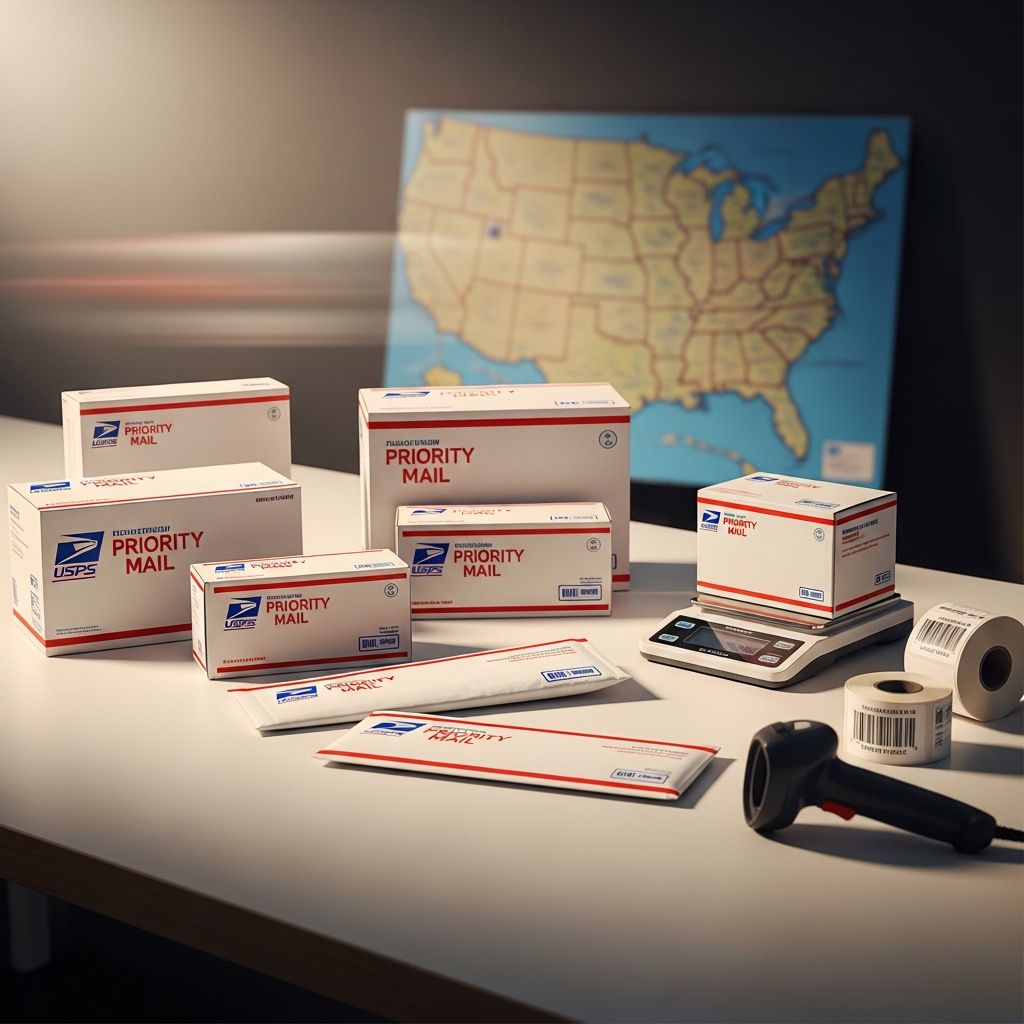
What Makes Priority Mail a Preferred Shipping Choice
When individuals and businesses need to send packages across the United States, they face numerous shipping options. Among the most reliable and cost-effective choices is USPS Priority Mail, a domestic mail service that has become the backbone of many shipping operations. This service distinguishes itself through a combination of speed, affordability, and convenience that appeals to both casual senders and commercial enterprises.
Priority Mail emerged as a response to the need for faster-than-standard mail delivery without the premium costs associated with overnight carriers. The service represents a balanced approach to shipping, offering predictable delivery windows and transparent pricing structures. Understanding how Priority Mail operates, what it includes, and how it compares to alternative services is essential for anyone regularly shipping items through the postal system.
Delivery Speed: Understanding Timeframes and Zones
The hallmark feature of USPS Priority Mail is its expedited delivery timeline. Standard Priority Mail packages typically arrive within two to three business days, making it suitable for time-sensitive shipments that don’t require overnight delivery. This delivery window applies to domestic shipments traveling within the continental United States.
The actual delivery speed depends on several variables, particularly the distance between the origin and destination. USPS divides the country into zones, with zone 1 representing local or nearby destinations and zone 9 representing the farthest points. Packages traveling shorter distances within lower-numbered zones may arrive more quickly than those destined for remote areas. For items traveling within close geographic proximity, ground transportation may be utilized, while longer-distance shipments often travel by air to maintain the promised delivery timeframe.
Senders should note that Priority Mail does not operate on weekends or holidays, meaning these days do not count toward the delivery estimate. If you mail a package on Friday afternoon, the business day count typically begins on Monday. Saturday delivery is available at no additional charge for Priority Mail, though Sunday delivery is not offered as a standard service option.
Included Benefits and Features
Priority Mail bundles several valuable features into its service at no additional cost, which contributes to its appeal among diverse shipping demographics. These included amenities reduce the overall expense of shipping while enhancing the shipping experience for both sender and recipient.
Complimentary tracking services allow both the sender and recipient to monitor package progress throughout the delivery journey. This transparency provides peace of mind and enables proactive communication if delays occur. Tracking information updates multiple times per day at major sorting facilities and during final delivery attempts.
Insurance protection comes standard with Priority Mail shipments. Domestic packages receive up to $100 of insurance coverage, while international Priority Mail shipments include up to $200 of coverage. This protection safeguards against loss, theft, or damage during transit, though certain items like cash and jewelry have restrictions.
Free package pickup services eliminate the need to visit a post office. Senders can request mail carriers to collect outgoing packages from their homes or offices during regular delivery stops. For those with sporadic shipping needs, this convenience removes a significant barrier to using postal services.
Flexible payment options accommodate different sender preferences. Payment can be made through postage stamps, postage meters, or online label printing. Packages under 13 ounces can be dropped directly with mail carriers, while heavier items require counter service at post offices.
Free packaging materials include Priority Mail branded boxes and envelopes available at post offices and online. These materials are designed to meet postal specifications and eliminate concerns about improper packaging.
Weight Capacity and Size Specifications
Priority Mail accommodates a significantly broader range of package sizes and weights compared to other standard USPS services. The maximum weight limit of 70 pounds makes Priority Mail suitable for items that exceed First-Class Mail restrictions.
This generous weight allowance opens Priority Mail to business applications that involve heavier merchandise, equipment, or bulk shipments. The service’s machinable requirements mean items must safely pass through USPS handling equipment, but most standard packages meet these specifications without issue. Oversized items that cannot be processed by automated sorting machinery may incur additional fees or face rejection.
The flexibility in weight capacity, combined with reasonable pricing, makes Priority Mail particularly attractive for small business owners shipping products to customers. An ecommerce seller dealing with books, tools, or packaged goods can reliably use Priority Mail without upgrading to expensive overnight services.
Flat-Rate Options: Predictable Pricing for Any Distance
One of Priority Mail’s most innovative features is the flat-rate shipping option, which simplifies the pricing structure and benefits senders of heavier items. With flat-rate service, the postage cost remains identical regardless of the package’s weight or destination zone, provided the items fit within the designated container.
USPS offers several flat-rate box sizes, from small padded envelopes to large boxes. This pricing model eliminates the complexity of calculating postage based on weight and distance. A 70-pound box shipped across the country costs the same as a 5-pound box traveling the same distance when using flat-rate service. For shippers with unpredictable item weights or those sending to remote locations, flat-rate options provide budget certainty and simplify accounting processes.
The flat-rate concept extends to Priority Mail Open and Distribute services, designed for bulk mailers. These commercial solutions allow mailers to ship containers to distribution points near final destinations, where postal workers open and distribute the contents locally. This hybrid approach reduces transportation costs for large-volume mailings while maintaining reasonable delivery timeframes.
How Priority Mail Compares to Alternative Services
Priority Mail Versus First-Class Mail
First-Class Mail and Priority Mail share the same basic infrastructure but differ significantly in capacity and delivery speed. First-Class Mail restricts packages to 13 ounces maximum, making it suitable for letters, documents, and small parcels. Retail customers paying with stamps for items exceeding 13 ounces automatically upgrade to Priority Mail pricing.
Priority Mail’s 70-pound capacity and faster 2-3 day delivery make it superior for packages that exceed First-Class weight limits. While First-Class Mail costs less for small, light items, the price advantage disappears when packages approach the weight threshold.
Priority Mail Express: When Speed Matters Most
For those requiring next-day or guaranteed two-day delivery, Priority Mail Express offers enhanced speed. This premium service operates seven days a week, 365 days annually, with money-back guarantees if delivery fails to meet promised timeframes. The trade-off is substantially higher postage costs compared to standard Priority Mail.
Priority Mail Versus Private Carriers
When compared to FedEx and UPS services, Priority Mail offers significant cost savings for domestic shipments that don’t require overnight delivery. While private carriers excel at guaranteed next-day service and real-time tracking capabilities, Priority Mail’s 2-3 day window and lower prices make it the economical choice for less urgent shipments. Many businesses strategically use Priority Mail for routine orders and reserve overnight services for time-critical deliveries.
How to Send a Package via Priority Mail
The process of sending Priority Mail is straightforward and offers multiple convenient methods. Senders can visit any post office, access USPS online services, or use authorized shipping platforms to purchase postage and generate labels.
Online shipping through the USPS website allows customers to purchase postage, print labels, and schedule free pickup without leaving home. This method typically offers lower commercial rates compared to retail counter pricing.
Post office shipping involves bringing packages to a local post office where staff weigh items, calculate postage, and process shipments. This method works well for occasional shippers or those purchasing flat-rate boxes at the counter.
Carrier pickup requests can be made through the USPS website, allowing mail carriers to collect packages during regular delivery stops. This option proves invaluable for busy individuals or businesses processing multiple shipments daily.
Regardless of the method chosen, all packages receive tracking numbers, insurance coverage, and the standard 2-3 day delivery window unless flat-rate options are selected.
Cost Considerations and Budget Planning
Priority Mail pricing reflects distance traveled, with packages destined for remote zones incurring higher postage than locally-bound items. Postage costs are calculated based on weight and zone designation, providing transparency for budgeting purposes.
Starting prices for Priority Mail begin at approximately $10.20 when purchased at retail counters, though online commercial rates offer significant savings for regular shippers. Flat-rate options provide fixed-price alternatives that simplify budgeting for items of varying weights.
For businesses shipping multiple packages weekly, establishing a commercial account with negotiated rates can substantially reduce per-package costs. Volume discounts and Business Rate Card programs reward consistent users with progressively lower postage rates.
Special Services and Enhancements
Beyond standard Priority Mail service, customers can enhance shipments with optional add-ons that provide additional security or functionality. Registered Mail service offers heightened protection for valuable items, though this enhancement incurs additional fees. Signature confirmation requires recipients to sign upon delivery, providing proof of receipt for packages where accountability matters.
Return service is included with Priority Mail postage, allowing recipients to return items to senders using the same expedited service. This feature proves particularly valuable for ecommerce operations handling exchanges or returns.
Forwarding service automatically redirects packages to updated addresses if recipients have filed change-of-address notifications with the postal service. This function provides flexibility for people in transition while ensuring valuable shipments reach intended recipients.
Priority Mail in Business Operations
Ecommerce sellers, small businesses, and professional service providers have embraced Priority Mail as their standard shipping method. The service’s combination of reasonable costs, predictable delivery windows, and included features makes it economically attractive compared to alternatives.
Subscription boxes, fulfillment services, and catalog retailers rely on Priority Mail to ship products affordably while meeting customer delivery expectations. The consistent 2-3 day window allows businesses to provide realistic delivery estimates during checkout processes.
Many businesses structure their shipping strategies by using Priority Mail for standard orders and reserving Premium or Express services for expedited requests. This tiered approach optimizes costs while maintaining customer satisfaction across different urgency levels.
Frequently Asked Questions
Q: Does Priority Mail deliver on Saturdays?
A: Yes, Priority Mail delivers six days per week, including Saturday delivery at no additional charge. Sunday delivery is not available under standard Priority Mail service.
Q: What’s the difference between Priority Mail and Priority Mail Express?
A: Priority Mail typically delivers in 2-3 business days, while Priority Mail Express guarantees delivery within two business days with money-back guarantees. Express service operates seven days weekly and costs significantly more.
Q: Can I use Priority Mail for international shipments?
A: Yes, Priority Mail International service is available for overseas shipments, though delivery times and pricing differ from domestic service. International packages receive up to $200 insurance coverage.
Q: Is tracking included with Priority Mail automatically?
A: Yes, USPS tracking is included at no extra cost with all Priority Mail shipments, allowing senders and recipients to monitor package progress throughout delivery.
Q: What items cannot be sent via Priority Mail?
A: Certain hazardous materials, liquids exceeding specific quantities, and items prohibited by law cannot be mailed via Priority Mail. Consult USPS guidelines for complete restrictions.
Q: How is Priority Mail pricing calculated?
A: Pricing depends on package weight and destination zone. Flat-rate options provide fixed pricing regardless of weight or distance when items fit within designated containers.
Q: Can I request a refund if my Priority Mail package arrives late?
A: Standard Priority Mail does not include money-back guarantees. Priority Mail Express provides refunds if delivery fails to meet promised timeframes.
References
- Priority Mail – USPS — United States Postal Service. 2024. https://www.usps.com/ship/priority-mail.htm
- Mail & Shipping Services – USPS — United States Postal Service. 2024. https://www.usps.com/ship/mail-shipping-services.htm
- Priority Mail | Postal Explorer – USPS — United States Postal Service. 2024. https://pe.usps.com/businessmail101?ViewName=PriorityMail
- What is USPS Priority Mail? — Quadient Mailing Solutions. 2024. https://mail.quadient.com/en/learn/special-mail-types/usps-priority-mail
- What is Priority Mail and How Does it Work — Pitney Bowes. 2024. https://www.pitneybowes.com/us/blog/what-is-priority-mail-and-how-does-it-work.html
- USPS Priority Mail: A Full Breakdown — ShippingEasy. 2024. https://shippingeasy.com/blog/usps-priority-mail-a-full-breakdown/
Similar Articles








Read full bio of Sneha Tete


