
Testamentary Trusts: How To Create One In Your Will 2025 Guide
Learn how testamentary trusts created through your will can control, protect, and structure inheritances long after you are gone.
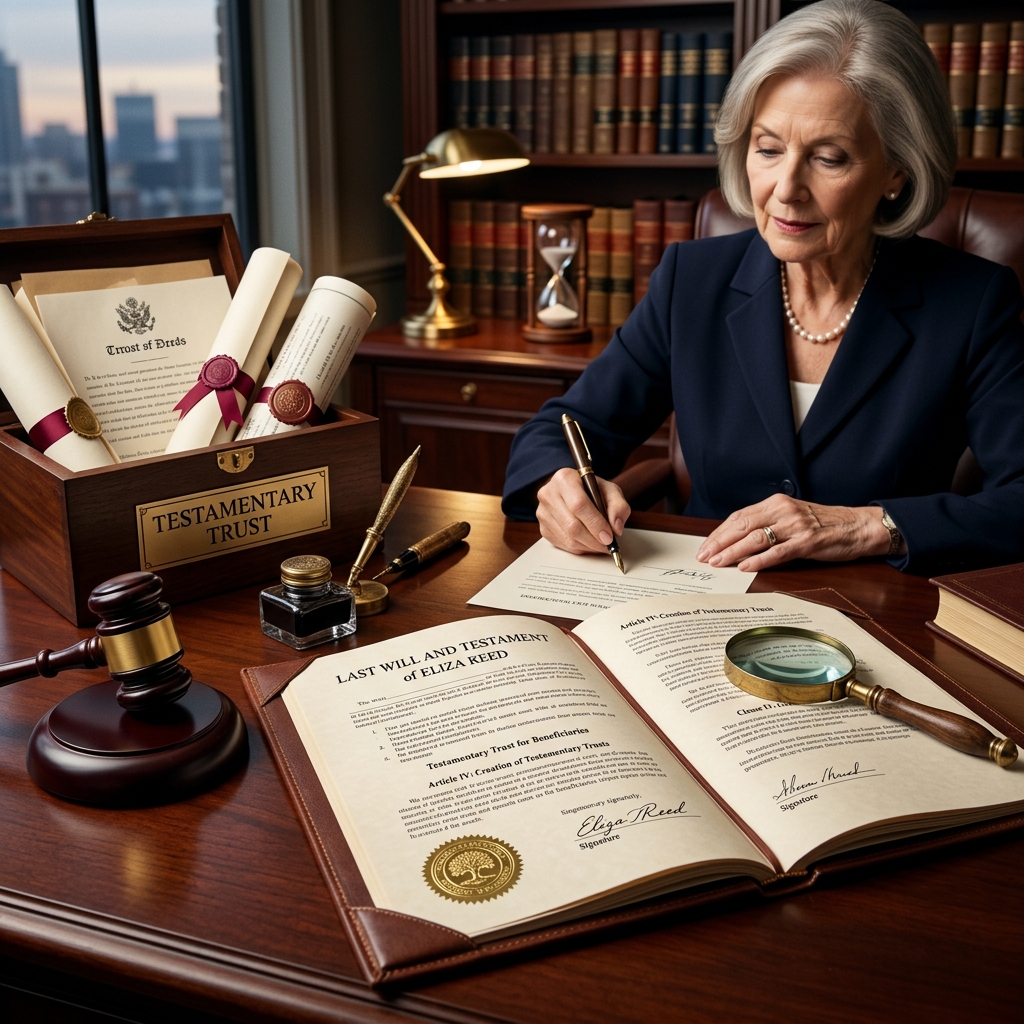
A testamentary trust is a trust that springs into existence after your death according to instructions in your last will and testament. It allows you to control how your property is managed and distributed over time, rather than leaving everything outright to your heirs. For many families, this is a powerful way to protect vulnerable beneficiaries, manage taxes, and keep assets working toward long‑term goals.
This guide explains what testamentary trusts are, how to place them in a will, and the main advantages and drawbacks. It is informational only and does not replace personalized legal advice.
What Is a Testamentary Trust?
In basic terms, a testamentary trust is a trust created under a will that takes effect only after the testator (the person making the will) dies and the will is admitted to probate. Until that point, the trust is merely a set of instructions on paper. Once the court validates the will, those instructions become legally enforceable, and the trust can be formed.
Most testamentary trusts involve three key roles:
- Grantor/Testator – the person whose will creates the trust.
- Trustee – the individual or institution appointed to manage trust property.
- Beneficiary – the person or group who is intended to benefit from the trust assets.
The will sets out the terms of the trust, including who will serve as trustee, which assets will be transferred into the trust, who will benefit, and what conditions govern distributions.
How Testamentary Trusts Are Created Through a Will
Placing a testamentary trust in your will requires specific language and a clear structure. The trust does not exist as a separate legal entity until after death and probate, but the will must fully describe the trust in advance.
1. Drafting Trust Provisions in the Will
The starting point is the will itself. Within the document, you (or your attorney) include provisions that:
- Identify the trust by name (for example, “Children’s Education Trust”).
- Define the beneficiaries and their interests.
- Appoint a trustee and, ideally, one or more successor trustees.
- Describe the assets that will fund the trust, such as real estate, bank accounts, life insurance proceeds, or a portion of the residue of your estate.
- Set out rules for distributions, investment, and eventual termination of the trust.
Some wills incorporate detailed trust terms directly, while others reference a separate trust instrument that is legally folded into the will by incorporation. Either way, the trust must be sufficiently specific to be enforceable when the time comes.
2. Probate and Court Validation
After death, the will usually must be submitted to the probate court, which oversees authentication of the document and administration of the estate. The court issues letters testamentary (or a similar authorization) to the executor named in the will. These letters confirm the executor’s legal authority to gather assets and carry out the will’s terms.
Only once the will is admitted to probate and the executor is formally appointed can the process of forming the testamentary trust begin.
3. Funding the Trust
The executor, not the trustee, is typically responsible for moving assets from the estate into the testamentary trust. This step happens after debts, taxes, and administrative expenses are settled during the estate administration phase.
Funding can involve:
- Transferring titled property such as real estate or vehicles into the trust’s name.
- Liquidating or reallocating investment accounts and depositing proceeds into a trust account.
- Directing life insurance or retirement benefits to the trust if the trust is named as beneficiary.
- Allocating a portion of the residue (what is left after specific gifts) to the trust.
Once the specified assets have been transferred, the trust becomes an active legal entity and the trustee can begin managing the property under the terms of the trust.
4. Ongoing Management and Final Distribution
From that point on, the trustee has fiduciary duties to manage the trust assets prudently and in the best interests of the beneficiaries. Duties typically include investing assets, making distributions as permitted, keeping records, and complying with legal reporting requirements.
Eventually, the trust will terminate according to the terms set out in the will: for example, when a beneficiary reaches a particular age, completes education, or upon the expiration of a maximum legal duration. At termination, any remaining property is distributed as specified and the trust is formally closed.
Why People Use Testamentary Trusts
Testamentary trusts are commonly used in estate planning to provide oversight and structure around inheritances, especially when beneficiaries may not be ready to manage significant assets on their own.
Key Benefits
- Control over timing and amount of distributions
Rather than giving assets outright, you can direct that funds be released in stages or only for particular purposes, such as education, housing, or medical care. - Protection for vulnerable beneficiaries
Children, individuals with disabilities, or beneficiaries with financial or substance‑abuse challenges may benefit from professional management and structured access to funds. - Potential tax planning opportunities
Depending on jurisdiction and design, distributing income among multiple beneficiaries or delaying distributions may allow for more favorable tax outcomes, though this must be evaluated carefully with professional advice. - Long‑term family support
Testamentary trusts can be designed to last for many years, supporting multiple generations and ensuring that core assets remain available. - Professional asset management
Choosing an experienced trustee, such as a trust company or professional fiduciary, can improve investment oversight and reduce mismanagement risk.
Common Drawbacks
- Subject to probate
Because the trust is created through the will, it cannot avoid the probate process. Probate can be time‑consuming, costly, and public, depending on local law. - Delays before trust funding
Beneficiaries may need to wait until probate is completed and estate administration tasks are finished before the trust receives assets and begins distributions. - Limited privacy
In many jurisdictions, probate filings, including wills, become part of the public record. That can expose the existence and terms of the testamentary trust to outside scrutiny. - Difficult to change after death
Although you can change your will while alive, once you die the testamentary trust terms usually become fixed and cannot be modified unless a court approves changes under limited circumstances. - Ongoing administration costs
Trustees may charge fees for managing the trust, preparing tax returns, and meeting legal obligations. These costs should be weighed against the benefits of the structure.
Testamentary Trusts vs. Living Trusts
Testamentary trusts are often compared to living trusts, which are created and funded during the grantor’s lifetime. Each type has distinct features and is suited to different planning goals.
| Feature | Testamentary Trust | Living Trust (Revocable) |
|---|---|---|
| When it takes effect | Only after death and probate. | Immediately upon creation and funding during life. |
| Created by | Provisions in a last will and testament. | A separate trust agreement signed by the grantor. |
| Probate avoidance | Does not avoid probate; it depends on probate to become effective. | Often used to reduce or avoid probate for assets titled in the trust. |
| Control during life | Grantor keeps full ownership and control of assets until death. | Grantor may retain control but assets are transferred to the trust while alive. |
| Flexibility to change terms | Terms can be changed by updating the will during life; usually fixed after death. | Revocable living trusts can usually be amended or revoked during life. |
Choosing between testamentary and living trusts requires a holistic look at your estate, state law, and personal preferences. Some plans use both kinds in combination.
Design Choices When Adding a Testamentary Trust to Your Will
The effectiveness of a testamentary trust depends on thoughtful design. When working with an attorney to include such a trust in your will, you will need to make several key decisions.
Choosing Trustees
The trustee is central to the trust’s success. You may choose:
- A trusted family member or friend.
- A professional such as an attorney, accountant, or corporate trust company.
- Co‑trustees, pairing a family member familiar with beneficiaries and a professional with technical expertise.
Whoever you select must be willing and able to carry out fiduciary responsibilities, which include acting with loyalty, prudence, and impartiality. Naming successor trustees in case your first choice is unable or unwilling to serve is also important.
Defining Beneficiaries and Conditions
Your will should clearly identify who will benefit from the trust and whether their interests are discretionary or mandatory. You may also include conditions such as:
- Age thresholds (for example, principal distributions only after a beneficiary turns 25 or 30).
- Education milestones (funds available for tuition and related expenses).
- Health or support needs (ongoing distributions for basic living expenses or medical care).
- Restrictions on distributions in certain circumstances, such as active addiction or bankruptcy.
Discretionary language gives trustees flexibility to adapt to changing circumstances, while more rigid rules create predictability but less adaptability.
Selecting and Describing Funding Sources
Your will should specify which assets will flow into the testamentary trust. Common approaches include:
- Assigning a specific property (for example, a family home or business interest) to the trust.
- Designating the trust as beneficiary of life insurance or certain accounts.
- Allocating a fixed percentage or dollar amount from the residue of your estate.
Careful coordination with beneficiary designations and titling of assets is necessary so that everything aligns and no property is unintentionally excluded.
Practical Considerations and Legal Guidance
While testamentary trusts can offer substantial benefits, they operate in a complex legal environment. Legal requirements differ by jurisdiction, and technical rules may affect validity, tax treatment, and the rights of creditors or family members.
In many places, state law governs how long a testamentary trust can last, what default duties trustees owe, and how trusts can be modified or terminated if circumstances change. A lawyer familiar with local estate and trust law can help ensure that the trust complies with these rules and reflects your intentions.
FAQs About Testamentary Trusts in Wills
Do I need a testamentary trust if my estate is small?
Not every estate requires a testamentary trust. Even smaller estates may benefit if you have minor children, beneficiaries with special needs, or concerns about how heirs will handle money. For some people, simpler arrangements—such as naming a custodian under a uniform transfers to minors law—may be sufficient. Talking with an estate planning professional is the best way to evaluate whether the added complexity is worthwhile.
Can I change the terms of a testamentary trust after I sign my will?
As long as you are alive and legally competent, you can typically revise or revoke your will, and thereby change the terms of any testamentary trust it contains. Once you die and the will is admitted to probate, the trust terms are generally fixed and can only be altered through limited court procedures where permitted by law.
Who oversees the trustee of a testamentary trust?
A trustee owes legal duties to the beneficiaries and must follow the trust terms and applicable law. Beneficiaries can often demand accountings and may bring legal action if they believe the trustee is violating obligations. In some cases, courts maintain ongoing jurisdiction over the trust and can intervene if problems arise.
Does a testamentary trust always go through probate?
Yes, by definition a testamentary trust is created under a will and depends on probate for its formation. If avoiding probate is a primary goal, a revocable living trust or other non‑probate arrangements may be more appropriate, potentially used alongside or instead of testamentary trusts.
Can I have more than one testamentary trust in my will?
It is common for a single will to establish multiple testamentary trusts—for example, one for each child or one for education and another for long‑term family support. Each trust should be clearly labeled, with separate terms and funding instructions to avoid confusion.
References
- Placing a Testamentary Trust in a Will — FindLaw. 2023-07-06. https://www.findlaw.com/estate/wills/placing-a-testamentary-trust-in-a-will.html
- What Is a Testamentary Trust? How Does It Work for You? — Western & Southern Financial Group. 2023-04-11. https://www.westernsouthern.com/retirement/testamentary-trust
- Testamentary Trust: Definition & How It Works — MetLife. 2023-05-18. https://www.metlife.com/stories/legal/testamentary-trust/
- Pros and Cons of Testamentary Trusts — Texas Trust Law. 2022-09-22. https://www.texastrustlaw.com/pros-and-cons-of-testamentary-trusts/
- What Is a Testamentary Trust — Bott & Associates, Ltd. 2022-11-10. https://bottestateplanning.com/what-is-a-testamentary-trust/
- Testamentary Trusts – A Complete Guide — Trust & Will. 2023-02-01. https://trustandwill.com/learn/testamentary-trust
- Testamentary Trusts — New York City Bar Association. 2021-06-15. https://www.nycbar.org/get-legal-help/article/wills-trusts-and-elder-law/trusts/testamentary-trusts/
Similar Articles








Read full bio of Sneha Tete


