
Unprecedented Digital Surveillance: US Tech Data Demands
Analyzing the immense scale of government data requests on tech platforms and the growing legal battles over digital privacy.
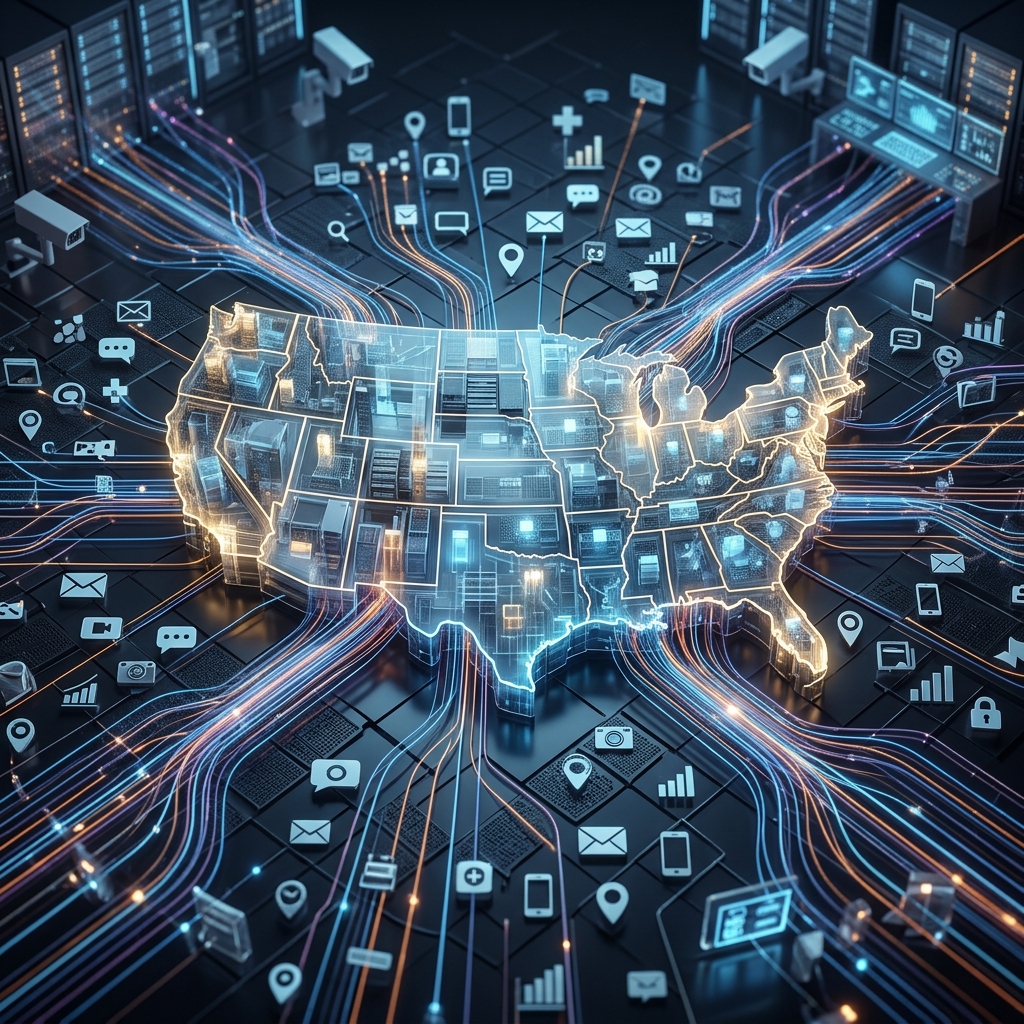
The modern digital ecosystem is built upon a continuous exchange of personal information. From mapping applications that guide our daily commutes to search engines that field our most intimate queries, the digital footprint left by the average individual is vast, deeply revealing, and permanent. As technology companies amass unprecedented volumes of behavioral, locational, and communicative data, law enforcement and national security agencies have increasingly turned to these corporate repositories to aid in their investigations. The result is a complex, high-stakes intersection of digital innovation, legal frameworks, and fundamental privacy rights.
At the forefront of this dynamic is the United States government, which consistently leads the global community in demanding user data from major technology platforms. Through a variety of legal mechanisms—ranging from routine administrative subpoenas to sweeping national security directives—federal, state, and local authorities in the U.S. have institutionalized the practice of relying on tech companies as de facto extensions of the investigative process. This article explores the staggering scale of these data demands, the controversial rise of novel surveillance techniques like geofence warrants, and the escalating constitutional battles over what constitutes an unreasonable search in the twenty-first century.
The Global Landscape of Data Demands
For over a decade, technology giants have attempted to shed light on government surveillance through the publication of transparency reports. Google pioneered this practice in 2010, releasing aggregated data on the number of demands it receives from governments worldwide. These reports have since become an industry standard, adopted by other major platforms such as Meta, Apple, and X (formerly Twitter).
When analyzing these public transparency reports, a stark pattern emerges immediately: the United States vastly outpaces other nations in both the frequency and scope of its digital data requests. While countries across Europe, Asia, and the Americas routinely submit legal demands for user information to assist in criminal cases, the raw volume generated by U.S. agencies exists in a league of its own. Several intersecting factors contribute to this staggering disparity in digital data collection:
- Corporate Jurisdiction: The United States serves as the home base for the world’s most dominant tech platforms, making it legally and logistically straightforward for domestic law enforcement to serve warrants under the Stored Communications Act (SCA).
- Decentralized Law Enforcement: The U.S. justice system is highly fragmented, comprising thousands of municipal, county, state, and federal law enforcement bodies, each operating with the independent authority to seek digital evidence.
- Normalization of Digital Forensics: The rapid integration of tech-centric investigations into routine policing has normalized the practice of requesting email logs, location history, and search queries for offenses ranging from petty theft to complex corporate fraud.
The Mechanics of Information Retrieval: Standard vs. Reverse Warrants
To fully understand the privacy implications of these growing demands, it is essential to distinguish between traditional methods of digital data collection and the newer, significantly more expansive techniques currently being deployed by investigators.
Traditional Subpoenas and Search Warrants
Historically, digital evidence gathering has followed a targeted, individualized approach. If an investigator suspects a specific person of committing a crime, they can petition a judge for a search warrant specifically targeting that individual’s digital accounts or devices. Under the Fourth Amendment, such a warrant requires “probable cause”—a demonstration that a crime has likely been committed and that evidence of that crime resides in the specified digital location (e.g., an email inbox or cloud storage drive).
Less intrusive demands, such as administrative subpoenas, can often be issued without a judge’s prior approval to obtain basic subscriber information. This includes the name, physical address, billing details, and IP login history associated with an account. While these traditional methods account for a massive volume of requests, they share one crucial characteristic: they generally target known subjects or specific accounts already implicated in an ongoing investigation.
The Rise of Geofence and Keyword Warrants
In recent years, the investigative paradigm has shifted dramatically with the advent of “reverse warrants”—specifically, geofence warrants and keyword search warrants. Unlike traditional warrants that start with a known suspect and seek their corresponding data, reverse warrants start with a massive dataset and seek to identify a suspect from within it.
A geofence warrant compels a technology company to comb through its vast location databases and produce identifying information for every active mobile device that was present within a specific geographic boundary during a specified timeframe. For example, if a severe crime occurs at a bank, police might draw a virtual “fence” around the building and demand the location data of all devices inside that perimeter over a two-hour window. Companies maintaining vast repositories of location history are frequent, virtually constant targets of these demands.
Similarly, keyword search warrants compel search engines to identify every single user who searched for specific terms or phrases within a given period. These reverse warrants have fundamentally transformed the nature of digital policing, essentially allowing law enforcement to crowdsource their suspect lists directly from the user bases of major tech companies, regardless of individual suspicion.
Analyzing the Numbers: U.S. Data Collection Trends
The sheer scale of U.S. data demands is immense, with numbers climbing steadily year over year. Based on historical and ongoing transparency metrics, the U.S. government routinely submits tens of thousands of individual requests—affecting hundreds of thousands of user accounts—within a single six-month reporting cycle. To grasp how this data is extracted, consider the breakdown of common legal processes utilized by the state:
| Legal Process | Judicial Requirement Level | Data Typically Acquired | Privacy Implications |
|---|---|---|---|
| Administrative Subpoena | Low (Often no judge required) | Subscriber name, IP addresses, billing records, length of service. | Reveals basic identity and general location but not the private contents of communications. |
| Court Order | Moderate (Specific and articulable facts) | Non-content metadata, email headers (To/From), communication logs. | Maps out a user’s digital network, habits, and associations without reading the messages. |
| Search Warrant | High (Probable cause reviewed by a judge) | Full content of emails, private messages, photos, files, and granular location history. | Highly intrusive; grants the state access to the most intimate details of a person’s digital life. |
| National Security Letter (NSL) | Specialized (Issued directly by the FBI) | Limited subscriber info and electronic communication transactional records. | Often subject to strict gag orders, severely limiting public transparency and user notification. |
The increasing reliance on comprehensive search warrants—which yield the most sensitive data—highlights a clear trend toward deep digital intrusion. Furthermore, geofence warrants now make up a highly significant and rapidly growing percentage of all warrants served on major tech platforms, reflecting a systemic shift toward data-driven, dragnet-style policing models.
Constitutional Friction: The Fourth Amendment in the Digital Age
The explosion of government data demands has ignited fierce, ongoing legal battles over the applicability of the Fourth Amendment, which protects the public against “unreasonable searches and seizures.” The core legal conflict centers on a decades-old judicial concept known as the “Third-Party Doctrine.”
Established by the Supreme Court in the 1970s, the Third-Party Doctrine posits that individuals do not have a reasonable expectation of privacy for information they voluntarily share with third parties, such as banks or telephone companies. For years, prosecutors argued that because modern users “voluntarily” share their location and search data with tech companies by utilizing their apps and services, that data fundamentally loses its Fourth Amendment protection. Under this aggressive interpretation, the government could access highly sensitive information without needing a traditional warrant.
However, the Supreme Court pushed back significantly against this framework in the landmark 2018 case Carpenter v. United States. The Court ruled that accessing historical cell-site location information (CSLI) requires a warrant supported by probable cause. The justices recognized that modern mobile devices track our movements continuously, forming a deeply revealing portrait of our lives that far exceeds the scope of 1970s-era telephone records. The deeply revealing nature of digital location data, the Court declared, necessitates a higher standard of constitutional protection.
Following Carpenter, lower courts and appellate circuits have grappled intensely with how to apply this modern precedent to reverse warrants. The resulting jurisprudence has been heavily fractured. Some federal judges have ruled that geofence warrants are inherently unconstitutional “general warrants” because they lack particularity and inevitably sweep up the private data of completely innocent bystanders. Conversely, other courts have upheld them, arguing that careful geographic and temporal limitations make them “reasonable” under the circumstances. These unresolved constitutional boundaries guarantee that digital surveillance will remain a defining legal issue for the foreseeable future.
Impact on Civil Liberties
Beyond the sterile environment of the courtroom, the unchecked expansion of data demands poses severe, real-world risks to civil liberties. The dragnet nature of geofence and keyword warrants means that the digital lives of entirely innocent individuals are regularly scrutinized by law enforcement simply because they were in the wrong place at the wrong time, or because they searched for a misunderstood term out of innocent curiosity.
This potential for collateral data collection creates a profound chilling effect on fundamental rights:
- Journalists and Whistleblowers: Reporters relying on confidential sources may find their clandestine meetings exposed by retroactive location tracking, effectively destroying the protections necessary for investigative journalism.
- Activists and Protestors: Individuals attending lawful political demonstrations may have their identities logged in police databases because a geofence warrant was drawn around a protest zone to investigate a minor act of peripheral vandalism.
- Marginalized Communities: Sweeping data collection often disproportionately affects heavily policed neighborhoods, exacerbating systemic biases by creating massive digital dossiers on residents who have committed no crimes.
If individuals believe their physical movements and digital inquiries are perpetually accessible to the state without individualized suspicion, their willingness to exercise their First Amendment rights to free expression, association, and assembly is fundamentally compromised.
The Corporate Pushback and Legal Compliance
Faced with escalating demands and growing public scrutiny, technology companies have not been entirely passive participants. Major service providers have established specialized legal compliance teams dedicated to scrutinizing every single government request for user data. These teams assess whether a demand is overly broad, procedurally defective, or lacking in proper legal foundation.
When a warrant is deemed overly broad—such as a geofence request covering a densely populated urban center over several days—companies frequently push back, demanding that law enforcement narrow the scope of the dragnet before any data is handed over. In certain high-stakes instances, tech giants have actively taken the government to court to quash unreasonable subpoenas or to lift restrictive gag orders that prevent them from notifying users that their personal data has been compromised.
Additionally, recognizing the immense liabilities associated with indefinitely hoarding vast amounts of behavioral data, some progressive companies have begun altering their data retention architectures. By reducing the amount of time they store granular location history or moving toward robust on-device encryption models, tech firms can functionally limit their own ability to comply with sweeping reverse warrants. This strategic shift effectively engineers a technological defense against persistent government overreach.
Conclusion
The United States’ position as the undisputed global leader in demanding user data from technology companies is a stark testament to the profound integration of digital forensics into modern statecraft. While these powerful tools undeniably aid in the resolution of serious crimes, their unchecked proliferation—particularly in the form of dragnet geofence and keyword warrants—threatens to systematically erode the foundational privacy protections of the digital age. As the judicial system continues to negotiate the delicate balance between public safety and civil liberties, the public must remain actively vigilant. In the modern era, the data we inadvertently generate is the very landscape upon which the future of constitutional privacy will be fiercely contested.
Frequently Asked Questions (FAQs)
What is a corporate transparency report?
A transparency report is a public document released by a technology company or service provider detailing the volume, type, and origin of requests they receive from global governments for user data, content removal, or account restrictions. These reports provide vital visibility into the scale of state surveillance.
What exactly is a geofence warrant?
A geofence warrant is a legally binding demand issued by law enforcement compelling a technology company to provide the location data for all active mobile devices present within a specifically defined geographic boundary during a set time period. It is primarily used to identify potential suspects whose identities are completely unknown to police.
Why are reverse warrants considered controversial by privacy advocates?
Reverse warrants, including geofence and keyword warrants, operate backward compared to traditional legal investigations. Instead of demonstrating probable cause against a specific suspect to get their data, these warrants compel the search of massive, generalized datasets to find a suspect, often sweeping up the private data of hundreds of innocent bystanders in the process.
Do tech companies blindly comply with all government data requests?
No. Most major technology platforms employ robust legal teams that deeply scrutinize incoming requests. If a request is overly broad, violates the company’s privacy policies without proper legal backing, or lacks necessary judicial oversight, companies will often reject it outright or negotiate a significantly narrower scope of disclosure.
How does the Fourth Amendment apply to digital data today?
The Fourth Amendment protects citizens against “unreasonable searches and seizures.” Landmark Supreme Court rulings, such as Carpenter v. United States, have established that individuals retain a reasonable expectation of privacy in highly revealing digital data, such as historical location records, meaning the government generally needs a warrant supported by probable cause to access them.
References
- Global requests for user information – Google Transparency Report — Google. 2024. https://transparencyreport.google.com/user-data/overview
- Geofence and Keyword Searches: Reverse Warrants and the Fourth Amendment — Congressional Research Service. 2026-02-10. https://crsreports.congress.gov/
- Supreme Court weighs constitutionality of geofence warrants — Brookings Institution. 2026-04-28. https://www.brookings.edu/articles/supreme-court-weighs-constitutionality-of-geofence-warrants/
- Carpenter v. United States, 138 S. Ct. 2206 (2018) — Supreme Court of the United States. 2018-06-22. https://supreme.justia.com/cases/federal/us/585/16-402/
Similar Articles








Read full bio of medha deb


